


Driving through Atlantic Canada rewards you with rugged coastlines, colorful fishing villages and easygoing small towns, all connected by quiet highways and coastal byways. Whether you have one week or three, a road trip through Nova Scotia, New Brunswick, Prince Edward Island and Newfoundland can be surprisingly straightforward to plan if you understand the main routes, ferries and driving distances. This guide focuses on practical details for designing 7 to 21 day circuits, including car rentals, fuel, ferry options and concrete examples of how much time to budget between key stops.
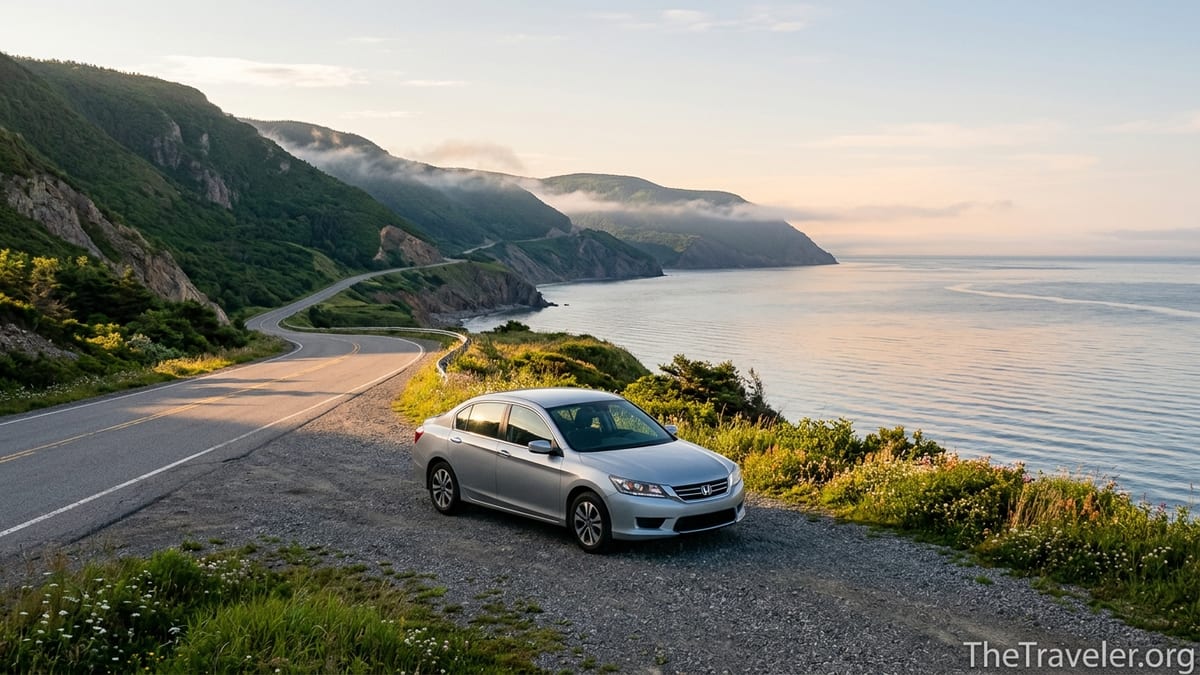
How Long Do You Need and Where Should You Start?
Most travelers begin an Atlantic Canada road trip by flying into Halifax Stanfield International Airport in Nova Scotia or into Moncton or Saint John in New Brunswick. Halifax usually offers the widest choice of rental cars and flights from major North American hubs, which makes it a practical starting point for circular itineraries that loop through Nova Scotia, Prince Edward Island and New Brunswick. With more time, you can add a Newfoundland extension using the Marine Atlantic ferries from North Sydney on Cape Breton Island.
For a compact 7 day trip, a realistic loop is Halifax to the South Shore (Lunenburg and Mahone Bay), then across to the Annapolis Valley, up to the Bay of Fundy near Wolfville, and back to Halifax. Travelers with 10 to 14 days can comfortably add Prince Edward Island and coastal New Brunswick, including the Confederation Bridge crossing and the Bay of Fundy coast around Hopewell Rocks and Fundy National Park. At 18 to 21 days you can include Cape Breton’s Cabot Trail and a short Newfoundland hop, while still keeping driving days to manageable lengths.
Distances in Atlantic Canada look small on the map but roads are mostly two lane and often wind along the coast. As a rough rule, plan on highway averages of about 80 to 90 km/h, with slower sections on the Cabot Trail and in national parks. For example, the 300 kilometer drive from Halifax to Moncton usually takes around three and a half hours of pure driving, while Halifax to Charlottetown via the Confederation Bridge is roughly four and a half hours without long stops.
Season matters as well. The main driving season runs roughly from late May to mid October, with peak summer crowds in July and August. Ferry schedules and some coastal accommodations scale back outside this window, so if you are planning for May or late October into early November, double check sailing calendars and opening dates, especially for Newfoundland and more remote coastal regions.
Planning Your Vehicle, Fuel and Driving Conditions
Most visitors rent a vehicle on arrival. At Halifax airport, major companies such as Enterprise, Budget, Hertz and Avis typically offer compact cars, midsize sedans and SUVs with unlimited mileage on Canadian rentals. In high summer, daily rates for a basic compact often sit in the general range of 70 to 100 Canadian dollars before taxes and fees, while small SUVs can run higher. Booking at least a few months ahead for July and August is wise, and for trips that include Newfoundland, reserve well in advance if you plan to take the car on the ferry.
Fuel prices in Atlantic Canada are regulated by each province and change regularly, but recent averages in late 2024 and 2025 have seen regular gasoline in Nova Scotia, New Brunswick and Prince Edward Island sitting somewhere around the mid 1.70s to low 1.80s Canadian dollars per liter, with Newfoundland often slightly higher. This means a typical compact car might cost roughly 55 to 75 Canadian dollars to fill from near empty, depending on tank size. On a 2,000 kilometer circuit, a fuel efficient vehicle might burn about 130 to 160 liters, so budgeting around 250 to 300 Canadian dollars for fuel on a two week trip is a reasonable starting point for planning.
Road conditions are generally good on main highways such as Nova Scotia Highway 102 between Halifax and Truro, the Trans Canada Highway 104 into New Brunswick and the 4 lane Highway 1 between Moncton and Saint John. Rural coastal routes can be narrower and rougher, especially after winter, so allow more time for drives such as the Sunrise Trail along Nova Scotia’s Northumberland Shore or sections of the Cabot Trail. In summer, fog is common along the Atlantic side of Nova Scotia and in Newfoundland, particularly in the morning, so be prepared for slower visibility and occasional drizzle even on otherwise clear days.
Winter driving in Atlantic Canada is a different proposition. Snow, ice and blowing winds can make conditions hazardous between December and March, and some smaller attractions and coastal accommodations close off season. Unless you are specifically visiting for a winter experience and are confident driving in snow with appropriate tires, the most comfortable road trip window is usually from June through September, when days are long and most ferry routes and services operate on peak schedules.
Core 7 to 14 Day Circuits in Nova Scotia, New Brunswick and PEI
A classic one week Nova Scotia loop might start and end in Halifax. Many travelers spend their first night in the city, then drive southwest along Highway 103 to Mahone Bay and UNESCO listed Lunenburg, about an hour and a half away. From there, continuing to Liverpool and the Kejimkujik Seaside area adds another hour or so. On day three or four, heading inland through Kejimkujik National Park and onward to the Annapolis Valley towns of Annapolis Royal or Wolfville creates a scenic cross province leg that is still short enough to allow for stops at wineries or farm markets.
From the Valley, it is an easy jump to the Bay of Fundy tides. For example, Wolfville to Parrsboro via Truro is around 260 kilometers, or about three hours of driving, and gives access to provincial parks such as Five Islands and the Joggins Fossil Cliffs area. Many travelers then swing back to Halifax via Truro, completing a comfortable seven day circuit with no single driving day longer than about four hours. This style of route suits travelers who prefer deeper exploration of one province rather than pushing into multiple provinces on a short trip.
If you have 10 to 12 days, adding Prince Edward Island and a slice of New Brunswick gives a rewarding multi province loop. One common pattern is Halifax to Truro and on to the Cobequid Pass into New Brunswick, then onward to Moncton. From Moncton, you can drive to Hopewell Rocks and Fundy National Park, staying overnight in Alma or Sussex. The next leg from Alma to the Confederation Bridge turnoff is about two hours, and the bridge crossing itself adds around 15 minutes. Once on PEI, Charlottetown makes a central base to explore the North Shore beaches, Cavendish and the rolling farm country.
A practical 12 day example might be: two nights in Halifax, two on the South Shore, two in the Annapolis Valley or Fundy coast, two in Moncton or Alma for New Brunswick’s Fundy attractions, three in Charlottetown or Cavendish exploring PEI, and a final night back in Halifax before departure. Each move keeps daily driving mostly between two and four hours, with time for stops at places such as Peggy’s Cove, Lunenburg, Grand Pré, Hopewell Rocks, the Fundy Trail Parkway and the red sand beaches of PEI National Park.
Extending to Cape Breton and Newfoundland
With 14 to 21 days, it becomes realistic to add Cape Breton’s Cabot Trail and even a short Newfoundland extension. From Halifax, it is about four and a half hours to the Canso Causeway, gateway to Cape Breton Island, and another hour and a half to Baddeck on the Bras d’Or Lake, which is a popular base for Cabot Trail drivers. The full Cabot Trail loop is roughly 300 kilometers and, with lookouts, hikes and coastal villages such as Cheticamp and Ingonish, is best done over two days rather than trying to rush it in one long push.
To reach Newfoundland by car, you will use Marine Atlantic ferries from North Sydney on Cape Breton. The year round route runs to Port aux Basques on Newfoundland’s southwest coast, with a sailing time typically around 6 to 8 hours depending on the crossing. In peak season there is also a longer seasonal route between North Sydney and Argentia, near St. John’s, which runs overnight and can take roughly 16 hours. It is wise to reserve these ferries well in advance for summer and to arrive at the terminal several hours before departure as requested in your ticket details.
Fares vary by season, vehicle size and whether you book a cabin. For a rough planning example, a regular car with two adults on the North Sydney to Port aux Basques route might total in the low to mid hundreds of Canadian dollars one way during high season when you add fuel charges and reservation fees, while the longer Argentia route, especially with a private cabin for the overnight leg, will cost more. Many travelers choose to sail into Port aux Basques, drive the island and then return via the same port, but if your focus is the Avalon Peninsula and St. John’s, sailing one direction via Argentia and the other via Port aux Basques can help balance driving and sailing time.
A 21 day example that includes Newfoundland could look like this. Spend three days between Halifax and the South Shore, two days in the Annapolis Valley and Fundy coast, two days for the drive to Cape Breton and the Cabot Trail, then catch an evening or overnight ferry from North Sydney. On Newfoundland, you might allocate two nights in Gros Morne National Park, one or two nights along the central coast around Twillingate or Gander, three nights in St. John’s and one night in a smaller outport on the Avalon such as Trinity Bay or the Irish Loop area. After returning by ferry, you can overnight again near North Sydney or Antigonish before driving back to Halifax for your departure.
Ferries, Tolls and Practical Crossing Costs
Any Atlantic Canada driving circuit that includes Prince Edward Island or Newfoundland involves at least one major water crossing. To reach PEI by car from New Brunswick, most travelers use the Confederation Bridge between Cape Jourimain and Borden Carleton. The bridge is nearly 13 kilometers long but the drive itself takes little more than 10 minutes. There is no charge to enter the island, and tolls are collected only when leaving. Recent information from provincial tourism sources indicates a standard two axle passenger vehicle pays a toll in the general range of 50 Canadian dollars when exiting the island, though amounts can change with inflation adjustments, so it is sensible to verify the current rate before travel.
Alternatively, some travelers choose the seasonal Northumberland Ferries service between Caribou, Nova Scotia and Wood Islands, PEI. This crossing takes about 75 minutes and usually runs from late spring into fall. Fares are paid only when leaving the island, whether by returning on the ferry or by taking the Confederation Bridge. As a rough planning example, a car and passengers returning via the ferry might expect to spend in the vicinity of several dozen Canadian dollars for the vehicle, not dramatically different from the bridge when you factor in time and fuel, which is why many travelers choose their route based on scenery and schedule convenience rather than saving small amounts of money.
Between New Brunswick and Nova Scotia across the Bay of Fundy, Bay Ferries operates the MV Fundy Rose between Saint John and Digby. The crossing time is a little over two hours, with year round daily sailings most of the year, sometimes more frequent in summer. For planning purposes, a car and two adults can easily end up in the low to mid hundreds of Canadian dollars round trip on this ferry once you factor in basic fares for passengers and the vehicle, though promotional fares and variable pricing mean exact amounts shift by season. Compared with driving around the top of the Bay of Fundy via Moncton and Truro, which can take over four hours, the ferry saves time and offers a relaxed break with views of whales and seabirds.
For Newfoundland crossings, Marine Atlantic operates the key links between North Sydney and both Port aux Basques and Argentia. The shorter Port aux Basques route is often priced lower and remains the primary year round link, while the Argentia service typically runs on a seasonal schedule and carries a supplement for the longer distance. Because these ferries are essential infrastructure, they are busy during peak travel months, and vehicle spaces can sell out, especially when local residents are traveling with trucks, trailers or RVs. Booking several months before a July or August trip gives you the best choice of sailing time and cabin availability.
Driving Times and Sample Daily Legs
To keep driving enjoyable rather than exhausting, it helps to break the region into logical daily segments. Halifax to Lunenburg is roughly 100 kilometers and about an hour and a half, but in practice you might spend most of the day, stopping at Peggy’s Cove, wandering Mahone Bay’s waterfront and arriving in Lunenburg by late afternoon. Lunenburg to Annapolis Royal via Highway 8 through Kejimkujik National Park is around 180 kilometers and usually about two and a half hours, which still leaves plenty of time for short hikes or a lakeside picnic in the park along the way.
Annapolis Royal to Moncton, New Brunswick, using Highway 101 and Highway 2 via Truro, is in the range of 400 kilometers and can take four and a half to five hours without long stops. Many travelers break this by staying a night around Truro or Amherst, or by using the Saint John to Digby ferry and overnighting in Saint John or Sussex before carrying on to Moncton. From Moncton to Charlottetown over the Confederation Bridge is approximately 160 kilometers and about two hours of driving plus whatever time you spend detouring to the Hopewell Rocks or the Fundy coast.
On Cape Breton, distances are shorter but the roads are slower. Baddeck to Cheticamp on the western Cabot Trail is around 110 kilometers, but with viewpoints and winding coastal sections, it is normal for this to take two to three hours with photo stops. Completing the northern loop from Cheticamp to Ingonish and back to Baddeck is another 200 kilometers, often filling most of a day if you include a hike in Cape Breton Highlands National Park. On Newfoundland, Port aux Basques to Gros Morne’s southern boundary is a drive of around three and a half hours, while Gros Morne to St. John’s can be eight hours or more, which is why many itineraries break that journey with a night around Gander or Clarenville.
As a planning strategy, aim to keep your longest driving days under five hours of pure wheel time and use shorter transfer days to enjoy local walks, boat tours, lighthouses and small town stops. This approach works particularly well in Atlantic Canada, where some of the best memories come from unplanned pauses at roadside viewpoints, fish shacks and village wharves rather than from ticking off a tight checklist.
Costs, Booking Tips and Seasonal Considerations
Beyond vehicle rental, fuel and ferries, daily costs in Atlantic Canada are governed by accommodation, food and activities. Midrange hotels or inns in places like Halifax, Charlottetown or St. John’s often fall in a range roughly between 180 and 260 Canadian dollars per night in high summer for a standard double room, while simpler motels or guesthouses in smaller towns can be notably cheaper. Waterfront boutique hotels or historic inns in high demand locations such as Old Lunenburg, Cavendish in peak beach season or inside national park boundaries can command higher prices, so booking early gives you the best balance of location and cost.
Restaurant prices are broadly comparable to many mid sized North American cities, with casual sit down meals such as fish and chips or a seafood chowder often running between 18 and 30 Canadian dollars per main dish in tourist towns. Lobster suppers, a popular experience on PEI and parts of Nova Scotia, can cost more, especially if you order market price whole lobster. Self catering where possible, using supermarkets in hubs such as Halifax, Moncton and Charlottetown, can reduce expenses if you are on a tighter budget or traveling as a family.
In terms of timing, July and August bring the warmest weather and the full range of seasonal services, but also the highest prices and busiest roads. June and September often offer a sweet spot of milder temperatures, fewer crowds and somewhat more flexible booking, though popular experiences such as whale watching tours in the Bay of Fundy or boat trips in Gros Morne can still fill up. Shoulder seasons in May and October can be very pleasant, especially for fall colors on Cape Breton and in New Brunswick’s interior, but some ferries, campgrounds and tour operators scale back schedules, so you will want to cross check your planned dates with current operating calendars.
For visitors driving their own vehicle from the northeastern United States, it is also wise to allow extra time at the border crossings between Maine and New Brunswick or Quebec and New Brunswick, especially on summer weekends. Make sure your auto insurance covers you in Canada, and carry physical or digital copies of insurance and registration documents, as rental companies and border officers may ask to see them. Cellular roaming charges can be high for visitors from outside Canada, so consider adding a Canada roaming package to your plan or picking up a local SIM on arrival.
FAQ
Q1. How many days do I need for a road trip through Nova Scotia, New Brunswick and PEI?
Most travelers find 10 to 14 days ideal for a loop that includes Nova Scotia, New Brunswick’s Bay of Fundy coast and Prince Edward Island, with daily drives of two to four hours.
Q2. Is it better to start my trip in Halifax or New Brunswick?
Halifax is usually the easiest starting point thanks to more flight options and a larger choice of rental cars, but Moncton or Saint John work well if you are focusing on the Bay of Fundy and PEI.
Q3. How far in advance should I book the Newfoundland ferry?
For July and August travel, booking Marine Atlantic ferries at least two to three months ahead is sensible, especially if you are taking a car and want a cabin on the overnight Argentia route.
Q4. Do I have to pay to drive onto Prince Edward Island?
You do not pay when entering PEI by bridge or ferry. Tolls or fares are charged only when you leave the island, whether by the Confederation Bridge or Northumberland Ferries.
Q5. Are the roads difficult to drive on the Cabot Trail and in Newfoundland?
Main routes are paved and plowed, but they can be steep, winding and exposed to wind and fog. In good summer weather, confident drivers in regular cars usually manage them without trouble.
Q6. Can I do this trip without a car using buses and tours?
Public transport is limited outside major centers. You could combine regional buses with local tours, but having your own car or camper gives far more flexibility for scenic stops and side trips.
Q7. Roughly how much will fuel cost on a two week Atlantic Canada road trip?
For a typical compact rental car on a 2,000 kilometer loop, many travelers spend in the broad range of 250 to 300 Canadian dollars on gasoline, depending on driving style and prices.
Q8. Do I need to reserve the Saint John to Digby ferry in advance?
Reservations are strongly recommended in peak season and on holiday weekends, especially if you are traveling with a car, RV or trailer, as vehicle spaces can sell out on popular sailings.
Q9. When is the best time of year to drive through Atlantic Canada?
The most reliable window is from June through September, when weather is milder, days are long and most ferries, accommodations and attractions operate on full schedules.
Q10. Is it worth including Newfoundland if I only have 10 days?
With only 10 days, Newfoundland can feel rushed because of ferry times and long internal drives. It is usually better saved for a dedicated trip or added when you have 18 to 21 days.