


Atlantic Canada rewards travelers who give it time. Four compact provinces, one long bridge, a handful of key ferries and short flights add up to an extraordinary coastal road trip. The challenge is not how to fill your days but how to fit the region into a week, 10 days, two weeks or a full three weeks without turning your vacation into a blur of highway signs. This guide breaks down realistic 7, 10, 14 and 21 day routes that combine two, three or all four Atlantic provinces, with concrete driving times, ferry options, flight hops and overnight suggestions that reflect how people actually travel here today.
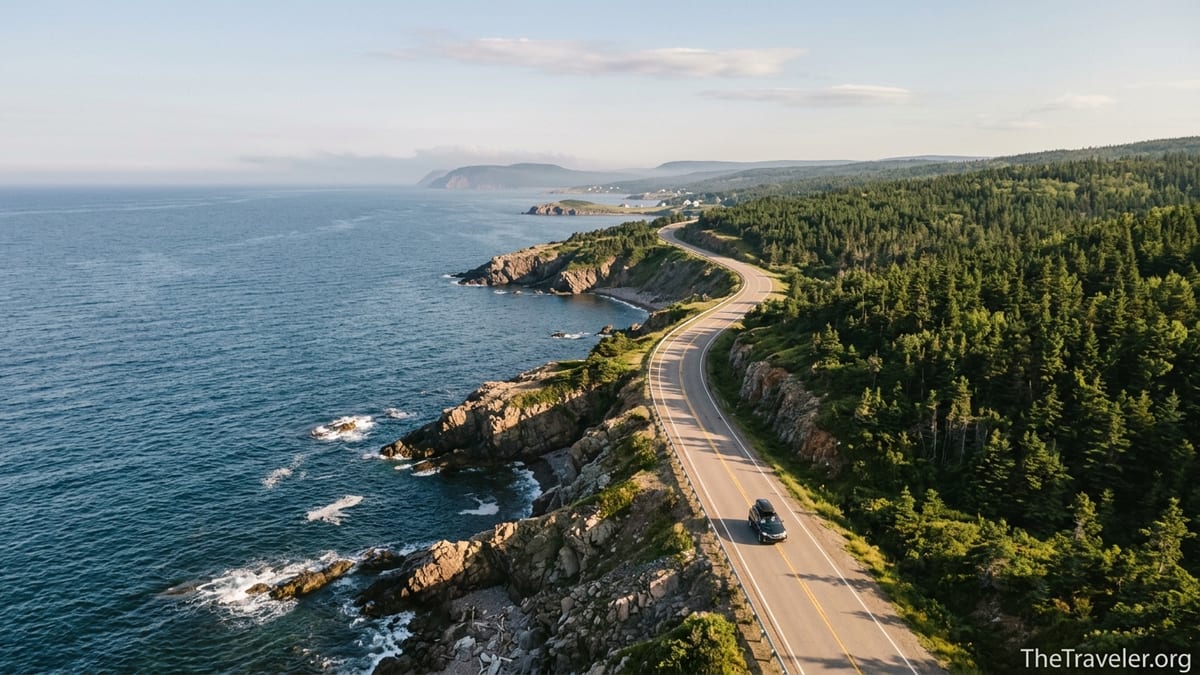
How to Think About an Atlantic Canada Road Trip
Atlantic Canada usually means Nova Scotia, New Brunswick, Prince Edward Island and Newfoundland and Labrador. On a map they look close together, but travel here is defined by coastline, tides and ferries more than straight lines. A typical visitor might land in Halifax, loop through the Maritimes by road, then decide whether to add Newfoundland via an overnight ferry or a short flight. Doing all four provinces is absolutely possible, but only becomes comfortable once you have about 14 to 21 days.
Driving distances are manageable by North American standards. Halifax to Moncton is about three hours of highway driving, Moncton to Charlottetown roughly two and a half hours via the Confederation Bridge, and Halifax to the Cabot Trail on Cape Breton Island around four to five hours depending on stops. The North Sydney to Port aux Basques ferry that links Nova Scotia to western Newfoundland generally takes between five and seven hours depending on schedule and conditions, so it functions as a full travel day rather than a quick hop.
The most common planning mistake is trying to cover too many headline sights in too few days, for example squeezing Halifax, the Bay of Fundy, Prince Edward Island, the Cabot Trail and St. John’s into a week. On paper, the distances may look feasible, but you end up arriving in fishing villages late, seeing national parks from the car window and spending more time chasing check-in times than walking coastal trails. The itineraries below are built around realistic daily drives in the three to five hour range, with ferry crossings placed where they naturally fit and at least two nights in most key hubs.
Because ferry schedules, tolls and gas prices change regularly, treat all specifics here as approximate and always confirm details with operators when you book. The goal is to give you a framework: if you know, for instance, that a Port aux Basques ferry will consume half a day and that a Halifax to Baddeck drive is about four hours without stops, you can adjust your overnight choices while keeping the trip relaxed.
7 Days: Classic Maritimes Loop (Nova Scotia, New Brunswick & PEI)
A week is just enough to experience three provinces without rushing if you keep your circle tight. A practical seven day loop usually starts and ends in Halifax, linking the Bay of Fundy in New Brunswick with Prince Edward Island before returning to Nova Scotia via ferry or bridge.
One workable pattern is: Halifax, Fundy coast of New Brunswick, Prince Edward Island, Cape Breton or South Shore, then back to Halifax. For example, you might arrive in Halifax on day one, pick up a rental car at the airport and spend your first night in the city. On day two, drive about three hours to Moncton, stopping in Truro or at the tidal interpretive centre near Maitland if timing lines up with high tide. From Moncton, the Hopewell Rocks and Fundy National Park lie about an hour to an hour and a half to the south for dramatic tides and coastal hikes, so basing yourself for one or two nights in either Moncton, Alma or Saint John keeps driving times short.
From the Fundy coast, day three or four can carry you over the Confederation Bridge to Prince Edward Island. The drive from Moncton to Charlottetown is roughly 160 kilometres, taking around two hours in light traffic plus time at viewpoints on the New Brunswick approach to the bridge and in the village of Victoria-by-the-Sea on the PEI side. Many travelers choose to stay two nights on the island, splitting their time between Charlottetown’s dining scene and the North Shore beaches and lighthouses near Cavendish or North Rustico.
To close the loop, take the ferry from Wood Islands on PEI to Caribou near Pictou in Nova Scotia for a change of scenery, or simply drive back across the bridge. The ferry crossing itself is about 75 minutes, but you should count several hours door to door including check-in and the drive to your next stop. With seven days in total, a final one or two nights can be spent either on Nova Scotia’s South Shore around Lunenburg and Mahone Bay, roughly an hour and a half from Halifax, or on the first section of Cape Breton Island if you are content with a longer final drive back to the airport.
10 Days: Maritimes Plus Cape Breton or a Taste of Newfoundland
With 10 days, you can either deepen your time in the Maritimes or add a carefully chosen taste of Newfoundland via flight. A full Newfoundland road loop still stretches the schedule at this length, but flying in and out of St. John’s for three or four nights becomes viable when combined with a shorter Nova Scotia and New Brunswick segment.
One land-focused 10 day idea is to build on the seven day loop by allocating more time in fewer places and adding Cape Breton. You might spend two nights in Halifax to explore the waterfront, museums and nearby Peggy’s Cove, one or two nights along the Bay of Fundy in New Brunswick for tide watching and short hikes, two nights on Prince Edward Island, and three nights on Cape Breton with at least one full day on the Cabot Trail. The drive from Pictou area to Baddeck, a common Cabot Trail base, takes around three hours, and Baddeck back to Halifax is about four hours, leaving room for coffee stops and photo breaks.
The alternative is to use Halifax as your Atlantic hub and let a domestic flight handle the biggest water gap. Nonstop flights between Halifax and St. John’s usually take around 90 minutes. In this scenario, you might block five or six days for Nova Scotia and New Brunswick by car, including the South Shore and a quick Bay of Fundy visit, then fly to St. John’s for three or four days without a vehicle. In and around St. John’s, organized day tours or short self-driven outings (if you rent a local car) can cover Cape Spear, Signal Hill, Petty Harbour and, in season, whale and puffin excursions from nearby harbours.
Ten days is also enough to sample Newfoundland’s west coast by combining a Halifax arrival with a Port aux Basques ferry crossing, but only if you are comfortable with a couple of long days. For example, after spending a night in Halifax, you could drive roughly four to five hours to North Sydney, take a night sailing to Port aux Basques, then spend three or four days exploring Gros Morne National Park, about three hours north of the ferry terminal. Returning on another overnight ferry and driving back to Halifax uses up most of two additional days, which leaves limited slack for New Brunswick or PEI. Travelers eager for a more relaxed experience often decide to save the driving tour of Newfoundland for a future, longer trip and keep the 10 day plan focused on the Maritimes plus a flight-based St. John’s add-on.
14 Days: All Four Provinces at a Comfortable Pace
At around 14 days, a full Atlantic Canada loop that includes all four provinces becomes not only possible but genuinely enjoyable. You can still overpack it by trying to see every peninsula on Newfoundland, but with two weeks you can combine a scenic Maritimes circuit with a focused look at either western or eastern Newfoundland and a couple of nights in St. John’s.
A practical two week route might look like this: begin in Halifax with two nights to adjust and explore, then drive to the Bay of Fundy in New Brunswick for two nights. Allow roughly three hours from Halifax to Moncton, then up to another two hours to reach Fundy National Park or Saint John depending on where you stay. From there, cross into Prince Edward Island via the bridge, spending two or three nights on the island so you have one full beach day and one day for coastal drives and small towns. Leaving PEI by the Wood Islands ferry to Caribou puts you within a three hour drive of Cape Breton, where two or three nights split between Baddeck and perhaps Cheticamp gives you at least one long Cabot Trail day and a second flexible day for hikes or whale watching if in season.
Once you have enjoyed the Cabot Trail, drive the short remaining distance to North Sydney, typically under two hours from Baddeck, and take the ferry to Newfoundland. The day crossing to Port aux Basques often takes around six or seven hours once boarding and disembarkation are factored in, so count it as a full day. On arrival, many travelers push on to Corner Brook or the southern edge of Gros Morne National Park, which is about three hours from the ferry terminal, and then use two or three nights to explore the park’s fjords, coastal hikes and fishing communities.
If you want to include St. John’s within the same two weeks, the most time-efficient option is usually to fly one way within Newfoundland. Driving from Gros Morne to St. John’s is roughly eight to nine hours under normal conditions, which eats an entire day in each direction. Instead, you can return your rental car at Deer Lake airport, take a short flight to St. John’s and spend two or three nights car-free in the city. That leaves your final day for a flight back to Halifax or directly home if your airline allows an open-jaw itinerary. Though this introduces an extra flight segment, it prevents your 14 day trip from turning into a string of marathon drives.
Throughout a 14 day loop, the key to a realistic pace is accepting that you will not see every region in depth. Skipping Nova Scotia’s deep South Shore or limiting New Brunswick to the Fundy coast is not a failure; it is the tradeoff that keeps evenings free for seafood suppers, live music and sunset walks instead of fuel stops and late check-ins. Many visitors who follow a two week pattern like this end up planning a second trip focused solely on either Newfoundland or a deeper dive into the Maritimes.
21 Days: Deep Dive Across the Atlantic Provinces
With three weeks to work with, you can slow down and add the kind of side trips that make Atlantic Canada memorable: extra days on the Annapolis Valley wine route, an overnight in a small Acadian town in New Brunswick, or time to wander quiet outports in Newfoundland instead of just passing through. A 21 day itinerary can comfortably combine a full Maritimes loop with a substantial Newfoundland road segment without constant packing and unpacking.
One way to structure three weeks is to imagine three roughly week-long chapters. The first week can focus on Nova Scotia, perhaps starting with two nights in Halifax, then tracing the South Shore to Lunenburg and Mahone Bay, continuing on to the Yarmouth area and returning via the Annapolis Valley with another two or three nights for vineyards, farm markets and historic sites. Daily drives on this leg can usually be kept in the two to three hour range, giving plenty of space for stops at beaches and lighthouses.
The second week can be given to New Brunswick and Prince Edward Island. From the Annapolis Valley, you can cross into New Brunswick by ferry from Digby to Saint John, a short sailing that saves a longer overland route and introduces the Bay of Fundy from the water. Two or three nights around Saint Andrews, Alma or the Fundy Trail Parkway allow you to experience high tides, sea caves and whale watching trips when in season. From there, drive to PEI, spend three or four nights dividing your time between Charlottetown and a North Shore base, then leave via the bridge for a straightforward route back toward Nova Scotia and Cape Breton.
The third week then belongs to Cape Breton and Newfoundland. Allocate at least three nights on Cape Breton to enjoy multiple days on the Cabot Trail, inland lakes and coastal villages without feeling rushed. From North Sydney, choose between the shorter Port aux Basques ferry, which places you on Newfoundland’s west coast, or the longer seasonal sailing to Argentia that lands you much closer to St. John’s on the Avalon Peninsula. The Port aux Basques crossing is common for travelers planning a full island drive, as it allows a several day progression from Gros Morne and the Long Range Mountains across central Newfoundland to the east.
With a full week available on Newfoundland itself, you might dedicate three nights to Gros Morne National Park for fjord boat tours and coastal hikes, two or three nights around the Bonavista Peninsula and Trinity for historic villages and puffin viewing in season, and another two or three nights in or near St. John’s for urban exploring, nearby coastal trails and day trips to outports like Quidi Vidi or Petty Harbour. The drives between these areas are not short; Gros Morne to the Bonavista region can take six hours or more, and Bonavista to St. John’s is often around three and a half to four hours. A 21 day timeframe is what turns those necessary transfers into parts of the journey rather than endurance tests.
Ferries, Flights and Driving Realities
Successful Atlantic Canada itineraries treat ferries and key highway segments as structural elements, not afterthoughts. The Confederation Bridge between New Brunswick and Prince Edward Island is an efficient year-round crossing, but you pay the toll only when leaving the island, so some travelers choose to enter by ferry from Nova Scotia and exit via the bridge to avoid backtracking and to spread out the scenic experiences. The Wood Islands to Caribou ferry is fairly short, under two hours on the water, yet check-in requirements mean you should still budget half a day if you are connecting it with a longer drive.
Marine Atlantic ferries between Nova Scotia and Newfoundland are longer and more consequential for planning. The route from North Sydney to Port aux Basques is typically scheduled at around six to seven hours, with a choice of daytime or overnight sailings in many seasons. The longer seasonal route to Argentia on Newfoundland’s east coast can take roughly 14 hours or more, operating less frequently. Booking a cabin on overnight crossings is common among road trippers who prefer to treat the sailing as both transport and accommodation, particularly when traveling with children or after a substantial drive.
Within Newfoundland, domestic flights compress distances that would otherwise trigger full day drives. Deer Lake serves the Gros Morne region, Gander sits in central Newfoundland and St. John’s anchors the east. A one way rental between, say, Deer Lake and St. John’s combined with a short internal flight lets you devote more days to walking and less to highway time. Similarly, for travelers with limited vacation days who still want a taste of Newfoundland, flying into St. John’s from Halifax or Toronto for a long weekend at the start or end of a Maritimes road trip can be more efficient than adding extra ferry segments.
Fuel costs and tolls add up over three weeks but are broadly similar to other parts of Canada. The Confederation Bridge toll for a standard car is typically several tens of dollars rather than a token fee, so include it in your budgeting just as you would the cost of a Marine Atlantic crossing or a domestic flight segment. Parking is generally straightforward and either free or reasonably priced outside the cores of Halifax and St. John’s, which makes road tripping practical even in high season as long as you reserve accommodations in popular spots such as Cavendish, Baddeck and Gros Morne well ahead of time.
Building the Right Itinerary for Your Travel Style
While the sample itineraries here work for many visitors, the best route is the one that matches your pace. Some travelers are content with back to back four or five hour driving days followed by simple motel stays, treating each evening as a quick reset before the next leg. Others view driving days as the least interesting part of the trip and prefer a base-and-spoke model, staying three or four nights in one spot and doing day trips. Atlantic Canada supports both approaches, provided you account for the fixed time of ferries and avoid scheduling long drives immediately after or before ocean crossings.
If your priority is food, culture and live music, you may want a Halifax and St. John’s focused plan with only shorter excursions to rural areas. That could mean four nights in Halifax with side trips to Lunenburg and the Annapolis Valley, followed by a flight to St. John’s for another four nights using guided tours and local taxis instead of a car. Conversely, if hiking and coastal scenery are your main draws, you might minimize city time and concentrate your nights in small communities near national parks, from Alma and Saint Andrews on the Bay of Fundy to Cheticamp, Ingonish and Rocky Harbour.
Season also shapes what is realistic. Late June through early September offers the warmest weather, the most ferry sailings and the widest range of tours and accommodations, but it is also the busiest and priciest. May and October bring quieter roads and fall foliage or spring wildflowers, yet some seasonal operations on PEI and in smaller Newfoundland outports may be limited or closed. Winter road trips are possible for confident drivers prepared for snow and shorter days, though some itineraries that rely on ferries or small coastal roads become more challenging outside of the main summer season.
Regardless of your month, building one flex day into a 14 or 21 day schedule is wise. Strong winds can affect ferry crossings, and heavy rain can make you grateful for an unscheduled day in a café in Charlottetown or a museum in Saint John rather than a forced march along a cliffside trail. Using that buffer around the middle or near a major crossing gives you space to adapt without cutting entire regions.
The Takeaway
Atlantic Canada is not a place to rush. In a week, you can circle the Maritimes and stand under Fundy cliffs, stroll Charlottetown’s harbour and drive part of the Cabot Trail. In 10 days, you can add Cape Breton at a gentler pace or fly to St. John’s for a taste of Newfoundland. With 14 days, all four provinces enter reach, especially if you combine a Port aux Basques ferry with a short internal flight across Newfoundland. At 21 days, you can slow down, linger in small communities and watch more than one sunset from a different harbour.
Whatever length you choose, the principles stay the same: treat ferries and key drives as anchors, allow multiple nights in your main bases and resist the urge to see every lighthouse in a single trip. By combining realistic daily distances with a mix of coastal towns, national parks and compact cities, you can string together a road trip that feels rich rather than rushed, whether you are charting a first visit or finally returning to a coastline you have long missed.
FAQ
Q1. Is it realistic to visit all four Atlantic provinces in just 7 days?
It is technically possible but not recommended. Seven days is best spent looping Nova Scotia, New Brunswick and Prince Edward Island. Adding Newfoundland requires long ferry or flight segments that compress your time on the ground and turn the itinerary into a series of travel days rather than a relaxed holiday.
Q2. How far in advance should I book the Marine Atlantic ferry to Newfoundland?
For summer travel, it is prudent to book several months ahead, especially if you need a cabin on an overnight crossing or are traveling with a larger vehicle. Schedules and capacity vary by season, and popular dates around holidays and long weekends can sell out, so treat the ferry like a key flight segment when locking in your plans.
Q3. Is it better to take the day or night crossing between North Sydney and Port aux Basques?
Day crossings offer coastal views and easier adjustment if you are sensitive to sleeping on moving transport, while night crossings let you maximize daytime hours at your destination by combining travel with rest. Many road trippers choose a night sailing eastbound to arrive early in Newfoundland and a day sailing on the way back to enjoy the scenery and avoid a second disrupted night of sleep.
Q4. Do I need a car for St. John’s, Newfoundland, or can I rely on tours and taxis?
You can comfortably explore central St. John’s without a car, and many visitors use organized tours or local taxis for nearby sights such as Cape Spear, Signal Hill and Petty Harbour. However, if you want to reach farther outport communities or combine St. John’s with longer coastal hikes outside regular tour routes, a short local car rental can provide helpful flexibility.
Q5. What is a sensible daily driving limit for an Atlantic Canada road trip?
For most travelers, planning around three to five hours of driving on travel days strikes a good balance between covering ground and leaving time for stops. Occasional longer hauls of six or more hours can work when necessary to reposition between regions, but building too many of them into a 10, 14 or 21 day itinerary can lead to fatigue and less time out of the car.
Q6. When is the best season to drive the Cabot Trail on Cape Breton Island?
Late June through early October is generally the most rewarding period, with open seasonal businesses, fuller accommodation options and better odds of clear coastal views. July and August are busiest, while September and early October can offer milder weather, fall foliage and slightly lighter traffic, though you should still reserve key lodgings in advance.
Q7. Should I bring my own car or rent in Halifax or St. John’s?
Bringing your own car can be cost effective for longer trips starting elsewhere in Canada or the northeastern United States, especially for families, but it adds extra days of highway driving to reach the region. Renting in Halifax or St. John’s allows you to fly in quickly, skip long inland stretches and focus your driving energy on coastal routes and scenic loops instead of transiting to the East Coast.
Q8. How many nights should I plan for Prince Edward Island on a multi-province itinerary?
On a 7 or 10 day trip that also includes Nova Scotia and New Brunswick, two or three nights on PEI usually feels right. This allows one full day for the North Shore beaches and coastal drives, plus another for Charlottetown or quieter inland areas, without turning the island into a rushed detour between bridge and ferry.
Q9. Is it necessary to reserve accommodations in advance in summer?
Advance reservations are strongly advised for July and August, especially in popular spots such as Cavendish, Baddeck, the Bay of Fundy villages and Gros Morne National Park. While you may occasionally find last minute rooms, relying on walk-in availability can force you into longer drives or less convenient locations than planned, particularly on weekends and near major events.
Q10. Can I realistically add Labrador to a 14 or 21 day Atlantic Canada trip?
Adding Labrador is possible but tends to stretch a schedule that already includes all four Atlantic provinces. The additional ferry segments, longer distances and sparser services mean you should treat Labrador as a dedicated extension or separate trip unless you are comfortable with frequent long driving days and a more expedition-style approach to your itinerary.