


Atlantic Canada rewards first-time visitors with wild coastline, small historic cities, and some of the friendliest communities in the country. Stretching from the red cliffs of Prince Edward Island to the fjords of Newfoundland and Labrador, this compact region is ideal for road trips, coastal hikes, and slow travel. For a first visit, the key is understanding distances, ferry routes, seasonal weather, and what it really costs to explore Nova Scotia, New Brunswick, Prince Edward Island, and Newfoundland and Labrador in 2026.
Getting Oriented: The Four Provinces of Atlantic Canada
Atlantic Canada covers four provinces on Canada’s eastern seaboard: Nova Scotia, New Brunswick, Prince Edward Island, and Newfoundland and Labrador. Many first-time visitors base themselves in Halifax, the main air gateway, and then fan out by rental car or regional flights. Halifax is a compact harbour city with a lively downtown boardwalk, historic Citadel hilltop fort, and easy day-trip access to famous sights such as Peggy’s Cove and the UNESCO-listed town of Lunenburg.
To the west, New Brunswick is anchored by the Bay of Fundy, known for some of the highest tidal ranges in the world. Travelers often pair a stay in Moncton or Saint John with visits to Fundy National Park and Hopewell Rocks, where you can walk on the ocean floor at low tide and return a few hours later to see boats floating several metres higher. Prince Edward Island is smaller and gentler, all rolling farm fields, red sandstone cliffs, and beaches, with Charlottetown as its main hub and gateway to Cavendish and the island’s national park.
Newfoundland and Labrador sits further out into the North Atlantic and feels more remote. Many first-timers underestimate the distances: it is roughly a 10 hour drive from the ferry at Port aux Basques to St John’s, even before scenic detours. Most visitors focus either on western Newfoundland and the fjords of Gros Morne National Park, or on the colourful row houses, pubs, and coastal trails around St John’s, sometimes adding outports such as Twillingate or Trinity for iceberg viewing and historic charm.
Because these provinces are relatively close together, you can visit more than one on a single trip, but it pays to be realistic. A classic two-week itinerary might combine Nova Scotia and New Brunswick with a short side trip to Prince Edward Island. Adding Newfoundland generally requires at least another week, especially if you will be taking ferries rather than flying between provinces.
Essential Highlights and Coastal Towns
Most first-time itineraries start in Nova Scotia. From Halifax, the lighthouse and fishing village of Peggy’s Cove is about 45 minutes by car, making it one of the most popular half-day excursions. The polished granite rocks, crashing Atlantic surf, and working lobster boats create iconic scenes, though crowds are heaviest on summer weekends. Many travelers continue along the South Shore to visit Mahone Bay and Lunenburg, where brightly painted wooden houses and working wharves line a sheltered harbour recognized as a UNESCO World Heritage Site.
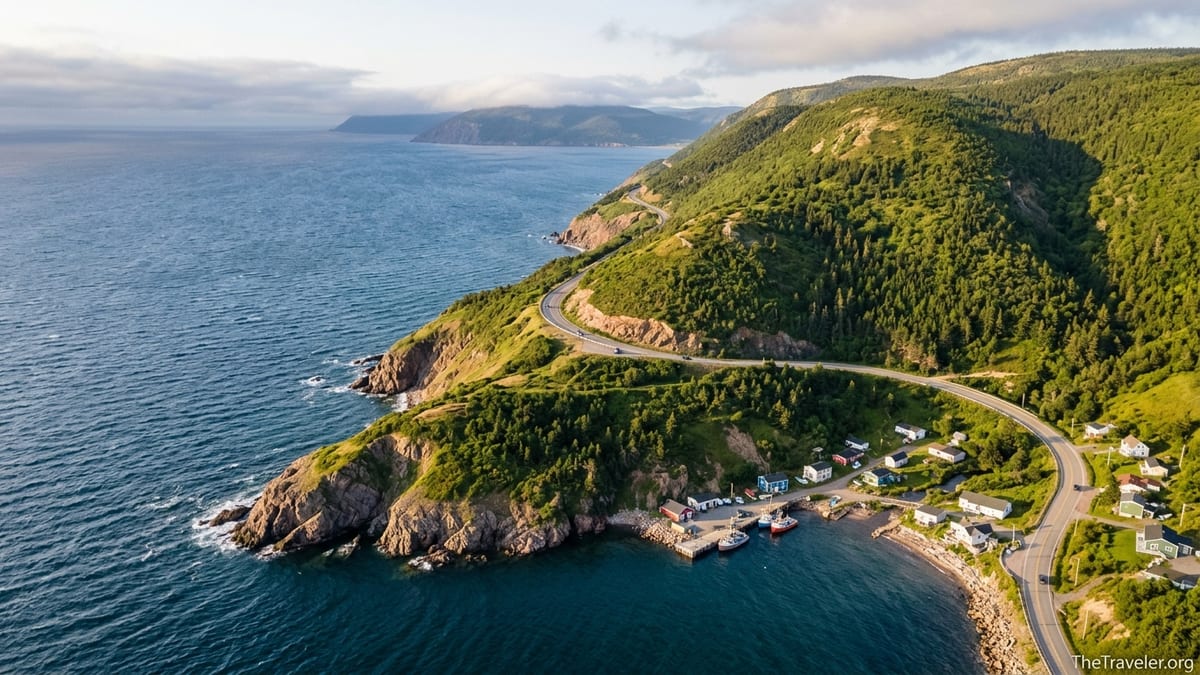
Further north, Cape Breton Island is home to the Cabot Trail, a roughly 300 kilometre scenic loop that threads along clifftops and through the highlands of Cape Breton Highlands National Park. Drivers typically base in small communities like Baddeck, Ingonish, or Cheticamp and spend two or three days hiking coastal trails such as the Skyline Trail, visiting beaches, and stopping at lookouts that give sweeping views over the Gulf of St Lawrence or the open Atlantic. In peak summer, simple waterfront motels and inns in these towns can sell out weeks in advance.
In New Brunswick, first-timers usually head for the Bay of Fundy. Hopewell Rocks, south of Moncton, offers the region’s most dramatic example of tidal range, where flowerpot-shaped sandstone pillars tower above visitors at low tide, then become sea stacks partially submerged a few hours later. Fundy National Park, about an hour away by car, combines rugged coastline with forested hiking trails and small waterfalls, and many travelers overnight in the nearby village of Alma, known for its seafood shacks and tidal harbour.
Prince Edward Island’s coastal appeal centres on Cavendish and the north shore beaches of Prince Edward Island National Park, where you can see red sandstone cliffs, dunes, and long sandy strands. Small communities such as North Rustico and Victoria-by-the-Sea offer classic maritime scenes: fishing boats, boardwalks, and simple seafood restaurants. In Newfoundland, travellers looking for coastal culture often visit Trinity and Bonavista on the east coast, or Twillingate along “Iceberg Alley,” where in late spring and early summer it is sometimes possible to scan the horizon for drifting icebergs from clifftop trails.
Ferries, Flights, and Getting Around
For most international travelers, Halifax Stanfield International Airport is the most practical entry point to Atlantic Canada, with regular flights from Toronto, Montreal, and several US cities. St John’s International Airport in Newfoundland, Fredericton, Moncton, and Saint John in New Brunswick, and Charlottetown in Prince Edward Island also receive domestic flights, which is useful if you plan to focus on one province and skip long drives or ferries.
Within the region, driving remains the most flexible way to explore smaller coastal communities and national parks. Car rental costs vary widely depending on the month and booking timing, but in recent summer seasons visitors have commonly reported paying in the range of 80 to 150 Canadian dollars per day for a mid-size vehicle in Halifax during July and August, sometimes more if booked last minute. Renting from airport locations is convenient but can be noticeably pricier than downtown depots, and vehicles in peak summer often sell out entirely for popular weeks.
Several major ferry routes shape trip planning. The main crossing between Nova Scotia and Newfoundland is the Marine Atlantic service from North Sydney to Port aux Basques, which typically takes 6 to 8 hours depending on the sailing. There is also a longer seasonal ferry from North Sydney to Argentia for those heading directly to eastern Newfoundland, which can take around 16 hours and often runs overnight in summer. Trips should usually be booked weeks in advance for July and August, especially if you are bringing a car and want a private cabin.
Travelers who wish to avoid some driving can connect provinces using other ferries. Bay Ferries operates a service between Saint John in New Brunswick and Digby in Nova Scotia across the Bay of Fundy, cutting out several hours of highway driving and giving views of the coastline. Another seasonal high-speed ferry, popularly known as “the CAT,” links Bar Harbor in Maine to Yarmouth in southwestern Nova Scotia, which some US visitors use to start a loop that includes the South Shore, Halifax, and the Annapolis Valley before heading home by road.
Weather, Seasons, and When to Visit
Atlantic Canada’s maritime climate means milder winters than much of inland Canada but also frequent fog and changeable conditions, especially along exposed coasts. In Halifax, average daily temperatures in July typically sit around the high teens to low twenties Celsius, with daytime highs often reaching the low to mid 20s. Inland areas can feel warmer, while places like St John’s and exposed capes can remain noticeably cooler, particularly when fog rolls in off the cold Labrador Current.
The main travel season runs from late June through September. July and August are warmest, with the fullest range of tours, whale-watching excursions, and festivals operating, but they also bring the highest prices and the greatest pressure on accommodations and car hire. Shoulder months such as late May, June, and late September can offer lower rates and fewer crowds, though some seasonal restaurants, campgrounds, and boat tours may still be closed in May or begin to wind down by the end of September, especially in smaller communities.
Weather can shift quickly in all four provinces. It is common to experience sun, drizzle, and fog in a single day along the coast. On the Cabot Trail, for example, clear views at one lookout can give way to low cloud or sea mist just a few bends further on. Packing layers is essential: visitors in July often wear shorts in the afternoon in Charlottetown but need a fleece and windproof jacket for a sunset stroll at Peggy’s Cove or while standing on a windy deck during a boat tour in Gros Morne.
If your priority is wildlife, timing matters. Whale-watching tours typically run from late spring through early autumn, with humpbacks and other species most commonly spotted in summer months, particularly in parts of Newfoundland and the Bay of Fundy. Iceberg viewing season off Newfoundland’s northeast coast usually peaks in late spring and early summer, though the exact timing and number of bergs vary from year to year depending on sea ice and currents.
Typical Costs, Accommodation, and Booking Strategy
Costs in Atlantic Canada have risen in recent summers, especially for car rentals and accommodations in peak season. Visitors planning a one-week July trip that includes Halifax, the South Shore, and Cape Breton commonly budget for mid-range hotel rooms in the range of 220 to 350 Canadian dollars per night in popular areas such as downtown Halifax, Lunenburg, or Baddeck. Simple motels and small inns along rural stretches of the Cabot Trail, the Fundy coast, or central Prince Edward Island may be available in the 150 to 220 dollar range if booked early, with basic cabins or older motels occasionally priced lower.
Vacation rentals and cottages are widely available, particularly on Prince Edward Island and in parts of Nova Scotia, but summer demand is intense. It is not unusual for desirable waterfront cottages near Cavendish or Mahone Bay to be booked out several months ahead for July and August. In national parks such as Cape Breton Highlands and Fundy, Parks Canada campgrounds offer tent and RV sites and sometimes roofed accommodations such as oTENTiks or small cabins, which can be a cost-effective option if you reserve as soon as the booking window opens.
Day-to-day expenses will depend on where and how you eat. In 2026 it is typical to pay roughly 18 to 25 Canadian dollars for a casual lunch of fish and chips or a lobster roll with a non-alcoholic drink at a basic coastal restaurant in places like Alma, North Rustico, or Twillingate. Dinner at a mid-range bistro in downtown Halifax or St John’s featuring local seafood, such as scallops, cod, or mussels, can easily run 35 to 50 dollars per person before drinks and tax. Many travelers offset restaurant costs by booking accommodations with kitchenettes and shopping at national grocery chains for breakfast and some dinners.
Given the region’s short high season, it pays to reserve critical elements early. For a July or early August trip that includes the Marine Atlantic ferry to Newfoundland, the Cabot Trail, and Prince Edward Island, booking car rental and main accommodations three to six months ahead is sensible. If you are travelling in shoulder season or focusing on less busy areas, you may be able to leave more flexibility for weather-dependent decisions such as which day to drive the Cabot Trail or book a whale-watching cruise.
Planning Your First Itinerary
First-time visitors are often tempted to “do it all” in a single trip, but distances and ferry logistics argue for a more focused approach. One popular 10 to 12 day loop starting and ending in Halifax might include two or three nights in Halifax, one or two nights along the South Shore near Lunenburg, then a drive to Wolfville in the Annapolis Valley wine region before crossing into New Brunswick to visit the Bay of Fundy, Fundy National Park, and Hopewell Rocks. From there, travellers can continue over the Confederation Bridge to Prince Edward Island for two or three nights of beaches and small towns, then return to Nova Scotia for a final night near the airport.
If you have more time and want to include Cape Breton, consider a two-week itinerary that trims some stops elsewhere. For example, after a couple of days in Halifax you might spend a single night around Lunenburg, skip Prince Edward Island this time, and drive directly toward Cape Breton for four or five days. Basing in Baddeck or Ingonish gives a good starting point for driving the Cabot Trail, hiking the Skyline Trail, and visiting coastal communities such as Cheticamp or Mabou. This kind of itinerary gives more time out of the car and allows a weather buffer for your Cabot Trail driving days.
Adding Newfoundland often makes most sense on a dedicated trip unless you have three weeks or longer. A focused western Newfoundland itinerary might involve driving or flying to Deer Lake, then basing for several days in or near Gros Morne National Park to hike in the Tablelands, take a boat tour in Western Brook Pond, and explore fishing communities such as Woody Point or Norris Point. Travellers with an interest in history and city culture might instead centre their first Newfoundland trip on St John’s, with day trips to Cape Spear, the East Coast Trail, and coastal towns like Petty Harbour.
As you refine your plan, map driving times with generous buffers. For instance, the drive from Halifax to Moncton is about 2.5 to 3 hours without stops, but you may want to allow a full day if you plan to detour to Joggins Fossil Cliffs or coastal viewpoints. Likewise, the loop of the Cabot Trail can be driven in a long day, but most travellers find it more enjoyable to split it into two or three shorter driving days with hikes, lookouts, and beach stops.
Practical Tips for First-Time Visitors
Atlantic Canada is generally safe and welcoming, with a relaxed pace and strong culture of hospitality. In smaller communities, businesses may keep shorter hours outside peak summer or even close for a midweek day, so it is wise to check opening times for restaurants and attractions when planning your evenings. Many visitors are surprised by how early things can wind down in rural areas, with some kitchens closing by 8 or 9 p.m., particularly in May, June, and late September.
Driving is relatively straightforward, with well-maintained highways linking major centres. However, rural roads on the Cabot Trail, coastal New Brunswick, or outport Newfoundland can be winding and slower than they look on a map. It is common to encounter moose warning signs in parts of Newfoundland and northern New Brunswick, and drivers are advised to be particularly cautious at dawn and dusk. Fuel stations are frequent along main corridors but can be more spaced out on remote coastal roads, so topping up in larger towns is a sensible habit.
Mobile coverage is strong around cities and most towns but can drop off in more remote stretches of Cape Breton Highlands National Park, the Fundy coast, and rural Newfoundland. Download offline maps before driving long distances and carry a paper map as backup if you expect to be hiking or camping away from major roads. Weather-related delays are rare in summer but can affect ferry crossings and small regional flights, so avoid planning tight same-day connections between ferries, flights, and long drives.
For payments, credit and debit cards are widely accepted, including at most small inns and restaurants, though a little cash is useful for rural markets, roadside farm stands, or small-town festivals. Tipping norms follow broader Canadian practice: around 15 to 20 percent in restaurants with table service, a few dollars for housekeeping in hotels, and optional but appreciated tips for guides on boat tours, walking tours, or whale-watching trips.
The Takeaway
A first trip to Atlantic Canada is less about ticking off a list of cities and more about embracing the rhythm of coastal life. From watching the tides rise along the Bay of Fundy to tracing clifftop roads on the Cabot Trail or listening to live music in a St John’s pub, the region rewards travelers who slow down and linger in a few well-chosen bases. With thoughtful planning around ferries, distances, and seasonal weather, it is possible to combine iconic attractions such as Peggy’s Cove, Lunenburg, Hopewell Rocks, and Gros Morne with quieter fishing villages and beaches that still feel largely undiscovered.
For most first-time visitors, the hardest part is narrowing down the options within the time available. Focus on one or two provinces, book key elements like summer car rentals and ferry crossings well ahead, and leave pockets of flexibility for weather and serendipity. Whether you are pairing Nova Scotia with the Bay of Fundy, cycling quiet roads on Prince Edward Island, or making the longer journey to Newfoundland’s fjords and outports, Atlantic Canada offers a memorable introduction to Canada’s eastern edge.
FAQ
Q1. How many days do I need for a first trip to Atlantic Canada?
Most first-time visitors find that 10 to 14 days is enough to explore two or three provinces without feeling rushed. For example, you might spend four or five days in Nova Scotia, three or four in New Brunswick around the Bay of Fundy, and two or three on Prince Edward Island. If you want to include Newfoundland by ferry or with a rental car, allowing at least an extra week is more comfortable, especially given the long driving distances on the island.
Q2. Is it possible to visit all four Atlantic provinces in one trip?
It is technically possible to set foot in all four provinces on a single holiday, especially if you are mainly interested in short stops and photo opportunities, but it often means more time driving than exploring. For a richer first experience, many travellers choose either a “Maritimes loop” that focuses on Nova Scotia, New Brunswick, and Prince Edward Island, or a dedicated Newfoundland and Labrador trip. If you have three weeks or more, you can more reasonably combine the Maritimes with at least one region of Newfoundland.
Q3. Do I need a car, or can I rely on public transport?
Outside major cities, public transport is limited and infrequent, so a car is by far the most practical way to explore coastal communities, national parks, and outports. In Halifax or St John’s you can get by on foot and with taxis or local buses, but to reach places like the Cabot Trail, Fundy National Park, or small villages on Prince Edward Island, having your own vehicle makes a big difference. Some travellers combine a few car-free days in a city with a one-week rental for the road trip portion to keep costs down.
Q4. When is the best time of year to visit Atlantic Canada?
The most popular time to visit is from late June through early September, when temperatures are mild, most attractions are open, and whale-watching and boat tours operate regularly. July and August bring the warmest weather and the liveliest calendar of festivals, but also the highest prices and the biggest crowds. If you prefer quieter roads and lower accommodation costs, consider late June or mid to late September, understanding that some seasonal businesses may operate with reduced hours or close earlier in the season.
Q5. How far in advance should I book ferries and accommodation?
In peak summer, it is wise to book key elements three to six months ahead. For the Marine Atlantic ferries to Newfoundland, reserving well in advance is especially important if you are bringing a car or want a private cabin on an overnight sailing. Accommodations on the Cabot Trail, in small Prince Edward Island beach communities, or near Fundy National Park also fill quickly for July and August. Shoulder-season trips give more flexibility, but even then it is sensible to secure a few anchor stays and any time-sensitive ferries before you depart.
Q6. What should I pack for the weather?
Even in summer, you should pack layers suitable for variable conditions. A lightweight waterproof jacket, fleece or sweater, and long trousers are useful alongside shorts and T-shirts. Coastal areas can feel cool and windy, particularly in the evening or when fog rolls in, so a windproof layer and closed shoes are helpful for walking on rocky shorelines. If you plan to hike or take boat tours, bring a hat, sunscreen, and insect repellent, as sunny days and sheltered forest trails can feel surprisingly warm.
Q7. Are there any safety concerns I should be aware of?
Atlantic Canada is generally very safe, with low rates of violent crime in tourist areas. The main concerns are environmental and related to common sense: strong coastal currents, slippery rocks around lighthouses and sea cliffs, and the possibility of encountering wildlife such as moose on the roads, especially in Newfoundland and rural New Brunswick. Heed warning signs around places like Peggy’s Cove, keep a respectful distance from cliffs, and drive cautiously at dawn and dusk in areas where moose are present.
Q8. How expensive is Atlantic Canada compared with other parts of Canada?
Overall costs can be similar to other popular Canadian destinations, though certain items, notably summer car rentals and peak-season accommodations, have become relatively expensive. You may find that hotel prices in downtown Halifax or St John’s in July rival those in mid-sized cities elsewhere in the country. On the other hand, some rural motels, campgrounds, and vacation rentals can still provide good value, and casual seafood meals, bakeries, and local markets offer affordable ways to eat well if you mix them with occasional splurge dinners.
Q9. Can I see icebergs and whales on a summer trip?
Yes, but timing and location matter. Icebergs are most commonly seen along Newfoundland’s northeast coast in late spring and early summer, roughly from May into early July, although the exact timing varies each year. Whale-watching tours operate through much of the summer in several areas, including parts of Newfoundland, the Bay of Fundy, and the waters off Nova Scotia. Booking a dedicated boat tour in a known hotspot significantly increases your chances of sightings compared with relying on chance views from shore.
Q10. Do I need to worry about language barriers or special documents?
English is widely spoken across Atlantic Canada, and while New Brunswick is officially bilingual and you may hear both English and French, visitors rarely encounter language barriers in hotels, restaurants, or attractions. If you are arriving from abroad, you will need the same passport and visa documentation required for any trip to Canada, and visitors who plan to rent a car should bring a valid driver’s licence from their home country, plus an international driving permit if recommended by their rental company. Within the region, moving between provinces does not require any additional formalities.