


Stretching from wine country along Lake Ontario to the wild cliffs of Lake Superior, Ontario’s share of the Great Lakes offers a remarkably varied road trip. Instead of ticking off dozens of waterfront towns, the most rewarding approach is to focus on a handful of standout regions, each with a distinct personality. This guide compares the most worthwhile Great Lakes destinations in Ontario and helps you decide which lakeshore belongs on your itinerary, how long to stay, and how to link them together into one seamless journey.
How to Choose Your Great Lakes Route
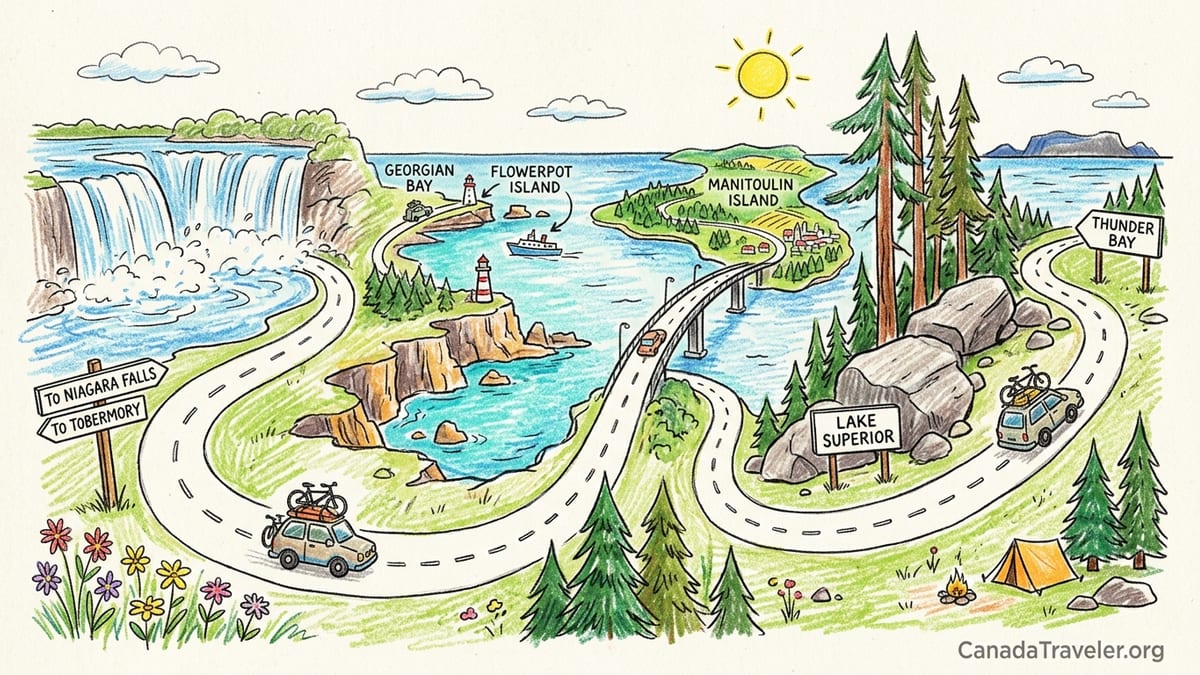
Planning a Great Lakes trip in Ontario starts with an honest look at what you want most: iconic sights, beaches, small towns, wilderness or a bit of everything. The good news is that you can combine several lake regions in a single loop, especially if you are starting from Toronto or another southern Ontario hub. With a week, many visitors pair Niagara and Lake Ontario with Bruce Peninsula and Tobermory. With 10 to 14 days, it becomes realistic to continue through Manitoulin Island, Sault Ste. Marie and along Lake Superior’s north shore to Thunder Bay before looping back.
Driving distances are substantial. For example, Niagara Falls to Tobermory is around six hours by car with no long stops, while Sault Ste. Marie to Thunder Bay along Lake Superior typically takes seven to eight hours of driving time. Many travelers break these legs up with overnight stays in places like Owen Sound, Manitoulin Island or Wawa. These stopovers are not just rest points; they add character to the trip, whether you are walking the harbour in Little Current on Manitoulin or watching the sunset at Pancake Bay on Lake Superior.
Season matters as much as route choice. Late May through September is prime time for most destinations, with July and August offering the warmest water for swimming but also the heaviest crowds and highest accommodation prices. Shoulder seasons such as early June and mid September can bring lower room rates, easier restaurant reservations and quieter hiking trails, especially on the Bruce Peninsula and along Lake Superior. Winter has its own appeal for hardy travelers, particularly in Niagara and around Lake Superior, but requires more planning around driving conditions and limited services.
As you read through each region below, consider how much driving you enjoy in a day, whether you prefer hotels or cabins, and how flexible your schedule is. A classic pattern is to book key nights in high-demand areas such as Niagara Falls, Tobermory and popular Lake Superior communities in advance, then leave buffer days between them for spontaneous detours to smaller beach towns or provincial parks along the way.
Niagara, Niagara-on-the-Lake and Lake Ontario
Niagara Falls and the surrounding peninsula sit between Lake Ontario and Lake Erie, but most visitors experience the region through its Lake Ontario side, anchored by the city of Niagara Falls and the town of Niagara-on-the-Lake. The main attraction is obvious: the Horseshoe Falls, American Falls and Bridal Veil Falls, which collectively draw roughly a dozen million visitors each year. A typical visit includes viewing platforms on the Canadian side, a boat cruise into the mist and walks along the Niagara Parkway, where you can see the river that eventually empties into Lake Ontario near Niagara-on-the-Lake.
What makes this area more than a quick photo stop is the concentration of wineries, historic villages and lake views that unfold as you follow the Niagara Parkway north toward Lake Ontario. Niagara-on-the-Lake is known for its 19th century streets, boutique inns and theatre festival, and it pairs naturally with time in the Falls themselves. Many travelers stay one night in town to enjoy dinner and wine tastings, then one night in Niagara Falls for illuminated views of the cataract and easy access to attractions such as the Journey Behind the Falls or the White Water Walk.
For most itineraries, Niagara deserves between one and three days. A fast-paced visitor might arrive mid morning, tour the falls and main attractions, and spend the night in Niagara Falls before driving back to Toronto the next afternoon. A slower trip might add a second night in Niagara-on-the-Lake, budgeting a full day for cycling between wineries, walking the lakeshore and exploring the region’s smaller communities like Jordan Village or Port Dalhousie, which sits on Lake Ontario’s shore.
Niagara and Lake Ontario combine naturally with the rest of southern Ontario. It is realistic to start in Toronto, spend two or three days between the city and Niagara, then drive west toward the Lake Huron beach towns or north toward Collingwood and Georgian Bay on the way to the Bruce Peninsula. Spring through fall is ideal, with May and June offering blossoms in wine country, July and August providing hot weather for boat tours, and September delivering grape harvests and generally comfortable temperatures.
Bruce Peninsula, Tobermory and Georgian Bay
The Bruce Peninsula separates the main basin of Lake Huron from Georgian Bay and is a standout destination for travelers drawn to turquoise water, limestone cliffs and scenic hiking. At the tip of the peninsula, Tobermory serves as the main hub for Bruce Peninsula National Park and Fathom Five National Marine Park. These parks are famous for sights like the Grotto, a sea cave filled with clear blue water, and Flowerpot Island, where rock pillars known as “flowerpots” rise from the shoreline. Boat tours around Tobermory regularly pass over shallow, visible shipwrecks, particularly in Big Tub Harbour, which underscores why snorkelling and glass bottom cruises are so popular here.
On the lake side of the peninsula, you have two distinct coastlines: Georgian Bay to the northeast and Lake Huron to the southwest. Georgian Bay faces the open water and often feels wilder and cooler, with dramatic rock formations and rugged trails. Lake Huron’s side is more about sunsets and sandy beaches, especially at spots like Sauble Beach and the shoreline near Southampton and Port Elgin. Many visitors split their time between the two sides, hiking along the Georgian Bay side by day then settling into lakeside motels or cottages on the Lake Huron side in the evening.
To do Bruce Peninsula justice, plan at least two full days, ideally three. Reservations are essential for popular national park access points in peak season, particularly timed parking at the Grotto and campsites at Cyprus Lake. In July and August, waterfront motels in Tobermory, small cabins and campgrounds often book out weeks in advance, while in May, June and September you may find more last minute availability and milder hiking temperatures. Families often build a long weekend around one full day in Bruce Peninsula National Park, a boat day to Flowerpot Island, and an afternoon or two on a Lake Huron beach.
Bruce Peninsula combines easily with several other Great Lakes regions. The most classic connection is the ferry from Tobermory to Manitoulin Island, which crosses the main channel between Georgian Bay and Lake Huron in about two hours and operates seasonally. Alternatively, you can drive south along Lake Huron’s shore, linking Sauble Beach and Kincardine with towns such as Goderich and Grand Bend, before continuing toward Windsor or back to Toronto.
Manitoulin Island, North Channel and Lake Huron Beach Towns
Manitoulin Island sits in Lake Huron and is recognized as the world’s largest freshwater island. Its south shore faces the open lake while its north shore looks toward the North Channel and Georgian Bay. The island’s appeal lies in its blend of Indigenous culture, quiet farms, inland lakes and shoreline scenery. Many visitors begin in South Baymouth, where the seasonal ferry arrives from Tobermory, then drive north to Little Current, the island’s largest town, crossing a swing bridge that connects Manitoulin to the mainland at Espanola.
Realistically, Manitoulin deserves at least two nights, particularly if you want to hike the Cup and Saucer Trail for panoramic views, visit communities such as M’Chigeeng and Wiikwemkoong, or spend a half day paddling on Lake Manitou or Kagawong’s Bridal Veil Falls area. Accommodation options range from waterfront motels and lodges to cottage rentals and small campgrounds. Prices are often more moderate than in heavily touristed areas like Niagara or central Muskoka, though peak summer weekends can still be busy, especially around major holidays or festivals.
South of Manitoulin and the Bruce Peninsula, Lake Huron’s eastern shoreline is lined with classic Ontario beach towns that work well as relaxed multi night bases. Places such as Sauble Beach, Southampton, Port Elgin, Kincardine, Goderich and Grand Bend offer long sand beaches, family friendly shallow water and summer town centres with ice cream shops, small patios and seasonal live music. Many Toronto area families return to the same rented cottage or campground here year after year, treating beach days and evening sunsets over Lake Huron as a simple, low key tradition.
In terms of combinations, Manitoulin is a natural link between the Bruce Peninsula and Sault Ste. Marie. A common route is to take the ferry from Tobermory to South Baymouth, spend two or three days touring Manitoulin, then continue north across the bridge at Little Current and west along Highway 17 toward the “Soo.” Beach town stays along Lake Huron can be slotted in either before you drive up the Bruce Peninsula, on the way back from Manitoulin, or as a separate long weekend. Late June through early September is the strongest window, though early autumn can be beautiful for hiking and quieter country roads.
Sault Ste. Marie and the Gateway to Lake Superior
Sault Ste. Marie sits where Lake Superior, Lake Huron and the St. Marys River meet, forming a gateway city between cottage country to the south and the wilder stretches of northern Lake Superior. On the Canadian side, Sault Ste. Marie combines working port infrastructure with a compact downtown and riverfront walking areas. It also serves as a starting point for exploring Algoma’s inland lakes, waterfalls and forests, or as the first major stop on a drive from southern Ontario to Thunder Bay.
Visitors often spend one or two nights in Sault Ste. Marie to break up the drive and sample local attractions. Typical activities include checking out the historic locks and waterfront, visiting local museums that detail the region’s role in shipping and rail, or taking day trips north to viewpoints such as Chippewa Falls or Pancake Bay on Lake Superior. Accommodation ranges from familiar hotel chains along the highway to waterfront hotels that look over the river and locks. Prices vary by season, with peak summer and major event weekends commanding higher nightly rates.
From a routing standpoint, the city is the obvious hinge between Lake Huron and Lake Superior itineraries. Arriving from Manitoulin or Sudbury, you can stock up on groceries, fuel and outdoor gear in Sault Ste. Marie before tackling the less populated Lake Superior shoreline. Many road trippers time their departure so they can reach Lake Superior Provincial Park by late morning or early afternoon, leaving time for hikes such as the Sand River or a swim at Katherine Cove. Others continue further to Wawa or Marathon for overnight stays that place them partway to Thunder Bay.
The best time to base in Sault Ste. Marie is late spring to early fall, especially from June to September when Highway 17 is usually clear of snow and most seasonal businesses are open along the route to Lake Superior. In shoulder months such as May and October, you may encounter cooler temperatures and some closed campgrounds or lodges, but you gain quieter trails and a better chance of autumn colour displays. Winter visits are certainly possible, especially for snowmobilers and skiers, but they require a thicker layer of planning around road conditions and reduced daylight.
Lake Superior’s North Shore and Thunder Bay
North and west of Sault Ste. Marie, Highway 17 traces one of the most scenic stretches of road in Canada along Lake Superior’s north shore. Here the lake feels oceanic in scale, with steep rock headlands, sheltered coves and long lonely beaches where you may share the sand with only a few other travelers. Lake Superior Provincial Park, Pukaskwa National Park and various smaller provincial parks offer trails ranging from quick lookouts to multi day backpacking routes. Popular roadside stops include Pancake Bay, Old Woman Bay and Katherine Cove, where you can pull off for short hikes or picnics with expansive lake views.
The farther you travel along this shoreline, the more you feel the remoteness. Towns such as Wawa, Marathon, Terrace Bay and Nipigon provide fuel, groceries and small hotels or motels, but the distance between them can be substantial. Many travelers aim for two to four nights somewhere along Lake Superior, stacking day hikes, beach walks and scenic drives. For example, a common pattern is to spend one night near Lake Superior Provincial Park, another around Wawa or Marathon, then two or three nights in or near Thunder Bay. Each overnight position gives you a different set of day trip options, from waterfalls to canyon viewpoints.
Thunder Bay, near the western edge of Lake Superior in Ontario, is the largest urban centre on this route and a practical base for exploring the region. From the city, many visitors head to Sleeping Giant Provincial Park for its signature cliff top hike, or to Kakabeka Falls, a powerful waterfall west of town with well developed viewing platforms. Thunder Bay itself offers a waterfront district with restaurants and patios overlooking the harbour, as well as local markets and brewpubs that give a sense of life in northwestern Ontario. Accommodation runs from business hotels to lakeside lodges outside the city, and prices are often more moderate than in Ontario’s southern resort regions.
In terms of timing, late June through early September offers the most reliable combination of open facilities and comfortable temperatures for swimming or paddling, although Lake Superior’s water remains cool even in midsummer. Black flies and mosquitoes can be significant in early summer, particularly on forested trails and at campsites, while September and early October often bring clearer air, fewer insects and striking autumn colours along the shore. This stretch combines best with Sault Ste. Marie, Manitoulin Island and the Bruce Peninsula on a multi week loop, though determined drivers occasionally tackle the entire run between Sault Ste. Marie and Thunder Bay in a single long day.
Point Pelee, Pelee Island and Canada’s Southernmost Shores
At the opposite end of the province from Thunder Bay, Point Pelee and Pelee Island offer a very different Great Lakes experience. Both sit in Lake Erie, southwest of the main Lake Ontario and Lake Huron routes, and are known for their mild climate, bird migrations and agricultural landscapes. Point Pelee National Park is built around a narrow peninsula that extends into Lake Erie, culminating in a sandy tip that marks one of the southernmost points in mainland Canada. Boardwalks and trails thread through marshes and forests, making the park famous among birders, especially during spring and fall migrations when warblers and other species funnel through in large numbers.
Pelee Island lies further offshore and is reached by seasonal ferries from mainland ports in Ontario. The island has a laid back, rural character, with vineyards, small beaches and quiet roads favored by cyclists. Travelers commonly bring their bikes or rent them on the island, spending a day riding between the ferry dock, lighthouse areas and picnic spots. Accommodation options range from small inns and cottage rentals to basic campgrounds, and services are more limited than in larger resort areas. For many, that simplicity is part of the appeal.
Point Pelee and Pelee Island work well as a two to three day add on to a Southwest Ontario trip, especially for visitors already heading toward Windsor, Detroit or the Lake Huron beach towns. Some combine a day at Point Pelee with an overnight in nearby communities such as Leamington or Kingsville, then continue north toward Grand Bend or east toward Niagara. While these destinations sit on Lake Erie rather than the other Great Lakes featured in this article, they round out an Ontario itinerary by showing a different side of the region’s lakes: marshlands, migration routes and relatively warm shallow waters compared with the cooler expanses of Lake Superior.
Spring and fall stand out as the best seasons here, driven largely by bird migrations and comfortable hiking temperatures. Summer can be pleasant for beach time and cycling, though it may feel hot and humid on still days and some trails can be busy on weekends. Winter visits are quieter and can be atmospheric in their own way, but services and ferry schedules are more limited, so travelers need to check operating dates and plan carefully around weather and access.
The Takeaway
Ontario’s Great Lakes regions reward travelers who think in terms of landscapes and linkable hubs rather than isolated towns. Niagara and Lake Ontario deliver iconic waterfalls, wine country and easy urban access. The Bruce Peninsula and Tobermory showcase the drama of Georgian Bay and Lake Huron’s cliffs and coves. Manitoulin Island and the Lake Huron beach towns offer a slower rhythm, Indigenous culture and long sunsets. Sault Ste. Marie, Lake Superior’s north shore and Thunder Bay provide some of the wildest, most scenic driving in the province. Point Pelee and Pelee Island then add a surprisingly southern, migratory twist to the story.
With roughly a week, you might pair Niagara, Bruce Peninsula and a Lake Huron beach town for a classic southern loop. With 10 to 14 days, you can extend through Manitoulin and Sault Ste. Marie to Lake Superior and Thunder Bay, or instead swing southwest to Point Pelee and Pelee Island. Whatever combination you choose, building your itinerary around these core regions keeps driving purposeful, balances popular highlights with quieter stretches, and allows each lake’s character to shine through in a way that a rushed checklist of waterfront towns never can.
FAQ
Q1. How many days do I need for a Great Lakes road trip in Ontario?
Most travelers are satisfied with 7 to 10 days, which allows time for Niagara, the Bruce Peninsula and either Manitoulin or a segment of Lake Superior. With 14 days or more, you can comfortably include Manitoulin, Sault Ste. Marie, substantial time along Lake Superior’s north shore and either Point Pelee or additional Lake Huron beach towns.
Q2. What is the best season to visit Bruce Peninsula and Tobermory?
Late June to early September offers the warmest water and the most reliable weather, but it is also the busiest time. Early June and mid to late September can be excellent for hiking and photography with fewer crowds, though some services and boat tours may run less frequently outside peak summer.
Q3. Is the ferry between Tobermory and Manitoulin Island essential for my route?
The ferry is not essential but it is very convenient for linking the Bruce Peninsula with Manitoulin and onward to Sault Ste. Marie. It saves you from driving all the way back south and around Georgian Bay. However, it operates seasonally and reservations for vehicles are strongly recommended in summer, so if space is not available you can still reach Manitoulin by road via Sudbury.
Q4. Can I swim in Lake Superior, or is it too cold?
You can swim in Lake Superior, especially in sheltered bays and on hot July and August days, but the water is noticeably colder than in Lakes Huron, Erie or Ontario. Many visitors opt for quick dips rather than long swims, and families with small children often choose warmer inland lakes or Lake Huron beaches for extended water time.
Q5. Are the Lake Huron beach towns suitable for families with young children?
Yes, towns such as Sauble Beach, Southampton, Port Elgin, Goderich and Grand Bend are very popular with families. They typically offer shallow entry beaches, lifeguards in peak season at main sections, playgrounds, ice cream shops and casual restaurants. Summer weekends can be busy, so booking accommodation well in advance is wise.
Q6. How challenging is the driving between Sault Ste. Marie and Thunder Bay?
The route is paved and well maintained, but it is a long, curving highway with limited services in some stretches. The scenery is superb, and many travelers break the journey into two or more days to allow for stops at parks and viewpoints. In summer, the main concerns are fatigue and wildlife on the roadside, while in late fall, winter and early spring snow and ice can significantly affect conditions.
Q7. Is Niagara Falls worth visiting if I have already seen other large waterfalls?
Yes, primarily because of the scale of water flow, the accessibility of multiple viewpoints, and the way Niagara pairs with nearby attractions. Even travelers who have seen tall alpine waterfalls often find the sheer volume and proximity of the Horseshoe Falls impressive. Combining the falls with Niagara-on-the-Lake’s wineries and Lake Ontario shoreline makes it more than a single sight stop.
Q8. Do I need a car to enjoy these Great Lakes regions?
A car is strongly recommended for most of the destinations described, especially the Bruce Peninsula, Manitoulin, Lake Huron beach towns and Lake Superior’s north shore. Public transit options between small communities are limited, and many of the best viewpoints and trailheads are not served by buses. For Niagara, it is possible to combine trains, buses and local shuttles, but a car still adds flexibility.
Q9. How far in advance should I book accommodation in peak season?
For July and August stays in high demand areas such as Tobermory, Manitoulin, popular Lake Huron beaches and Lake Superior hotspots, booking several months ahead is prudent, especially for waterfront cabins or campgrounds. Niagara hotels can sometimes be found closer to arrival, but rooms with falls views or during major events often sell out or increase in price well in advance.
Q10. Can I reasonably combine Point Pelee with a Lake Superior trip?
It is possible but it requires additional driving time because Point Pelee and Pelee Island sit on Lake Erie in southwestern Ontario, far from Lake Superior. Many travelers instead combine Point Pelee with Lake Huron beach towns or Niagara on a dedicated southern Ontario loop, and then plan a separate trip for Lake Superior and Thunder Bay to avoid spending too much of their holiday in the car.