


The Canadian side of the Great Lakes holds some of the country’s most dramatic national parks and marine conservation areas, from the cliffs of Georgian Bay to the wild shores of Lake Superior and the bird-filled marshes of Lake Erie. Yet these protected areas are very different travel experiences. Some are easy weekend getaways with boardwalk trails and serviced campgrounds. Others demand serious planning, backcountry skills and a long drive into northern Ontario. This guide compares the major Parks Canada destinations directly tied to the Great Lakes and helps you decide which park fits your next Lake Superior, Georgian Bay, Lake Huron or Lake Erie itinerary.
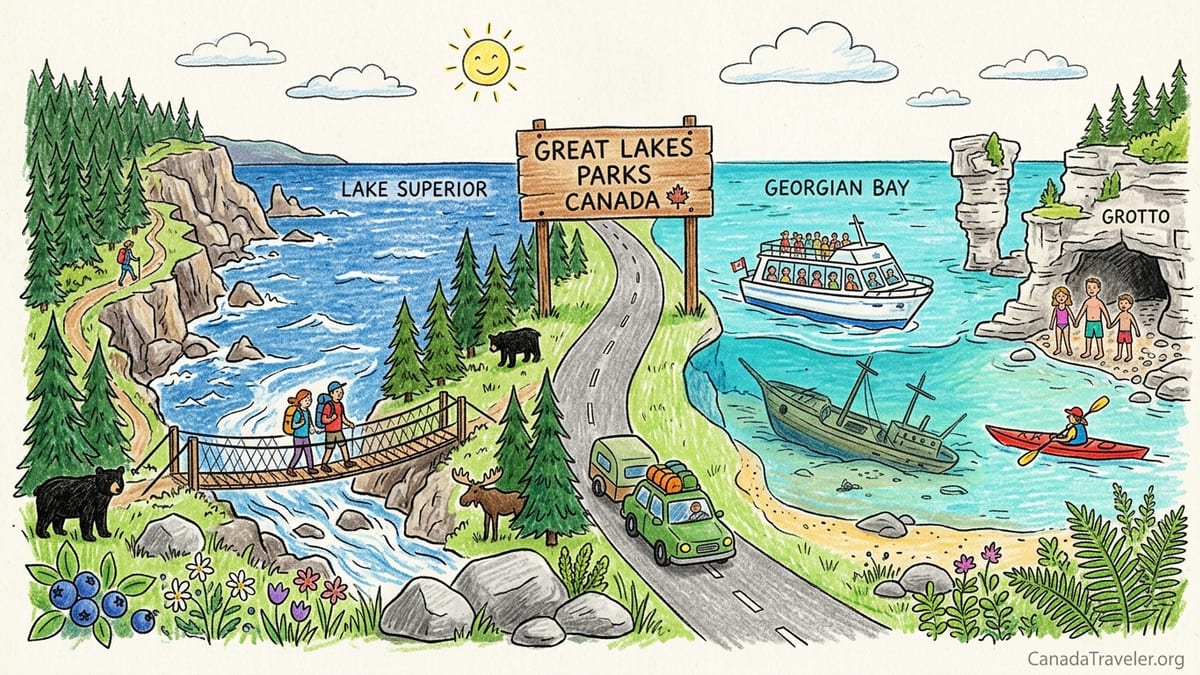
Understanding Canada’s Great Lakes National Parks
When Canadians talk about Great Lakes parks, they usually mean a mix of inland national parks and national marine conservation areas. In Ontario, the core Parks Canada destinations that directly touch the Great Lakes are Bruce Peninsula National Park and Fathom Five National Marine Park on Georgian Bay and Lake Huron, Georgian Bay Islands National Park in the Thirty Thousand Islands, Pukaskwa National Park and the Lake Superior National Marine Conservation Area on Lake Superior, and Point Pelee National Park jutting into Lake Erie. All are within a two day drive of major US border crossings, but they offer very different levels of remoteness and infrastructure.
Most visitors experience these parks as part of a broader road trip. Travelers from Detroit and Ohio often combine Point Pelee with wine touring in Essex County and city time in Windsor. Those driving up from Michigan or Minnesota may loop around Lake Superior, stopping at Pukaskwa and viewpoints along Highway 17. Southern Ontario residents frequently plan long weekends in Tobermory for Bruce Peninsula and Fathom Five, or island-hopping trips to Georgian Bay Islands from Honey Harbour. Thinking about your wider route and how much driving you are comfortable with is the first step in choosing where to go.
Another key difference is management style. National parks like Bruce Peninsula, Georgian Bay Islands and Pukaskwa have defined campgrounds, trail systems and usually controlled vehicle access. National marine conservation areas such as Fathom Five and Lake Superior NMCA focus more on water-based recreation and underwater heritage, so you will rely heavily on boat tours, kayaks or private vessels to see the highlights. For many travelers, that means factoring in the cost and logistics of boat cruises, water taxis or gear rentals alongside park entry fees.
Hiking: From Boardwalk Strolls to Remote Coastal Trails
If hiking is your main reason to visit, the parks divide cleanly between family-friendly day hikes and serious coastal treks. Bruce Peninsula National Park offers some of the most famous short hikes in Ontario, especially the trail to the Grotto and Indian Head Cove on the Niagara Escarpment. Many visitors base themselves at the Cyprus Lake Campground and walk the 30 to 45 minute trail to the turquoise bay, then continue along the Bruce Trail on exposed limestone ledges for cliff-top views of Georgian Bay. Trails are well marked but busy in summer, and sections of the escarpment can be slick when wet.
Pukaskwa National Park is at the opposite end of the spectrum. It has several short trails near Hattie Cove, including the popular White River Suspension Bridge hike, which many visitors complete as a moderate half or full day. Beyond that, Pukaskwa’s signature experience is the roughly 60 kilometre Coastal Hiking Trail along Lake Superior, a multi day backcountry route that demands solid navigation skills, river crossings and readiness for quickly changing weather. Hikers commonly spend four to seven days on the trail, using coastal campsites reached only on foot or by boat. It is comparable in commitment to well known wilderness routes in Western Canada, but with far fewer people.
Point Pelee National Park is almost the opposite of Pukaskwa. Its terrain is flat and low, and the most popular walks are short boardwalks and paths through marsh and Carolinian forest. Many families and older travelers come specifically because they can experience a national park landscape without steep climbs. The Marsh Boardwalk, the DeLaurier Trail and the short walk to the Tip, where Lake Erie surrounds you on three sides, can each be completed in 30 to 60 minutes at a leisurely pace.
Georgian Bay Islands National Park offers a middle ground. Most visitors head to Beausoleil Island by boat and then walk a network of forest and shoreline trails ranging from easy hour long loops to moderate half day hikes over Canadian Shield granite. Trails here feel more like classic cottage country than raw wilderness, and you can comfortably combine walks with swimming spots and picnic areas. On Fathom Five and within Lake Superior NMCA, hiking is more limited because these are water focused areas, though you will find short trails on islands such as Flowerpot Island in Fathom Five that link the dock to viewpoints and rock formations.
Camping and Lodging: How Much Comfort Do You Need?
Camping options vary from serviced car campgrounds to completely undeveloped backcountry sites. Bruce Peninsula National Park’s Cyprus Lake Campground is one of the busiest in the national system during July and August, and sites often book up the day they are released for peak summer weekends. Campsites are drive in and suitable for family tents or small trailers, with washrooms, potable water taps and easy access to the Grotto trail. If you prefer a roof, nearby Tobermory offers motels, cottage rentals and small inns, which many visitors use instead of camping.
Pukaskwa has a single frontcountry campground at Hattie Cove, with drive in sites, basic services and lake access. Even in mid summer, it is usually quieter than Bruce Peninsula, though long weekends still see high demand and reservations are recommended. The real draw, however, is Pukaskwa’s backcountry. Coastal campsites along the hiking trail or paddling route are bare rock or sand clearings with minimal facilities, typically just a cleared tent pad area, a fire ring and a food hang or bear proof storage. You must be completely self sufficient and prepared for cold water, wind and rain even in July.
Georgian Bay Islands National Park is unusual because it has both traditional campsites and more comfortable roofed options. On Beausoleil Island, Parks Canada operates oTENTik tents and cabins that appeal to travelers who like the idea of sleeping on an island but do not want to carry all their gear by canoe. You can bring your own tent and use more rustic sites, or pay a premium for furnished, platform style accommodations with mattresses and basic furniture. Most visitors either arrive with their own boat or use a seasonal water taxi service from Honey Harbour, then push luggage in provided carts along the island trails.
Point Pelee does not have a large traditional campground, but it does offer oTENTik units that can be reserved in advance near the visitor services area. Many visitors instead stay in hotels or rental cottages in nearby Leamington or Kingsville and treat the park as a day trip, especially during spring bird migration when early morning access is valuable. In Fathom Five and Lake Superior NMCA, camping is largely backcountry on islands or remote mainland shoreline, reached by private boat, multi day paddling trips or shuttles. You should not expect amenities beyond tent sites and basic privies, and you need to be comfortable with exposed coastlines and cold water conditions.
On the Water: Kayaking, Boat Access and Shipwrecks
For paddlers and anyone who loves being on the water, the Great Lakes parks offer some of the most memorable kayaking and boating in Eastern Canada. Fathom Five National Marine Park is the best choice if you want to see historic shipwrecks without being a diver. The clear waters around Tobermory reveal dozens of wrecks from the age of wooden schooners and steamships, and glass bottom boat tours departing the harbour regularly during the main season allow visitors to look directly down on well preserved hulls such as the Sweepstakes in Big Tub Harbour. Many travelers book a combined shipwreck and Flowerpot Island cruise, then spend several hours walking the island trails and shoreline.
Sea kayaking in Fathom Five and nearby islands can be spectacular, but conditions change quickly. Even in midsummer, paddlers planning to explore the outer islands or cross open stretches of Georgian Bay typically use sea kayaks with spray skirts, cold water gear and navigation skills, and they pay close attention to marine forecasts. A more relaxed way to experience the water is to rent sit on top kayaks or canoes from outfitters around Tobermory and stick to the shelter of Little Tub and Big Tub harbours or the calmer shorelines near town.
On Lake Superior, the Lake Superior National Marine Conservation Area and Pukaskwa’s coastal zone are world class destinations for experienced sea kayakers. Multi day trips follow an intricate shoreline of headlands, cobble beaches and pocket coves, often camping on remote beaches with nobody else in sight. Many paddlers either arrange shuttles with local outfitters or stage vehicles along the Trans Canada Highway to allow one way journeys. However, Lake Superior is notorious for cold water and sudden weather changes, so outfitters and local authorities strongly encourage only skilled paddlers with rescue training and appropriate gear to attempt exposed crossings or long trips.
Georgian Bay Islands National Park is more forgiving for casual kayakers. The islands sit in relatively sheltered waters compared with the open lake, and many cottagers and weekend visitors use recreational kayaks or small motorboats to hop between coves and picnic areas. If you do not have your own boat, commercial water taxis from Honey Harbour make it easy to reach Beausoleil Island as a pedestrian with day packs or rolling coolers. Point Pelee, by contrast, is not a paddling destination on the same level as Lake Superior or Georgian Bay, but visitors can rent canoes or kayaks seasonally to explore the inland marsh channels, often combining a gentle paddle with birdwatching.
Beaches, Wildlife and Seasonal Highlights
Despite sharing the same Great Lakes, these parks offer very different beach and wildlife experiences. Bruce Peninsula’s coastline is dominated by rocky shelves and small cobble bays rather than broad sand beaches. The iconic Grotto area features deep, clear water over limestone ledges, which looks tropical in photos but is usually cold enough that many swimmers wear wetsuits for longer dips even in August. Families often seek out smaller, more protected spots on the Lake Huron side of the peninsula for warmer water and sandier entries.
Pukaskwa and the Lake Superior coast offer some of the most beautiful but also most rugged beaches in Ontario. Long arcs of golden sand are backed by boreal forest and bedrock headlands, but water temperatures stay cold throughout summer and waves can be strong. Many visitors enjoy walking and photography more than swimming, treating the beaches as dramatic viewpoints and resting places on hikes or paddling trips. Wildlife sightings in this region often include black bears, moose and woodland caribou sign, and Parks Canada emphasizes strict food storage rules in both frontcountry and backcountry areas.
Point Pelee offers the most accessible combination of warm water beaches and wildlife viewing. Sand and pebble beaches on both the east and west sides of the point provide relatively gentle entries into Lake Erie, where summer water temperatures are considerably higher than in Lake Superior. The park is world renowned for bird migration, particularly in May when warblers, thrushes and other songbirds concentrate in the small forested point before crossing the lake. Birding festivals and early morning shuttles make this one of the busiest and most festive times to visit. In autumn, monarch butterflies gather in large numbers before flying south, creating another seasonal highlight.
At Georgian Bay Islands and Fathom Five, wildlife viewing is more subtle and often focused on reptiles, amphibians and shoreline birds in a classic Canadian Shield landscape. Visitors commonly see loons, mergansers and herons, along with turtles basking on logs and occasional rattlesnakes in rocky clearings on Beausoleil Island. Because these parks sit in a transition zone between southern and northern ecosystems, they support a mix of species, from mature hardwood forests in some areas to windswept pines leaning over granite slabs in others. For many travelers, the combination of sculpted rock, blue water and twisted pines is the iconic Georgian Bay scene.
Reservations, Access and Ease of Getting Around
Practical logistics can matter as much as scenery when you are choosing a park. Bruce Peninsula National Park and Fathom Five are among the most tightly managed for parking and day use because of their popularity. In peak season, visitors heading to the Grotto area at Bruce Peninsula must reserve a parking time slot in advance for the Cyprus Lake access lot. Day users without reservations are often turned away when the park reaches capacity. Similarly, commercial boat cruises in Fathom Five can sell out on busy weekends, so travelers planning to see shipwrecks or visit Flowerpot Island are wise to book seats several days ahead.
Georgian Bay Islands National Park also requires more planning than a typical drive in park because access is by water only. If you do not have your own boat, you must time your arrival to match the schedule of the private water taxi operators that shuttle visitors from Honey Harbour to Beausoleil Island. Campsites, oTENTik units and cabins all require reservations, and you need to be comfortable loading gear on and off boats. Once you are on the island, however, getting around is straightforward on foot via signed trails and gravel roads.
Pukaskwa is remote but simpler in terms of day to day logistics. The park is reached by Highway 627 off the Trans Canada Highway near Marathon, and most visitors simply drive into Hattie Cove, check in at the kiosk and set up at the frontcountry campground or head to day use areas. Backcountry hiking and paddling, on the other hand, require advance permits and careful planning. You must register your itinerary, carry appropriate maps and be prepared for self rescue, since there are few exit points along the coast and no road network paralleling the trail. Some paddlers arrange private shuttles or use two vehicles to manage one way routes.
Point Pelee is by far the easiest park to visit on short notice. It lies on a short spur road south of Leamington, and day use visitors can usually drive directly to the main parking areas, then use a shuttle to reach the Tip if they prefer not to walk. During peak bird migration in May, some services operate on special schedules and parking lots fill early, but the overall experience is closer to visiting an urban nature reserve than a remote wilderness park. Hotel and rental options in nearby communities give travelers flexibility to adjust their plans based on weather.
Matching Parks to Your Great Lake and Travel Style
Choosing among these parks often comes down to which Great Lake you want to focus on and how much adventure you are seeking. For a Lake Superior trip, Pukaskwa National Park and the Lake Superior National Marine Conservation Area represent the wild, sparsely populated north shore. You might plan a route that combines Pukaskwa’s Hattie Cove campground and short hikes with a day of exploring viewpoints along Highway 17, then perhaps a guided day paddle on a sheltered section of the marine conservation area. This kind of itinerary suits travelers comfortable with longer drives, minimal services and cooler weather, even in midsummer.
For Georgian Bay and Lake Huron, Bruce Peninsula, Fathom Five and Georgian Bay Islands can form a multi stop circuit. One common pattern is to spend two or three nights in Tobermory or Cyprus Lake exploring the Grotto, cliff top sections of the Bruce Trail and glass bottom boat tours in Fathom Five, then drive south and east to Honey Harbour for a couple of nights on Beausoleil Island. This combination offers a blend of dramatic cliffs, shipwrecks, island hikes and sheltered bays, and it works well for active families who want a sense of adventure without committing to remote backcountry travel.
Travelers focused on Lake Erie or those with only a long weekend often gravitate to Point Pelee. Because it is close to major highways and border crossings, it fits easily into short getaways, including cross border trips that combine US attractions in Ohio or Michigan with a quick foray into Canada. It is also the most accessible park for visitors with limited mobility or young children, thanks to flat trails, boardwalks, shuttles and plentiful nearby accommodation. If swimming and warm weather beach days are priorities, Point Pelee offers more comfortable water temperatures than the northern Great Lakes.
Another factor is how much structure you want in your days. Bruce Peninsula, Point Pelee and Beausoleil Island all lend themselves to flexible, pick and choose itineraries where you can decide each morning whether to hike, swim or simply relax by the water. Pukaskwa and the Lake Superior NMCA, by contrast, reward travelers who enjoy planning multi day routes and are comfortable committing to a schedule because of backcountry permits, shuttles and weather windows. Being honest about your experience level and tolerance for uncertainty will help you choose a park that feels challenging in a rewarding way rather than stressful.
The Takeaway
Canada’s Great Lakes national parks and marine conservation areas span a remarkable range of landscapes, from the limestone cliffs and shipwrecks of Georgian Bay to the wild beaches of Lake Superior and the warm shallows of Lake Erie. There is no single best park, only the one that matches your lake of choice, time frame and comfort with wilderness conditions. Bruce Peninsula and Fathom Five deliver iconic views and easy access to shipwrecks and cliffs, but they require careful reservation planning in peak season. Georgian Bay Islands offers a softer island experience with a mix of camping and roofed stays, while Pukaskwa and Lake Superior NMCA cater to experienced hikers and paddlers seeking solitude.
Point Pelee rounds out the picture as an accessible, bird rich park where boardwalks, shuttles and nearby towns make logistics simple. Together, these destinations form a network of gateways into the Great Lakes, each revealing a different side of the inland seas that define central North America. By weighing your priorities for hiking, camping, kayaking, beaches, wildlife and ease of access, you can build a Great Lakes itinerary that feels both memorable and realistic. Whether you are watching the sun set over a Georgian Bay island, crossing a suspension bridge high above a Lake Superior river or listening to warblers in a Lake Erie marsh, these parks make the scale and diversity of the Great Lakes feel very real.
FAQ
Q1. Do I need parking reservations for Bruce Peninsula National Park?
Yes, in peak season visitors who want to access the Grotto and Cyprus Lake area must reserve a timed parking slot, and day users without reservations are often turned away once lots are full.
Q2. Can I visit Fathom Five National Marine Park without a boat?
Yes, most visitors join commercial glass bottom boat cruises from Tobermory to see shipwrecks and Flowerpot Island, so you do not need your own boat, but advance booking is recommended on busy summer weekends.
Q3. How remote is Pukaskwa National Park for first time visitors?
Pukaskwa’s Hattie Cove campground and short day hikes are straightforward to access by car, but the coastal backcountry feels very remote, with limited exit points and few other people on the trail compared with more southern parks.
Q4. Do I need to reserve camping at Georgian Bay Islands National Park?
Yes, both tent sites and roofed accommodations on Beausoleil Island are reservable, and because access is by water taxi or private boat, you should book your site and confirm transport times before traveling.
Q5. Is Lake Superior too cold for swimming in these parks?
Many visitors find Lake Superior cold even in midsummer and choose brief dips or simply enjoy the beaches for walking and photography, while those seeking warmer swimming often prefer Point Pelee on Lake Erie or sheltered Lake Huron bays.
Q6. Are there beginner friendly kayaking options in these parks?
Yes, sheltered areas such as the marsh channels at Point Pelee, harbour waters near Tobermory and some bays around Beausoleil Island offer calmer conditions, while exposed sections of Lake Superior and outer Georgian Bay islands are better suited to experienced sea kayakers.
Q7. Can I camp on islands in Fathom Five or Lake Superior National Marine Conservation Area?
Backcountry island camping is possible but requires a boat or charter, permits and a willingness to manage your own safety in exposed conditions, so it is generally recommended for experienced paddlers or boaters rather than first time visitors.
Q8. Which park is best for a short family trip with young kids?
Point Pelee and Georgian Bay Islands are strong options for families, offering short, flat trails, warm season beaches or sheltered coves, and relatively easy access to services and accommodation nearby.
Q9. When is the best time to visit for wildlife and fewer crowds?
Shoulder seasons in late May to June and September offer good wildlife viewing and generally fewer visitors than peak summer, though specific events like spring bird migration at Point Pelee can be very busy despite being outside school holidays.
Q10. How far in advance should I book camping or oTENTik units?
For popular summer weekends at Bruce Peninsula, Georgian Bay Islands and Point Pelee, many travelers reserve as soon as the national reservation system opens for the season, while Pukaskwa and backcountry sites on Lake Superior often have more availability but still benefit from booking several months ahead.