


Crossing Canada by train is one of the world’s great overland journeys. VIA Rail’s long-distance routes link Toronto, Vancouver and the Canadian Rockies with classic stainless-steel coaches, sleeper cabins and dome cars that feel like a rolling time capsule. It is slower than flying and often not cheaper, but for many travelers the reward is days of uninterrupted scenery, unhurried meals and the chance to watch the country change outside your window.
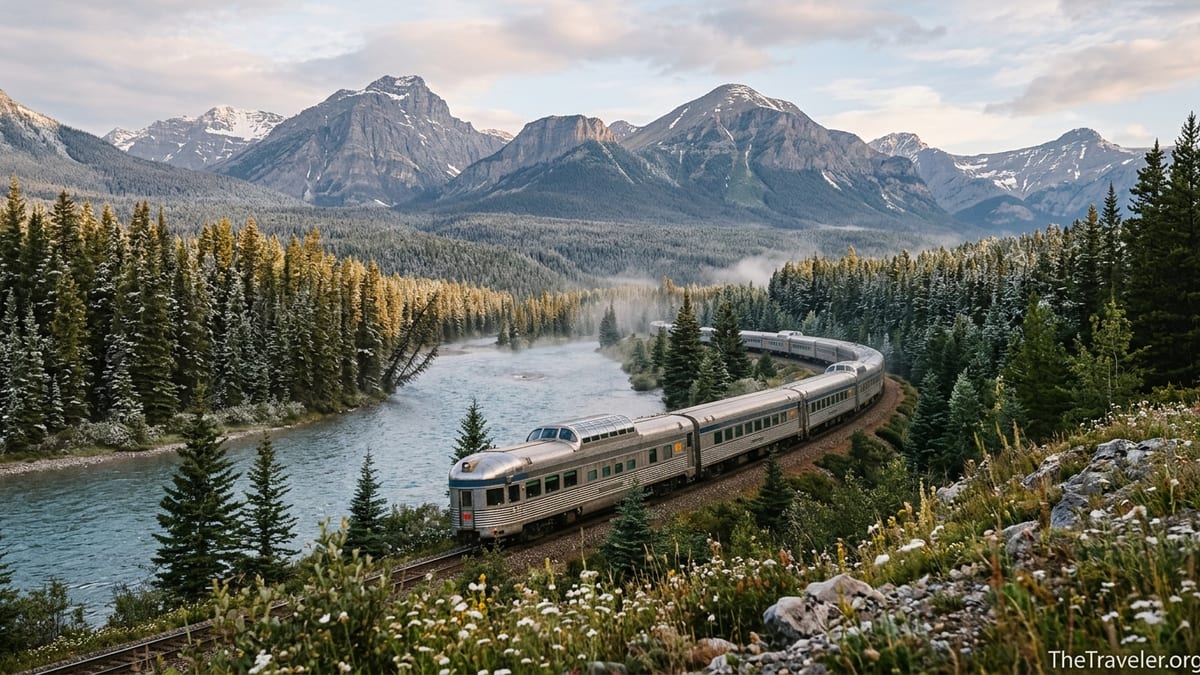
Key VIA Rail Routes for Long-Distance Travelers
For most international visitors, Canada by train begins with three core VIA Rail routes. The flagship is The Canadian, running between Toronto and Vancouver in roughly four nights and three full days, covering about 4,466 kilometers across Ontario, the Prairies and the Rocky Mountains. It generally operates two to three times a week depending on the season, so your travel dates need to fit the schedule rather than the other way around.
On the Atlantic side, The Ocean connects Montreal and Halifax in about 23 hours, providing an overnight transcontinental flavor without the multi-day commitment. Farther west, the Jasper–Prince Rupert route links the Rockies with the Pacific coast of northern British Columbia over two daylight segments with an overnight stop in Prince George. These three are the backbone of VIA’s “long-distance and tourism” network and are where you find the classic sleeper experience.
Many travelers combine routes into cross-country itineraries. A common pattern is flying into Montreal, taking The Ocean to or from Halifax, then an economy hop or corridor train to Toronto before boarding The Canadian to Vancouver. Others connect the Toronto–Vancouver run with regional trains in the Rockies, or add a luxury trip on private operator Rocky Mountaineer between Banff or Jasper and Vancouver for a concentrated Canadian Rockies highlight.
All of these routes require more planning than a simple domestic flight. Frequencies are low and seats, especially sleeper cabins, often sell out months ahead during the May to October peak season. Before you fix your international flights, it is worth checking that your preferred train and cabin type are actually available for your dates.
Toronto to Vancouver on The Canadian: What to Expect
The Canadian is the marquee journey for travelers who want to see a cross-section of Canada at ground level. Departing from Toronto’s Union Station, the train heads north through lake country before night falls, then spends a full day crossing the rock cuts and forests of northern Ontario. Day two brings the vast, flat Prairie provinces of Manitoba and Saskatchewan, where you watch grain elevators and small towns slide by. The final daylight stretch is between Edmonton and Jasper and then into the Rockies, where the dome cars fill as the train curves along rivers and past snow-tipped peaks.
Officially, the journey takes about four nights, though delays from freight traffic and weather are common. You should treat the schedule as aspirational and avoid tight onward connections in Vancouver or Toronto. Many experienced travelers build in at least one hotel night at either end, especially in winter when snow and sub-zero temperatures can slow operations.
On board, the atmosphere is relaxed and social. Meals in Sleeper Plus and Prestige classes are served in real dining cars with white tablecloths and rotating menus that might include Alberta beef, Atlantic salmon or regional vegetarian dishes. Between meals, passengers drift between their cabins, the Skyline dome car and, for many sleeper passengers, the classic bullet-ended Park car at the rear, which has a lounge and an upper-level glass dome for 360-degree views.
One practical consideration is motion and noise. Tracks are used primarily by freight trains, and the ride is not as smooth as high-speed rail in Europe or Asia. Earplugs, comfortable clothing and flexible expectations help. Most travelers find that the scenery, train ambience and the novelty of waking up in a different landscape outweigh the occasional overnight jolts.
Sleeper Cabins and Onboard Comfort
VIA Rail offers three broad classes on The Canadian: Economy, Sleeper Plus and Prestige. Economy provides a reclining seat, access to a limited snack and lounge area, and the same scenery, but no included meals and no shower access. It is the budget way to ride and can work for a single overnight leg, but for the full Toronto–Vancouver run most travelers find a bed and private space worth the extra cost.
Sleeper Plus is the mainstay sleeper product. It includes meals in the dining car, access to showers and shared or private accommodation depending on what you book. At the lower end are upper and lower berths in an open section, where seats convert into bunks curtained off from the corridor at night. More popular for couples and solo travelers are the enclosed “cabin for one” (often called a roomette) and “cabin for two,” which provide a sofa or seats that turn into beds, a washbasin and a toilet that folds out or shares a compartment. These cabins offer enough privacy for changing and relaxing while still feeling connected to the train.
Prestige class, available on select departures, is VIA Rail’s top tier and is priced accordingly. Cabins in Prestige are about 50 percent larger than Sleeper Plus cabins for two and come with a double bed, a private shower, larger windows, a dedicated concierge and an all-inclusive bar. Prestige guests also receive priority dining reservations and exclusive daytime access to part of the Park car. For many travelers, especially on a honeymoon or milestone trip, Prestige offers a boutique hotel on rails experience, but you pay a premium for the space and service.
Whichever class you choose, daily routines shape the trip. Attendants make up beds in the evening and convert them back in the morning. Showers in Sleeper Plus are shared but kept reasonably clean, with towels provided. Power outlets in cabins and seats allow you to charge phones and cameras, though mobile reception will be patchy for long stretches. Wi-Fi is not typically available on the remote parts of these long-distance routes, so downloading books, playlists and offline maps before departure is wise.
Ticket Prices, Seasonal Costs and How to Book
Prices for VIA Rail’s long-distance trains vary widely by season, cabin type and how early you book. For the full Toronto to Vancouver route in 2026, published starting fares for Sleeper Plus typically begin around the low four figures in Canadian dollars per person for an upper berth in low season, rising into the mid or high four figures for a cabin for two in peak summer. Prestige class can run from roughly the mid four figures into the seven-thousand-dollar range per person for the full journey, and in some cases more when demand is high or when packaged with hotels and tours.
Economy fares for the entire Toronto–Vancouver trip can be significantly lower, often in the ballpark of several hundred dollars one way in off-peak periods if you secure an advance or discounted fare. However, these cheaper tickets can come with stricter change or refund conditions. For many travelers, a good value compromise is to use Economy or business class on short corridor segments and reserve Sleeper Plus only for the long overnight portions where a bed and meals add the most comfort.
Booking is usually most cost-effective directly through VIA Rail’s official channels, either online or by phone, where you can see live fare calendars and cabin availability. Third-party agencies and rail tour companies often package VIA Rail tickets with hotels, Rocky Mountaineer segments or guided excursions, which can be convenient but may cost more than assembling the elements yourself. Because summer sleeper space can sell out months in advance, particularly in June through September, serious planners often start checking availability as soon as they know their travel year, then monitor for seat sales before committing.
If your dates are flexible, shifting your trip by a few days or choosing shoulder seasons such as May, early June or late September can trim hundreds or even thousands of dollars from the fare. It can also mean a quieter train. Winter journeys, while less popular, sometimes offer lower pricing and atmospheric scenes of snow-covered forests and frozen lakes, though daylight hours are shorter and temperatures at stops can be harsh.
VIA Rail in the Rockies vs Rocky Mountaineer
VIA Rail’s Canadian passes through the Rockies between roughly Edmonton and Kamloops, including a particularly scenic segment between Jasper and the British Columbia interior. This portion offers classic mountain views at a comparatively moderate price, especially in Sleeper Plus. By contrast, Rocky Mountaineer is a separate, privately operated luxury train running daylight-only routes such as Vancouver to Banff, Lake Louise or Jasper, with an overnight hotel stop instead of sleeping on the train.
Rocky Mountaineer packages for two-day rail journeys in 2025 and 2026 typically start in the low to mid two-thousands of Canadian dollars per person and can exceed five thousand dollars or more in their top-tier GoldLeaf service for longer itineraries. The focus there is on gourmet dining at your seat, panoramic dome windows, hotel nights in mountain towns and guided commentary. Alcoholic drinks and snacks are generally included. VIA Rail, in comparison, is more of a classic intercity service where your sleeper fare includes meals but not a guided-tour structure, and you sleep and live on the train for multiple nights.
Some travelers choose one over the other based on budget and priorities. If you want the most hours in the Rockies themselves, with big windows and a curated experience, Rocky Mountaineer is hard to beat but comes at a premium. If you want a broader cross-country narrative and are happy with comfortable but not ultra-luxury accommodation, VIA Rail’s Canadian gives you a more varied slice of Canada, including lesser-known prairie and shield landscapes, at a lower cost per day of travel.
It is also possible to combine them. One common pattern is to ride VIA Rail from Toronto to Jasper in Sleeper Plus, spend a few days exploring Jasper and Banff by road, then continue to Vancouver on Rocky Mountaineer. Travel companies in Canada build entire holiday packages around this pairing, which can help you see both the historic transcontinental train and the modern Rockies sightseeing train in a single trip.
Luggage, Practicalities and Life On Board
VIA Rail’s baggage rules on long-distance trains are friendlier than airline cabin limits, but they still have clear caps. On routes like The Canadian and The Ocean, Economy passengers typically may bring carry-on bags within a set size and weight, plus personal items, while Sleeper Plus and Prestige passengers usually have both carry-on and checked baggage options. Checked baggage is available only between stations where that service is offered, so if you board or leave at a smaller stop, you may need to keep all your possessions with you in the cabin or at your seat.
In practical terms, most sleeper passengers travel with one medium suitcase that they check and a smaller soft bag or backpack for the cabin, since interior storage space is limited. Cabins for one and two have small closets and shelves but are not designed for large hard-shell suitcases. Lockable luggage racks and under-seat spaces in shared areas help, but packing light, using soft-sided bags and organizing essentials in a daypack make cabin life more comfortable.
On board, dress code is casual. Layers are important, as interior temperatures can fluctuate slightly between cars, and you will step into very different climates at stops, from humid Toronto summers to cool mountain evenings or winter cold in the Prairies. Comfortable shoes are essential for moving between swaying cars. Plastic or reusable water bottles can be refilled on board, and bringing a small selection of snacks is allowed within reasonable limits, even if your sleeper fare includes meals.
When the train stops for longer servicing breaks in places like Winnipeg or Jasper, passengers can often step off briefly to stretch their legs and take photos. You should always listen carefully to announcements about how long the stop will last and stay close to your car, as the crew will not hold departure for missing passengers. Using a simple lanyard or zip pocket for your ticket and ID avoids frantic searches when boarding again.
Should You Take the Train or Fly Across Canada?
The decision between traveling by train or by air in Canada comes down to time, budget and appetite for the journey itself. A one-way flight between Toronto and Vancouver typically takes about five hours and, outside peak holidays, can often cost in the mid hundreds of Canadian dollars or less in economy. Even a business-class air ticket can undercut the price of a popular-season Sleeper Plus cabin on The Canadian, let alone Prestige class.
By contrast, the train takes roughly four nights and several days, with fares that can easily reach four figures or more per person for Sleeper Plus or Prestige. There is also the opportunity cost of days spent in transit. If your goal is simply to get from one city to another as efficiently as possible for a conference, family visit or onward international flight, flying is almost always the logical choice.
Where the train wins is in experience value. Instead of a day lost to airports and security lines, you gain a multi-day moving base where meals, a bed and changing scenery are part of the holiday. Travelers who cherish slow travel, photography or the romance of classic railways often consider the extra time and money as an investment in memories rather than transportation. Couples celebrating anniversaries, retirees with flexible schedules and rail enthusiasts are particularly well represented on these long-distance trains.
A hybrid strategy can work well for many visitors. You might, for example, fly from your home country to Vancouver, take The Canadian in Sleeper Plus as far as Jasper for the Rockies segment, then rent a car or join a coach tour through Banff and Calgary before flying onward. This reduces the number of nights and cost on board while still giving you a substantial train experience.
The Takeaway
Canada by train is not the fastest or cheapest way to cross the country, but it remains one of the most distinctive. VIA Rail’s long-distance routes, especially The Canadian between Toronto and Vancouver, offer a blend of mid-century rail heritage, modern comfort and broad landscapes that are hard to replicate any other way. Sleeper cabins transform transportation into temporary home, while dining cars and dome lounges turn mealtimes into social events framed by ever-changing views.
Planning around schedules, seasons and cabin types is essential, as is setting realistic expectations about delays and the level of luxury for the price paid. For many travelers, choosing Sleeper Plus represents the best balance of comfort and cost, with Prestige reserved for special occasions and Economy for shorter segments or stricter budgets. Thoughtful packing, early booking and a flexible mindset go a long way.
Ultimately, deciding between the train and a quick flight comes down to whether you see the journey as a hurdle or a highlight. For those who relish the idea of watching boreal forest give way to prairie and mountains from the same seat, waking up to new horizons each morning and meeting fellow travelers along the way, a long-distance VIA Rail trip can be the center of a Canadian itinerary, not just the link between its cities.
FAQ
Q1. How long does the VIA Rail trip from Toronto to Vancouver take?
The Canadian is scheduled for about four nights and three full days, though delays can add several hours, so avoid tight onward connections.
Q2. How much does a sleeper cabin on The Canadian usually cost?
In 2026, Sleeper Plus fares for the full Toronto–Vancouver journey often start in the low four figures in Canadian dollars per person and rise into higher four figures in peak summer, with Prestige class significantly more expensive.
Q3. Is it worth paying for Sleeper Plus instead of Economy?
For the full cross-country trip, many travelers find Sleeper Plus worth it because it includes a bed, meals and shower access, making several nights on board much more comfortable than an economy seat.
Q4. How far in advance should I book VIA Rail sleeper tickets?
For peak season between roughly May and October, booking several months ahead is wise, especially for cabins for two and Prestige, which can sell out long before departure.
Q5. Can I bring large luggage on VIA Rail’s long-distance trains?
Yes, but space in cabins is limited. Sleeper passengers can often check at least one larger suitcase between major stations and keep a smaller bag or backpack in the cabin.
Q6. Is food included in the ticket price?
Meals in the dining car are usually included for Sleeper Plus and Prestige passengers on long-distance routes, while Economy passengers buy food separately from the café or bring their own snacks.
Q7. How does VIA Rail compare with Rocky Mountaineer in the Rockies?
VIA Rail offers classic overnight trains that include the Rockies as part of a longer route, at a lower cost per day. Rocky Mountaineer is a more luxurious, daylight-only sightseeing train with hotel nights and higher prices.
Q8. Is there Wi-Fi on VIA Rail’s cross-country trains?
Wi-Fi access is limited or unavailable on much of The Canadian’s route. Travelers should plan to be offline for long stretches and download entertainment in advance.
Q9. What is the best time of year to ride The Canadian?
Summer and early autumn offer longer daylight and milder weather but higher prices and busier trains. Winter brings snow-covered landscapes and quieter departures, though with shorter days and colder conditions.
Q10. Is traveling by train across Canada safe for solo travelers?
Yes, long-distance VIA Rail services are generally considered safe for solo travelers, including solo women, especially in Sleeper Plus, where staff presence and a defined community of passengers create a comfortable environment.