


Canada is vast enough that choosing where to go can feel like planning several trips at once. In a country that stretches six time zones and covers everything from glassy skyscrapers to grizzly bear country, the real question is not whether to go, but which experiences to prioritize. This guide compares Canada’s marquee destinations to help you decide between cities and mountains, coasts and lakes, wildlife and nightlife, and what works best for couples, families and first time visitors.
How to Narrow Down Where to Go in Canada
Before you start booking flights, be honest about what you want most from this trip. If your dream is sipping cocktails on a rooftop with skyline views, your time is better spent in Toronto, Vancouver or Montreal than zigzagging between remote parks. If you are picturing turquoise lakes and elk wandering past your hotel, base yourself in the Rockies around Banff and Jasper instead of trying to do everything in ten days.
Distance is the second big filter. A flight from Toronto to Vancouver is about five hours, similar to crossing much of Europe. Trying to see both coasts plus the Rockies in one holiday often means spending more time in airports than on hiking trails or café patios. A realistic two week itinerary usually focuses on either Ontario and Quebec, the western mountains and Pacific coast, or the Atlantic provinces.
Budget matters too, because costs vary sharply by region and season. In summer 2025, an average double room in downtown Toronto has run around 250 to 300 Canadian dollars a night, with many central four star hotels pricing closer to 350 dollars or more on peak weekends. Mountain towns like Banff and Jasper can be similar or higher in July and August, while shoulder season in May, June and September often brings noticeably lower rates. National park entry fees are a modest part of the cost compared with accommodation and transport, but still worth factoring in for longer stays.
Finally, think about your travel style. Couples on a first big Canada trip often combine one major city with a mountain or coastal region. Families with school age kids tend to do better with fewer hotel changes and access to easy walking trails, playgrounds and casual food options. Solo travelers may appreciate cities with strong public transit and walkable neighborhoods such as Montreal’s Plateau or Vancouver’s West End.
City Highlights: Toronto, Vancouver, Montreal and Quebec City
If you want culture, dining and nightlife with day trips to nature, Canada’s big cities are the obvious starting point. Toronto is the country’s financial and entertainment hub, with a skyline dominated by the CN Tower and neighborhoods that feel like mini worlds: Little Italy, Greektown, Chinatown, Little India and more. A typical visitor day might start with coffee in the historic Distillery District, continue with an afternoon at the Royal Ontario Museum or Art Gallery of Ontario, and wrap up with a Blue Jays game or theater performance in the Entertainment District.
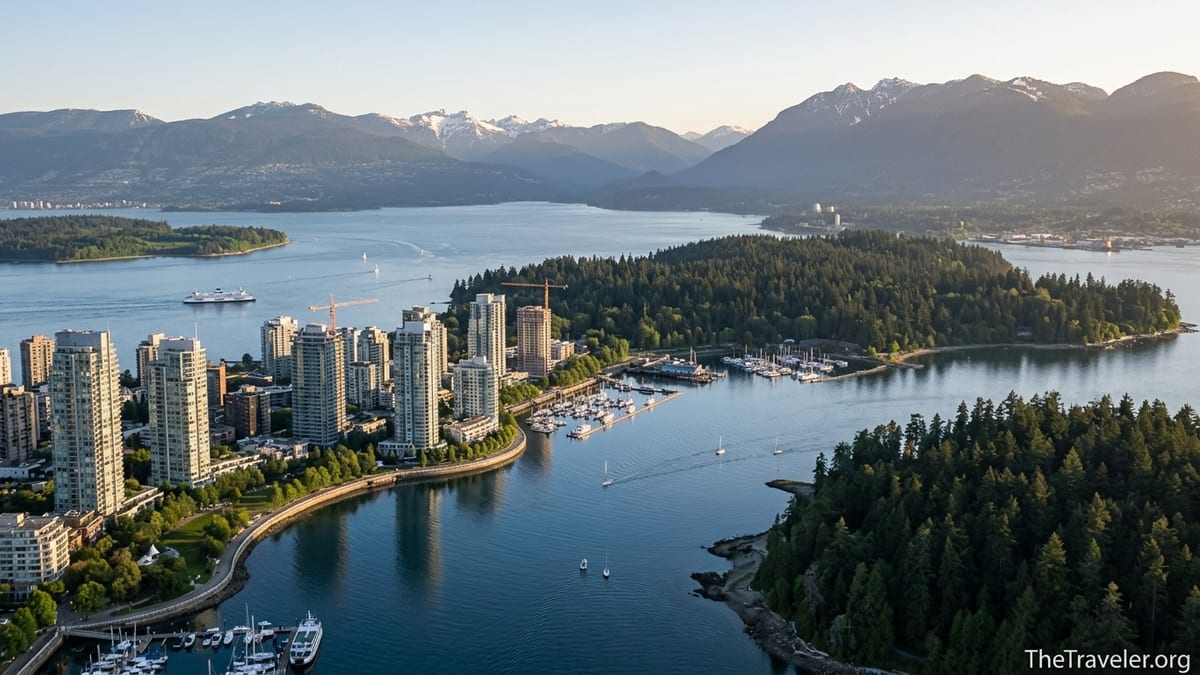
Vancouver is the choice for travelers who want a city that is welded to the outdoors. The downtown core sits on a peninsula between mountains and the Pacific, with seawall paths looping around Stanley Park and beaches at English Bay and Kitsilano. It is entirely possible to have breakfast in the city, rent a bike around the park, and be on a suspension bridge or mountain viewpoint in North Vancouver by early afternoon. The climate is milder than much of Canada, so spring and fall can still feel comfortable for hiking and patio dining, even when the Rockies are already snowy.
Montreal brings a European inflection with a North American edge. French is the main language, but you can function entirely in English in hotels, restaurants and attractions. Many visitors split their time between cobbled Old Montreal, with its historic churches and old port, and newer districts like the Plateau and Mile End where you find third wave coffee, independent boutiques and famous smoked meat and bagels. Summer is prime time, when festivals fill the calendar and outdoor terraces overflow late into the evening.
Quebec City is smaller than the big three but punches above its weight for romance and history. The walled Old Town, a UNESCO World Heritage Site, feels like a fortified hilltop village of stone buildings, steep streets and viewpoints over the St. Lawrence River. It is one of the best choices in Canada for couples who want a walkable, compact base with boutique hotels inside historic buildings. In winter, the city turns into a snow globe during the Quebec Winter Carnival, while in summer many visitors combine the city with nearby Montmorency Falls or the pastoral Ile d’Orleans.
Rocky Mountain Icons: Banff, Lake Louise and Jasper
For classic postcard Canada scenery, it is hard to beat the Rockies around Banff and Jasper. Banff National Park, based around the town of Banff and the village of Lake Louise, is Canada’s oldest national park and now sees millions of visitors each year. The trade off for world famous views is popularity, especially in July and August, when parking lots at places like Moraine Lake and the Lake Louise lakeshore can fill early in the morning and shuttle reservations may be required.
Costs in the Rockies reflect their status as a global bucket list destination. Standard hotel rooms in Banff town site often reach well over 300 Canadian dollars a night at summer peak, while historic properties on the lakes, like the chateau style hotel at Lake Louise, frequently price much higher. Travelers on tighter budgets often book in nearby Canmore, a twenty minute drive outside the park gates, where condo style units with kitchens can be more cost effective for families.
Drive the Icefields Parkway between Lake Louise and Jasper and you connect two parks that offer different moods. Jasper National Park is more spread out and feels quieter than Banff, with a town that has fewer big resorts and a slightly more local atmosphere. The route itself passes frozen looking turquoise lakes, trailheads, and the Columbia Icefield region, where scenic stops and short walks get you close to ancient ice. Summer and early fall are prime for wildlife sightings along the road, from elk grazing in roadside meadows to bighorn sheep gathered near viewpoints.
For travelers who prioritize hiking and scenery over nightlife, a week split between Banff or Lake Louise and Jasper can fill an entire Canada trip. Families may structure days around easy walks like Johnston Canyon, lakeside strolls at Emerald Lake in neighboring Yoho National Park or paddle rentals on Vermilion Lakes, balancing active time with hotel pool breaks. Couples often plan sunrise or sunset at iconic viewpoints followed by spa time or atmospheric dinners in town.
Niagara Falls and Ontario’s Easy Add Ons
Niagara Falls is one of Canada’s most recognizable sights and an obvious add on if you are starting or ending in Toronto. The direct drive from downtown Toronto to Niagara Falls typically takes around 90 minutes without heavy traffic, making it suitable for a long day trip or one night stay. Many visitors choose a boat tour that glides into the mist at the base of the Horseshoe Falls, and combine it with a stroll along the promenade that lines the Canadian side.
The town around the falls is highly commercial, with neon lit attractions, arcades and chain restaurants that can feel overwhelming if you are on a romantic trip. Couples often stay at hotels with river or falls views and then spend their evening in the quieter Niagara-on-the-Lake region instead. That 30 to 40 minute drive takes you to a compact heritage town surrounded by vineyards, where tasting rooms, farm to table restaurants and live theater at the Shaw Festival make for a much calmer atmosphere.
Families, on the other hand, may appreciate Niagara Falls’ concentration of kid friendly entertainment. Water park hotels, observation towers and themed attractions allow for a low effort weekend where parents do not need a car once they arrive. A realistic budget for a family of four might include a mid range hotel room around 250 to 350 Canadian dollars a night in high season, plus boat tickets, a meal with a view and some extra spending for attractions or arcade games.
Travelers with more time sometimes link Niagara and Toronto with Ottawa and Montreal by train or car, creating a triangle route that samples Canada’s largest city, its capital and a major French speaking metropolis without backtracking. This works best if you have at least ten days and are happy to focus on city sightseeing with a single major nature experience at Niagara.
Pacific Coast and Islands: Vancouver, Vancouver Island and Beyond
The Pacific side of Canada offers a different kind of nature experience from the Rockies: lower mountains right at the ocean’s edge, temperate rainforest and an emphasis on marine life. Many visitors start in Vancouver, then take a ferry across to Vancouver Island. The crossing itself becomes part of the trip, with chances to spot seals and sometimes whales from the decks as you weave between forested islands.
Victoria, on the southern tip of Vancouver Island, is the main base for many first timers. The compact Inner Harbour area has heritage buildings, parliament architecture and easy access to whale watching tours that head into the strait in search of orcas, humpbacks and other marine wildlife. Typical half day tours in recent seasons have often cost in the low to mid hundreds of dollars per adult, depending on vessel type and inclusions, and are a highlight for families with older children and nature minded couples.
Farther up the island, the Pacific Rim region around Tofino and Ucluelet offers wild beaches, surfing, storm watching in shoulder seasons and access to a national park reserve that protects long strands of sand and coastal forest. Accommodation here is limited relative to demand in summer, so waterfront resorts and cabins can book out months in advance and price toward the top end of a mid range or luxury budget. Travelers who plan early often secure better rates, while more flexible visitors sometimes find value in late spring or early fall, when temperatures are cooler but crowds thin out.
For wildlife minded travelers, Vancouver Island and the surrounding coast are among Canada’s best spots for viewing marine animals in relatively gentle conditions. In addition to whales, guided tours might bring you near sea lions hauled out on rocky islets, bald eagles perched in shoreline trees and, in some areas, black bears foraging along tidal flats at low tide. Regulations and responsible operators focus on minimizing disturbance to animals, so it is worth choosing companies that emphasize small group sizes and respectful viewing distances.
Atlantic Canada: Nova Scotia, Prince Edward Island and Coastal Road Trips
On the Atlantic side, Nova Scotia and Prince Edward Island appeal to travelers looking for slower paced coastal scenery, seafood and maritime culture. Nova Scotia’s capital, Halifax, pairs harborfront boardwalks and historic sites with easy access to day trips such as Peggy’s Cove, known for its lighthouse perched on smooth granite, and Lunenburg, a brightly painted UNESCO listed town with deep seafaring roots. Recent tourism reports show strong growth in visitation to the province, reflecting its rise as a summer and shoulder season favorite for both Canadians and international visitors.
Beyond Halifax, Nova Scotia’s Cape Breton Island is often cited as one of the country’s great scenic drives. The Cabot Trail loops around rugged headlands and highland plateaus, with viewpoints over the Gulf of St. Lawrence and plenty of short walking trails branching off the main road. The region blends Gaelic and Acadian cultural influences, so it is common on a weeklong trip to combine coastal hikes and whale watching with evenings of live fiddle music or community suppers.
Prince Edward Island, Canada’s smallest province, is famous for its red sand beaches, rolling farmland and connections to the Anne of Green Gables novels. Tourism authorities reported record breaking visitor numbers and spending in 2025, reinforcing the island’s status as a family friendly summer destination. Many visitors base in the north shore area near Cavendish, where national park beaches and heritage farm sites sit close to vacation cottages, motels and campgrounds.
Both Nova Scotia and PEI lend themselves to relatively relaxed road trips. Driving distances are short by Canadian standards, with many key sights reachable in one to three hours from regional hubs. Seafood is a major feature of the local economy, so even small coastal villages often have simple places serving fresh fish, lobster rolls, or local mussels. For couples, this can be a quietly romantic setting centered on coastal walks and long dinners, while families appreciate the calm, shallow waters at some north shore beaches that are suitable for younger children under supervision.
Wildlife and National Parks: Where to Go for Nature First
If wildlife is your top priority, Canada offers options on both coasts and in the interior. In the Rockies, elk, bighorn sheep, mountain goats and black bears are regularly spotted around Banff and Jasper, especially in the early morning and evening. Grizzly bears are more elusive but are still present, and park staff invest significant effort in both monitoring populations and educating visitors on safe behavior. Guided wildlife tours in these regions tend to focus on road accessible viewpoints and may be particularly valuable for visitors without a car.
On the Atlantic side, Nova Scotia and Newfoundland have become known for marine wildlife experiences. Boats leaving ports like Brier Island or Cape Breton head into the Bay of Fundy and open Atlantic to look for humpback, minke and fin whales in season, along with dolphins and seals. In Newfoundland, colonies of puffins and other seabirds nest on cliffside reserves, with places like Elliston often mentioned as especially reliable viewing spots. Such excursions usually operate from late spring to early fall, with local operators adjusting schedules based on migration patterns and sea conditions.
In western coastal waters around Vancouver Island and the Great Bear Rainforest region of British Columbia, wildlife tourism has grown around black bear and grizzly viewing, along with whale watching. Some lodges and tour companies operate in remote inlets where guests travel by small boat to watch bears feeding on salmon in late summer and early fall. These experiences are often among the higher priced nature trips in Canada, reflecting both their remoteness and the small group, guide intensive model.
Regardless of where you go, visiting Canada’s national parks and marine protected areas usually involves a daily entry fee or pass. While the specific amounts change periodically, the structure generally includes individual adult rates, reduced youth or child pricing and family or group options that cover several people traveling together. For trips of a week or longer that include multiple Parks Canada sites, many international visitors find that a seasonal or annual style pass works out cheaper than paying day by day, especially when combining mountain parks with nearby historic sites.
Best Canadian Destinations for Couples and Families
Some Canadian destinations appeal most strongly to couples, others to families, and some manage both with ease. For a romantic trip focused on scenery and good food, combinations like Vancouver and Tofino, Montreal and Quebec City, or Banff and Lake Louise are hard to beat. In these places you can layer scenic drives and viewpoints with long dinners, boutique hotels and spa visits. A long weekend in Quebec City in winter or Victoria in early summer can be especially atmospheric, with compact historic centers that reward slow wandering.
Families often gravitate toward destinations with easy logistics and a lot of low or no cost outdoor activities. Banff and Jasper offer lakeside beaches, short interpretive trails, gondola rides and picnic spots alongside more challenging hikes for older kids. On the coasts, PEI’s national park beaches and Nova Scotia’s accessible coastal walks make it simple to plan full days outside without complicated gear. Niagara Falls, with its boat rides and indoor attractions, can be an all weather choice that covers a wide range of ages.
City breaks can work for both groups, but the neighborhood choice matters. In Toronto, staying near the waterfront or around Union Station keeps families close to the aquarium, stadiums and ferries to the Toronto Islands, while couples might prefer boutique options in neighborhoods like King West. In Montreal, many families like the downtown core for access to museums and the underground city in colder months, while couples often select small hotels or apartments in the Plateau for café lined streets and nightlife.
When comparing costs for couples versus families, remember that many Canadian hotel rooms are priced per room, not per person, but excursions and dining quickly multiply with each extra traveler. Apartment style rentals or hotels with kitchenettes are common in resort towns like Canmore, Whistler and Tofino, and can significantly reduce overall spending by allowing for some self catering. For both couples and families, visiting in late May, June or September rather than peak July and August often yields better value and fewer crowds while still offering good weather in many regions.
FAQ
Q1. How many days do I need for a first trip to Canada?
Most first time visitors should plan at least 10 to 14 days so travel days do not dominate the experience, especially if you are crossing multiple time zones to reach Canada.
Q2. Is it realistic to visit Toronto, Vancouver and the Rockies in one holiday?
It is possible but usually rushed unless you have three weeks or more. Most travelers get more out of focusing on either the western mountains and Pacific coast or the Ontario and Quebec corridor on a single trip.
Q3. What is the best time of year to visit Banff and Jasper?
Late June through September brings open hiking trails, warmer temperatures and full access to lakes and scenic drives, though July and August are the busiest and most expensive months.
Q4. Are Canadian cities like Toronto and Montreal walkable for visitors?
Central neighborhoods in Toronto, Montreal, Vancouver and Quebec City are very walkable, and public transit supplements walking for longer distances, so many visitors manage without renting a car.
Q5. Is Niagara Falls better as a day trip or overnight stay?
Niagara Falls works well as a long day trip from Toronto, but an overnight stay allows you to see the falls at night, avoid some daytime crowds and combine the visit with nearby Niagara on the Lake.
Q6. Where should I go in Canada for whale watching?
Top choices include tours from Vancouver Island and coastal British Columbia, Nova Scotia’s Bay of Fundy region and parts of Newfoundland, all offering seasonal chances to see whales, dolphins and other marine life.
Q7. What are good Canadian destinations for a family with young children?
Niagara Falls, Prince Edward Island, Halifax with its nearby beaches and the Banff area with easy lake walks and gondola rides are all popular with families traveling with younger kids.
Q8. Do I need to rent a car to explore Canada’s national parks?
A car offers the most flexibility in parks like Banff and Jasper, but shuttle systems and guided tours serve many major sights, so car free travel is possible with more planning and advance reservations.
Q9. Are Canada’s national parks very expensive to visit?
Entry fees are modest compared with accommodation and transport costs. For longer trips visiting several parks, multi day or annual style passes usually offer better value than paying daily.
Q10. How should I choose between the Atlantic provinces and the Rockies?
Choose the Rockies if you prioritize dramatic mountains, alpine lakes and hiking, and opt for Atlantic Canada if you prefer coastal scenery, seafood, shorter drives and quieter villages.