


Canada rewards first-time visitors with big scenery, friendly cities and a straightforward travel experience. Distances are vast and seasons are dramatic, but with some advance planning you can combine world-class cities like Toronto and Vancouver with historic Montreal and Quebec City, plus iconic nature in the Canadian Rockies and at Niagara Falls. This guide focuses on the essentials first-time visitors need: where to go, how to get around, what it costs and how to plan a realistic itinerary.
Key Canadian Destinations at a Glance
Most first-time trips to Canada focus on a few core regions rather than attempting to cross the entire country. A common two-week itinerary might combine Toronto and Niagara Falls in Ontario, Montreal and Quebec City in Quebec, and a few days in the Canadian Rockies around Banff or Jasper. Travelers with more time often add Vancouver and Vancouver Island on the west coast or spend several days on a scenic train journey between Toronto and Vancouver.
Toronto is Canada’s largest city and its main international gateway in the east. First-time visitors usually stay downtown around Union Station, the Entertainment District or the waterfront for easy access to highlights like the CN Tower, St. Lawrence Market and the Distillery District. From downtown Toronto, organized day trips and buses to Niagara Falls typically take about 1.5 to 2 hours each way, making it a straightforward side trip even on a short visit.
On the west coast, Vancouver combines mountains, ocean and urban culture in a compact, walkable setting. Many visitors base themselves in the downtown core or in neighborhoods like Yaletown or Coal Harbour, which sit within a 20 to 30 minute walk of Stanley Park’s seawall. From Vancouver, you can reach the North Shore mountains, the Sea-to-Sky Highway to Whistler, or ferry terminals for Vancouver Island, all within a half-day travel window.
Montreal and Quebec City introduce travelers to Canada’s French-speaking heartland. Montreal offers a cosmopolitan mix of historic Old Montreal, contemporary neighborhoods like Plateau-Mont-Royal and a strong food scene. Quebec City, about 3 hours away by train or bus from Montreal, feels more compact and historic, with cobblestone streets in Old Quebec and views over the St. Lawrence River. Many first-time visitors spend 3 to 4 nights in Montreal and 2 nights in Quebec City to experience both without rushing.
Toronto and Niagara Falls
Toronto works well as a starting point because it has one of Canada’s busiest airports and an easy-to-navigate downtown. Pearson International Airport is connected to Union Station by an express train that usually takes around 25 minutes, so even after a long-haul flight you can reach the core quickly without needing a car. Taxis and rideshares are readily available, but many visitors find the express train plus a short walk to their hotel more predictable at rush hour.
Downtown hotel prices in Toronto vary widely by season and location. Recent rate surveys for the central area show average double rooms around the mid-200s US dollars per night, with simple 2 to 3 star hotels sometimes dropping below 150 dollars on off-peak nights and upscale towers around the Financial District or by the waterfront often running 300 to 400 dollars or more. Booking early for summer weekends, major festivals and sports events is important, as demand can push rates up quickly.
Niagara Falls is an easy and popular side trip from Toronto. Bus companies and guided tour operators typically offer morning departures from downtown, with a drive of roughly 130 kilometers to the falls. A typical full-day tour includes stops at Niagara-on-the-Lake, photo viewpoints and a boat cruise to the base of Horseshoe Falls, then returns to Toronto in the evening. Independent travelers can also rent a car or take regional buses from Toronto’s main coach terminal to Niagara Falls, then walk from the local bus station to the viewpoints along the Niagara Parkway.
At the falls themselves, expect a very developed, resort-style atmosphere on the Canadian side, with high-rise hotels, chain restaurants and attractions like the Journey Behind the Falls and the illuminated evening light show. Boat cruises run seasonally, usually from spring through late autumn, and operate frequently in the middle of the day. Bringing a light rain jacket or poncho is wise, as the spray can soak visitors even in warm weather.
Vancouver and the Pacific Coast
Vancouver is often the entry point for trips focusing on western Canada and the Rockies. Vancouver International Airport is connected to downtown in about 25 minutes by the Canada Line rapid transit train, which runs frequently and is easy to navigate for first-time visitors. Many travelers choose to stay near Waterfront Station or in central neighborhoods like Downtown, Coal Harbour or Yaletown, where you can walk to attractions and access public transit easily.
Once in the city, you can explore Stanley Park’s forest trails and seawall, visit Granville Island’s public market, and stroll historic Gastown or Chinatown without a car. A typical first-time stay might last 3 to 4 nights, allowing time for at least one day trip to the North Shore for views from Grouse Mountain or the Capilano area. Public buses, sea buses and ride-hailing services all operate across the metropolitan area, and tap-on transit cards keep fares straightforward.
Hotel prices in central Vancouver are similar to other major North American coastal cities. A basic but well-located downtown hotel may be in the low to mid-200 US dollar range outside peak dates, while waterfront or luxury properties often exceed 350 dollars per night in high season. Shoulder months in spring and autumn sometimes offer better value, especially midweek.
Many travelers combine Vancouver with nearby destinations such as Whistler or Vancouver Island. Shuttle buses and rental cars connect Vancouver with Whistler via the scenic Sea-to-Sky Highway in about 2 hours. Ferries from terminals south of the city serve Nanaimo and Victoria on Vancouver Island; reaching downtown Victoria from Vancouver typically involves a mix of bus and ferry that takes around 4 hours each way, so an overnight stay is usually more comfortable than a same-day return.
Montreal, Quebec City and French Canada
Montreal provides a different flavor of Canada, where French is widely spoken and European influences are visible in the architecture and café culture. The city’s main international airport sits roughly 20 to 30 minutes by car or bus from downtown. First-time visitors often base themselves in Old Montreal for its cobblestone streets and riverfront, or near the downtown business district where large hotels and the main train station are located. The Plateau and Mile End neighborhoods, a short metro ride away, are popular for more local-feeling restaurants and bars.
Accommodation costs in Montreal are generally a bit lower than in Toronto or Vancouver, although they still vary by season. Summer festivals, particularly the jazz and comedy festivals, can drive up rates. Outside these peak weekends, a well-rated mid-range hotel in central Montreal is often available in the 150 to 250 US dollar range per night, with boutique options and larger chains both represented.
Quebec City lies about 250 kilometers northeast of Montreal and is easily reached by intercity train or coach in approximately 3 hours. Many visitors spend 2 nights there to explore Old Quebec, the Plains of Abraham and nearby Montmorency Falls. Staying within or close to the fortified Old Town lets you experience the historic setting on foot, though this area can be more expensive than newer districts a short bus or taxi ride away.
For first-time visitors who are concerned about language, it helps to know that English is widely understood in both Montreal and Quebec City, especially in tourist areas, hotels and restaurants. However, learning a few basic French phrases is appreciated and can make daily interactions, like ordering in a café or asking for directions, feel more relaxed and friendly.
Canadian Rockies and National Parks
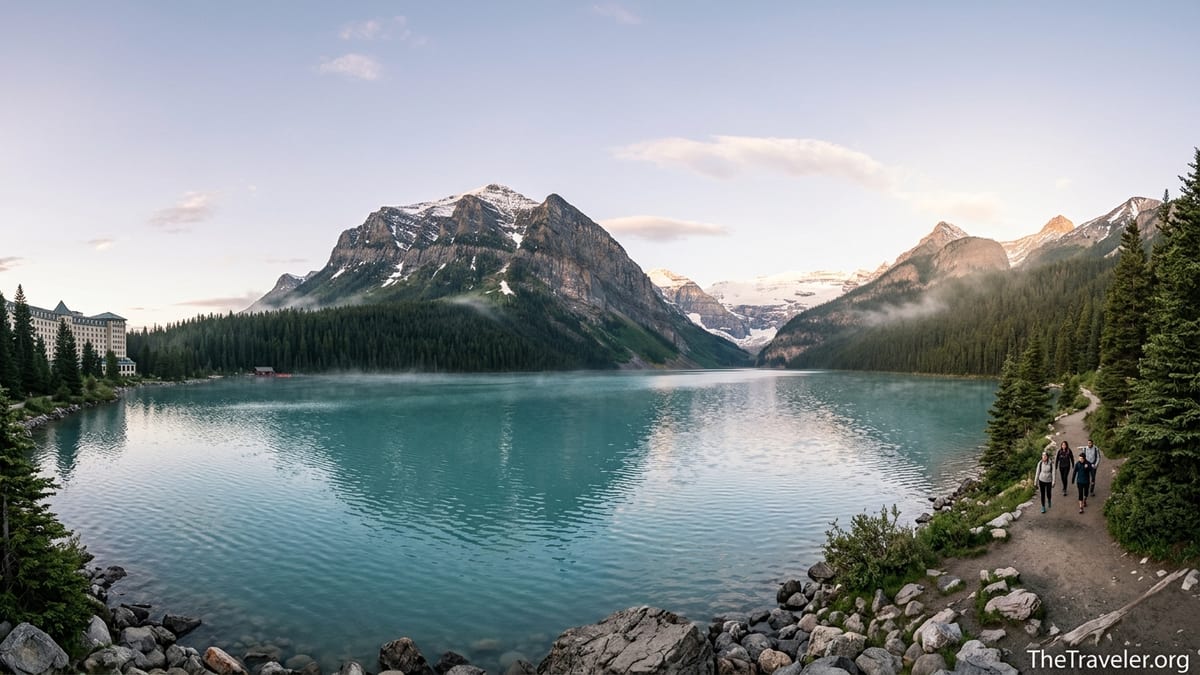
The Canadian Rockies are often the scenic highlight of a first trip to Canada. The most famous park hubs are Banff and Lake Louise in Banff National Park and Jasper in Jasper National Park, all in the province of Alberta. Banff is roughly a 90-minute drive from Calgary International Airport on well-maintained highways, which is why many visitors start or end their Rockies section in Calgary and use a rental car to reach the mountains.
Within the Rockies, distances between towns and trailheads are shorter than cross-country travel but still significant. Banff to Lake Louise is about a 45-minute drive, and the Icefields Parkway between Lake Louise and Jasper, considered one of the world’s great scenic drives, takes around 3 hours without stops, although most travelers spend a full day with photo breaks and short walks. In summer, parking at popular spots like Lake Louise and Moraine Lake can be limited, so shuttle buses or early-morning arrivals are important parts of trip planning.
Parks Canada charges daily admission fees for most national parks. Visitors staying several days or visiting more than one park often find that an annual Parks Canada pass is more economical than individual daily fees, especially for couples or families. Prices are reviewed regularly and adjusted every few years, so it is best to check current rates when planning, but in practice the total for a week of park time for two adults with a discovery-style pass usually works out to a modest fraction of the overall trip budget.
Accommodation in the Rockies ranges from simple campgrounds and hostels to historic railway hotels and upscale mountain lodges. Average hotel rates in Banff and Lake Louise during peak summer can easily reach the upper 200s to 400 US dollars per night for standard rooms, particularly on weekends. Visiting in late spring or early autumn, or basing yourself in less famous but still scenic towns like Canmore, can reduce costs while keeping you close to the main hiking areas and viewpoints.
Trains, Driving and Getting Around
Canada is large, so choosing the right transportation mix is a key part of first-time planning. For city-to-city travel in the busy Quebec City to Windsor corridor, trains operated by the national passenger carrier link major cities like Quebec City, Montreal, Ottawa and Toronto. These intercity trains usually offer reserved seating, power outlets and options for economy or a more spacious business class. Travel times between Toronto and Montreal commonly fall in the 4.5 to 6 hour range depending on the service, which is competitive with flying once airport transfers and security times are included.
For coast-to-coast journeys, a classic Canadian experience is the transcontinental train between Toronto and Vancouver, sometimes called the Canadian. This overnight service usually operates a few times per week, takes four nights, and passes through the Canadian Shield, the Prairies and the Rockies. Many travelers book a private cabin or sleeping berth that includes meals in a dining car and access to dome observation cars, turning the journey into a rolling sightseeing trip rather than just transportation.
Driving offers the most flexibility, especially in the Rockies and for exploring smaller towns and rural areas. Highway driving conditions on major routes are generally good, with clear signage and regular fuel stops, though winter weather between roughly November and March can bring snow and ice. Car rental prices vary by season and location, but a compact or mid-size car from a major brand often runs in the 50 to 90 US dollar per day range before insurance, taxes and one-way drop fees. Renting from airport locations can be slightly more expensive than downtown depots.
Within large cities, it is often easier to rely on public transportation and walking than to drive. Toronto, Montreal and Vancouver all have rapid transit systems and dense bus networks that connect airports, downtown cores and main attractions. For example, Toronto’s Union Station connects regional commuter trains, the airport express and the city subway, while Vancouver’s light rail brings you directly from the airport to several downtown stations. Rideshare services operate in most urban areas, which can fill gaps late at night or when carrying luggage.
Weather, Seasons and What Things Cost
Canada’s size means weather varies significantly by region and season. Generally, late May through September brings the most reliable mild or warm conditions for city sightseeing and national parks, with July and August being the warmest and busiest months. In Toronto and Montreal, summer daytime highs often sit in the mid-20s Celsius, sometimes higher, while winters from December through February are cold with snow and below-freezing temperatures. Vancouver has milder, wetter winters and more moderate summers than cities inland.
Visiting the Rockies in summer provides access to the widest range of hiking trails and activities, though popular viewpoints and parking lots can be crowded. June can still see some snow at higher elevations and lakes gradually thawing, while September brings cooler temperatures and fall colors with fewer crowds. Winter visits open up skiing and snowshoeing, but they require winter driving skills or reliance on shuttle buses and guided excursions due to icy roads and shorter daylight hours.
Daily travel costs depend on your travel style but can be sketched with rough examples. A mid-range budget for a couple in large cities might include a hotel in the 200 to 300 US dollar range per night, meals around 60 to 120 dollars per day depending on restaurants chosen, and local transportation of perhaps 10 to 20 dollars per person daily using transit passes and the occasional rideshare. In smaller towns and shoulder seasons, accommodation and dining can be noticeably cheaper, though remote areas may have fewer budget options overall.
Entry fees for attractions tend to be moderate compared with some other countries. Tickets for major observation decks or towers in big cities typically fall somewhere in the 25 to 50 US dollar equivalent per adult, while museum admissions often range from roughly 10 to 25 dollars. Boat tours at Niagara Falls or guided excursions in the Rockies are extra costs to factor in, with many signature activities priced similarly to popular tours in the United States or Western Europe.
First-Time Planning Tips and Sample Itineraries
For a first-time visitor with about 10 to 14 days, it is usually better to focus on one side of the country plus the Rockies rather than trying to see everything. One common route starts in Toronto for 3 nights with a day trip to Niagara Falls, continues by train or plane to Montreal for 3 nights, adds 2 nights in Quebec City, then flies to Calgary for 4 to 5 nights split between Banff, Lake Louise and possibly Jasper. This gives a mix of English and French Canada, big-city experiences and mountain scenery without unmanageable travel times.
Another popular plan focuses on the west. A traveler might spend 4 nights in Vancouver, take a bus or rental car for 2 to 3 nights in Whistler, then fly to Calgary for 4 to 5 nights in the Rockies before returning home. This approach highlights coastal landscapes and alpine environments without backtracking across the entire country. Those with a strong interest in rail journeys might instead fly into Toronto, spend a few days in the city, then board the transcontinental train to Vancouver and add a short stay there at the end.
Booking intercity flights or long-distance trains several months in advance often yields better prices and more choice of departure times or accommodation classes. The same applies to high-demand mountain lodges, hotels in Banff and Lake Louise, and downtown hotels during major festivals in Toronto, Montreal or Vancouver. Travelers who prefer flexibility can still keep some nights unbooked in shoulder seasons, but for peak summer and holiday periods it is safer to reserve in advance.
Finally, it is worth considering travel insurance that covers medical care, trip interruptions and weather-related delays, especially in winter and when connecting multiple flights or train segments. Canada’s healthcare system does not automatically cover visitors, and distances between destinations mean that rebooking missed connections can be expensive. Having copies of reservations, confirmation numbers and any required electronic documents stored both digitally and on paper can smooth out minor disruptions.
FAQ
Q1. Do I need a visa or electronic travel authorization to visit Canada?
Requirements vary by nationality. Many visitors from visa-exempt countries need an electronic travel authorization for air travel, while others must apply for a visa in advance. Check the latest rules for your passport well before booking flights.
Q2. How many days should a first-time visitor spend in Canada?
With 10 to 14 days you can comfortably include two major city areas plus a few days in the Rockies. Shorter trips of 5 to 7 days are best focused on a single region, such as Toronto and Niagara, or Vancouver and nearby coastal or mountain areas.
Q3. Is it necessary to rent a car in Canada?
In big cities like Toronto, Montreal and Vancouver you can rely on public transit, walking and rideshares. A rental car is very useful for the Canadian Rockies and smaller towns, where public transportation is limited and distances between sights are greater.
Q4. When is the best time to visit the Canadian Rockies?
Late June through early September offers the widest range of open trails and services. May and early June can still have snow at higher elevations, while September brings cooler temperatures and fewer crowds but shorter days.
Q5. How expensive are hotels in Toronto, Vancouver and Montreal?
Prices vary by season, but many central hotels in Toronto and Vancouver fall in the 200 to 350 US dollar range per night in summer, with Montreal often a bit lower. Budget-friendly options exist, but peak weekends and festivals can raise rates significantly.
Q6. Can I visit Niagara Falls as a day trip from Toronto?
Yes. Organized tours and buses make the roughly 1.5 to 2 hour journey each way, allowing time for a boat cruise and viewpoints before returning to Toronto in the evening. Some travelers choose to stay overnight for a more relaxed pace.
Q7. Is the transcontinental train across Canada worth it for first-time visitors?
The multi-night train between Toronto and Vancouver is a memorable experience if you enjoy slow travel and have the time and budget for a sleeping cabin. It adds several days to your itinerary, so it works best on longer trips of at least two weeks.
Q8. Do people speak English everywhere in Canada?
English is widely spoken across most of the country. In Quebec, French is the primary language, but visitors will still find that English is commonly understood in tourist areas, hotels and restaurants, especially in Montreal and Quebec City.
Q9. How cold does it get in winter, and can I still visit?
Winters in many parts of Canada are cold, with temperatures often below freezing and snow common from December to February. You can still visit for winter sports or city trips, but you will need proper cold-weather clothing and should be prepared for possible travel delays.
Q10. Do I need a national park pass to visit the Rockies?
Yes, national parks like Banff and Jasper charge admission. You can buy daily passes or an annual pass that covers multiple parks. For stays of several days or visits to more than one park, an annual-style pass often offers better value.