

Planning a trip to Canada’s national parks can feel overwhelming, especially if you are trying to weigh Banff against Jasper and other heavy hitters in the Rockies. Each park offers world class scenery, wildlife, hiking and road trip routes, but the experience on the ground can be very different, from how soon you need to book a campsite to how much driving you will do in a day. This guide walks you through the key parks most first time visitors consider, compares what they actually feel like in real life, and explains how to plan reservations, camping and road trips that match your budget, timeline and travel style.
Banff vs Jasper vs Other Canadian Parks: How They Really Compare
For many travelers, Banff National Park is the name they know, while Jasper sounds slightly more remote and Yoho or Kootenay barely register. In practice, these four contiguous Rocky Mountain parks work as one giant region, but each has a distinct character. Banff is the most developed and busiest, centered on the resort town of Banff and the Lake Louise area, with restaurants, hotels and shuttles that make sightseeing straightforward for first timers. Jasper feels quieter and wilder, with a compact townsite and long valleys where elk graze in roadside meadows and night skies remain dark enough for stargazing.
Yoho and Kootenay, just over the border in British Columbia, tend to see far fewer tour buses and are where many repeat visitors go to escape crowds while keeping the same towering peaks and turquoise lakes. Pacific Rim on Vancouver Island and Gros Morne in Newfoundland offer different coastal landscapes entirely, with rainforests and wave beaten beaches in the west and fjords and sea cliffs in the east. That means most first timers with limited time will focus on Banff and Jasper, then add a third park such as Yoho if they have an extra day or two.
If you have five to seven days, a realistic plan for a first visit might include three nights in Banff or Lake Louise, two in Jasper, and one in or near Yoho before looping back toward Calgary. Travelers with 10 to 14 days can add Kootenay, Waterton Lakes or a flight to Vancouver Island for Pacific Rim. The main constraint is not just distance but accommodation and camping availability in peak months, which often dictates where you can actually stay.
Season also changes the calculation. In July and August, Banff’s townsite can feel almost urban, with busy sidewalks and restaurants that require dinner reservations, while in May or October shoulder seasons it quiets down and snow lingers higher on the passes. Jasper, with fewer hotel beds, books out early in peak periods and can feel extremely peaceful once you are a few minutes outside town even in summer.
Scenery, Hiking and Wildlife: What to Expect in Each Park
Banff is the classic Canadian Rockies postcard. Around Lake Louise and Moraine Lake, you will see bright turquoise water backed by glaciated peaks, which is why sunrise parking lots fill long before breakfast and why Parks Canada runs shuttle buses to manage demand. Hikes like the Lake Agnes Teahouse trail give a half day introduction to alpine scenery without technical difficulty, and the Banff Gondola above Sulphur Mountain provides sweeping views for visitors who prefer not to hike. In practice you can see a lot in Banff with a series of short walks and scenic viewpoints rather than strenuous backcountry days.
Jasper’s scenery is more expansive than dramatic in a single snapshot, though its highlights like Maligne Lake, Mount Edith Cavell and the Icefields Parkway are showstoppers. Trails such as the Valley of the Five Lakes or Maligne Canyon give easy access to turquoise pools and slot canyons, while longer hikes like the Skyline Trail draw backpackers from around the world. Wildlife viewing is often better in Jasper than in Banff simply because fewer people crowd the roads. It is common to see elk grazing on the lawns near the townsite, bighorn sheep along Highway 16, and in some seasons black bears foraging on roadside dandelions. Travelers should always carry bear spray when hiking and follow posted guidance on keeping distance and securing food.
Yoho National Park condenses much of the Rockies’ drama into a smaller area. Here you will find waterfalls like Takakkaw Falls, one of the tallest in Canada, and lakes such as Emerald Lake where canoe rentals and gentle shoreline trails appeal to families. Strong hikers often target Yoho’s Iceline Trail, which climbs to a high bench with views across glaciers and peaks, or overnight trips into the Yoho Valley that connect to Kootenay’s Rockwall Trail. Because Yoho sits slightly off the main tour-bus loop and has fewer large hotels, many visitors who base in Lake Louise or Field drop in for a day trip and find remarkably quiet trails once they are a few kilometers from the road.
Beyond the Rockies, scenery shifts dramatically. On Vancouver Island, Pacific Rim National Park Reserve offers wide beaches such as Long Beach, backed by temperate rainforest. Hikers here might spend a day on the Lighthouse Loop near Ucluelet or, for serious backpackers, secure a coveted permit for the multi day West Coast Trail, where ladders, cable cars and tidal crossings replace alpine passes. On the Atlantic coast, Gros Morne National Park in Newfoundland delivers fjord like arms of the sea, such as Western Brook Pond, and stark Tablelands rock formations that look almost Martian. These coastal parks tend to be less crowded than Banff in midsummer but have shorter peak seasons and can feel wild and windy even in July.
Accommodation and Camping: How Far Ahead You Need to Book
In Banff and Jasper, the main friction point for travelers is securing somewhere to sleep between late June and early September. Hotels and lodges in Banff townsite, Lake Louise and Jasper often fill many months in advance, especially on weekends. Nightly rates in peak season can be high, from budget motels that still cost well into the hundreds of dollars per night to premium lakefront properties that can run far higher. Travelers on a tighter budget often look to campgrounds, hostels or accommodations in smaller communities like Canmore, Hinton or the village of Field near Yoho.
Parks Canada operates a reservation system for many frontcountry and backcountry campgrounds across Banff, Jasper, Yoho and Kootenay. For the 2026 season, reservations are set to open in January, with specific launch days and times listed by individual park. The booking system uses an online platform with a virtual waiting room on busier launch days, and campers are encouraged to create or update their account in advance. Popular frontcountry sites near Banff, Lake Louise and Jasper often book out on opening day for summer weekends, while lesser known campgrounds and shoulder season dates can remain available longer.
Expect a range of camping options, from fully serviced RV loops with electrical and sometimes water hookups to unserviced tent sites and backcountry pads accessible only by hiking or paddling. In Banff, for instance, some campgrounds close to town offer hot showers, flush toilets and easy access to transit, which suits first time visitors and families. In Jasper, large campgrounds like Whistlers combine hundreds of sites with modern washroom buildings and a short drive to the townsite. Yoho’s campgrounds tend to be smaller and more rustic, with fewer sites overall and a more intimate feel along the Kicking Horse River or near Emerald Lake.
Backcountry reservations require more planning. Trips to popular areas such as the Lake O’Hara region in Yoho, the Skyline Trail in Jasper or the Rockwall in Kootenay involve limited designated campsites, and permits for prime summer windows can disappear quickly when the reservation window opens. It is common for hikers to plan these trips six to nine months ahead, build flexibility into their dates and consider shoulder season departures in June or September when snow and weather are more variable but demand is lower.
Road Trips and Driving Routes: Building a Realistic Itinerary
Most first time visitors fly into Calgary, rent a vehicle and drive the Trans Canada Highway west to Banff, then on to Lake Louise and the Icefields Parkway toward Jasper. The distance from Calgary to Banff is roughly a 90 minute drive in normal conditions, though summer construction, wildlife on the road or weather can extend travel time. From Banff to Lake Louise is about 45 minutes along the main highway, with alternatives such as the slower Bow Valley Parkway providing scenic stops and more chances to see wildlife at dawn and dusk.
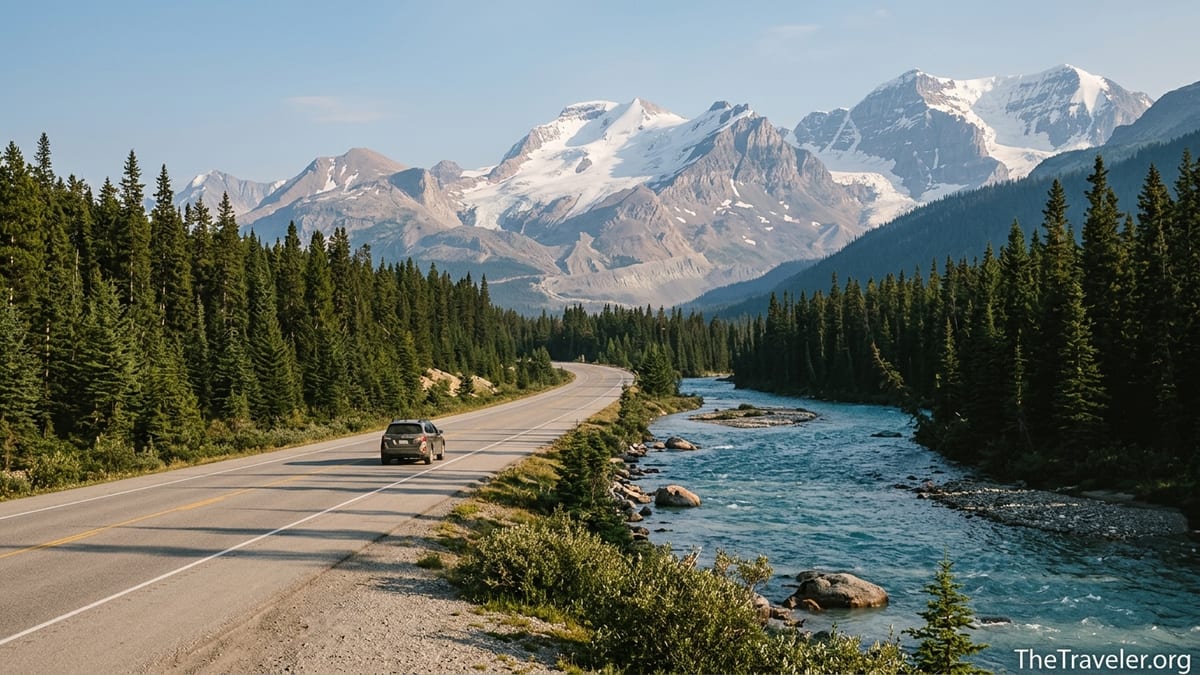
The Icefields Parkway between Lake Louise and Jasper is one of the most spectacular road trip segments in North America. The full drive is roughly 230 kilometers and can be completed in about three to four hours without stops, but in reality most travelers take the better part of a day. En route you might linger at Peyto Lake’s viewpoint, walk to the toe of the Athabasca Glacier or picnic at Sunwapta Falls. It is wise to depart early, keep your fuel tank topped up at Lake Louise or Saskatchewan River Crossing, and pack snacks and water since services are limited along the route.
From Jasper, some travelers continue west toward British Columbia or loop south through the Yellowhead Highway to connect with other routes, while others retrace the Icefields Parkway back to Lake Louise and then drive into Yoho and Kootenay before returning to Calgary. A common one week circuit might look like Calgary to Banff, on to Lake Louise, drive the Icefields Parkway to Jasper, spend two nights there, then head back via Yoho with a night in Field or Golden, before flying out of Calgary. Distances look short on a map but mountain driving, frequent photo stops and unpredictable weather mean daily legs longer than three to four hours of driving can feel rushed.
Travelers who prefer to rely on public transport can still visit Banff and, with more planning, some parts of Jasper. Shuttle buses run from Calgary to Banff and Lake Louise in peak seasons, and local transit within Banff National Park links campgrounds and trailheads. However, without a car it becomes harder to reach trailheads along the Icefields Parkway or quieter corners of Yoho and Kootenay. In practical terms, a rental vehicle offers the most flexibility for a multi park itinerary, especially if you hope to combine dawn and dusk wildlife viewing with mid day hikes and lakeside stops.
Reservations, Passes and Trip Timing: Practical Planning Steps
Successful trips to Banff, Jasper and neighboring parks start months before arrival with three main tasks: choosing dates, securing accommodation or campsites, and purchasing the right park passes. Summer, roughly late June through early September, brings the best combination of open trails and warm weather, but also the highest prices and largest crowds. Shoulder seasons in May and October can be excellent for road trips, with quieter viewpoints and lower hotel rates, though some high elevation hiking routes may still be snowbound or already closed.
Parks Canada’s reservation service opens for the upcoming season in January, with each park assigned a specific launch date and time. Travelers typically log in a little before the opening hour and may be placed in a virtual waiting room when demand is high. Being flexible with dates and campgrounds increases your odds. If your dream frontcountry campground near Lake Louise is sold out for a particular weekend, you might instead book midweek nights or look at campgrounds in Yoho, which are still within a reasonable drive of many Banff and Lake Louise highlights.
In addition to campsite or lodging reservations, most visitors need a valid park entry pass. These can be purchased in advance online or at entry gates and visitor centers when you arrive. Families or groups staying multiple days often find it better value to buy a multi day or annual pass rather than paying per day. Separate reservations may be required for specific shuttles, such as those serving popular lakes, or for backcountry permits on routes like the West Coast Trail or Lake O’Hara access buses. Travel insurance that covers trip interruption and medical expenses is also advisable given the cost of evacuations from remote areas and the potential for wildfire related closures during some summers.
If you are planning a road trip that includes both Rocky Mountain parks and coastal parks such as Pacific Rim, factor in domestic flights, ferry sailings and rental car logistics. For example, one common pattern is to fly into Calgary, complete a one week Rockies loop, then fly from Calgary or Edmonton to Vancouver or Nanaimo to rent a second vehicle for Vancouver Island. Crossing with a rental vehicle on a ferry is straightforward but requires advance booking on popular routes, especially around long weekends.
Which Parks Should First Time Visitors Prioritize?
With limited vacation time, most first time visitors cannot see every major park in one trip. The decision often comes down to how much you value iconic views, how comfortable you are with driving in mountains, and whether you prefer a busy resort atmosphere or a quieter, more local feel. For travelers who want that classic turquoise lake photograph, a walkable town with a range of restaurants, and easy day hikes, Banff and Lake Louise deserve top priority. Two to four nights split between the town of Banff and the Lake Louise area allow enough time for a gondola ride, a lakefront canoe, and one or two classic hikes.
Jasper is the second priority for many visitors, especially those who enjoy wildlife, starry skies and slightly less crowded trails. Two or three nights in or near Jasper give time for a boat cruise or paddle on Maligne Lake, a day hike on a ridge such as Sulphur Skyline, and an evening drive along Pyramid Lake Road to look for elk or beavers. The Icefields Parkway drive between Banff and Jasper is a highlight in itself and should be scheduled on a clear day if possible.
If you have an extra day or two in the Rockies, Yoho is the most rewarding addition for many itineraries. A single full day allows for a stop at Emerald Lake, a visit to Takakkaw Falls and a shorter hike such as the Emerald Lake loop or part of the Iceline Trail. Travelers with strong hiking experience and a willingness to plan months ahead might also aim for Lake O’Hara, but permits are limited and day use access requires advance booking through a separate system. Kootenay, while less well known, is a good choice if you are driving in or out via British Columbia and want to sample hot springs and more lightly visited valleys.
Coastal parks such as Pacific Rim and Gros Morne are better treated as centerpieces of separate trips rather than add ons to a short Rockies vacation. Each requires additional travel time from major hubs and rewards slower exploration. If your dream Canada trip is split across several years, many travelers start with Banff and Jasper, then return at a later date for a dedicated coastal or East Coast itinerary.
The Takeaway
Banff, Jasper, Yoho and the other flagship Canadian national parks offer enough variety to fill multiple trips, but most first time visitors will have a better experience by narrowing their focus. Instead of racing from coast to coast, plan a coherent route, whether that is a one week loop from Calgary through Banff, Jasper and Yoho or a focused stay on Vancouver Island or Newfoundland. Match your park choices to your appetite for hiking, driving and crowds, and be realistic about how much you can see in a day once photo stops, weather and wildlife slow your pace.
On the practical side, pay close attention to when reservations open, especially if you hope to camp in popular frontcountry or backcountry areas in July and August. Book accommodation early, aim for shoulder seasons if you prefer quieter trails, and keep an eye on official updates about shuttles, roadworks and fire conditions as your departure date approaches. With solid planning and a flexible mindset, it is entirely possible to stand beside a turquoise lake at sunrise one day, hike beside a glacier the next, and fall asleep to the sound of a river running past your campsite under a sky full of stars.
FAQ
Q1. How far in advance should I book Banff and Jasper for a summer trip?
For peak season in July and August, many hotels and popular campgrounds book out several months ahead, especially for weekends. Aim to secure accommodation or campsite reservations as soon as Parks Canada and local hotels open their booking windows in January, and be flexible with dates if you are planning within three to four months of travel.
Q2. Is Banff or Jasper better for first time visitors with limited time?
If you only have three or four days, Banff and the Lake Louise area are usually the better base for a first visit because they combine iconic sights, more transport options and a larger range of hotels and restaurants. Jasper is an excellent addition if you can extend your trip to at least six or seven days so you have time for the Icefields Parkway and a couple of days based in Jasper itself.
Q3. Do I need a car to visit Banff and Jasper?
You can reach Banff and Lake Louise by shuttle from Calgary and get around some areas on local transit and tour buses, but a rental car provides far more flexibility, especially for early morning or evening wildlife viewing and stops along the Icefields Parkway. Without a car you will need to rely on scheduled shuttles and guided tours to reach many trailheads and scenic spots.
Q4. When is the best time of year to visit the Canadian Rockies?
Late June through early September offers the most reliable weather and the greatest number of open trails and services, but it is also the busiest and most expensive period. May and October can provide quieter viewpoints and lower prices, though some high elevation routes may still be snow covered or already closed, and weather can swing quickly between warm sunshine and early snow.
Q5. Which Canadian national parks are best for seeing wildlife?
Jasper is often recommended for wildlife viewing because of its quieter roads and extensive valleys, where elk, deer and bighorn sheep are commonly seen. Banff, Yoho and Kootenay also host bears, mountain goats and other wildlife, but animals can be more elusive near busier corridors. Always view wildlife from a safe distance, stay in your vehicle when advised and never feed animals.
Q6. How difficult are the hikes around Banff, Jasper and Yoho?
Each park offers a full range from short, flat walks suitable for most visitors to challenging multi day backpacking routes. In Banff, trails like Johnston Canyon or the Lake Louise shoreline are accessible introductions, while in Jasper routes such as the Valley of the Five Lakes or Maligne Canyon serve a similar role. More advanced hikers target routes like the Skyline Trail in Jasper, the Iceline in Yoho or multi day Rockwall and West Coast Trail itineraries.
Q7. What should I know about camping reservations in these parks?
Parks Canada operates an online reservation system that opens for the upcoming season in January, with specific launch days for each park. Popular frontcountry and backcountry sites near Banff, Lake Louise and Jasper can book out quickly, sometimes on opening day for summer weekends. Creating an account in advance, logging in early on launch day and being open to alternative campgrounds or midweek dates improves your chances.
Q8. Are coastal parks like Pacific Rim or Gros Morne realistic add ons to a Rockies trip?
It is possible but only if you have significant time and are willing to factor in extra flights or long drives and ferry crossings. For trips of one to two weeks, most travelers will have a better experience by focusing either on the Rockies or on a coastal region such as Vancouver Island or Newfoundland rather than trying to combine everything in a single itinerary.
Q9. What kind of budget should I expect for accommodation and activities?
Costs vary widely by season and comfort level. In peak summer, hotel rooms in Banff, Lake Louise and Jasper can be relatively expensive compared to smaller towns outside the parks, while camping remains the most budget friendly option. Many of the main attractions, such as hiking trails and roadside viewpoints, are free once you have a park pass, while paid experiences like gondola rides, guided hikes or lake cruises add to overall trip costs but are optional.
Q10. Is it safe to drive in the Canadian Rockies in spring or fall?
Roads between major towns are well maintained, but conditions can change quickly, especially outside midsummer. In spring and fall it is possible to encounter snow or ice on high passes, as well as wildlife crossing the highways at dawn and dusk. Check road condition reports before driving, allow extra time between destinations, carry warm layers and make sure your rental vehicle is equipped for mountain conditions during shoulder seasons.