


The Canadian Rockies live up to the hype: jagged peaks, glacier-fed lakes the colour of turquoise paint, and wildlife that can appear without warning around the next bend in the road. For first-time visitors, though, the region’s sheer scale and logistics can be surprising. Distances are long, parking at famous lakes is limited, and the best experiences depend heavily on when you visit and where you decide to base yourself. This guide distills the essentials for Banff, Jasper, Yoho and Kootenay national parks, plus Canmore, Kananaskis and Mount Robson, so you can plan a realistic and rewarding first trip.
Key Regions of the Canadian Rockies
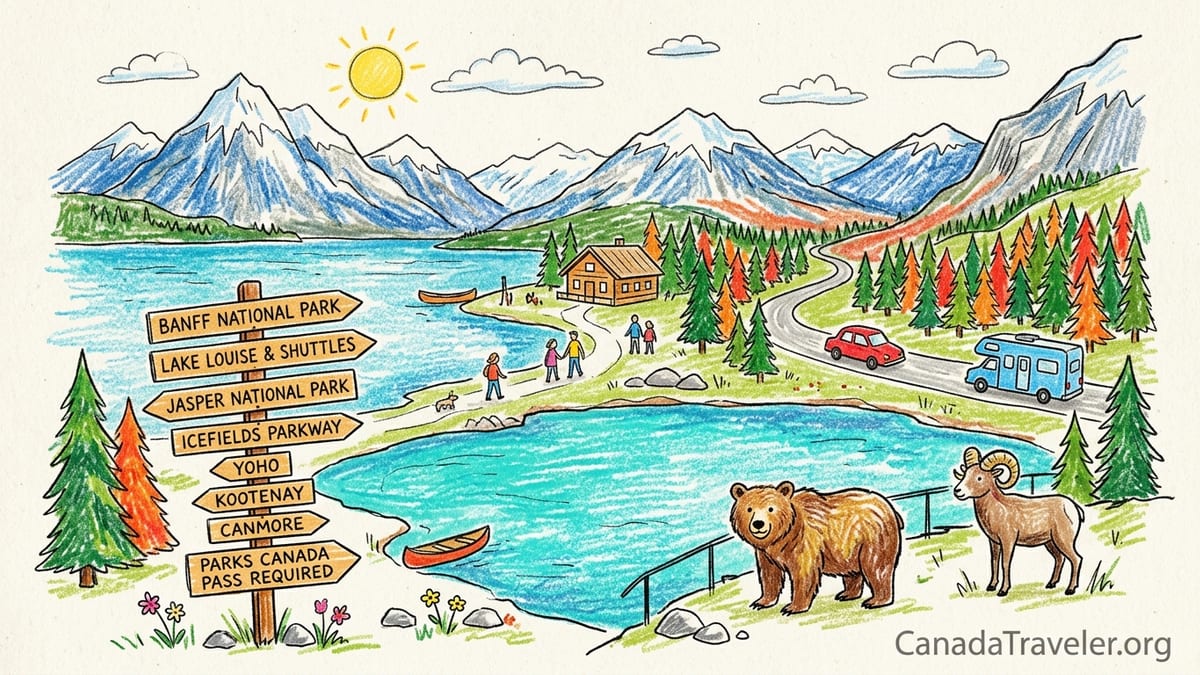
Most first-time itineraries revolve around four national parks in Alberta and British Columbia: Banff, Jasper, Yoho and Kootenay. These parks sit side by side along the spine of the Rockies and are managed by Parks Canada, which means similar entry rules and a shared focus on conservation. Banff and Jasper hold headline sights such as Lake Louise, Moraine Lake, the Icefields Parkway, Columbia Icefield and Maligne Lake. Yoho and Kootenay, just over the provincial border in British Columbia, feel quieter but offer dramatic scenery, from towering waterfalls to ochre-coloured mineral pools.
Banff National Park, centred on the town of Banff and the village of Lake Louise, is usually the starting point. It combines easy roadside viewpoints with short walks and serious alpine hikes. Jasper National Park begins roughly 230 kilometres north of Lake Louise along the Icefields Parkway. It is more spread out, with fewer visitors and a more low-key town, but it offers major sights like the Columbia Icefield, Athabasca Glacier and the boat tours on Maligne Lake.
Yoho National Park is directly west of Lake Louise over Kicking Horse Pass. It is compact enough that many travellers visit on a day trip from Banff or Lake Louise, dropping into the tiny community of Field for coffee before driving to Emerald Lake or the viewpoint above the Kicking Horse River’s Natural Bridge. Kootenay National Park, which connects Banff with the town of Radium Hot Springs, is known for its deep canyons, forested valleys and hot pools, and works well as part of a driving loop back to Calgary.
Beyond the park boundaries, several non-park areas form part of most itineraries. Canmore, just east of Banff’s gate, provides a more residential base with strong dining options. Kananaskis Country, south of Canmore, is a patchwork of provincial parks and recreation areas that offer superb hiking with less crowding. To the northwest, Mount Robson Provincial Park in British Columbia protects the highest peak in the Canadian Rockies and anchors the scenic corridor between Jasper and the interior city of Kamloops.
Gateway Airports and How to Get Around
Calgary International Airport in Alberta is the primary arrival point for most travellers to the Canadian Rockies. Direct flights from major North American and some European hubs arrive daily, and the drive from the airport to the town of Banff takes about 90 minutes in good conditions. Many rental car agencies operate directly at the airport, and compact SUVs are popular choices for their higher clearance and space for luggage and hiking gear. In peak summer, daily rental rates can rise significantly compared with spring and autumn, so booking early is advisable.
Edmonton International Airport serves as a secondary gateway, especially for those planning to begin or end their trip in Jasper. From Edmonton, the drive to Jasper takes roughly four hours via Highway 16. This route is mostly on fast, open highway through forest and farmland before entering the mountains near Hinton. Some visitors design a one-way itinerary, flying into Calgary, driving through Banff and Jasper, then exiting via Edmonton, or vice versa, to avoid retracing the same route.
It is technically possible to explore parts of the Rockies without a car by combining shuttle buses and local transit. For example, there are seasonal bus services from Calgary to Banff, and Roam Transit operates local buses around Banff and to Lake Minnewanka, with regional routes to Canmore and, in some seasons, Lake Louise. However, a private vehicle remains the most flexible option, especially if you want to explore the Icefields Parkway at your own pace, reach trailheads in Kananaskis, or respond to rapidly changing weather.
When renting a car, request one equipped with proper all-season or winter tires if you are traveling outside the core summer months. On mountain highways such as the Icefields Parkway, regulations require snow tires or chains in winter, and early-spring or late-autumn storms can bring snow even when valley-bottom towns are clear. For those uncomfortable with winter driving, guided tour companies run year-round day trips from Banff to popular sights like Lake Louise, the Johnston Canyon ice walk and the Columbia Icefield visitor area when roads are safe to access.
National Park Entry, Passes and Practicalities
To visit Banff, Jasper, Yoho and Kootenay national parks, every person or vehicle must hold a valid Parks Canada pass for each day spent inside park boundaries. Visitors can buy a day pass, which covers a calendar day, or an annual Discovery Pass that offers unlimited entry for a year to most national parks and historic sites across Canada. For many travelers planning more than six or seven days in the Rockies, the Discovery Pass is the better-value option, especially for families traveling together in one vehicle.
Passes can be purchased online in advance or in person at park gates and visitor centers, such as the Banff East Gate on the Trans-Canada Highway or the Jasper Visitor Information Centre downtown. If you are arriving late at night when gates are unstaffed, you are still expected to buy a pass the following morning. Keep the pass clearly displayed on your dashboard if it is vehicle-based, as staff may check parking lots at popular viewpoints, campsites and trailheads.
Entry fees are separate from parking or shuttle costs. For example, paid parking at the Lake Louise lakeshore in summer covers your space at the lot but does not count as a park pass, and similarly, a ticket for the Lake Louise and Moraine Lake shuttle system is different from the required national park entry. Allow time at the start of your trip to sort out passes and orient yourself at a visitor center, where staff can also help with current trail closures, wildlife advisories and fire information.
In addition to passes, be aware of Canada’s rules on alcohol, cannabis and drones within national parks. Open alcohol is generally prohibited in day-use areas and some campgrounds outside certain hours, and recreational cannabis use is subject to provincial law but often restricted in public park spaces. Recreational drones are not allowed without special permits because of wildlife and safety concerns, so leave them at home and focus on photography from established viewpoints and trails.
Where to Base Yourself: Banff, Canmore, Lake Louise, Jasper and Beyond
For a first-time visitor, choosing a home base is one of the most important decisions. The town of Banff offers the greatest range of accommodation, from simple motels on the edge of town to historic properties with on-site dining and spas. You can walk almost everywhere, and Roam Transit buses connect the center to trailheads such as Tunnel Mountain and Lake Minnewanka. Banff works well for travelers who want restaurants, shops and evening activity after daytime excursions.
Canmore, about 20 minutes east of Banff outside the national park boundary, has grown into a popular alternative. Many condo-style hotels include kitchenettes, which appeal to families and longer stays. Because it sits outside the park, you do not need a park pass just to walk around town or check into your accommodation, which can be helpful on arrival or departure days. Canmore is also the best base for Kananaskis Country, with trailheads for hikes like Ha Ling Peak and Grassi Lakes within a short drive.
The Lake Louise area is quieter and more compact, with a small service center near the highway and a cluster of hotels and lodges near the lake itself. Staying here costs more than in Canmore or Banff, but it offers the advantage of waking up close to headline attractions like Lake Louise and Moraine Lake. This can be valuable during peak season when early mornings are the least crowded. However, visitors should still expect to rely on shuttle systems to reach Moraine Lake, where private vehicles are not permitted on the access road.
Farther north, Jasper townsite feels more like a working railway town than a purpose-built resort. Accommodation ranges from hotels and motels to a large supply of private rooms in local homes known as “home accommodations.” Jasper works well for travelers who want a quieter pace and easier access to Maligne Lake, Pyramid Lake and the hiking areas around Mount Edith Cavell. For those planning to visit Mount Robson Provincial Park, consider a night nearby to make the most of long hikes such as the Berg Lake corridor when sections are open.
Iconic Sights: Lakes, Icefields and Scenic Drives
Lake Louise is the icon that appears on countless brochures: a broad turquoise lake cupped below Victoria Glacier, framed by steep valley walls. First-time visitors typically combine a lakeshore stroll with a short uphill hike to one of the historic teahouses during snow-free months, or a wintertime skate on the cleared ice when conditions permit. Parking at the lakeshore is limited and expensive in peak season, so many visitors either arrive very early in the morning or use shuttle buses from the park-and-ride lot near the ski resort.
Moraine Lake, set in the Valley of the Ten Peaks, is smaller but even more intensely coloured. Since 2023, the access road has been closed to personal vehicles, which means visitors must book a Parks Canada shuttle, a private shuttle or join a guided tour to reach its shoreline during the operating season. A short trail climbs to the famous rockpile viewpoint, while longer trails leave from the same area for those prepared for full-day alpine hikes. Because sunrise here is sought after for photography, early shuttle departures often sell out quickly in midsummer.
The Icefields Parkway, Highway 93 between Lake Louise and Jasper, is one of the world’s great mountain drives. Over roughly 230 kilometres, it passes hanging glaciers, broad river valleys and high passes like Sunwapta Pass, with signed viewpoints and trailheads along the way. Many visitors dedicate at least one long day to this drive, stopping at places like Bow Lake, Peyto Lake viewpoints, the Columbia Icefield visitor area and Sunwapta or Athabasca Falls. Fuel and services are limited, so it is wise to start with a full tank and pack food and water.
Other classic sights include the Columbia Icefield itself, where commercial tours in large all-terrain vehicles operate on the Athabasca Glacier during the main season, and Maligne Lake near Jasper, which offers scenic boat cruises to Spirit Island when the lake is ice-free. In Yoho, Emerald Lake provides an easily accessed turquoise lake experience with a walking path around the shoreline, while Kootenay’s highlight for many first-timers is a soak at Radium Hot Springs, often combined with a drive through the narrow walls of Sinclair Canyon at the park’s eastern entrance.
Driving Realities, Wildlife Safety and Seasonal Access
Driving in the Canadian Rockies is straightforward in good weather, but road conditions can change rapidly. Even in July, afternoon thunderstorms can roll over passes and reduce visibility, while in May or October snow can fall at higher elevations. Speed limits are strictly enforced, particularly in wildlife corridors, and it is common to find reduced limits on stretches such as the Bow Valley Parkway. Plan conservative driving days: for example, allow at least three hours to travel the Icefields Parkway from Lake Louise to Jasper without major stops, and significantly longer if you plan to hike or photograph along the way.
Wildlife is both a highlight and a hazard. Elk, deer, bighorn sheep and black bears regularly cross or walk along roads, and drivers sometimes encounter grizzly bears or even moose. Never stop in the middle of the road to photograph animals, and avoid surrounding them with vehicles. Parks Canada rangers may actively manage traffic during “bear jams” and will ask motorists to move on if crowds form. On trails, carrying bear spray, hiking in groups and making noise are standard safety practices. Food, garbage and scented items must be stored properly in vehicles or bear-proof lockers to avoid habituating animals to human food.
Seasonal access shapes what you can realistically do. The main summer season runs from late June through early September, when most trails are snow-free and services such as campgrounds, boat tours and shuttles operate on full schedules. Shoulder seasons, roughly May to mid-June and mid-September to October, can bring a mix of lingering snow and brilliant fall colours. Some higher-elevation roads and trails, such as those around Moraine Lake and certain mountain passes, open later or can close early depending on snowpack, so always confirm opening dates the year you travel.
Winter, typically November through April, transforms the region into a cold-weather destination focused on skiing, snowshoeing and ice walks. Roads are plowed regularly, but you should expect snowpacked or icy sections, especially on the Icefields Parkway and secondary roads. Winter tires are strongly recommended and may be legally required on specific routes during certain dates. In exchange for the extra preparations, travelers can enjoy quiet viewpoints, the possibility of northern lights on clear nights, and winter activities such as skiing at Sunshine Village, Lake Louise Ski Resort or Marmot Basin, along with guided ice walks through frozen canyons.
Designing Your Trip: Sightseeing, Hiking, Camping or Winter Focus
A sightseeing-focused trip suits visitors who want to sample as many major highlights as possible without committing to long hikes. A typical one-week itinerary might include three nights in Banff or Canmore, two nights in Lake Louise and two nights in Jasper, with day trips to Yoho and Kootenay along the way. Days would center on short walks to viewpoints, lakeshore strolls and scenic drives like the Bow Valley Parkway and Icefields Parkway. Guided sightseeing tours from Banff or Jasper can reduce driving stress and offer local insight for those who prefer not to navigate on their own.
For hikers, the Rockies reward longer stays and flexible plans. Base yourself where trail networks are dense, such as around Lake Louise, Moraine Lake (accessed by shuttle), the Sunshine Meadows area above Banff or the Maligne Lake corridor near Jasper. Many classic trails are full-day efforts that climb several hundred meters, so building in rest days is essential. Kananaskis Country is particularly attractive for hiking-focused visitors who want fewer crowds; for example, visitors might stay in Canmore and spend consecutive days tackling peaks like Ha Ling and exploring alpine lakes in Peter Lougheed Provincial Park.
Camping trips require more advance planning because front-country campgrounds in Banff, Jasper, Yoho and Kootenay often use a reservation system with dates that open months ahead. Popular places near Banff town and Lake Louise can sell out quickly for summer weekends. Some smaller campgrounds along the Icefields Parkway or in Kootenay may offer a more relaxed atmosphere but still benefit from bookings where available. Backcountry camping permits are mandatory for overnight trips into the wilderness, and quotas on specific routes, such as multi-day treks near Mount Robson, help reduce impacts on fragile alpine environments.
Winter-focused visits revolve around ski resorts, cross-country trails and winter sightseeing. Many travelers choose Banff or Canmore as a base and drive daily to Sunshine Village or Lake Louise Ski Resort, or continue on to Jasper for alpine skiing at Marmot Basin. Others focus on activities like snowshoeing near Lake Minnewanka or joining guided ice walks along frozen creek beds in canyons where giant icicles line the cliffs. Winter also has shorter daylight hours and colder temperatures, so itineraries should build in time for warming up in cafes, hot springs or hotel pools and should avoid long, remote drives after dark.
Planning for Crowds, Costs and Real-World Logistics
Visitor numbers in the Canadian Rockies have grown steadily, and peak summer dates in July and August can feel busy at marquee sights. Practical steps make a big difference. For example, reserving shuttles to Lake Louise and Moraine Lake as soon as your travel dates are firm increases your chances of getting preferred times. Starting popular hikes before 8 a.m. often means easier parking and calmer trails. Less famous areas such as Kananaskis or lesser-known trails in Yoho can provide quieter experiences on the same day that lakeside parking lots near Banff are full.
Costs vary widely by season. Accommodation in Banff town in late July is typically the most expensive, while May and October can offer substantially lower rates, especially midweek. Campgrounds provide a more affordable alternative, but gear rental or purchase adds its own costs if you are not already equipped. Food prices in mountain towns run higher than in major cities, so some visitors reduce expenses by picking up groceries in Calgary before driving west, then mixing restaurant meals with self-catered breakfasts or picnic lunches.
Weather flexibility is key in mountain environments. A day that begins with clear skies over Banff can see low cloud and steady rain over Yoho by midday, or vice versa. Many visitors keep a “weather buffer” day without firm plans and use it to revisit a favorite area when conditions line up. It is also wise to carry layers in the car, such as a light insulated jacket and rain shell, even if the forecast is warm. Lakes at higher elevations can feel markedly cooler than towns like Canmore on the same day.
Finally, respect for the landscape and local communities underpins a good trip. Staying on marked trails protects fragile alpine vegetation, and using designated parking areas helps prevent roadside erosion and unsafe stopping. In towns, late-night noise carries far in mountain valleys, so keeping evenings low-key supports residents who share their communities with visitors year-round. Simple choices, like refilling water bottles at hotel stations instead of buying multiple single-use bottles, help preserve the environment that draws people to the Rockies in the first place.
FAQ
Q1. Do I really need a car to visit Banff and Jasper on my first trip?
It is possible to see major sights using airport shuttles, local buses and organized tours, but a car offers far more flexibility. If you want to explore the Icefields Parkway at your own pace, access trailheads in Kananaskis, or adjust daily plans based on weather, renting a vehicle is the most practical choice for most first-time visitors.
Q2. How many days should I plan for a first visit to the Canadian Rockies?
A minimum of five to seven days allows time to see highlights in Banff, Lake Louise and Jasper without rushing. With 10 to 12 days you can add Yoho, Kootenay, Kananaskis and Mount Robson, plus rest days or longer hikes. Very short visits of two or three days are best focused on one area, such as Banff and Lake Louise only.
Q3. When is the best time of year to see turquoise lakes like Lake Louise and Moraine Lake?
Turquoise colour peaks in summer when glacial meltwater carries fine rock flour into the lakes. Typically late June through early September offers the strongest colours, though exact timing varies with weather and snowpack. In May or early June lakes may still be partially frozen at higher elevations, and in October they often darken as inflow slows.
Q4. How does the national park pass work if I am driving my own car?
If you drive your own or a rental car, you can purchase a day pass or annual Discovery Pass at park gates or visitor centres. The pass is usually valid per vehicle, covering everyone inside, and must be displayed on the dashboard each day you are inside park boundaries. The pass fee is separate from parking charges or shuttle tickets.
Q5. What should I know about wildlife safety on trails?
Hike in groups where possible, make regular noise, and carry bear spray where recommended. Keep at least several dozen meters from all wildlife, never feed animals and store food securely in vehicles or provided lockers. If you encounter a bear at close range, stay calm, speak in a firm voice and follow the guidance on Parks Canada information boards or from rangers.
Q6. Is it safe to drive the Icefields Parkway in one day between Lake Louise and Jasper?
In summer with good weather, most visitors drive the Icefields Parkway in a day, allowing at least three hours of pure driving plus additional time for viewpoints and short walks. Start with a full fuel tank, check the weather and road reports, and avoid driving the route for the first time after dark, when wildlife is harder to see.
Q7. How far in advance should I book accommodation and campgrounds?
For peak summer dates in July and August, it is wise to book hotels and lodges several months in advance, especially in Banff, Lake Louise and Jasper. Campground reservations for popular areas often open many months before the season and can sell out quickly on weekends, so check Parks Canada reservation opening dates for the year you plan to visit.
Q8. Can I visit Lake Louise and Moraine Lake in the same day?
Yes, many visitors see both lakes on the same day, often using the shuttle systems that link them. Start early, reserve shuttle times where required and expect a full day once travel, walking and sightseeing are factored in. Those who prefer a slower pace sometimes dedicate one day to each lake instead.
Q9. What special preparations do I need for a winter visit?
For winter trips, ensure your vehicle has appropriate winter or all-weather tires, pack warm layers, hats and gloves, and be prepared for temperatures well below freezing. Daylight hours are shorter, so plan shorter drives and finish road travel before nightfall where possible. Many activities, such as ski resort visits or guided ice walks, must be booked ahead during busy holiday periods.
Q10. How can I keep costs down on my first Rockies trip?
You can save money by visiting in shoulder seasons, staying in Canmore instead of Banff, combining restaurant meals with self-catered picnics, and using campgrounds or simple motels rather than premium hotels. Buying groceries in Calgary before heading into the mountains and sharing costs among a group for car rental and fuel also helps keep overall expenses under control.