


Eastern Canada combines skyline cities, French heritage, iconic waterfalls and Atlantic fishing harbours in a compact region that works beautifully as a one, two or three week itinerary. This guide breaks down realistic 7, 10, 14 and 21 day routes linking Toronto, Niagara Falls, Ottawa, Montreal and Quebec City, with optional extensions to Atlantic Canada. All timings, overnights and examples are based on typical driving, train and flight schedules available as of 2026, so you can plan a trip that feels ambitious but still achievable on the ground.
How to Think About an Eastern Canada Itinerary
Most first time visits to Eastern Canada focus on the Quebec City to Windsor rail corridor, a busy band of cities that includes Toronto, Ottawa, Montreal and Quebec City. Intercity trains and highways here are relatively frequent and direct, and most journeys between the big cities take between two and five hours by train or car. For example, tourism authorities describe Ottawa as roughly a two hour drive west of Montreal and about four hours northeast of Toronto, which is a good benchmark for planning days that blend travel and sightseeing rather than being spent entirely on the road.
The good news is that you can see a convincing slice of this region in as little as seven days, especially if you focus on just two or three cities and Niagara Falls. With 10 days you can comfortably include five city stops. At the two and three week mark, you have enough time to add smaller detours to places like the Thousand Islands near Kingston or head east to Atlantic Canada for a taste of Nova Scotia or New Brunswick’s coastline.
When you allocate nights, remember that moving every single day quickly becomes exhausting. As a rule of thumb, try to book at least two nights in major cities such as Toronto, Montreal and Quebec City so you have one full day without packing and unpacking. Also factor in that train stations are often located close to downtown cores, while airports can be 30 to 45 minutes away, so rail can actually save time door to door on shorter hops even if the published flight time looks faster.
Finally, be realistic about your travel style and season. Winter driving in Ontario and Quebec can be slow, particularly in January and February, and you may prefer trains during this period. In peak summer from late June through August, highway traffic near Toronto and Niagara can be heavy on weekends, so consider booking early morning train departures or planning drives midweek to avoid congestion.
7 Day Highlights: Toronto, Niagara Falls and Montreal or Quebec City
A one week trip is best treated as a highlights tour that links Toronto, Niagara Falls and one major Quebec destination. A popular pattern is to fly into Toronto, spend three or four nights in the city with a day trip to Niagara Falls, then travel by train or short flight to Montreal or Quebec City for the remaining nights. This keeps you to two hotel bases while still covering Ontario and Quebec.
A practical 7 day version could look like this: arrive in Toronto on day one and spend three nights downtown. On day two, take a guided coach or small group tour to Niagara Falls that includes pickup near Union Station, a boat cruise to the base of the Horseshoe Falls, and wine tasting stops in Niagara-on-the-Lake. Many operators price these day trips around the equivalent of a modest hotel night for two, so compare carefully with renting a car for the day plus parking and fuel before you decide. Day three in Toronto can focus on neighbourhoods such as the Distillery District, Kensington Market and the waterfront.
On day four, board a mid-morning train from Toronto to Montreal or Quebec City. Direct trains between Toronto and Montreal typically take around five hours, while trips between Toronto and Quebec City via Montreal often take closer to eight or nine hours including the connection, so for a short trip many travellers choose Montreal to reduce transit time. Spend the final three nights of your week in your chosen Quebec city. In Montreal this might mean exploring Old Montreal, the Plateau and Mount Royal. In Quebec City, focus on walking the cobbled streets of Old Quebec, visiting the Citadelle and taking a half day ferry or shuttle to nearby Ile d’Orleans for countryside views.
If you prefer to see Quebec City rather than Montreal on a one week trip without such a long train day, you can fly directly from Toronto to Quebec City in under two hours and then use local buses and walking to get around. This costs more than the train but avoids the connection. Either way, budget at least half a day of travel between Toronto and your Quebec base so you are not planning heavy sightseeing on the same day.
10 Day Classic: Toronto, Niagara Falls, Ottawa, Montreal and Quebec City
With 10 days you can complete what many consider the classic Eastern Canada circuit: Toronto, Niagara Falls, Ottawa, Montreal and Quebec City in one loop. This route works well by car, train or a mix of both, and it gives you one to two nights in each city, plus a dedicated Niagara visit. The pace is busier than a two week itinerary but still attainable if you keep luggage light and accept a few early starts.
A realistic 10 day outline might be as follows. Days one to three in Toronto, with one of those days devoted to a Niagara Falls excursion. If you are renting a car, it is often easier to pick it up on the morning you drive to Niagara, park at one of the garages near the falls, then continue on to your next stop the same day. Day four could be a travel and arrival day in Ottawa. Driving from Toronto to Ottawa takes around four and a half hours in normal conditions, while trains typically take four to five hours depending on the service and route.
Spend days five and six in Ottawa and Montreal. From Ottawa, it is roughly two hours by car or train to downtown Montreal, which makes it easy to leave after breakfast and still have an afternoon in the city. In Ottawa, you might spend your full day walking Parliament Hill, the ByWard Market and the Rideau Canal, perhaps including a guided tour of the Parliament buildings if they are open to visitors on your dates. In Montreal, one full day is enough to explore Old Montreal on foot, sample poutine at a casual diner and visit a major museum such as the Montreal Museum of Fine Arts.
Finally, days seven to ten can be allocated to Quebec City and the return. Trains between Montreal and Quebec City usually take around three and a half hours, and buses are a similar duration, so it is feasible to travel in the morning and have a half day of sightseeing on arrival. Two nights in Quebec City will give you one full day within the old walls, but adding a third night allows for a side trip to Montmorency Falls or a leisurely brunch with St. Lawrence River views. For your departure, you can either fly home directly from Quebec City, backtrack to Montreal for a wider range of international flights, or take the train all the way back to Toronto if you booked an open jaw ticket at the start.
14 Day Deeper Dive: Adding Kingston, the Thousand Islands and Slower Days
A two week itinerary opens time for smaller stops and slower travel days that many travellers appreciate after several intense city visits. One natural addition between Toronto and Montreal is the historic city of Kingston and the Thousand Islands region, roughly halfway between the two. Trains on the main Toronto to Montreal line often stop in Kingston, and the driving time from Toronto to Kingston is around two and a half to three hours, making it an easy leg for an afternoon departure after a relaxed Toronto brunch.
A sample 14 day circuit could look like this. Spend three nights in Toronto and one night near Niagara Falls, staying in one of the high rise hotels that overlook the illuminated falls, so you can see them at night as well as on a boat cruise. Then travel to Ottawa for two nights, giving you one full day for museums such as the National Gallery of Canada or the Canadian Museum of History across the river in Gatineau. From Ottawa, continue to Montreal for three nights so you can explore beyond Old Montreal and the core neighbourhoods, perhaps visiting the Jean Talon Market or taking a food tour that introduces you to smoked meat sandwiches and bagels from long running bakeries.
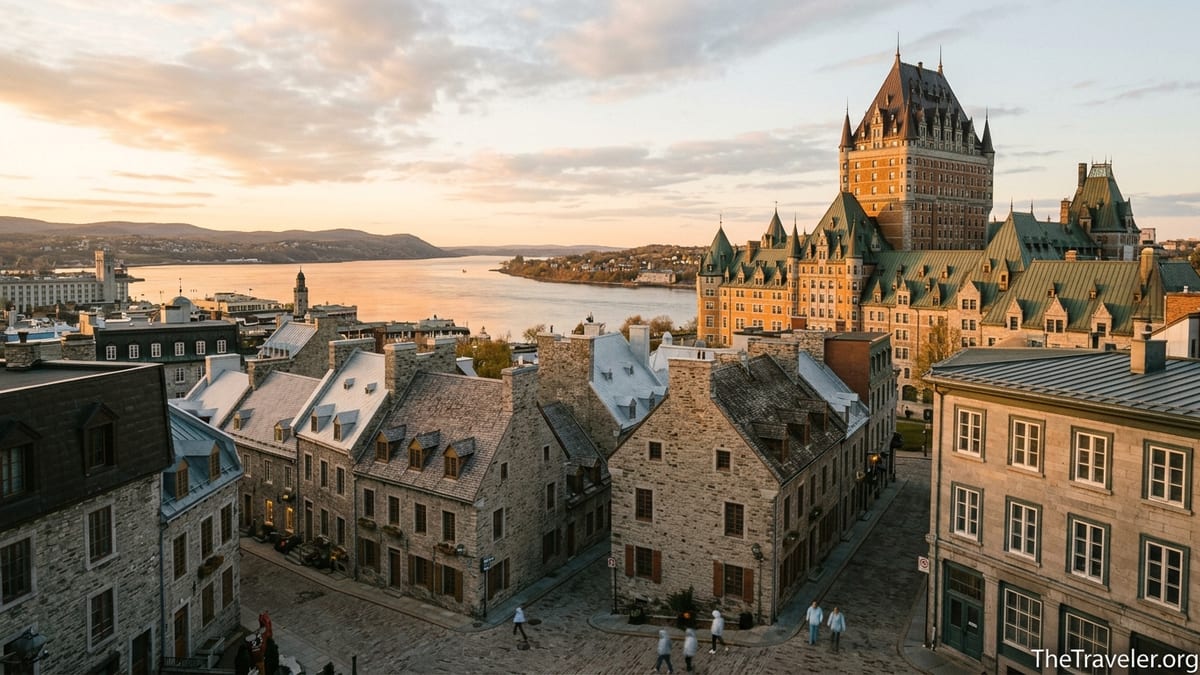
After Montreal, head to Quebec City for three nights, with time to walk the Plains of Abraham, ride the funicular between Upper and Lower Town and perhaps take a sunset stroll along the Dufferin Terrace in front of the iconic Chateau Frontenac hotel. On day thirteen, take an early train or drive from Quebec City back to Montreal or directly towards Kingston. If you are returning west, spending one or two nights in Kingston allows a boat cruise into the Thousand Islands, where you can see small cottages perched on rocky islands and historic estates tucked among the trees. Many cruises last two to three hours and depart from Kingston’s waterfront, which is within walking distance of downtown hotels and restaurants.
Throughout a two week trip, aim to structure your moves so that longer travel days are followed by lighter sightseeing days. For instance, after the five hour journey between Toronto and Montreal, plan a relaxed evening stroll and dinner instead of multiple timed tickets. This pattern helps avoid burnout, especially for families or multi generational groups who may have different energy levels. Booking flexible rail fares where available can also give you the option to take an earlier or later train if you find yourself ahead of or behind schedule on any given day.
21 Day Grand Tour: Extending to Atlantic Canada
Three weeks gives you enough time to complete the full Quebec and Ontario circuit and add an Atlantic Canada segment without feeling rushed. Many travellers choose to visit Halifax in Nova Scotia, sometimes combined with a driving loop through Cape Breton Island or the South Shore, while others focus on New Brunswick’s Bay of Fundy region, known for some of the highest tides in the world. To reach these areas from Quebec City or Montreal, you can either fly or take a long distance train combined with regional buses, depending on your budget and appetite for slow travel.
A practical 21 day outline might allocate about 12 to 14 nights to the core Eastern Canada cities and 7 to 9 nights to the Atlantic region. For example, spend nights one to three in Toronto, four and five in Niagara and Kingston, six and seven in Ottawa, eight to ten in Montreal and eleven to thirteen in Quebec City. From Quebec City, consider a short flight to Halifax, which usually takes under two hours. This saves more than a day compared to combining the long distance train that serves the route with additional ground transfers.
Once in Halifax, you could spend three nights in the city itself, exploring the waterfront boardwalk, the Maritime Museum of the Atlantic and the historic Citadel. From there, rent a car for a three or four night loop. One classic route includes Lunenburg and Mahone Bay on the South Shore, with colourful wooden houses and seafood restaurants, and then a visit to Peggy’s Cove, where a white lighthouse stands on wave washed granite rocks. Another option is to head for Cape Breton Island and the Cabot Trail, a scenic coastal drive often tackled over two or three days with overnight stops in small inns or bed and breakfasts.
If you prefer New Brunswick, you might aim for Moncton or Saint John as a base. From there, it is possible to visit Hopewell Rocks on the Bay of Fundy, where the tide difference can be several metres between low and high tides, revealing and then covering the famous rock formations. Be prepared for changeable weather in Atlantic Canada even in summer, with fog and cool breezes near the coast, so pack layers and a waterproof jacket and leave some flexibility for indoor activities such as brewery visits or museums on days with persistent rain.
When you add an Atlantic segment, it becomes more important to think about your flights in and out of Canada. An efficient pattern is to arrive in Toronto, travel east overland through Ottawa, Montreal and Quebec City, then fly onward to Halifax from Quebec City or Montreal and depart home from Halifax at the end of the trip. This open jaw approach reduces backtracking and frees up extra time for coastal walks or village visits instead of repeating a long corridor journey at the end.
Transport Choices: Train, Car and Short Flights
Eastern Canada is one of the few regions in North America where intercity trains are a practical alternative to driving. The main passenger operator connects Toronto, Ottawa, Montreal and Quebec City with multiple departures per day on what is sometimes called the corridor. Travel times vary by service, but broadly you can expect around four to five hours between Toronto and Ottawa, a similar duration between Toronto and Montreal, roughly two hours between Ottawa and Montreal, and approximately three and a half hours between Montreal and Quebec City. For many visitors, especially those who prefer not to drive in unfamiliar cities, this makes trains an attractive and environmentally conscious option.
Driving still has advantages, especially if you want to include side trips that are not served by frequent trains, such as small towns along the St. Lawrence River or countryside wineries. Car rental costs fluctuate by season, but for planning purposes many travellers find compact rentals from major brands at daily rates that compare with two long distance train tickets, especially when booked well in advance. Remember to factor in parking costs in downtown Toronto and Montreal, which can add a noticeable amount per night, and be aware that some historic areas, notably Old Quebec, have narrow streets and limited parking near heritage hotels.
Short flights are most useful for bridging larger gaps, such as between Quebec City or Montreal and Atlantic Canada or between Toronto and Halifax if you plan to skip Quebec. Flight times on these routes often fall in the one to two hour range, but when you add airport transfers and security, the total time can be closer to four or five hours door to door. For this reason, many travellers prefer to fly only when distances exceed what can be covered by train or car in a similar time. Domestic airlines frequently run sales outside peak summer and holiday periods, so it is worth watching fare calendars if your dates are flexible.
Whichever mode you choose, avoid overpacking your days. If a schedule shows a five hour train ride between cities, plan at least seven hours between hotel check out and check in to account for getting to and from stations, possible delays and meals. Aim to arrive in new cities by late afternoon, not late night, so you can orient yourself while it is still light, especially in winter when darkness comes early in Canada. Booking accommodations within walking distance of central stations in cities like Toronto, Ottawa and Montreal can also reduce the need for taxis and simplify your arrival and departure days.
Seasonality, Budgets and Practical Tips
The feel of an Eastern Canada itinerary changes dramatically with the seasons. Summer, from late June to early September, brings warm temperatures, lively outdoor festivals in Montreal and Quebec City and comfortable conditions for Niagara boat tours and Atlantic coastal hikes. It is also when hotel rates and car rental prices are typically at their highest, and when you will encounter the biggest crowds around Canada Day and major festivals. Shoulder seasons in May, early June, late September and early October often deliver cooler but pleasant weather and lower prices, along with fall foliage in late September and early October in much of Ontario and Quebec.
Winter itineraries, especially from December through March, can be magical in Old Quebec and Montreal, with snow covered streets, ice skating rinks and seasonal markets, but they demand preparation. Expect sub-freezing temperatures, icy sidewalks and occasional snowstorms that can disrupt driving schedules. Trains are often more comfortable than highways on stormy days, and winter festivals such as Quebec’s famous winter carnival are a strong draw. When planning a winter route, shorten your driving legs, schedule extra time between connections and look for centrally heated hotels or apartments close to restaurants and attractions.
In terms of budgets, Eastern Canada is often a bit more affordable than major Western European capitals but more expensive than many parts of the United States. Mid range downtown hotels in Toronto, Montreal and Quebec City often price rooms at levels comparable to large American cities, with rates climbing significantly during peak summer weekends and major events. Mixing a few nights in business hotels near train stations with character stays in historic inns or boutique properties can keep costs under control while still giving you a sense of place.
Finally, small practical choices will make your itinerary feel smoother. Buying regional transit passes in Montreal or Toronto can simplify getting around without a car. Booking timed entry tickets in advance for major attractions such as the CN Tower in Toronto or certain popular museums can reduce wait times. Packing a light day bag with a refillable water bottle, compact umbrella and power bank will also help you cope with Canada’s variable weather and long sightseeing days. If you are traveling during a busy festival period, such as Montreal’s jazz festival or Quebec City’s summer festival, reserve accommodations and intercity transport well in advance, as popular dates can sell out or become significantly more expensive.
The Takeaway
A well planned Eastern Canada itinerary offers a mix of skyscraper skylines, European influenced old towns, powerful waterfalls and, with a bit more time, maritime fishing villages and rocky coasts. Whether you have seven, ten, fourteen or twenty one days, focusing on a logical route through Toronto, Niagara Falls, Ottawa, Montreal and Quebec City, and optionally extending to Atlantic Canada, lets you experience many of the country’s most memorable settings without unrealistic travel days.
As you sketch your route, think in terms of travel building blocks: four to five hour train segments between major cities, two to three night stays in urban hubs and three to four night clusters for coastal or countryside extensions. Layer on the season, your preferred pace and your chosen mix of trains, cars and flights, and you will arrive at a plan that works in practice as well as on paper. The key is to be selective, allowing time to linger in a few places that speak to you rather than trying to check every possible stop off a list.
From the observation decks of Toronto’s skyline towers to the mist of Niagara Falls, from Ottawa’s riverside parliament to the cobbles of Old Quebec and, further east, the lighthouses of Nova Scotia or the tides of the Bay of Fundy, Eastern Canada rewards travellers who balance movement with moments of stillness. With realistic travel times, thoughtful overnight allocations and attention to the character of each region, your journey through this part of Canada can feel both comprehensive and refreshingly humane in pace.
FAQ
Q1: Is it better to travel Eastern Canada by train or by car?
For city focused itineraries that link Toronto, Ottawa, Montreal and Quebec City, trains work very well and save parking hassles. If you want to explore smaller towns, wineries or national parks in depth, a car gives you more flexibility. Many travellers combine both, using trains between big cities and renting a car only for specific days around Niagara or in Atlantic Canada.
Q2: How many nights should I spend in each city on a 10 day trip?
On a classic 10 day route, a common pattern is three nights in Toronto, one near Niagara Falls, two in Ottawa, two in Montreal and two in Quebec City. You can adjust by trimming Niagara or Ottawa if you prefer more time in Montreal or Quebec City, but try not to book fewer than two nights in any major city so you have at least one full day without moving.
Q3: Can I visit Niagara Falls as a day trip from Toronto?
Yes, Niagara Falls is a very popular day trip from Toronto. The drive is roughly 90 minutes each way in good traffic, and many tour companies offer full and half day excursions that include transport, a boat cruise and time at the falls. If you want to see the illumination and evening fireworks in summer, consider staying one night near the falls instead of returning to Toronto the same day.
Q4: Do I need to speak French to travel in Quebec and Atlantic Canada?
No, you do not need to speak French to travel in Quebec or Atlantic Canada, though knowing a few basic phrases is appreciated. In Montreal and Quebec City, many people working in hotels, restaurants and tourist attractions speak both French and English. In Atlantic Canada, English is dominant, with French also present in some communities, particularly in parts of New Brunswick.
Q5: What is the best time of year to do a 21 day Eastern and Atlantic Canada trip?
Late June through early October is generally the most comfortable window for a three week itinerary that includes both inland cities and coastal regions. July and August offer the warmest weather and the most festivals but also the highest prices. Late September and early October trade beach weather for beautiful fall foliage and slightly lower crowd levels in many places.
Q6: How far in advance should I book trains and flights within Canada?
For peak summer or major holiday periods, aim to book intercity trains and domestic flights at least two to three months in advance to secure good schedules and prices. In shoulder seasons, availability is usually better and you can sometimes wait until four to six weeks before travel, but specific popular departures and weekend dates can still sell out.
Q7: Is driving in winter between Toronto, Ottawa, Montreal and Quebec City safe?
Winter driving in this region is common and roads are generally well maintained, but conditions can change quickly with snow, ice and freezing rain. If you are not experienced driving in winter, consider using trains between major cities and saving any car rentals for shorter local trips on days with favourable forecasts. Always allow extra time, check conditions before departure and be flexible with your plans.
Q8: Can I start my itinerary in Montreal or Quebec City instead of Toronto?
Yes, many travellers, especially those arriving from Europe, start in Montreal or Quebec City because of direct transatlantic flights. You can then travel west through Ottawa and Toronto and fly home from Toronto, or reverse the direction. Open jaw flight tickets that arrive in one city and depart from another are often the most efficient option for linear routes.
Q9: How expensive is accommodation in Eastern Canada’s main cities?
Accommodation prices vary by season and location, but in general, downtown mid range hotels in Toronto, Montreal and Quebec City are comparable to those in large American cities. Rates rise during major festivals, sports events and summer weekends. More budget friendly options include chain hotels outside the very centre, short term apartment rentals and, in some cases, university residences that rent rooms in summer.
Q10: Is three weeks enough to include both Quebec and Ontario cities and a full Atlantic Canada loop?
Three weeks is enough for a satisfying combination, but you will still need to make choices. A common approach is to spend about 12 to 14 nights on the Toronto, Niagara, Ottawa, Montreal and Quebec City circuit and 7 to 9 nights focused on either Nova Scotia or New Brunswick rather than trying to cover every Atlantic province. This allows time for a mix of city sightseeing, coastal drives and rest days without packing and unpacking every day.