


Choosing where to stay in Eastern Canada can shape your entire trip, whether you are planning an urban long weekend, a Niagara Falls getaway or a multi-week road trip linking Ontario, Quebec and the Atlantic coast. The right base will decide how much time you lose in transit, how walkable your days feel and whether your evenings are spent in lively neighborhoods or quiet harbors. This guide focuses on real neighborhoods and concrete choices in Toronto, Niagara Falls, Ottawa, Montreal, Quebec City and Halifax, plus a few scenic stopovers that work especially well for first-time visitors, couples, families, city breaks and nature-focused itineraries.
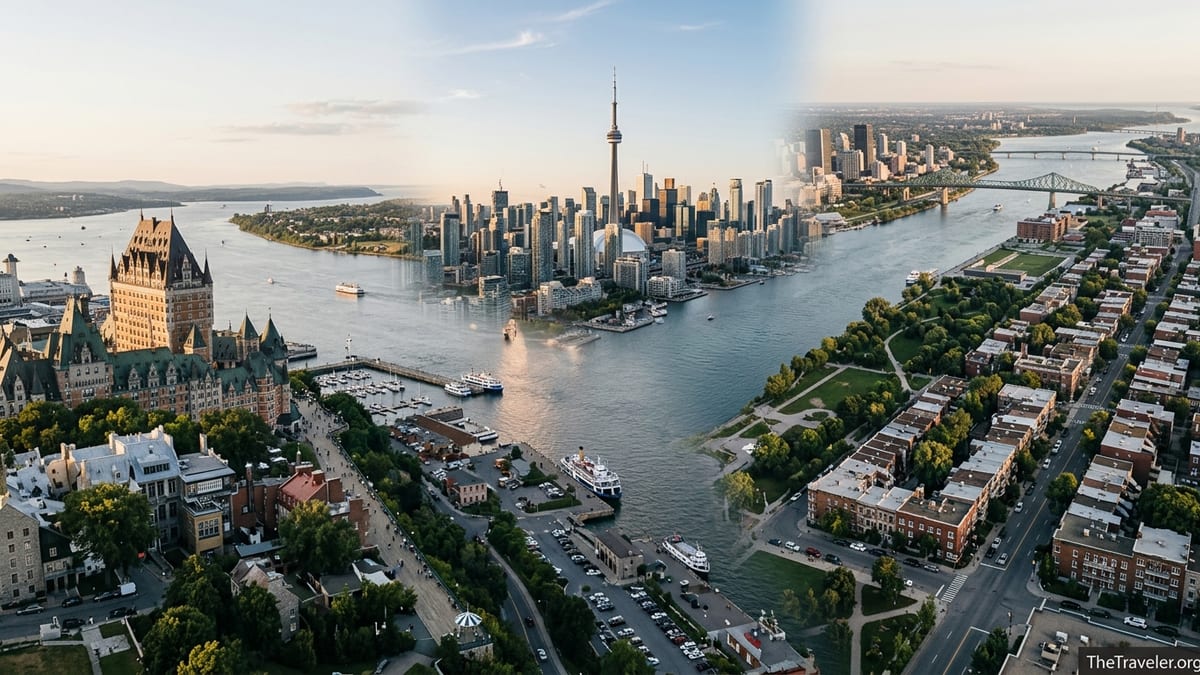
How to Think About Bases in Eastern Canada
Distances in Eastern Canada are large, but the main cities are compact enough that a smart base can let you explore mostly on foot or with simple transit. A typical first-time route might run from Toronto to Niagara Falls, then east toward Ottawa, Montreal, Quebec City and finally Halifax if you are including the Atlantic provinces. Each of these cities has a historic or downtown core where most visitors stay, plus a ring of neighborhoods that suit specific styles such as luxury, nightlife, family comfort or quiet local life.
Hotel prices vary by season and day of the week. In Toronto and Montreal, a central midrange hotel for two people can often run from roughly 220 to 350 Canadian dollars per night in peak summer, with winter and shoulder seasons dropping that range, especially Sunday to Thursday. Niagara Falls is highly seasonal, with fallsview rooms that can double in price on summer weekends. Families often save by choosing chain hotels with breakfast and parking slightly away from the busiest blocks, then walking or using public transit in.
For a road trip, you will usually combine walkable city bases with one or two scenic smaller towns. Many travelers pair Toronto with at least one night near Niagara Falls, then choose either Ottawa or Montreal as their next longer base rather than trying to stay in every city for the same number of nights. Quebec City and Halifax often come at the beginning or end of a loop, rewarding those extra travel hours with strong sense of place, waterfront scenery and easier access to nature.
When comparing bases, think about three practical questions. How will you arrive and leave, whether by train, plane or car. What do your days look like, such as museum-hopping, café wandering, hiking or winery visits. And who is in your group. Couples and solo travelers may prefer atmospheric historic quarters, families often prioritize space and pools, and nature-focused visitors may prefer to sleep in smaller towns or near national and provincial parks.
Toronto: Big City Base With Neighborhood Choice
For most visitors, the best all-round base in Toronto is the downtown core near Union Station and the waterfront. Staying around the Financial District, Entertainment District or along Front Street puts you within a 10 to 20 minute walk of the CN Tower, Rogers Centre, Scotiabank Arena and the Harbourfront. Many major hotels cluster here, including international brands with predictable standards, indoor pools and easy access to the UP Express train to the airport. In high season, expect a standard downtown room to start somewhere in the mid 200s CAD on quieter nights and rise higher when there are big events or sports games.
Couples and style-focused travelers often gravitate toward Yorkville, just north of downtown. This compact upscale neighborhood is known for its luxury hotels, designer boutiques and polished restaurants, and it is anchored by two key subway lines. Rooms here tend to be among the most expensive per night in the city but reward you with quieter evenings, high-end shopping and quick transit back to the core. It is a strong choice for a long weekend built around galleries, dining and spa time rather than stadium events.
For a more local-feeling base at slightly softer prices, look at the King West and Queen West corridors or the Distillery District area. Converted warehouses and low-rise buildings hold boutique hotels and loft-style stays within reach of independent shops, bars and cafés. The Distillery District in particular gives you cobblestone streets and 19th century brick architecture, popular Christmas markets in winter and patios in summer, while still being close to the downtown core. Families sometimes prefer the waterfront and Harbourfront area because of open space, playgrounds and easier stroller routes along the lake.
Road trippers may choose to stay near the highway network around the Don Valley Parkway or Gardiner Expressway for one night on either end of a journey, especially if they are collecting a rental car and heading toward Niagara or Ottawa. Business parks and airport-adjacent zones typically offer lower rates and include parking and breakfast, but they come at the cost of needing a car for almost everything and having little character for evening walks. For first-time visitors who want to feel Toronto itself, downtown or Yorkville are usually the better call.
Niagara Falls: Choosing Between Fallsview and Clifton Hill
On the Canadian side of Niagara Falls, visitors choose mainly between the Fallsview district and the Clifton Hill area. Fallsview sits up on the bluff with large modern hotels facing the Horseshoe Falls. Many towers have south or east facing rooms designed to maximize views, and higher floors are priced accordingly. A standard room facing away from the falls in a midrange hotel might start somewhere around the low- to mid-200s CAD on a weekday in summer, while a high-floor fallsview room in peak season can push into the 400s or more, especially on Friday and Saturday nights. Couples coming for a special occasion often decide that the premium is worth it for sunrise and illumination views directly from bed.
Clifton Hill, just downhill, trades panoramic views for proximity to attractions. Streets here are packed with arcades, fun houses, mini golf, chain restaurants and family-friendly attractions, which makes it noisy but convenient. Hotels and motels a few blocks back from the main strip often come in cheaper than Fallsview towers, and many include free parking and breakfast. For families with younger kids, this means you can step straight from your lobby into the action without needing to navigate the incline railway or long uphill walks at the end of the day.
Travelers focused on budgets or road trips may decide to stay slightly away from the central tourist zone altogether. Properties along Lundy’s Lane or in nearby St. Catharines often offer lower nightly rates and free parking, trading a 10 to 20 minute drive for meaningful savings on multi-night stays. This can work well if you plan to visit nearby wineries in Niagara-on-the-Lake or explore hiking trails along the Niagara Parkway rather than spending every hour at the falls themselves.
One logistical note is that most of the classic postcard views of the Horseshoe Falls are from the Canadian side, while the American side in Niagara Falls, New York, offers more direct park access and shorter walks to the water’s edge from certain hotels. Some travelers split their stay, spending one or two nights in a fallsview tower for the full spectacle and then moving to a quieter town surrounded by vineyards or countryside to decompress and lower costs.
Ottawa: Compact Capital for Walkable Sightseeing
Ottawa’s downtown core is small enough that most first-time visitors can treat it as one broad walkable base. Staying near Parliament Hill, between the Rideau Canal and the Ottawa River, puts you within easy reach of the National Gallery, the Canadian Museum of History across the river, and the ceremonial buildings that define the capital. Many of the city’s established hotels line streets like Elgin and Rideau, close to the large downtown shopping center and transit hubs. For city breaks focused on museums, history and winter skating on the canal when conditions allow, this central zone is the most convenient choice.
Just east of the canal, the ByWard Market district combines historic street grids with dense dining and nightlife. This neighborhood has long been considered one of Ottawa’s hearts, mixing produce stalls, patios and bars with galleries and small shops. Hotels here range from straightforward chains to boutique options over restaurants, and the streets stay lively into the night. Couples who value walkable dinners and wine bars often base themselves here, while light sleepers and families with younger children may prefer streets a few blocks removed from the noisiest sections.
For visitors who value a slightly quieter, residential feel while staying close to the center, Centretown and the Golden Triangle areas just south of downtown are good options. These neighborhoods hug the Rideau Canal and offer a mix of apartment-style stays, bed and breakfast properties and small hotels. They are particularly appealing in summer when you can walk or cycle along the canal paths and in winter if you hope to lace up skates nearby. Travelers with cars sometimes appreciate that these streets can have easier parking arrangements than the tightest downtown blocks.
Road trippers using Ottawa as a gateway to outdoor activities often look at bases that make it simple to reach Gatineau Park in Quebec, which lies just across the river and offers hiking, cross-country skiing and scenic drives. Staying on the Hull or Gatineau side can reduce the morning drive to the park while still leaving you within a short drive or bus ride of central Ottawa’s museums and restaurants. If you split your trip, consider a few central nights for pure sightseeing and then a night closer to the park or along the Ottawa River for nature-focused days.
Montreal: Matching Neighborhoods to Travel Style
Montreal rewards travelers who choose their neighborhood thoughtfully, because each area has a distinct character. For first-time visitors wanting a strong sense of place, Old Montreal is a classic base. This historic district along the St. Lawrence River has cobblestone streets, stone buildings and landmark sites like Notre-Dame Basilica and the Old Port. Many hotels and apartment-style stays here occupy converted warehouses and heritage buildings, with interior stone walls and narrow streets right outside. Prices generally sit at the higher end of the city’s range, especially in summer and during festivals, but couples and photographers often find the atmosphere is worth the premium.
Downtown Montreal, stretching roughly along Sainte-Catherine Street, suits visitors who prioritize convenience. This area concentrates major hotel chains, office towers, shopping and access to the main train station. It connects directly to the Underground City, which is a network of passageways and malls that can be handy in winter when temperatures drop and sidewalks ice over. Families who want large hotels with pools, reliable services and direct access to multiple metro lines often choose downtown, especially if they plan day trips by rail or bus.
To experience Montreal’s café and restaurant culture more fully, many travelers look to Plateau Mont-Royal and the neighboring Mile End. These tree-lined residential districts are filled with low-rise apartments, staircased balconies, small parks and independent shops. Accommodation here often leans toward smaller hotels, guesthouses and apartment rentals rather than large towers. It can be ideal for longer stays, digital nomads and families who want kitchens and laundries. The trade-off is that you will rely a bit more on the metro or bus to reach the Old Port and downtown sights, though bike lanes and walkable streets help keep everyday logistics simple.
For road trips and modern comforts, newer condo-dense areas such as Griffintown and the Lachine Canal corridor give you contemporary hotel rooms and serviced apartments a short walk or tram ride from the center. These zones are particularly attractive to travelers arriving by car, as they tend to have more readily available parking than the tight Historic Quarter. They also put you within cycling reach of the waterfront paths west along the canal or east toward the Old Port, which is useful if your itinerary mixes city days with outdoor exercise along the river.
Quebec City: Old Town Charm and Scenic Gateways
Quebec City is smaller than Montreal, but its choice of bases matters just as much because of the steep terrain and historic layout. The most iconic place to stay is within the walled Old Quebec, either in Upper Town near the famous château-style hotel that dominates the skyline or in Lower Town along the riverside streets of the Petit-Champlain area. Upper Town offers easy access to the fortified walls, classic plazas and major museums, while Lower Town gives you charming narrow streets, artisan shops and proximity to the cruise docks. Hotels in these zones command higher prices, especially for rooms with river views or historic features, but they deliver the strongest European feel in North America.
For travelers trying to balance budget and experience, neighborhoods just outside the walls can be excellent. The Saint-Jean-Baptiste area to the west, for example, places you within a 10 to 20 minute walk of the Old City gates while surrounding you with local bakeries, small grocery stores and less touristy restaurants. Room rates here are often softer than inside the walls, and some properties provide on-site parking, which can be difficult in the narrowest streets of Old Quebec. This combination can be ideal for families or anyone planning several nights.
Couples and travelers focused on food and nightlife may gravitate toward the Saint-Roch and Saint-Sauveur districts down the hill from the old center. In recent years these neighborhoods have filled with microbreweries, coffee shops, creative restaurants and boutiques in former industrial spaces. Accommodation options include boutique hotels, design-led hostels and short-term rentals, usually at lower nightly prices than Upper Town. The walk back up the hill to the old fortifications can be steep, but public buses and rideshares soften that drawback, especially after long days of staircase climbing.
Nature-focused visitors often use Quebec City as a jumping-off point for day trips along the St. Lawrence River or into nearby countryside. Staying on the city’s eastern side or near major routes can cut travel times to destinations such as Montmorency Falls and the Île d’Orléans, where you can visit orchards, farm stands and overlook viewpoints. For multi-day road trips, some travelers split time between two bases: a couple of nights inside or at the edge of Old Quebec for history and then a night or two in a riverside inn or small village to enjoy quieter evenings and scenic drives.
Halifax and Scenic Road Trip Bases
Halifax, on the Atlantic coast of Nova Scotia, gives road trippers a compact waterfront city base with straightforward access to coastal drives. Staying near the downtown harborfront puts you within walking distance of the boardwalk, the historic citadel hilltop fort and many of the city’s seafood restaurants and pubs. Hotels and inns along or just above the boardwalk range from simple to upscale, and many rooms offer partial harbor views that feel atmospheric when fog rolls in or when cruise ships call. This area suits first-time visitors, couples and weekend breaks focused on food and maritime history.
Families and travelers who prefer quieter evenings sometimes look just slightly inland in neighborhoods above the harbor. Here you will find midrange chain hotels and apartment-style stays, often with more space and easier parking than the waterfront streets. Because Halifax’s center is small, you can still walk to the harbor in 10 to 20 minutes from many of these locations, or use local buses and rideshares. This arrangement can work well if you are using Halifax as your entry point and then heading out along the coast for a larger road trip loop.
For nature-focused itineraries, pairing Halifax with smaller scenic bases unlocks classic Eastern Canada landscapes. Many visitors add a night or two near places like Mahone Bay or Lunenburg, historic coastal towns southwest of Halifax known for colorful wooden buildings, working harbors and accessible seaside trails. These communities have a mix of guesthouses, inns and small hotels, plus seasonal restaurants that focus on local seafood. On the other side of the province, the Bay of Fundy coast offers dramatic tides and hiking, with small towns providing modest motels and bed and breakfasts that serve as quiet night stops on longer journeys.
Further afield, if your trip extends beyond Halifax into the rest of Atlantic Canada, you can choose bases on Prince Edward Island near beaches and farmland, or in New Brunswick cities such as Saint John or Moncton that give easier access to Fundy National Park and Hopewell Rocks. In all of these cases, the pattern is similar: stay centrally in a small city or large town for walkable evenings, then add one or two nights in more remote inn-style accommodations to cut drive times to trailheads, beaches or viewpoints.
Pairing Bases for Different Travelers
First-time visitors who want a mix of cities and iconic sights often build a route like Toronto, Niagara Falls, Montreal and Quebec City. In this case, downtown Toronto plus a fallsview or Clifton Hill hotel in Niagara give you two very different urban energies. Old Montreal or the Plateau then provide a deep dive into Quebec culture, and a final stay inside or just outside the walls of Old Quebec leaves a strong last impression. Traveling mostly by train and bus is realistic between Toronto, Montreal and Quebec City, though you will likely use a bus or tour for Niagara Falls.
Couples planning a romantic trip might prioritize atmospheric bases like Yorkville in Toronto, Fallsview tower hotels in Niagara, Old Montreal’s stone streets, Upper Town in Quebec City and a harborfront inn in Halifax. This combination focuses on walkable historic or stylish quarters, evening restaurant scenes and rooms with views. It tends to be more expensive, so couples can manage costs by mixing in a few nights in less central areas or traveling during shoulder seasons such as late spring and early autumn when hotel rates are often softer.
Families often benefit from midrange chain hotels with pools, breakfast and parking included, located just outside the busiest cores. In Toronto, that might mean a hotel between downtown and midtown that still sits on a subway line. In Ottawa, a property near the canal in Centretown provides green spaces and reasonable walks to museums. Around Niagara, a Clifton Hill or Lundy’s Lane hotel with easy parking may make more sense than a high-rise tower, and in Montreal, downtown or the Plateau’s apartment rentals can give you kitchens and separate bedrooms. Building in regular playground stops and short drives keeps energy up for children and adults alike.
Nature-focused travelers should think about adding secondary bases beyond the main cities. From Toronto, Niagara-on-the-Lake provides a quieter town surrounded by vineyards and bike paths. Near Ottawa, a lodge or cabin close to Gatineau Park shortens drives to hiking and cross-country skiing. Outside Quebec City, a countryside inn along the river or near a regional park allows early starts for waterfall visits and rural drives. From Halifax, seaside towns along the South Shore or near the Bay of Fundy become staging points for kayaking, whale watching and coastal hikes. This mix of city and small-town nights creates a rhythm that many road trippers find more satisfying than staying only in large urban hotels.
FAQ
Q1. Where should first-time visitors to Eastern Canada base themselves if they have only 10 days
For a 10 day trip, a practical route is to stay in downtown Toronto, spend one or two nights near Niagara Falls, then divide the remaining time between Montreal and Quebec City. This gives you one major English-speaking metropolis, the falls, and two distinct Francophone cities without overloading travel days.
Q2. Is it better to stay in Fallsview or Clifton Hill at Niagara Falls
Fallsview is best if you want a room facing the Horseshoe Falls and are willing to pay a premium for views, which suits couples and special occasions. Clifton Hill suits families and budget travelers who prefer to be next to attractions, arcades and casual dining, with lower prices when you step a few blocks off the main strip.
Q3. Which neighborhood in Montreal is best for families
Downtown Montreal works well for families who want large hotels with pools and quick access to museums and transit. Plateau Mont-Royal is also popular for families who prefer apartment-style rentals, quieter residential streets, parks and the ability to cook some meals at home while still being a short metro ride from Old Montreal.
Q4. Is it worth staying inside the walls of Old Quebec
Staying inside the walls of Old Quebec is often worth it if your budget allows, because you experience the historic atmosphere from early morning to late at night without needing to commute in. If prices or parking are a concern, neighborhoods immediately outside the walls such as Saint-Jean-Baptiste still give you charm and walkability at slightly lower cost.
Q5. Do I need a car to enjoy Ottawa, Montreal and Quebec City
You do not need a car to enjoy the central areas of Ottawa, Montreal and Quebec City, as each has compact cores and workable public transit. A car becomes more useful if you plan day trips to Gatineau Park, countryside vineyards, waterfalls or regional parks, or if you are linking several cities on a flexible road trip schedule.
Q6. Where should couples stay in Toronto for a romantic city break
Yorkville is a strong choice for couples seeking a romantic city break in Toronto, with luxury hotels, high-end shops and quiet streets. Some couples also enjoy boutique hotels in the Distillery District or along King West, where historic or design-focused properties sit close to restaurants, galleries and evening walks along the waterfront.
Q7. What is a good base in Halifax for a mixed city and coastal trip
For a mixed city and coastal trip, start with a few nights near the Halifax waterfront so you can walk to the harbor, citadel and restaurants. Then add one or two nights in a small coastal town such as those along the South Shore or near the Bay of Fundy, where inns and guesthouses offer easy access to beaches, lighthouses and hiking trails.
Q8. How can families keep accommodation costs manageable in Eastern Canadian cities
Families can keep costs manageable by booking midrange chain hotels that include breakfast and parking, choosing apartment rentals with kitchens in neighborhoods like Montreal’s Plateau or Quebec City’s near-Old Town districts, and avoiding peak weekends and festival dates when rates spike. Staying slightly outside the most touristed streets while remaining on good transit lines usually delivers the best value.
Q9. Are there scenic small-town bases between the major cities
Yes, several small towns make excellent scenic stopovers between cities, such as Niagara-on-the-Lake between Toronto and Niagara Falls, or riverside villages near Quebec City. In Atlantic Canada, communities like Mahone Bay or Lunenburg give you colorful waterfronts and slower evenings within a couple of hours of Halifax, which helps break up driving days and adds variety to mostly urban trips.
Q10. When is the best time of year to book city bases in Eastern Canada
The best balance of price and weather often comes in late spring and early fall, when temperatures are mild and hotel rates are typically lower than peak summer. Winter brings lower prices in many cities but requires preparation for snow and cold, while July and August have the highest demand and prices, especially in Niagara Falls and popular festival cities like Montreal and Quebec City.