


Ontario’s slice of the Great Lakes coastline stretches for thousands of kilometres, and much of it is surprisingly beach-perfect. Instead of hunting for a single “best” spot, it is far more useful to choose a lake first, then a shoreline that fits your style: lively or laid-back, bath‑warm or bracing, dune-fringed or rugged rock. This guide compares standout Canadian beaches on Lake Huron, Georgian Bay, Lake Erie, Lake Ontario and Lake Superior so you can match the right stretch of sand to the kind of trip you actually want to take.
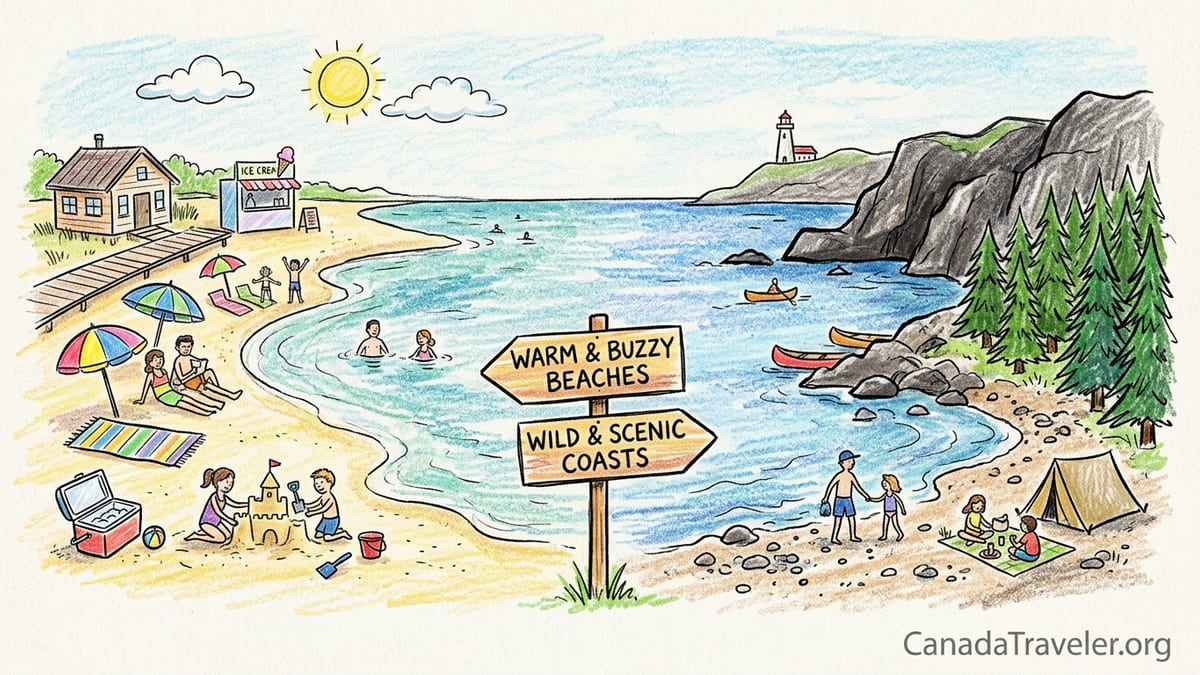
How the Canadian Great Lakes Beaches Compare
The first big decision is which lake suits your expectations. In broad strokes, Lake Erie and parts of Lake Huron warm up the quickest in summer and often feel most like “classic” beach holidays, with mid‑summer water temperatures that can reach the low‑20s Celsius or higher during warm spells. Lake Ontario can be swimmable but is more variable, especially early in the season. Georgian Bay and Lake Superior stay noticeably cooler, though they often win on water clarity and wild scenery.
Sand quality also varies by shoreline. Lake Huron’s Grand Bend and Sauble Beach, Georgian Bay’s Wasaga Beach, Lake Erie’s Long Point and many sections of Sandbanks Provincial Park on Lake Ontario all offer wide sweeps of soft, fine sand that feel close to an ocean beach. By contrast, some Lake Superior coves such as Old Woman Bay and Katherine Cove mix coarse sand with pebbles, which can be beautiful but less forgiving on bare feet.
Atmosphere is the third major difference. Grand Bend’s Main Beach on Lake Huron and Wasaga Beach Area 1 on Georgian Bay are built‑up, buzzy and can feel like resort towns in July and August, with music, patios and busy parking lots. Sandbanks, Long Point and many Lake Superior beaches trade some of that energy for a more natural setting, where evenings mean campfires or star‑gazing instead of nightlife. Knowing which mood you want will narrow your options quickly.
Finally, think about logistics. If you want drive‑up convenience with day‑use parking a short walk from the sand, Grand Bend, Sauble Beach, Wasaga and Point Pelee all deliver, especially if you arrive before late morning on peak weekends. If you prefer to step out of a tent or cottage directly onto the beach, consider provincial park campgrounds at Sandbanks, Long Point, Lake Superior or private cottage resorts strung along the Huron shore near Sauble and Southampton.
Lake Huron: Grand Bend and Sauble Beach
Lake Huron’s Ontario shoreline is one of the province’s most reliable bets for warm, swimmable water combined with wide sandy strands and famous sunsets. At Grand Bend, the municipality maintains a broad, groomed main beach backed by a modern beach house, playground and boardwalk. In high summer, the shallow near‑shore water can feel almost pool‑like on calm afternoons, and the fine sand makes it easy to spread out with beach tents and coolers.
Grand Bend is best for travelers who like a bit of buzz with their beach time. The main strip behind the sand is lined with casual restaurants, ice‑cream stands and bars, and summer weekends can feel almost festival‑like, especially during events and on long weekends. Families often choose the north or south ends of the beach, which are slightly quieter, while day‑trippers who want action gravitate to the centre close to the pier. Parking is concentrated in municipally run lots just behind the beach; on peak July Saturdays you should plan to arrive before 10 a.m. to avoid circling for a space.
Sauble Beach, about two and a half to three hours northwest of Toronto, offers a different version of Huron. Stretching for roughly 11 kilometres, it is one of the longest freshwater beaches in the world, with flat, hard‑packed sand at the water’s edge that is perfect for walking, biking and beach sports. The gradual slope means you can wade out a long way before the water reaches your shoulders, which reassures parents with younger children. Sauble sunsets are a major draw, with many visitors staying on the sand until the sky glows orange over the lake.
For accommodations around Sauble, the town and surrounding area are dotted with small motels, cottage courts and seasonal campgrounds, from simple tent and trailer parks to resort‑style properties with pools and playgrounds. Grand Bend offers a similar mix, including roadside motels on the way into town, rental cottages within walking distance of the beach and seasonal camping in nearby Pinery Provincial Park. In both beach towns, prices climb in July and August, so families often look at mid‑week visits in late June or early September for better value and more elbow room on the sand.
Georgian Bay: Wasaga Beach and Beyond
Georgian Bay is technically part of Lake Huron, but it has its own distinct feel. Wasaga Beach, on the southern shore, markets itself as the world’s longest freshwater beach, with more than 14 kilometres of sand broken into several signed beach areas. The water here tends to warm reasonably well in mid‑summer thanks to extensive shallow sections, and on calm days you can walk out over a sandy bottom for a surprising distance before it gets deep.
Wasaga works best for travelers who value choice. Beach Area 1, known locally as the main end, concentrates most of the action, with seasonal shops, patios and events just steps from the sand. It is lively, popular with younger crowds and day‑trippers, and it fills early on sunny weekends. Families often prefer Beach Area 2 or some of the eastern sections, which offer playgrounds, easier parking and a slightly quieter atmosphere while still keeping washrooms and lifeguarded zones within reach.
Water clarity on Georgian Bay is typically good, especially on calmer days, and the bay’s backdrop of the distant Niagara Escarpment gives Wasaga’s horizon a subtle mountain feel. The trade‑off is that windy days can bring in waves and cooler currents, so if swimming comfort is a priority, late July and August are safer bets than early summer. Many visitors combine beach time with cycling along the shore, paddling the Nottawasaga River or driving 40 minutes to Collingwood or Blue Mountain for additional dining and accommodation options.
For lodging near Wasaga, the town offers everything from simple roadside motels and old‑school cottage courts a few blocks off the sand to newer vacation rentals booked by the week. Prices are typically lower than in Muskoka resort country, which makes Wasaga an appealing base for travelers who want a beachy holiday within a half‑day drive of southern Ontario cities. Parking is spread across multiple lots along the shoreline; if you are arriving with young children and plenty of gear, choosing a lot adjacent to Beach Area 2 or 3 can shorten the walk significantly.
Lake Erie: Point Pelee, Long Point and the North Shore
Among the Great Lakes, Lake Erie usually delivers the warmest mid‑summer water, which is a major advantage if you like long swims rather than quick dips. Around Point Pelee National Park in southwestern Ontario, historic records show lake temperatures in July and August commonly in the low‑ to mid‑20s Celsius, and some years warmer still during heat waves. Within the park, the main public swimming areas are Northwest Beach and West Beach, both with long, sandy stretches, shallow entry and basic facilities like washrooms and change rooms.
Point Pelee appeals to travelers who want a beach experience paired with nature. Between swims, you can walk boardwalks through marshland, look for migratory birds or cycle quiet park roads. The trade‑off is that there are no hotels inside the park itself. Most visitors base in nearby Leamington or Kingsville, where you will find mid‑range chain hotels, waterfront boutique inns and cottage rentals, often within a 10 to 20 minute drive of the park gates. Day‑trippers should plan for a modest park entry fee and arrive reasonably early in summer to secure parking near the beach access points.
On the north shore of Lake Erie, Long Point Provincial Park is another favourite for soft sand and warm, shallow water. The park sits on a narrow sandy peninsula, and many campsites are only a short walk over low dunes to a broad, gently sloping beach. This makes Long Point especially appealing to families with children who like to run between campsite and water all day. The nearby village of Port Rowan provides basic groceries, a few casual restaurants and small motels, while more developed amenities are about 45 minutes away in Simcoe or Tillsonburg.
Elsewhere along Lake Erie’s north shore, beaches at Port Stanley, Turkey Point and Port Dover combine accessible day‑use areas with small‑town atmospheres. These spots work well for travelers from London, Hamilton or the Kitchener‑Waterloo region looking for a straightforward beach day. Sand is generally soft and the near‑shore water warm in late summer, though conditions can change after storms. Crowds and parking pressure at these smaller beaches usually peak on hot Saturdays in late July and early August, when lots can fill by late morning.
Lake Ontario: Sandbanks and Nearby Shores
Lake Ontario is deeper and slower to warm than Lake Erie or much of Lake Huron, but some pockets offer inviting swimming by mid‑summer, especially on sheltered bays. Sandbanks Provincial Park in Prince Edward County is the standout choice on the Canadian side for an almost oceanic beach feel. The park’s main beaches, including Outlet Beach and Sandbanks Beach, stretch out in long, pale arcs backed by impressive dunes and soft, fine sand that is ideal for bare feet and sandcastles.
Outlet Beach, which faces into a bay, is particularly popular with families. The water here stays shallow for a long distance and is more sheltered from waves, so even on breezy days it often feels calmer than the open‑lake side. By contrast, Sandbanks Beach and Dunes Beach can see more wave action, which some swimmers and body‑surfers enjoy. Water temperatures vary: in early June, many visitors find the lake bracing, but by late July and August, stretches of warm weather can bring the surface into a comfortable range for longer swims, especially in the shallower bay.
Because Sandbanks has become one of Ontario’s most in‑demand parks, logistics matter. Day‑use visitors from Toronto, Ottawa and Montreal need to reserve a timed entry pass during peak season and should expect lines at the gate on holiday weekends. Parking lots sit directly behind each main beach, but they do fill; arriving before mid‑morning is the surest way to park close to the sand. The park itself offers multiple campgrounds, ranging from more open, family‑oriented loops near West Lake to quieter, more wooded sections. Sites near the water are prized and often booked months in advance.
For travelers who prefer solid walls to tent fabric, Prince Edward County provides a wide range of accommodations within a 10 to 30 minute drive of Sandbanks, including farmhouse B&Bs, contemporary inns, vineyard guest suites and rental cottages. This makes it easy to blend beach days with winery visits and meals in Picton, Wellington or Bloomfield. If you want a similar sand‑and‑dune feel with fewer crowds, North Beach Provincial Park, a smaller day‑use area on a narrow strip of land, can be an appealing alternative, though its Lake Ontario side is rockier and can collect more debris than Sandbanks’ main strands.
Lake Superior: Wild Beaches for Rugged Travelers
Lake Superior is in a different category from the other Great Lakes. Its sheer size and depth keep water temperatures much cooler, so even at the height of summer many swimmers describe the experience as bracing rather than balmy. Typical August surface temperatures along the Ontario shore may hover in the mid‑teens Celsius, occasionally edging higher during hot spells near shallow, protected bays. If you prioritize warm, lazy swims, Lake Superior is not your best match.
What it does offer are some of the most dramatic freshwater beach landscapes in Canada. In Lake Superior Provincial Park, Old Woman Bay and Katherine Cove are two of the most photographed spots. Old Woman Bay combines a crescent of coarse sand and small pebbles with steep cliffs looming above the water, creating a fjord‑like feel that comes alive at sunset. Katherine Cove is smaller and somewhat more sheltered, with clear, green‑blue water and pockets of sand between rocky outcrops. On calm days, many visitors are happy to wade in for a quick dip, but most people spend as much time exploring the shoreline, picnicking and taking photos as they do swimming.
Superior’s beaches suit travelers who value solitude, hiking and scenery over amenities. Facilities tend to be minimal: parking lots, vault toilets and basic picnic areas rather than boardwalks and beach towns. Accommodations are concentrated in campgrounds inside the park and small motels or lodges in communities like Wawa or Batchawana Bay. If you are planning a road trip along the Trans‑Canada Highway between Sault Ste. Marie and Thunder Bay, building in one or two stops at these beaches turns a long drive into a highlight.
Because of the colder water, conditions on Lake Superior can change quickly, with fog, strong waves and sudden temperature drops after storms. Families visiting with children should be conservative about swimming, sticking to calm days and shallow near‑shore areas. For many travelers, the reward is not time in the water but standing barefoot in the sand as the lake reflects late‑evening light, reminding you that this is more inland sea than typical beach resort.
Choosing by Traveler Type: Warm‑Water Swimmers, Families, Campers and Crowd‑Avoiders
If warm swimming is your top priority, start with Lake Erie and the more sheltered parts of Lake Huron and Georgian Bay. Point Pelee, Long Point and the north‑shore beaches around Port Stanley and Turkey Point generally feel the most reliably warm in late July and August, with shallow, sandy entries and smaller waves on calm days. Grand Bend, Sauble Beach and Wasaga Beach can also be pleasantly warm during heat waves, but being on larger, more open water, they see more variation from one week to the next.
Families with younger children often gravitate toward beaches with shallow gradients, fine sand and nearby washrooms. Outlet Beach at Sandbanks, Long Point’s main beach, many sections of Wasaga Beach and the central stretches of Sauble and Grand Bend fit this profile. All offer room to spread out toys and sunshades, and most have lifeguarded zones during peak season. Practical touches like accessible mats at some Wasaga beach entries, boardwalks behind Grand Bend’s main strip and easy stroller access at Point Pelee’s Northwest Beach can make the day run more smoothly.
Campers and budget‑conscious travelers should look first at provincial parks: Sandbanks and Long Point for a balance of facilities and classic beach feel, Lake Superior for rugged beauty, and Pinery near Grand Bend as a Huron alternative that combines tall pines with expansive dunes and beachfront sites. Provincial park camping fees, while not cheap, are typically lower per night than nearby private cottages or hotels, especially for families or small groups sharing a site.
If avoiding crowds matters more than anything else, lean away from the headline beaches on peak weekends. Instead of Grand Bend’s Main Beach on a Saturday in August, consider driving a bit north to quieter stretches near Bayfield or Southampton. Rather than Wasaga’s busiest sections, look to its eastern beach areas or smaller Georgian Bay communities. On Lake Ontario, visit Sandbanks mid‑week in June or September or explore North Beach and lesser‑known county shorelines. On Lake Superior, almost any weekday visit outside of prime holiday periods will feel uncrowded by southern Ontario standards.
The Takeaway
No single Great Lake beach in Canada can claim to be perfect for every traveler. Warm‑water seekers will be happiest on Lake Erie and the more sheltered shores of Huron and Georgian Bay. Families who want fine sand and easy facilities have standout options at Grand Bend, Sauble Beach, Wasaga, Sandbanks, Long Point and Point Pelee. Those who dream of wild, photogenic shorelines will find what they are looking for on Lake Superior, even if that means briefer swims.
The most successful trips start by matching your expectations to the character of each lake and town. Decide honestly whether you want nightlife or campfires, warm shallows or dramatic waves, boardwalks and patios or quiet dunes and dark skies. Then choose your beach accordingly, reserve early if you are eyeing popular provincial parks, and time your visit for mid‑week or shoulder season if you hope to trade some heat for extra space.
Whichever lake you end up beside, treat it like the inland sea it is. Check local advisories before swimming, respect currents and weather, and give yourself time to explore beyond the main beach. From Lake Huron sunsets to Lake Superior cliffs, the Canadian Great Lakes reward travelers who see their beaches not as stand‑alone attractions but as gateways to some of the most varied freshwater coasts on the continent.
FAQ
Q1. Which Canadian Great Lake has the warmest beaches for swimming?
Lake Erie usually has the warmest water in mid‑summer, especially around Point Pelee, Long Point and the north‑shore beaches such as Port Stanley and Turkey Point.
Q2. Are Grand Bend and Sauble Beach suitable for families with young children?
Yes. Both offer wide, sandy beaches with gradual entry, shallow near‑shore water on calm days, washrooms nearby and plenty of space for strollers, shade tents and beach toys.
Q3. How cold is the water at Lake Superior beaches in summer?
Even in July and August, Lake Superior often feels chilly, with many visitors limiting themselves to quick dips or wading. Shallow, sheltered coves can be slightly more comfortable than open stretches.
Q4. Do I need reservations to visit Sandbanks Provincial Park for the day?
On most summer days and holiday weekends you need to book a day‑use reservation in advance, especially if you want to arrive late morning and still find parking close to the main beaches.
Q5. Which beaches are best if I want clear water and scenic views more than warm temperatures?
Georgian Bay around Wasaga and the Lake Superior shoreline at places like Old Woman Bay and Katherine Cove are known for clear water, dramatic backdrops and excellent photo opportunities.
Q6. Where can I camp right beside a Great Lakes beach in Ontario?
Sandbanks, Long Point and Lake Superior provincial parks all offer campgrounds within a short walk of the sand, and some loops have sites just behind low dunes or directly overlooking the water.
Q7. How bad are the crowds at popular beaches like Grand Bend and Wasaga in peak season?
On hot weekends in late July and early August, these beaches can feel very busy, with packed parking lots and lively main strips. Arriving early or visiting mid‑week makes a big difference.
Q8. Are there quieter alternatives to Sandbanks in Prince Edward County?
North Beach Provincial Park and smaller public access points along the county shoreline can offer a similar sand‑and‑water feel with fewer people, especially outside peak holiday weekends.
Q9. What kind of accommodations can I expect near Sauble Beach and Grand Bend?
Both towns offer a mix of small motels, cottage courts, vacation rentals and nearby campgrounds, ranging from simple tent sites to family‑oriented resorts with pools and playgrounds.
Q10. When is the best time of year to balance warm water and lighter crowds on the Great Lakes?
Late June and early September often strike the best balance, with water that has started to warm, more moderate prices and noticeably fewer day‑trippers than peak late‑July and August weekends.