


Driving a loop through Nova Scotia, Prince Edward Island and New Brunswick is one of the most rewarding road trips in Canada. In a single journey you can walk on the ocean floor at the Bay of Fundy, trace the cliffs of the Cabot Trail, linger over seafood in Charlottetown, and cross between provinces by both ferry and the Confederation Bridge. This guide lays out realistic 7, 10 and 14 day itineraries built around Halifax, Cape Breton, PEI, Saint John and Hopewell Rocks, with concrete examples of distances, timing and costs to help you turn inspiration into a bookable plan.
How to Structure a Maritime Provinces Road Trip
Most travelers start and end in Halifax, which has the region’s busiest international airport and a full range of rental car options. A compact SUV typically starts around 65 to 90 Canadian dollars per day in summer from major brands at Halifax Stanfield International Airport, with higher rates during peak July and August. From Halifax, it is roughly three hours to the Bay of Fundy side of Nova Scotia, three and a half to the Caribou ferry terminal for PEI, and four to five hours to Cape Breton Island and the Cabot Trail.
A classic loop connects Halifax with the Bay of Fundy and Annapolis Valley, crosses by ferry or bridge to New Brunswick and Saint John, continues to Hopewell Rocks and Moncton, hops to PEI and Charlottetown, then returns to Nova Scotia and finishes with Cape Breton and the Cabot Trail before dropping back to Halifax. Many organized tours, from coach itineraries to small-group operators, follow this same pattern because it balances driving days with coastal villages, hikes and time in the car at a sustainable pace.
The main planning choice is how to cross to and from PEI. The Confederation Bridge between New Brunswick and PEI is open year-round and takes about 10 minutes to drive. The Northumberland Ferries route between Caribou, Nova Scotia and Wood Islands, PEI is seasonal, running most days from mid-June to mid-October and taking about 75 minutes. Schedules can shift by year and certain sailings are sometimes removed on peak dates, so it is wise to check the current timetable and book vehicle spaces in advance, especially in July and August.
Your time frame will dictate how many regions you can realistically cover. In seven days, you are choosing highlights and making a fast circuit that touches each province. Ten days lets you slow down in at least two hubs, while 14 days supports a fuller loop with extra nights on Cape Breton and in PEI beach areas. The sample routes below are designed to be driven in either direction, but many visitors prefer to start with the Bay of Fundy and New Brunswick before crossing to PEI and ending with the Cabot Trail as a finale.
Ferry vs Bridge: Planning Your PEI Crossings
There are two main ways to include PEI in your Maritime loop: drive the Confederation Bridge between New Brunswick and PEI, or use the Northumberland Ferries crossing between Caribou, Nova Scotia and Wood Islands, PEI. Many travelers do one in each direction to add variety and enjoy both the engineering of the bridge and the relaxed feel of a ferry crossing. The bridge toll is charged only when leaving PEI, while the ferry charges for the vehicle and passengers on the crossing you take.
The Confederation Bridge usually takes less than 15 minutes to cross and operates in most weather conditions, although high winds can trigger speed restrictions for high-profile vehicles. In practical terms for a summer road trip, it functions like an ordinary highway segment between the Moncton area and PEI’s south shore. The drive from Moncton to Charlottetown via the bridge is about two and a half hours, making it convenient if you are coming directly from Hopewell Rocks or the Fundy coast and want to maximize time on PEI.
The Northumberland Ferries route offers a more leisurely experience. The crossing takes about 75 minutes between Caribou, near Pictou in Nova Scotia, and Wood Islands in southeastern PEI. In 2026, the core seasonal schedule runs from mid-June through mid-October, with multiple sailings per day in each direction. On certain peak Saturdays or holiday weekends, a mid-day round trip can be removed from the schedule, so travelers visiting in summer should reserve a sailing and plan to arrive at the terminal 45 to 60 minutes before departure. A one-way crossing for a standard car with two adults typically runs in the low three figures in Canadian dollars, though exact prices depend on vehicle size and passenger count.
If you have only a week, the bridge is usually the time-efficient choice because you can drive straight from Hopewell Rocks or Saint John to Charlottetown without needing to match a ferry departure. On a 10 or 14 day trip, using the ferry one way can be a highlight in itself. Many travelers pick up a late afternoon sailing from Wood Islands to Nova Scotia after a day exploring PEI’s beaches, then stay overnight in Pictou or Antigonish before continuing to Cape Breton the next morning. This breaks up the driving and gives you a taste of coastal village life in northern Nova Scotia.
7-Day Nova Scotia, PEI & New Brunswick Highlights
A week is just enough to sample each province and hit the high points: Halifax, the Bay of Fundy, Hopewell Rocks, PEI and a taste of Cape Breton. The trade-off is pace; you will be driving most days and will not see every corner of the region. The outline below assumes you start and end in Halifax and travel between New Brunswick and PEI via the Confederation Bridge, which is the most straightforward option for a short trip.
On Day 1, arrive in Halifax and spend the afternoon and evening in the city. Many travelers stay downtown near the waterfront boardwalk so they can walk to the Maritime Museum of the Atlantic, the Citadel and the city’s restaurants. A mid-range hotel or apartment in this area often runs from 220 to 320 Canadian dollars per night in summer. Day 2 is your Bay of Fundy day in Nova Scotia: drive about one hour to Wolfville to see the tides along the Minas Basin, visit a winery in the Annapolis Valley, then continue another hour and a half west if you want to reach the Digby area, known for scallops and whale-watching excursions in season.
Day 3 is dedicated to New Brunswick’s Fundy coast. Drive roughly three hours from Digby to the Saint John area via the ferry across the Bay of Fundy or the land route through Nova Scotia and New Brunswick. Many road trippers choose Saint John as a base and stop at the Reversing Falls rapids in town. On Day 4, continue about two and a half hours to Hopewell Rocks Provincial Park, timing your visit so that you see the famous flowerpot rocks at both low tide and high tide if possible. The park posts tide charts on-site, and a typical strategy is to arrive two hours before low tide to walk on the ocean floor, then return after lunch to see the tide reclaim the beach.
From Hopewell Rocks, drive about two and a half hours via Moncton and the Trans-Canada Highway to Charlottetown for a two-night stay covering Days 4 and 5. Use your full day on PEI to explore north shore beaches near Cavendish or Brackley, sample seafood in Charlottetown and visit small fishing harbours like North Rustico. On Day 6, leave via the Confederation Bridge and drive about three to four hours toward northern Nova Scotia and into Cape Breton, staying overnight in Baddeck or Ingonish as a base for the Cabot Trail. Day 7 is your Cabot Trail day: the loop takes about five to eight hours depending on stops, with short hikes like the Skyline Trail near Cheticamp and beach time in Ingonish if the weather cooperates. End the day driving four hours back to Halifax for a late flight or an extra night in the city if your schedule allows.
10-Day Itinerary: A Balanced Maritime Loop
With 10 days, you can slow the pace and add breathing room around the Bay of Fundy and Cape Breton sections while still visiting all three provinces. Many experienced travelers recommend structuring this as a full loop that includes both the Confederation Bridge and the Northumberland Ferry so your route feels varied rather than backtracking on the same highways.
Days 1 and 2 focus on Halifax and the nearby South Shore of Nova Scotia. After your arrival day in the city, dedicate a full day to driving the lighthouse route to Peggy’s Cove and Lunenburg. Peggy’s Cove is about 45 minutes from downtown Halifax, and the drive from there to Lunenburg takes roughly another hour and a half along the coast. Travelers often spend time photographing the classic lighthouse perched on the granite rocks, then wander the colourful streets and working waterfront of Old Town Lunenburg, a UNESCO World Heritage site, before returning to Halifax in the evening.
On Days 3 and 4, head for the Bay of Fundy and New Brunswick. One option is to drive two and a half hours north to the Wolfville and Grand Pré area for views of the Minas Basin tides and stays at vineyard inns or small hotels, then continue on Day 4 via the land route to Saint John, which usually takes about four and a half to five hours including a border crossing into New Brunswick. Alternatively, you can use a ferry between Nova Scotia and New Brunswick if schedules and prices line up for your dates. In Saint John, many visitors base themselves in the uptown district, where heritage brick buildings now house boutique hotels, cafes and the historic City Market.
Day 5 is devoted to Hopewell Rocks and the Bay of Fundy Parkway. From Saint John it is roughly two and a half hours along coastal roads through villages like Saint Martins to Hopewell Rocks. Many travelers combine a walk among the sea stacks at low tide with a drive along the Fundy Trail Parkway for cliff viewpoints and short walks to beaches and sea caves. If you plan carefully, you can end the day in Moncton, which is about 45 minutes from Hopewell Rocks, to position yourself for an early start across the bridge to PEI on Day 6.
Days 6 and 7 cover PEI. Cross the Confederation Bridge in the morning and drive to Charlottetown, about an hour and a half from the New Brunswick side. Use these days to tour the island’s north shore beaches, bike or drive through PEI National Park, and experience Charlottetown’s compact downtown with its restaurants and live music venues in summer. Many visitors stay one night in Charlottetown and another night near Cavendish or Stanley Bridge to balance urban comforts with easy beach access.
On Day 8, drive about an hour from central PEI to the Wood Islands ferry terminal and catch an early afternoon Northumberland Ferries sailing to Caribou, which takes roughly 75 minutes. After disembarking, you can drive about an hour to Antigonish or two hours to the Canso Causeway and on to Baddeck on Cape Breton Island for the night. Days 9 and 10 are reserved for the Cabot Trail and Cape Breton Highlands National Park. Entry requires a park pass during the core season, and seasonal notices show that a pass is required between mid-May and late June and again from early September through late October, with daily fees around the mid single digits per adult. Most travelers split their time between Cheticamp on the west side of the Cabot Trail and Ingonish or nearby communities on the east, enjoying hikes such as the Skyline Trail and beaches like Ingonish Beach before returning to Halifax on the final day.
14-Day Route: In-Depth Atlantic Canada Explorer
Two weeks give you enough time to experience the region in a more relaxed way, with additional nights in Halifax, more time on Cape Breton, and detours to extra coastal communities in New Brunswick and Nova Scotia. Many sample itineraries from tour operators stretch this loop to 12 or 13 days, and adding a rest day or two is especially welcome if you are traveling with children or prefer shorter driving days.
In a 14 day plan, you might spend Days 1 to 3 based in Halifax, doing one day on the South Shore to Peggy’s Cove and Lunenburg and another half-day exploring Dartmouth by passenger ferry across the harbour, as locals often do. The ferry ride itself costs only a few dollars per person and runs frequently, making it an easy way to see the skyline before sampling restaurants and breweries on the Dartmouth side. Spend a third day on museums, the Citadel, and perhaps a harbour cruise if the weather is calm.
Days 4 to 6 can focus on Nova Scotia’s Bay of Fundy and Annapolis Valley. You might overnight in Wolfville or nearby for access to vineyards, then continue to the Digby area for whale-watching on the Fundy coast in season. A small-boat whale-watching trip often costs in the low to mid three figures for a family of four, depending on the operator and duration. From Digby, some travelers add a side trip to Brier Island for birdwatching and even more remote Fundy scenery, spending two nights in this corner of the province before continuing toward New Brunswick.
On Days 7 and 8, cross into New Brunswick and base in Saint John or Alma at the edge of Fundy National Park. This gives you time to explore the Fundy Trail Parkway, walk coastal trails to sea caves, and visit Hopewell Rocks with flexibility around the tides. Experienced visitors recommend planning two separate visits to Hopewell Rocks, one at low tide to walk among the sea stacks and one at or near high tide to see kayakers paddling where you earlier stood on bare ocean floor.
Days 9 to 11 can then be dedicated to PEI. Enter via the Confederation Bridge and stay one or two nights in Charlottetown, plus at least one night near the beaches of the north shore. With three days, you can drive the island’s scenic coastal routes, spend a full day at Cavendish or Brackley Beach, and explore lesser-known spots such as Basin Head or the fishing harbours along the east or west coastal drives. Many visitors use small inns or cottage rentals near the shore rather than staying only in the city.
Finally, Days 12 to 14 focus on Cape Breton and the Cabot Trail. Take the morning ferry from Wood Islands to Caribou, then drive to Baddeck for the night, giving yourself two full days for the Cabot Trail loop. One day can cover the west side with a focus on Cheticamp, the Skyline Trail and sunset viewpoints, while the other takes in the east side beaches and coastal hikes near Ingonish and Cape Smokey. With two nights on Cape Breton, you also have the option to visit the Fortress of Louisbourg, a reconstructed 18th century French fortification that brings the region’s colonial history to life with costumed interpreters and demonstrations during the main visitor season. On your final day, drive the four hours back to Halifax for your flight, possibly adding a last seafood stop at a roadside shack near the Canso Causeway or along the Eastern Shore.
Driving Distances, Seasons and Practical Tips
Atlantic Canada looks compact on the map, but coastal roads and stops for viewpoints can lengthen driving days. A full Cabot Trail loop, for example, is roughly 300 kilometres and can be driven in five hours without stops, but most travelers allocate at least eight hours to allow for trailheads, scenic pullouts and meals in communities like Cheticamp, Pleasant Bay and Ingonish. Similarly, the distance from Halifax to Hopewell Rocks via the shortest highway route might look like a single day’s drive, but when you add time for the bridge crossing, rest stops and tide-dependent sightseeing, it becomes a full travel day.
The peak season runs from late June through early September, when most attractions operate daily, whale-watching tours are in full swing and water temperatures for beach outings are at their warmest. This is also when accommodation prices are highest, and coastal towns like Lunenburg, Cavendish and Cheticamp see strong demand. Booking key stays at least three to four months in advance is prudent if you are traveling in July or August, especially for cabins and small inns that comprise much of the region’s charm. Shoulder seasons in June and late September to early October often bring lower prices and fewer crowds, with the added bonus of fall colours in Cape Breton by early October.
Weather can change quickly in coastal and highland areas, so packing layers and rain gear is essential even for summer trips. Daytime highs in July commonly sit in the low to mid twenties Celsius near the coast but can feel cooler with wind or fog, particularly along the Cabot Trail. Fog is common along sections of the Atlantic shore and can briefly obscure viewpoints. Travelers frequently respond by building flexibility into their schedule, swapping days between regions so that a foggy day on the coast becomes a museum or city day while waiting for clearer skies for lighthouse or cliff hikes.
Parking fees and park passes are another practical consideration. Cape Breton Highlands National Park, which covers the most dramatic stretches of the Cabot Trail, requires a daily park entry pass for most of the main visitor season, with daily adult rates listed by Parks Canada in the mid single digits and youth admitted free. Municipal parking in cities like Halifax, Saint John and Charlottetown is a mix of metered street spaces and paid lots; mobile payment apps and clear signage make it straightforward in most downtowns. At Hopewell Rocks Provincial Park, a day pass grants access for both a low-tide and high-tide visit on the same day, which is useful if you are timing your day around the tides.
Cost Ranges and Booking Strategy
Overall trip costs vary considerably based on travel style, but a realistic mid-range budget for two adults self-driving for 10 days in summer might include around 900 to 1300 Canadian dollars for car rental, 2000 to 3000 for accommodation, and several hundred for ferries, park fees and activities. For instance, two one-way crossings on the PEI ferry with a standard car and two passengers, plus parking at major attractions and passes for Cape Breton Highlands National Park and Hopewell Rocks, can easily total a few hundred dollars over the course of a loop.
Accommodation spans everything from large hotel chains in Halifax and Moncton to family-run motels in Saint John and Baddeck, cottage rentals on PEI, and inns along the Cabot Trail. In smaller communities such as Cheticamp or Ingonish, options can sell out months ahead for peak dates, which is why many seasoned travelers book Cabot Trail nights as soon as flights are confirmed. In PEI’s north shore region, two-bedroom cottages near the beach often command weekly rates in the mid four figures in July, while motel-style rooms or small inns in Charlottetown and Summerside can be significantly more affordable, particularly outside weekends and festivals.
One practical approach is to lock in your first and last nights in Halifax, plus key high-demand nights in Cheticamp, Ingonish and PEI’s north shore, then leave a couple of nights flexible to respond to weather or personal preferences. For example, if rain is forecast for Cape Breton on your planned Cabot Trail day but the Bay of Fundy looks clear, you might swap the order of your loop or add an extra Fundy day, using flexible hotel bookings that can be changed without penalty up to 24 or 48 hours before arrival.
Food costs are broadly comparable to other Canadian destinations, with the exception that seafood is often excellent value relative to quality. A lobster supper in PEI or coastal Nova Scotia can range from budget-friendly picnic settings with paper-lined tables to higher-end dining rooms, but even simpler spots often feature fresh lobster, mussels and fish caught nearby. In Charlottetown, Saint John and Halifax, diners will also find a strong craft beer scene and casual spots serving donairs, fish and chips and locally roasted coffee, making it easy to eat well without breaking the bank.
The Takeaway
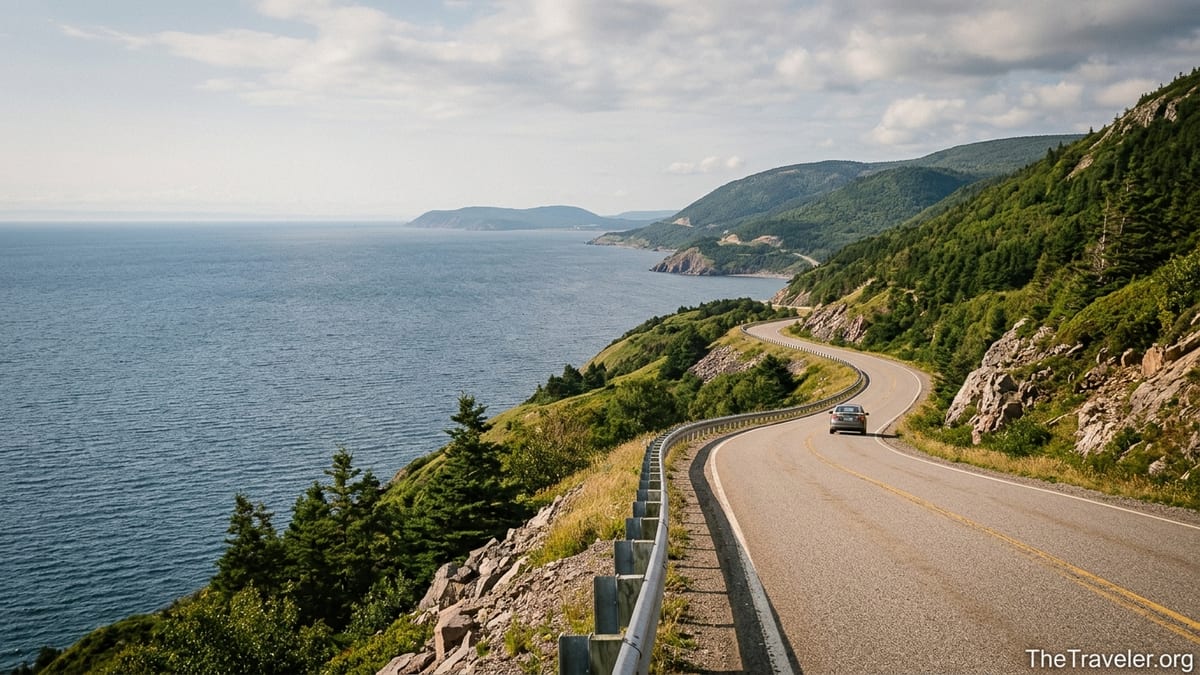
A road trip through Nova Scotia, PEI and New Brunswick is less about ticking off individual attractions and more about linking together a chain of coastal experiences: standing under towering flowerpot rocks at Hopewell, watching the tide race across the Bay of Fundy, wandering Lunenburg’s colourful waterfront, cycling beside red-sand beaches on PEI and tracing the cliff-hugging curves of the Cabot Trail. Whether you have seven, ten or fourteen days, the loop options outlined here show how to combine these highlights into a coherent route that feels ambitious but achievable.
For a week-long trip, think in terms of a greatest-hits circuit that includes Halifax, Hopewell Rocks, Charlottetown and a single long day on the Cabot Trail. With ten days, you gain the luxury of a full Cape Breton segment and two or three nights on PEI, plus time for both Fundy and the South Shore. At two weeks, the Maritimes begin to feel like a series of distinct regions rather than a single route, with each province offering its own rhythm, landscapes and small-town encounters.
The practical choices you make around ferry versus bridge crossings, where to base yourself along the Cabot Trail, and how many nights to assign to PEI’s beaches versus Fundy’s cliffs will shape the tone of your trip. There is no single right answer, but with realistic driving days, attention to ferry timetables and tide charts, and early bookings in the busiest hubs, it is entirely possible to craft an Atlantic Canada itinerary that balances iconic sights with quiet moments by the sea.
FAQ
Q1. Is it better to drive the Confederation Bridge or take the PEI ferry?
The bridge is faster and operates year-round, making it ideal for tight schedules or shoulder seasons. The ferry is slower but more scenic and works well if you have extra time or want to break up a long driving day. Many travelers do one in each direction.
Q2. How many days do I really need for the Cabot Trail?
At minimum, allow a full day to drive the loop with several stops, which can easily take eight hours. Two days with an overnight in Cheticamp or Ingonish is more comfortable and lets you add hikes like the Skyline Trail and time on the beaches.
Q3. When is the best time of year to visit Nova Scotia, PEI and New Brunswick?
Late June through early September offers the warmest weather, open attractions and active whale-watching. June and September often have fewer crowds and somewhat lower prices. Early October brings fall colours, especially on Cape Breton, but some seasonal operations wind down.
Q4. Do I need to reserve the Northumberland Ferries crossing in advance?
For summer travel, reservations are strongly recommended, particularly if you are driving a rental car and have a fixed itinerary. Schedules can change slightly year to year, and some mid-day sailings on peak dates are occasionally removed, so it is safer to book a specific sailing.
Q5. Can I do this Maritime loop without renting a car?
It is challenging to replicate these itineraries without a car because many key sights are in rural areas with limited public transit. There are coach tours that follow similar routes and some local day tours from Halifax and Charlottetown, but a rental car or campervan offers the most flexibility.
Q6. How far in advance should I book hotels on the Cabot Trail and PEI?
For July and August, booking three to four months ahead is sensible for popular areas like Cheticamp, Ingonish and PEI’s north shore. Smaller inns and cottages in these areas often sell out for peak summer weeks, while city hotels in Halifax or Moncton usually have more last-minute availability.
Q7. Is driving in Atlantic Canada difficult for visitors from outside North America?
Most visitors find it straightforward. Roads are generally well maintained, traffic is light by big-city standards, and signage is clear. The main adjustments are staying mindful of wildlife on the roads at dawn and dusk and allowing extra time for two-lane coastal routes where you may encounter slow-moving vehicles.
Q8. How should I plan my visit around the tides at Hopewell Rocks?
Check the tide tables for your intended date and aim to arrive about two hours before low tide to walk on the ocean floor. Plan a return visit the same day at or near high tide to see the sea stacks partly submerged. A day pass to the park typically allows re-entry for both experiences.
Q9. Are there tolls other than the Confederation Bridge I should budget for?
Aside from the bridge toll and any ferry fares, there are no major highway tolls on the routes most travelers use in Nova Scotia, PEI and New Brunswick. You will, however, encounter parking fees in city centres and at some popular attractions, plus park entry fees in places such as Cape Breton Highlands National Park.
Q10. Is a 7-day trip enough to see all three provinces?
Seven days is enough for a highlights loop but not for an in-depth visit. You can fit in Halifax, Hopewell Rocks, Charlottetown and a day on the Cabot Trail, but you will be on the move most days. If you prefer a slower pace or want extra beach days or hikes, ten or fourteen days are better options.