


Atlantic Canada rewards travelers who slow down. Distances look short on the map, but winding coastal roads, ferry crossings and countless photo stops all stretch the days. Choosing the right base can make the difference between a rushed checklist and the kind of unhurried coastal trip this region is made for. This guide compares the most strategic places to stay in Atlantic Canada for road trips, coastal stays and nature-focused travel, from Halifax and Cape Breton to Prince Edward Island, the Bay of Fundy, St. John’s and Gros Morne.
How to Choose Your Base in Atlantic Canada
Atlantic Canada is vast, and it is rarely efficient to stay in one place and day-trip everywhere. A smarter strategy is to pick two or three hubs that match your style of travel. For a first-time trip of ten to fourteen days, many travelers combine Halifax, Cape Breton’s Cabot Trail, Prince Edward Island, and either the Bay of Fundy or western Newfoundland.
As a rule of thumb, aim for bases that are within a two-hour drive of several major sights. For example, Baddeck in Cape Breton is within an hour or two of many Cabot Trail highlights, while Rocky Harbour in Gros Morne keeps you close to famous viewpoints yet still gives you dining and grocery options. This limits backtracking and lets you build relaxed loops rather than long out-and-back drives.
Accommodation prices vary across the region, but in peak summer a standard hotel or inn room in popular hubs such as Halifax’s downtown waterfront, Cavendish on Prince Edward Island, or Ingonish on Cape Breton can often run in the range of 220 to 350 Canadian dollars per night, with budget motels and cabins sometimes under 180 dollars and higher end inns or resorts above 400 dollars. Shoulder seasons in June and September are often more affordable and quieter, while July and August book out far in advance, especially around school holidays and festivals.
Before you lock in an itinerary, think about your priorities. Couples often prefer walkable towns with characterful inns and restaurants. Families may want cabins or cottages with kitchens and space for kids to run around near beaches. Hikers and nature-focused travelers will generally trade some nightlife for proximity to trailheads, boat tours and national parks. The bases below are organized with those trade-offs in mind.
Halifax: Lively Urban Base and Easy Coastal Day Trips
For many visitors, Halifax is the gateway to Atlantic Canada, with direct flights from major North American hubs and car rentals at the airport. Staying downtown or on the waterfront puts you within walking distance of the harbour boardwalk, the Citadel, and neighborhood dining in areas like the North End. Chain hotels, independent boutiques and short term rentals cluster near the harbour; summer nightly rates in central Halifax typically start around 230 to 260 Canadian dollars for midrange hotels, with upscale properties edging higher.
Halifax works particularly well as a base for two or three nights at the start or end of a road trip. From the city, it is an easy day trip to Peggy’s Cove, with its lighthouse and wave-battered granite, or to the UNESCO listed town of Lunenburg. Peggy’s Cove is roughly a 45 minute drive each way, while Lunenburg is about 90 minutes, which leaves room for a leisurely seafood lunch and a stroll among the colourful waterfront buildings before returning to the city for the evening.
Couples who want car free evenings often choose waterfront hotels so they can return the car to a garage and explore on foot. Families may prefer larger rooms or suites in properties near the harbour but slightly away from the busiest bar areas, so children can sleep while adults enjoy room service or nearby casual restaurants. Travelers on longer trips often spend their first night near the airport, then move into the city once they have their bearings, especially if they are arriving late in the evening.
If you are continuing onward to Cape Breton, plan for at least four to five hours of drive time from Halifax to Chéticamp or Ingonish at the edges of Cape Breton Highlands National Park, not counting stops. Many travelers break this up with an overnight in Antigonish or along the Northumberland Shore if they are not in a hurry.
Cape Breton & the Cabot Trail: Best for Iconic Coastal Road Trips
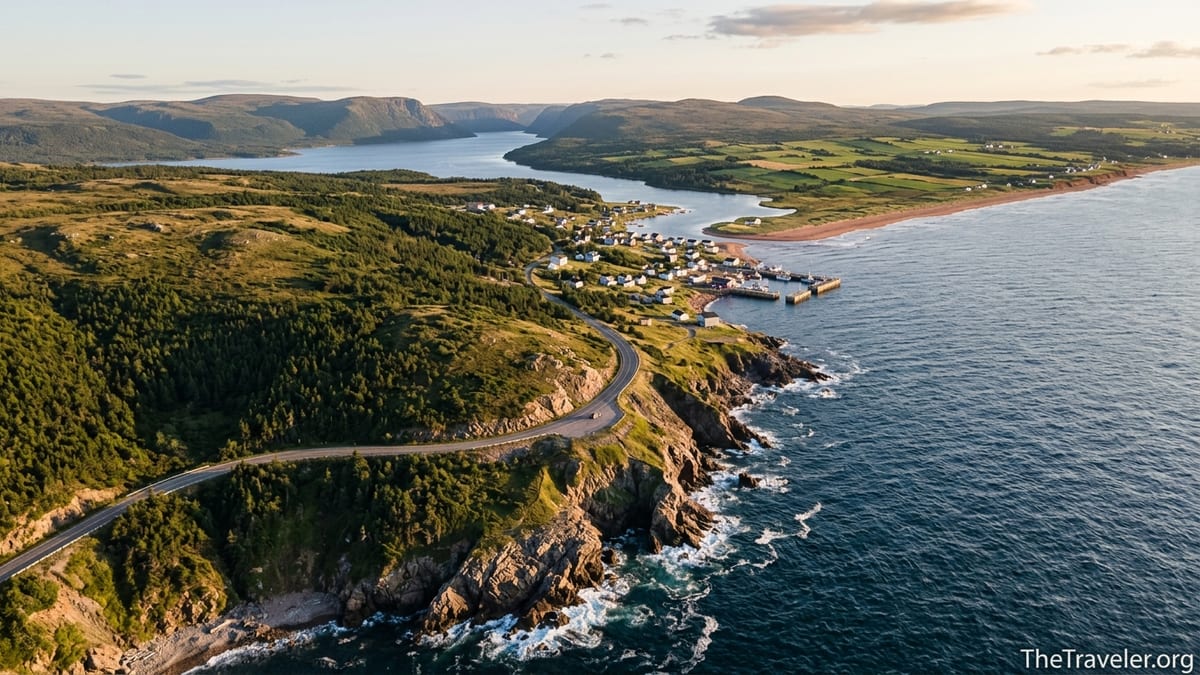
Cape Breton Island is one of Atlantic Canada’s signature drives, with the Cabot Trail looping around cliffs, coves and Acadian villages. Instead of trying to rush the 300 kilometer loop in a single day from Halifax, build in at least two or three nights on the island itself. The most popular bases are Baddeck, Chéticamp and Ingonish, each offering a different vibe and set of advantages.
Baddeck, on the Bras d’Or Lake, works well as a central base, especially if you are short on time or visiting outside peak season. It is known as the start and finish of the Cabot Trail, and has a small main street with lakeside inns, motels and campgrounds, plus the Alexander Graham Bell National Historic Site. Many accommodations here, such as lakeside lodges and inns, offer on site restaurants and simple lake views, with typical summer hotel rates landing roughly in the 220 to 320 Canadian dollar range for standard rooms.
For a classic coastal road trip, Tourism Nova Scotia recommends splitting your stay between Chéticamp on the western side and Ingonish on the eastern side of the Cabot Trail. Chéticamp, an Acadian fishing village, is ideal for sunset views, access to the Skyline Trail and whale watching tours, while Ingonish puts you close to beaches, Cape Smokey and some of the area’s more resort like accommodations. This two base approach reduces daily driving and keeps you nearer to multiple trailheads and lookouts.
Families often like cabin style properties and campgrounds scattered around the trail. Rustic cottages near Ingonish Beach, farm stays with on site animals, and campgrounds offering simple cabins or tiny homes are popular in July and August. If you are traveling in peak season, book early, especially if you need multi bedroom units or adjoining rooms for larger groups. Spring and autumn visits can be cooler but quieter, with more availability and fewer cars on the winding park roads.
Prince Edward Island: Gentle Beaches, Green Fields and Easy Touring
Prince Edward Island is Canada’s smallest province, and its gentle terrain, rolling fields and red sand beaches make it an appealing, lower stress destination for families and relaxed road trippers. Most visitors choose between staying in Charlottetown, the island’s small capital, or near the North Shore beaches around Cavendish and the Prince Edward Island National Park.
Charlottetown is compact and walkable, with heritage streets, a working harbour and a lively dining scene that punches above its weight. Staying in or near the historic core allows you to park the car and explore on foot in the evenings. Midrange downtown hotels and inns usually cost somewhere around 220 to 300 Canadian dollars per night in peak summer, with some heritage properties and waterfront hotels commanding higher rates. From town, it is roughly a 30 to 40 minute drive to the North Shore beaches, which makes it feasible as a central base on a shorter trip.
For a more resort style coastal stay, many families gravitate to Cavendish or nearby communities along the North Shore. Here, you find a mix of cottages, motels, small resorts and campgrounds that cater to visitors spending most of their day at the beach or local attractions. Summer nightly rates in this area can range widely, from under 200 Canadian dollars at older motels and basic cabins to much higher for modern cottages with multiple bedrooms, full kitchens and ocean views. When comparing options, look at distance to the beach, on site pools or playgrounds, and whether linens and cleaning fees are included.
Because Prince Edward Island is compact, you can day trip almost anywhere on the island from a single base if you are comfortable with one to two hour drives. A typical one week stay might involve four or five nights near Cavendish for beach time and Anne of Green Gables related sights, plus two or three nights in Charlottetown for dining and cultural events. Shoulder season visits in June or September can offer quieter beaches, lower prices and pleasant temperatures, although some seasonal attractions may operate shorter hours.
Bay of Fundy & the Maritimes: Tides, Trails and Coastal Villages
The Bay of Fundy is famous for having some of the highest tides in the world. To use this region as an effective base for a road trip, you will want to stay close enough to the water to witness both high and low tide within the same day. Two of the most practical hubs are Alma in New Brunswick and Wolfville in Nova Scotia, each with its own character and cluster of accommodations.
Alma sits at the doorstep of Fundy National Park in New Brunswick. The village offers small inns, motels, cabins and campgrounds within a short drive of the park’s hiking trails and viewpoints. Fundy National Park itself runs several campgrounds and roofed accommodations, and Alma provides dining, grocery and tide watching along the wharf. In summer, simple motel rooms or cabins here might start in the ballpark of 180 to 240 Canadian dollars per night, with higher prices for larger or newer waterfront units. For nature focused travelers and hikers, this is one of the most efficient bases for exploring the New Brunswick side of Fundy.
On the Nova Scotia side, Wolfville anchors the eastern end of the Annapolis Valley. It is a small university town known for nearby wineries and tidal viewpoints along the Minas Basin. Wolfville has a range of inns, bed and breakfasts and small hotels within walking distance of cafes and restaurants, and serves as a springboard for day trips to tidal locations and vineyards in the surrounding countryside. Travelers interested in pairing nature with food and wine often spend two or three nights here as part of a wider Nova Scotia itinerary.
If you have extra time, you can add additional overnights in Saint Andrews by the Sea in New Brunswick or the Digby area in Nova Scotia to focus on whale watching and coastal scenery. However, for most itineraries of ten to fourteen days that already include Halifax and Cape Breton, it is more efficient to choose either Alma or Wolfville rather than trying to cover every community along the bay.
St. John’s & Eastern Newfoundland: Colorful City and Rugged Coast
St. John’s in Newfoundland and Labrador is one of the most distinctive small cities in Canada, perched on steep hills above a narrow harbour. Many travelers fly directly here to focus on eastern Newfoundland rather than combining it with the Maritime provinces, since ferry crossings and long driving distances can add significant time to an itinerary. St. John’s works well as a base for three or four nights, with additional nights in smaller coastal communities if you are extending your trip.
Most visitors stay in or near downtown St. John’s, where rows of colourful row houses, known locally as “jellybean” houses, climb the hills and nightlife and dining are concentrated on streets like George Street and Water Street. Accommodation options run from large chain hotels to boutique inns in heritage buildings. In peak summer, expect typical nightly rates somewhere in the range of 220 to 320 Canadian dollars for standard rooms, with harbour view suites and top end boutiques commanding more. Staying central makes it easy to walk to Signal Hill, The Rooms museum complex and harbour viewpoints.
St. John’s also serves as a hub for day trips around the Avalon Peninsula. From the city, you can drive to Cape Spear, the easternmost point in North America, in about 20 minutes, or follow sections of the East Coast Trail for clifftop hikes. Small fishing villages such as Petty Harbour and Bay Bulls are within an hour’s drive and offer boat tours that look for whales and puffins in season. If you prefer to reduce driving, consider adding a night or two in smaller communities along the Irish Loop, but many travelers are comfortable returning to a base in St. John’s each evening.
Couples often enjoy this combination of city comforts and quick access to wild coasts, while families may look for hotels that offer pools or larger rooms to balance urban sightseeing with downtime for kids. As elsewhere in Atlantic Canada, booking ahead in July and August is important, especially during festivals or long weekends when local demand spikes.
Gros Morne National Park: Western Newfoundland’s Nature Base
Gros Morne National Park on Newfoundland’s west coast is one of the region’s most dramatic landscapes, with fjord like inlets, tablelands of exposed earth’s mantle and a mix of coastal and mountain scenery. Because the park covers a broad area, choosing the right base here is particularly important. Most visitors stay in or near Rocky Harbour, Norris Point, Cow Head or Woody Point, all within or adjacent to the park’s boundaries.
Rocky Harbour functions as the main hub for Gros Morne, sitting centrally within the park and offering the widest range of lodging, dining and services. You will find ocean view hotels, motels, cabins and vacation rentals clustered near the harbour, with easy access to boat tours and short drives to trailheads. Norris Point across the water provides additional inns and cottages with strong views of Bonne Bay, connected by a short drive. From these towns, popular activities such as the Western Brook Pond boat tour and Gros Morne Mountain hike are typically within a 30 to 60 minute drive.
Further north, Cow Head offers motels and cabins near long sandy beaches and a quieter atmosphere, and is convenient for those arriving or departing by ferry at Port aux Basques via the long coastal highway. To the south, Woody Point and nearby Trout River sit closer to the Tablelands and some of the park’s geological highlights, with small inns and cabins that appeal to hikers and geology enthusiasts. In peak season, simple motel rooms in the area can start around 200 Canadian dollars per night, with more for modern cabins and waterfront properties, and campgrounds offering a lower cost option.
Gros Morne is particularly suited to nature focused travel. Visitors often spend four to five nights in the area, breaking their stay between Rocky Harbour or Norris Point and either Cow Head or Woody Point to reduce backtracking. Weather can change quickly even in summer, so having multiple days in the park increases your chances of clear conditions for key hikes or boat tours. Much of the area feels quiet and rural once the day visitors leave, making evenings star filled and peaceful, especially if you are staying in a cabin away from the main roads.
Other Strategic Bases for Coastal & Nature-Focused Trips
Beyond the headline destinations, several smaller communities make excellent bases if you prefer a quieter trip or have extra time to explore. On Nova Scotia’s South Shore, towns such as Lunenburg and Mahone Bay offer colourful waterfronts, historic architecture and a slower pace than Halifax, with inns and guesthouses that suit couples and food focused travelers. These towns work well for two or three nights if you want to linger on this stretch of coast rather than visit on a day trip.
In New Brunswick, Saint Andrews by the Sea is a classic seaside resort town near the United States border. Many visitors use it as a base for whale watching excursions and visits to nearby islands and nature reserves. The town has a compact walkable centre and a mix of hotels, historic inns and vacation rentals. Its location makes it convenient for people driving up from Maine or looping through New Brunswick without going as far as Newfoundland.
On Cape Breton, smaller communities such as Inverness and Mabou along the western shore appeal to travelers interested in beaches and live traditional music. Inverness has a long sandy beach and a notable golf course, with accommodations that range from modest motels to upscale lodges overlooking the water. Mabou is known for its ceilidh music and community halls, with a handful of inns and cottage rentals. These areas can be added as extra nights after a Cabot Trail loop if you want a less hurried end to your time on the island.
On Prince Edward Island, points such as Summerside or the quieter eastern shore near places like Souris can serve as alternatives to Charlottetown and Cavendish. These smaller centres provide access to beaches and coastal drives with fewer crowds, though with a more limited range of dining and entertainment. They suit travelers who value calm and simple seaside routines over a long list of attractions.
The Takeaway
Choosing where to stay in Atlantic Canada is as important as choosing which provinces to visit. Thoughtful bases such as Halifax, Baddeck and Ingonish in Cape Breton, Cavendish or Charlottetown on Prince Edward Island, Alma or Wolfville on the Bay of Fundy, and St. John’s or Rocky Harbour in Newfoundland can turn a complex itinerary into an enjoyable series of manageable drives and memorable overnights. Each of these hubs offers its own balance of scenery, services and access to nearby highlights.
For couples, consider a mix of small cities and coastal towns where you can walk to dinner and return to an inn or boutique hotel. Families may prioritize cabins, cottages and campgrounds near beaches or national parks, where days revolve around outdoor play and evenings around campfires or simple home cooked meals. Nature focused travelers will often be happiest basing themselves as close as possible to trailheads and boat tours, even if that means fewer restaurant choices.
Whatever combination you choose, allow time for weather, ferries and the inevitable pull of scenic viewpoints. Distances that look modest on a map can take longer than expected when every bay and lighthouse invites a stop. By anchoring your trip around a few well chosen bases, you make space for those unscripted moments that often become the highlights of an Atlantic Canada journey.
FAQ
Q1. How many bases do I need for a two week Atlantic Canada road trip?
For a two week trip, most travelers are comfortable with three to four bases, for example Halifax, Cape Breton, Prince Edward Island and either the Bay of Fundy or western Newfoundland, rather than trying to sleep in a new town every night.
Q2. Is Halifax a good base for exploring all of Nova Scotia?
Halifax is excellent for nearby day trips such as Peggy’s Cove and Lunenburg, but it is too far for relaxed day trips to Cape Breton or the Bay of Fundy, so it works best as one base among several.
Q3. Should I stay in one place or move around the Cabot Trail?
If time allows, splitting your stay between Chéticamp on the west side and Ingonish on the east side of the Cabot Trail reduces driving and keeps you close to multiple hikes and viewpoints.
Q4. Is Charlottetown or Cavendish better for a first visit to Prince Edward Island?
Charlottetown is better for dining and walkability, while Cavendish and the North Shore work well if you want to spend most of your time on beaches and coastal paths, especially with children.
Q5. Where should nature lovers stay near the Bay of Fundy?
Nature focused travelers usually prefer Alma near Fundy National Park for easy access to trails and tides in New Brunswick, or Wolfville in Nova Scotia for a mix of tidal viewpoints and nearby wineries.
Q6. Is St. John’s a good base for exploring all of Newfoundland?
St. John’s is ideal for the Avalon Peninsula and eastern Newfoundland, but distances are too long to use it as a base for Gros Morne or the west coast, which warrant their own separate stays.
Q7. How long should I stay in Gros Morne National Park?
A stay of four to five nights in or around Rocky Harbour, Norris Point, Cow Head or Woody Point lets you see major viewpoints, take a boat tour and enjoy several hikes without rushing.
Q8. Are cottages and cabins common in Atlantic Canada?
Cottages and cabins are very common around beaches, lakes and national parks, and they are popular with families and groups who want kitchens, outdoor space and easy parking.
Q9. When should I book accommodation for July and August?
For peak season travel in July and August, it is wise to book key bases such as Halifax, Cavendish, Ingonish and Rocky Harbour several months in advance, especially for weekends and school holidays.
Q10. Is it worth visiting in June or September instead of midsummer?
June and September often bring lower prices, fewer crowds and pleasant weather, though water may be cooler for swimming and some strictly seasonal attractions may offer reduced hours.