


Few food traditions in North America are as rooted in place as Québec’s cabane à sucre. From late winter into early spring, maple sap season draws locals out of the cities and into the woods for long, loud meals in rustic cabins, sleigh rides between maple trees, and one last celebration of winter before the thaw. For visitors, it is one of the clearest windows into everyday Québec culture, where food, family and landscape are all on the table at once.
What Exactly Is a Sugar Shack in Québec Culture?
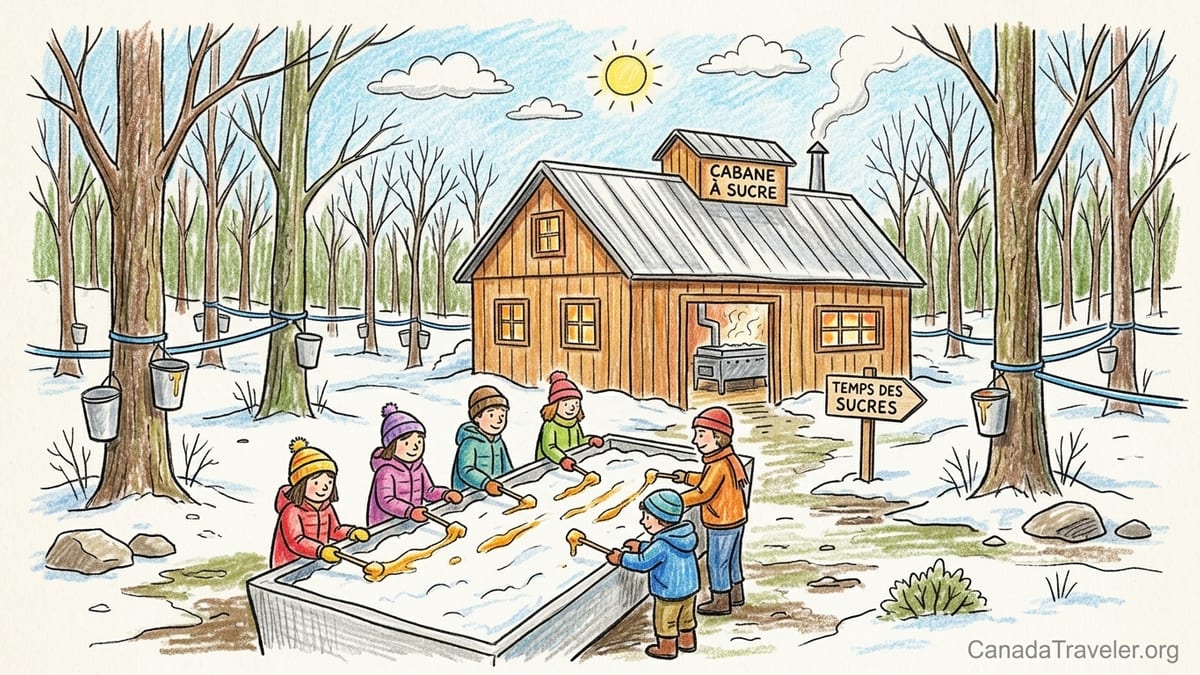
In Québec, a cabane à sucre is first a working place where maple sap is boiled into syrup, and only second a restaurant. The wooden cabin in the forest, the steel evaporator, the clouds of sweet steam and the metal buckets or plastic tubing in the trees are not stage props. They are how many Québec producers still make a product that now accounts for most of the world’s maple syrup production. Inside, large communal tables, wood stoves and the smell of maple and pork recall the days when families and neighbors would sleep on straw mattresses in the loft to keep the evaporator going all night.
The social side developed from that work. As sugaring became less central to survival and more of a seasonal income, producers began inviting paying guests to share a hearty meal in the cabin. By the mid twentieth century, the spring “temps des sucres” had become both a rural industry and a city tradition, with Montréalers and Quebecers driving out on weekends to eat, sing and walk in the still-snowy woods. Today, many sugar shacks can serve hundreds of people a day, but the core idea remains the same: eat a lot, move a little, and end with maple taffy on snow.
Compared with sugar houses in New England or other Canadian provinces, Québec sugar shacks lean more heavily into communal dining and folk culture. It is common to find live fiddle music, people playing spoons, and children running between tables while adults linger over one more plate of baked beans. For many locals, going “à la cabane” once a year is less about seeking the best food and more about confirming that winter is nearly over and that the family ritual continues.
How Maple Sap Season Works
Maple season in Québec depends on temperature, not dates, which is why even official tourism sites describe it in flexible terms. The sap starts to flow when nights fall below freezing while days climb a few degrees above. In practice, that usually happens between late February and early March, then continues for four to six weeks into April. A warm spring can shorten the season; a colder year can extend it into early May in some regions. This variability is important for visitors because cabin opening dates shift every year, especially for smaller, more traditional places.
The workday starts in the maple woods, or érablière. Sap is collected either in traditional metal buckets hanging from spouts or through networks of plastic tubing that carry it downhill to storage tanks. From there, it moves into an evaporator, where it is boiled until the sugar concentration reaches syrup stage. Many shacks keep the evaporator room open to visitors, so between courses you can watch the syrup bubbling and talk with staff about the process. Early in the season, sap can run clear and plentiful; later, as temperatures rise, the flavor darkens and the season ends when the buds on the trees change the taste.
For diners, this schedule explains why the classic sugar shack window for meals is March and April, when sap is flowing and there is still enough snow outside for maple taffy. Reservations during those weeks can be essential around Montréal and Québec City, especially on weekends. Some modern shacks now separate the farm side from the restaurant, allowing them to serve “sugar shack style” food beyond the strict sap season, but for a first visit it is worth aiming for the real sugaring-off period if your travel dates allow.
What the Traditional Cabane à Sucre Meal Looks Like
The standard sugar shack meal is generous and intentionally heavy, rooted in what lumberjacks and farmers could cook with stored ingredients at the end of winter. You are usually seated at long tables, sometimes with other groups, and served dishes family-style in large platters that staff refill on request. Tourisme Montréal and provincial tourism authorities describe a menu that typically starts with a simple vegetable or split pea soup and homemade bread, followed by an array of salty, protein-rich plates.
On a classic table you can expect maple-baked ham, thick sausages simmered in syrup, scrambled eggs or omelette, fèves au lard baked beans, pork rinds known as oreilles de crisse, creton pork spread, tourtière meat pie, roasted or boiled potatoes and pickled beets. On the sweet side, there are crêpes or pancakes, pouding chômeur baked in maple syrup, sugar pie, and always more syrup in pitchers for the table. Everything is designed to be doused in maple: people pour it over eggs, ham, potatoes and even on bread. For many first-time visitors, the combination of sweetness and saltiness is surprising, and the sheer volume means pacing yourself matters.
At the end of the meal comes the ritual many people remember most: maple taffy on snow. Staff boil syrup a bit longer, then bring it outside or to a dedicated counter where a trough is packed with clean snow or crushed ice. Lines of hot syrup are poured onto the snow, where it firms up enough to be rolled onto wooden sticks. Adults and children stand in coats and hats, chatting and eating their sticky maple candy outdoors. It is messy, simple and uniquely tied to climate; without snow, producers must improvise with metal pans and ice, one reason why the purest form of this tradition is tied to early spring.
Types of Sugar Shack Experiences: From Rustic to Refined
Not all cabanes à sucre feel the same, and choosing the right style for a first visit matters more than picking a single “best” address. Many traditional communal shacks sit in forested regions like Lanaudière or Montérégie, within an hour or so of Montréal. They keep prices relatively accessible, often somewhere in the range of what you might pay for a city brunch, and focus on an all-you-can-eat fixed menu with a lively, sometimes noisy atmosphere. In these dining rooms you are likely to see multigenerational local families, school groups on outings, and maybe a pair of fiddlers moving between tables.
At the other end of the spectrum, more gastronomic sugar shacks reinterpret the same ingredients through modern Québec cuisine. Some well-known chefs have used seasonal maple menus as laboratories for creative dishes: maple lacquered pork shoulder, foie gras with maple jelly, inventive vegetable courses and intricate desserts. These experiences tend to involve set tasting menus, timed seatings, higher prices and reservations booked weeks in advance. The evaporator and maple grove are still there, but the focus is as much on culinary creativity as on tradition.
In between, family-oriented maple farms emphasize outdoor activities as much as food. Around Montréal’s South Shore and in Montérégie, for example, some farms combine wagon rides through the maple woods, small animal barns, playgrounds, mini sliding hills, and sugar shack meals adapted for children who may not love deep-fried pork rinds. Lanaudière tourism materials highlight places where families can toast bread on the wood stove, watch old-fashioned sap collection and enjoy modest tubing runs in the snow. These are particularly attractive if you are traveling with younger children or want to extend your visit into a half-day outing.
There is also a growing category of year-round maple experiences. In the Québec City region, some sugar shacks keep dining rooms open outside the sap season, serving full maple menus in summer and autumn and offering maple taffy using refrigerated snow or ice. Others, including restaurants in historic districts, recreate the sugar shack feel in the city with maple-forward menus and taffy counters. For travelers visiting in June or October, these hybrid options are often the most practical way to experience the tradition without snow.
Where to Experience Sugar Shacks: Key Regions for Visitors
Around Montréal, sugar shack outings are part of spring life. The city itself does not have maple forests, but within an hour’s drive you can reach multiple styles of cabanes. Montérégie, to the south, is known for family-friendly shacks set among apple orchards and rolling farmland. A typical day trip from Montréal might involve driving over one of the bridges to the South Shore, following signs along secondary roads to a cabane where you park in a large snowy lot, then taking a short wagon or tractor ride from the reception area out to the dining hall hidden among the maples.
To the north and northeast of Montréal, Lanaudière has built a reputation as one of the classic sugar shack regions. Tourism brochures for Lanaudière list dozens of options from simple, old-school cabins with wood stoves and sliding hills to larger operations that host live music and weddings in other seasons. For visitors with a rental car, following the regional tourist routes through villages like Saint-Jean-de-Matha or Saint-Esprit can be a way to combine the sugar shack meal with winter scenery, small-town stops and even cross-country skiing or snowshoeing nearby.
Near Québec City, sugar shacks dot both sides of the St. Lawrence River, though many are in semi-rural municipalities west of the city. From downtown Québec City, it is common to rent a car for half a day, cross the bridges toward the north shore or head west along the river, then turn inland to reach maple farms in low wooded hills. Some of these shacks, according to recent regional guides, now operate nearly year-round, offering the full sugar shack meal and maple taffy even in summer. For travelers short on time, certain restaurants in Old Québec recreate a sugar shack atmosphere indoors, with rustic decor, hearty maple dishes and, in some cases, a taffy bar.
Beyond these two main urban hubs, other regions like Mauricie, the Eastern Townships and parts of Outaouais also host traditional cabanes à sucre within reach of regional cities. For example, tourism publications from Mauricie feature sugar shacks that pair all-you-can-eat maple menus with nearby winter activity centers or spas, making them appealing for travelers on longer road trips through central Québec. Wherever you go, it is worth checking regional tourism offices for current-season lists and opening dates, since smaller, family-run cabanes may only open for a few weekends when sap conditions are right.
Practicalities: Reservations, Seating, BYOB and Payment
Planning a first sugar shack visit requires a bit more preparation than booking a typical restaurant. During the core season from early March to mid April, many popular cabanes near Montréal and Québec City fill weekend seatings several weeks in advance. Reservations are usually made by phone or online, and you will be asked to choose a date, time and often a sitting length, since many shacks operate in distinct brunch, lunch and dinner waves. Some require a deposit or prepayment, especially for larger groups, so be prepared to confirm the booking with a card even if you plan to pay differently on site.
The meal format varies but remains communal at heart. In traditional cabins, expect long wooden tables where your group may share space with another family, especially at peak times. There is usually a fixed price that includes the entire buffet-style menu, coffee or tea, sometimes juice or milk for children, and access to outdoor activities like sledding, walking trails or demonstrations of the evaporator. Alcohol policies differ by establishment. Certain shacks are fully licensed and sell beer, cider or wine on site; others operate on a bring-your-own-wine model, particularly those that market themselves as more gastronomic or intimate. When BYOB is allowed, there are usually no corkage fees, but you must still respect provincial alcohol laws about consumption on the premises.
Payment methods have evolved as sugar shacks modernize. Around major cities, most larger cabanes now accept credit and debit cards for both meals and purchases in the maple products shop, though some still prefer cash for smaller amounts or bar service. In more rural regions, you may find cabins where card terminals rely on mobile signals that can be weak in the woods, so carrying some Canadian dollars is prudent. Prices are rarely a surprise because the menu is fixed; however, taxes and tip are often added at the table. Ask when booking if the gratuity for groups is included.
A typical visit lasts between two and four hours. Expect about ninety minutes to two hours at the table itself, with courses arriving in waves, plus time to visit the evaporator, walk among the trees or take a wagon ride. Locals with children often plan an entire half-day around the outing, bringing snow pants for kids to slide and play outside between bites. If you are visiting Québec without a car, some tour operators in Montréal and Québec City organize shuttle packages that include transport, the sugar shack meal, taffy on snow and sometimes an additional winter activity such as snowshoeing.
Food Expectations, Vegetarians and How Heavy It Really Is
For many travelers, the biggest surprise at a cabane à sucre is how unapologetically rich the food is. The traditional menu combines large quantities of pork, eggs, butter and flour with generous amounts of sugar, then tops that off with syrup, desserts and maple taffy. People often leave feeling both satisfied and in need of a long walk. If you are sensitive to heavy or very sweet meals, consider booking an earlier seating, such as late morning, so that you have the rest of the day to digest and perhaps schedule a lighter dinner.
Vegetarians and vegans face real but improving challenges. Historically, most dishes were meat-based or cooked with pork fat, and even the baked beans and potatoes might share cooking pots with ham. Some producers now advertise vegetarian or even vegan menus, often substituting plant-based sausages, vegan tourtière, dairy-free pancakes and maple-baked vegetables while keeping the traditional structure of the meal. In mainstream shacks, however, options can be limited to bread, eggs, potatoes, beans without visible meat, salad if offered, and desserts. If someone in your group has strict dietary needs, you should ask explicitly when booking what can be done and whether cross-contamination with meat is likely.
Gluten-free and lactose-intolerant diners also need to plan. Maple syrup itself is naturally gluten-free and dairy-free, but pancakes, bread and many desserts are not. Some modern or gastronomic cabanes list allergens clearly and can accommodate substitutions; smaller, older operations may not. Bringing a snack for very restricted eaters, then enjoying the outdoor parts of the experience together, can be an acceptable compromise if nothing suitable is promised in advance.
Sobriety and moderation are part of the cultural shift around sugar shacks. Traditional images spotlight loud rooms, overflowing jugs of syrup and people collapsing contentedly after their fourth plate. Yet there is no obligation to overeat. Staff are accustomed to visitors sampling small portions and focusing on a few dishes they enjoy, especially when groups include older relatives or travelers who are simply curious. Drinking plenty of water and taking breaks to step outside between courses makes the experience more comfortable without taking anything away from its authenticity.
Experiencing Sugar Shack Traditions Outside Maple Season
If your trip to Québec falls in summer, autumn or midwinter, you can still connect with sugar shack culture even though the sap is not flowing. One option is to visit year-round maple interpretation centers or farms that keep their evaporator rooms, trails and shops open in all seasons. In several regions, brochures now advertise daily or weekend tastings where you can learn about the history of maple production, sample syrup of different grades, try maple butter or maple sugar candies, and watch short demonstrations of how sap is boiled using water or stored syrup for illustration.
Another increasingly common alternative is the “urban sugar shack” concept. In Montréal neighborhoods like Verdun and in parts of Québec City, local festivals or seasonal pop-ups recreate elements of the cabane à sucre in parks or streets during March and April, sometimes even when snow is scarce. There might be outdoor grills serving maple-glazed sausages, musicians playing traditional tunes, stands selling maple taffy rolled on crushed ice, and communal tables set up temporarily. While these are not full sit-down feasts, they give a taste of the atmosphere for travelers without cars or for those visiting during shoulder weeks when rural roads can be muddy.
Restaurants inspired by sugar shack cuisine also bridge the seasonal gap. In Old Québec and central Montréal, some bistros and diners offer “brunch cabane à sucre” menus in late winter and early spring, featuring pea soup, baked beans, ham, pancakes and maple desserts in portions better suited to individuals than to large families. At higher-end establishments, chefs integrate maple into tasting menus throughout the year, drawing on the same terroir but with more delicate plating and pairings. Booking one of these meals can be a way to honor the tradition when the classic countryside cabins are closed or fully booked.
Finally, provincial tourist offices and museums provide historical context that enriches any eventual visit. Exhibits on Indigenous maple-harvesting practices, the evolution of maple technology and the economic role of syrup help frame the cabane à sucre as more than a once-a-year indulgence. Even if your first contact with the tradition is a jar of Québec maple syrup bought in a city shop, understanding the culture behind that product will make a future sugar shack meal, whenever it happens, feel less like a themed restaurant and more like joining a living ritual.
The Takeaway
Choosing the right cabane à sucre for a first-timer in Québec comes down to matching your expectations with the style of experience. If you want to see the most traditional and social side of the custom, look for a rustic communal sugar shack in regions like Lanaudière or Montérégie during March or early April, book a weekend lunch, and be prepared for noise, music and very full plates. If you are more interested in contemporary Québec cuisine and dietary flexibility, a gastronomic sugar shack or maple-inspired restaurant near Montréal or Québec City might be a better fit, even if it means trading some of the chaos for a quieter, more curated meal.
Families with young children often do best at farms that combine the meal with outdoor activities, animal barns and sliding hills, turning the outing into a full half-day adventure. Visitors outside maple season should not write off the idea entirely; between year-round maple centers, urban taffy pop-ups and restaurant menus that echo the cabane à sucre, it is possible to capture the spirit of the tradition at other times of year. Whichever format you choose, going in with realistic expectations about the heaviness of the food, the communal seating and the importance of reservations will help you relax and enjoy what locals see as one of the defining rituals of Québec’s calendar.
FAQ
Q1. When is the best time of year to visit a sugar shack in Québec?
The most reliable period is from early March to mid April, when nights are still below freezing and days are mild enough for sap to flow and snow remains for maple taffy.
Q2. Do I need a car to experience a traditional cabane à sucre?
A car makes it easier, especially for rural shacks in Lanaudière or Montérégie, but in peak season some tour operators from Montréal and Québec City offer shuttle packages that include transport and the meal.
Q3. How far in advance should I reserve during maple season?
For popular shacks within an hour of Montréal or Québec City, it is wise to book two to four weeks ahead for March and early April weekends, and at least several days ahead for weekday seatings.
Q4. How long does a typical sugar shack visit last?
Plan on two to four hours, including about ninety minutes to two hours at the table plus time to visit the evaporator, walk in the maple grove, enjoy wagon rides or let children play outside.
Q5. Is the traditional sugar shack meal suitable for vegetarians or vegans?
The classic menu is meat-heavy, but some cabanes now offer vegetarian or vegan options by reservation. Always ask in advance, since older, more traditional places may have very limited alternatives.
Q6. Can I bring my own wine or beer to a sugar shack?
Policies vary. Some cabins are fully licensed and sell alcohol, while a few allow you to bring your own wine. Check when reserving, and remember that provincial alcohol regulations still apply.
Q7. What should I wear for a sugar shack outing?
Dress in warm, layered clothing with waterproof boots, since you will likely walk on snow or slush between the parking area, cabin and maple taffy station, and indoor rooms can be quite warm.
Q8. How much does a sugar shack meal cost?
Prices differ by region and style, but as a rough guide, fixed-price meals at traditional shacks often fall in the range of a generous weekend brunch in a major Québec city, with gastronomic versions costing more.
Q9. Is the experience appropriate for young children?
Yes. Many cabanes cater to families with highchairs, simple dishes, outdoor play areas, wagon rides and animals to see, though the noise level and rich food can be tiring for very young children.
Q10. What can I do if I visit Québec outside maple season?
Look for year-round maple interpretation centers, urban sugar shack festivals in late winter, or restaurants offering maple-focused menus that echo the cabane à sucre experience even when the sap is not running.