


Atlantic Canada cruises combine working waterfronts, small historic cities and wild coastline in a compact, easy-to-navigate region. If your itinerary includes Halifax, Sydney, Charlottetown, Saint John and one or more Newfoundland ports, smart planning can turn short calls into memorable days ashore. This guide focuses on concrete details cruise planners need: how to choose shore excursions, what you can reasonably do in a single port day, and when a ship tour makes more sense than independent travel.
Understanding Atlantic Canada Cruise Itineraries
Most Atlantic Canada sailings are marketed as Canada and New England or fall foliage cruises, typically running from late May through October. Seven to ten night itineraries from New York, Boston or Quebec City often call at some combination of Halifax, Sydney, Charlottetown, Saint John and one or two Newfoundland ports such as St. John’s or Corner Brook. Lines like Royal Caribbean, Princess, Holland America, Norwegian and Celebrity all deploy ships here, with some smaller expedition lines adding remote Newfoundland outports.
Fall cruises in late September and early October are particularly popular because passengers hope to see color in the hardwood forests of Nova Scotia and New Brunswick. In reality, peak foliage can shift by a week or two depending on the year and latitude, so it is better to think in terms of “shoulder of peak” rather than pinning hopes on one weekend. On a ten night October itinerary you might see near-peak reds and golds on the Cabot Trail near Sydney while leaves in coastal Halifax are only just turning.
Port times are usually generous by Caribbean standards, often eight to ten hours in the larger cities. For example, a typical schedule might list Halifax from 8:00 to 18:00, Sydney 9:00 to 18:00 and Charlottetown 8:00 to 17:00, which gives enough time for a half-day coach tour plus a walk along the waterfront. That said, distances to headline sights like Peggy’s Cove, the Cabot Trail, Anne of Green Gables or Gros Morne mean you still need to watch the clock carefully, especially in shoulder season when daylight is shorter.
Pricing on ship excursions in Atlantic Canada is similar to other premium regions. Half-day city highlights tours might run around 70 to 110 US dollars per person through the cruise line, while full-day scenic routes such as a Cabot Trail loop from Sydney or a full Green Gables and North Shore day from Charlottetown can reach 150 to 220 US dollars. Independent operators often price slightly lower on a per-person basis, particularly for small groups that can fill an 8 to 12 seat van, but ship tours carry the peace-of-mind factor that the vessel will wait or arrange alternative transport if something runs late.
Halifax: Lighthouses, History and Waterfront Wandering
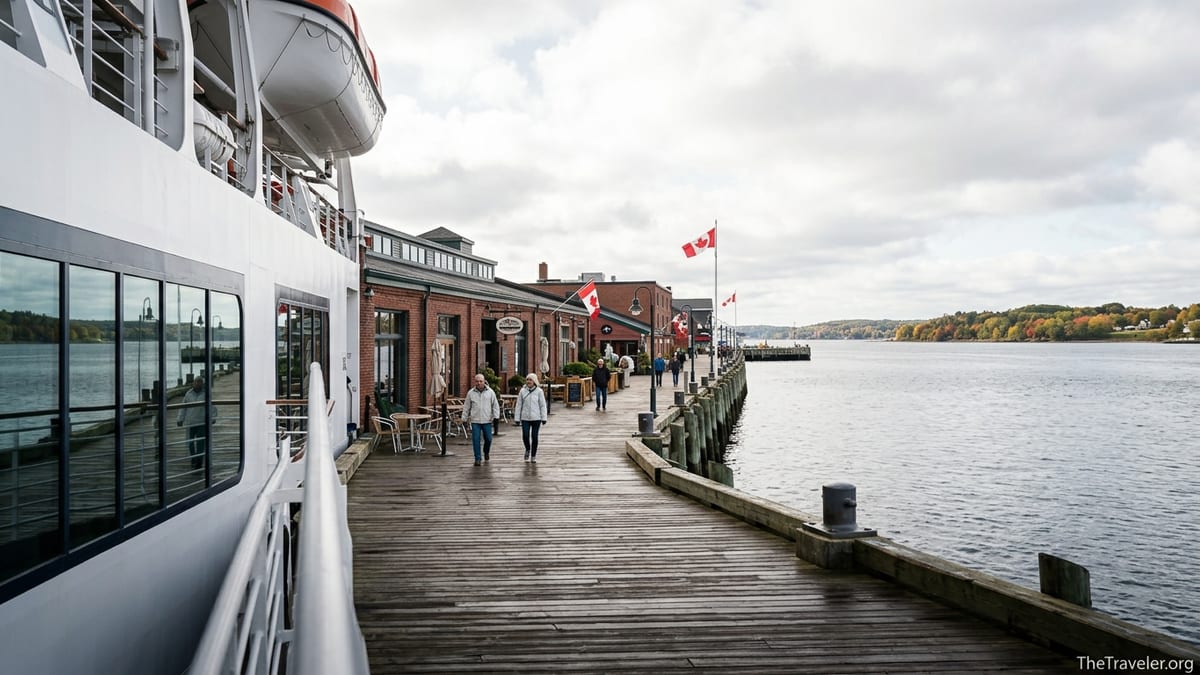
Most cruise ships in Halifax dock at the dedicated cruise pavilion on the south end of the downtown waterfront, usually at Piers 20 to 22. The moment you step off the gangway you are in a converted warehouse district of cafes, craft breweries and souvenir shops, with the Harbourwalk boardwalk stretching for several kilometers toward the center of town. On a warm September day passengers often spend an hour or two simply strolling this route, stopping for a coffee in the Seaport Farmers’ Market area or a bowl of chowder at one of the harbourside restaurants.
The classic Halifax excursion combines city highlights with the fishing village of Peggy’s Cove, whose lighthouse is one of the most photographed symbols of Canada’s Atlantic coast. Ship tours typically run four to five hours, with about an hour’s drive each way. A through-the-ship tour might cost around 90 to 130 US dollars per person, depending on inclusions. Because Peggy’s Cove has limited parking and narrow roads, joining a scheduled coach can be more relaxing than renting a car for first-time visitors, and the tour timing is planned around port hours so you are not rushing back along the coast road.
Travelers who prefer to explore independently often find Halifax one of the easiest Atlantic Canada ports to do on their own. From the cruise terminal it is a manageable uphill walk of about 20 to 25 minutes to the Halifax Citadel National Historic Site, where you can time a visit to coincide with the noon gun. Nearby, the Halifax Public Gardens, the Maritime Museum of the Atlantic and the Canadian Museum of Immigration at Pier 21 are all within a compact city core. A taxi from the ship to the Citadel or gardens usually runs well under 20 Canadian dollars one way, and there is no need for a tour if your main interest is simply experiencing the downtown and harbor views.
For a full port-day itinerary, many cruise passengers choose a half-day organized excursion to Peggy’s Cove in the morning and then leave the afternoon free for self-guided wandering. An example schedule might be leaving at 8:30 for Peggy’s Cove, back at the pier by 13:00, lunch on the waterfront, then a slow walk to the Citadel and Public Gardens, returning to the ship by 17:00 for a 18:00 departure. This balances the efficiency and security of a vetted tour with the flexibility to duck into local pubs or coffee shops once you are back in town.
Sydney & Cape Breton Island: Cabot Trail or Fortress of Louisbourg
Sydney is your gateway to Cape Breton Island, the wild, hilly northern part of Nova Scotia. Ships tie up at the Joan Harriss Cruise Pavilion, an indoor terminal with local vendors and the famous giant fiddle sculpture right outside. From here you can easily walk into downtown Sydney in a few minutes, but the real prize lies farther afield on scenic drives around Bras d’Or Lake, the Cabot Trail and the 18th century Fortress of Louisbourg.
Because distances on Cape Breton are substantial, the first decision in Sydney is whether to commit to a long scenic day or stay closer to port. A full Cabot Trail coach tour often consumes seven to eight hours including photo stops and lunch, and ship excursions priced around 150 to 200 US dollars per person are common due to fuel and guide costs. They can be spectacular on a clear October day when hardwood forests above the Gulf of St. Lawrence blaze orange and red. However, if your ship is only in port from 9:00 to 17:00, this type of tour may feel rushed, and some lines will not offer it on shorter calls for exactly that reason.
An excellent compromise is a Fortress of Louisbourg excursion. The reconstructed French fort sits about a 45 to 60 minute drive southeast of Sydney, and guided tours usually last four to five hours total. On a typical ship tour you might pay roughly 100 to 140 US dollars per person, which includes admission and guide services. Costumed interpreters explain daily life in the 1740s, and on fall days the wind across the harbor and smell of woodsmoke add to the atmosphere. Because Louisbourg is more compact and has a straightforward highway link back to Sydney, many travelers choose it over the more time-consuming Cabot Trail, especially on a first visit.
If you prefer a lower-key day, Sydney itself offers enough for a relaxed port call. A self-guided walking tour from the pavilion might include the historic downtown churches, small museums and the boardwalk along Sydney Harbour. Independent operators stationed outside the terminal also offer shorter three to four hour circuits that visit Bras d’Or Lake viewpoints or nearby coastal communities, with pricing often in the 60 to 90 US dollar range. These small-group vans generally time their departures around ship arrival, and because they operate almost exclusively with cruise passengers, they are very focused on returning to the pier with a generous safety buffer.
Charlottetown & Prince Edward Island: Compact Port, Big Day Trips
Charlottetown’s cruise berth sits at Confederation Landing on the edge of downtown, within a few minutes’ walk of Peake’s Wharf, Victoria Row and the Confederation Centre of the Arts. Many passengers are surprised by how compact and walkable the city is. Without booking any excursion at all you can spend a satisfying day wandering heritage streets, visiting St. Dunstan’s Basilica, touring Beaconsfield Historic House and relaxing in Victoria Park overlooking the harbor, all on foot from the ship.
However, the island’s most famous landscapes lie along the north shore, about 45 to 60 minutes’ drive away. Green Gables Heritage Place near Cavendish, with its farmhouse museum and forest trails, and the red sandstone cliffs and beaches of Prince Edward Island National Park are staples of cruise excursions. Through the ship, a combined Green Gables and North Shore tour might run around 110 to 160 US dollars per person for a four to six hour outing. Independent companies based in Charlottetown often run similar van tours for small groups that work out cheaper per person if you fill the vehicle, though exact pricing varies by operator and season.
Transportation logistics matter because there is no rapid public transit to the north shore timed to cruise calls outside peak summer, and taxis can be expensive for longer routes. For instance, a round-trip taxi to Cavendish could easily reach a couple of hundred Canadian dollars once waiting time and multiple stops are included. Some travelers opt for pre-arranged private tours with local companies that pick up directly at the port and customize a circuit including Green Gables, a red sand beach such as Cavendish or Brackley, and a small fishing village like North Rustico before returning to Charlottetown mid-afternoon.
A realistic port-day itinerary blends town and countryside. You might leave the ship at 8:30 for a five hour north shore tour, returning around 13:30, then spend the afternoon sampling local food at Founders’ Food Hall near the dock and strolling the compact grid of heritage streets. In autumn, you can expect daytime highs around the mid-teens Celsius, so layering is useful if you plan beach walks or cliff-top viewpoints, and the wind off the Gulf of St. Lawrence can feel cooler than the thermometer suggests.
Saint John, Bay of Fundy and Reversing Falls
Saint John in New Brunswick is the primary cruise gateway to the Bay of Fundy, known for some of the world’s highest tidal ranges. Ships dock at a modern terminal right on the edge of Uptown Saint John, and within ten minutes on foot you can reach the City Market, historic brick streets and several pubs and cafes popular with passengers. Like Halifax and Charlottetown, Saint John is easy to explore independently if you are content with an urban day and a few viewpoints.
The defining natural spectacle near Saint John is the Reversing Falls, where the Saint John River appears to flow backward as Bay of Fundy tides push inland. Ship excursions bundle this with city highlights on two to three hour tours that may cost in the neighborhood of 70 to 100 US dollars per person. You can also reach the viewpoint by local taxi for a much lower total if you share with fellow passengers, allowing a flexible stay that fits changing tidal conditions during your port time.
Many longer tours from Saint John roll farther along the Bay of Fundy coastline to fishing villages like St. Martins or to walking trails in Fundy Trail Parkway. These outings often take five to seven hours and can command prices above 120 US dollars per person. They are most rewarding in late summer and early fall when coastal trails are snow-free and days are still reasonably long. On ten night fall foliage sailings that include both Saint John and Halifax, some travelers choose one port for a longer countryside excursion and keep the other for a shorter city-focused day.
If your cruise line offers pre- or post-cruise extensions by coach into New Brunswick interior destinations such as Fredericton or the Hopewell Rocks area beyond Saint John, consider whether you prefer to experience Fundy tide extremes with the relaxed pacing of an overnight land stay. For many, however, a well-timed port-day visit to the Reversing Falls and a few hours in the compact uptown are enough of an introduction, especially if you combine them with a seafood lunch featuring local lobster rolls or fish and chips before walking back to the ship.
Newfoundland Ports: St. John’s, Corner Brook and Beyond
Newfoundland appears on fewer mainstream itineraries than Nova Scotia or Prince Edward Island, but when it does, it is often a highlight. The most common ports are St. John’s on the Avalon Peninsula and Corner Brook on the island’s west coast. Smaller ships and expedition vessels may add outports like St. Anthony or Red Bay in Labrador, but those are still niche calls compared with St. John’s and Corner Brook.
In St. John’s, the cruise pier sits below a steep hillside of colorful row houses known locally as Jellybean Row, and the compact downtown is easily walkable. A popular independent activity is to hike or taxi up Signal Hill for panoramic views over the narrow harbor entrance and the open Atlantic. Ship excursions may combine Signal Hill with Cape Spear, the easternmost point of North America, on four to five hour tours priced similarly to city tours in Halifax. Because weather on the Avalon Peninsula can be foggy and windy even in September, packing a warm, windproof layer is particularly important for cliff-top viewpoints.
Corner Brook is the typical gateway to western Newfoundland, Gros Morne National Park and rugged coastal inlets. Full-day ship excursions from Corner Brook to Gros Morne often run six to eight hours and can be among the more expensive day tours in Atlantic Canada because of the distance involved, typically well over 150 US dollars per person. Travelers who prefer a shorter outing sometimes choose a closer look at the Bay of Islands by boat or a half-day city and viewpoints tour that stays around Corner Brook itself.
Compared with larger ports, Newfoundland communities may have fewer independent operators waiting at the dock, especially on shoulder-season calls. If visiting St. John’s or Corner Brook is a key reason you chose a particular itinerary, booking the most important excursion through the ship is often wise. You can then use any remaining time to explore the town on your own, popping into local pubs for live music or browsing shops that showcase Newfoundland crafts and traditional knitwear before your ship sails back toward the mainland.
Cruise Excursions vs Independent Travel in Atlantic Canada
Choosing between ship-organized excursions and independent arrangements in Atlantic Canada involves balancing cost, risk tolerance and the specific geography of each port. In walkable cities like Halifax, Charlottetown and Saint John, it is entirely realistic to spend a day on foot without any formal tour, relying on local taxis only when needed. Independent travelers often research walking routes ahead of time, mark museums and parks within a one to two kilometer radius of the pier and then improvise stops in cafes or breweries as weather and energy levels dictate.
However, for marquee sights that are 45 minutes to two hours from the pier, such as Peggy’s Cove, the Cabot Trail, Green Gables, Fundy Trail Parkway or Gros Morne, full-day excursions through the cruise line provide schedule security that is difficult to replicate on your own. In these cases, independent options usually make sense only if you assemble a small group in advance and charter a local operator who knows cruise timetables well and explicitly guarantees on-time return to the ship. Even then, you should avoid tight itineraries that leave less than an hour of buffer before all-aboard time, especially in regions with only two-lane highways.
Another factor is seasonality. In June and early July, before peak cruise crowds arrive, there may be fewer independent shuttle buses or last-minute tours operating at the pier. In late September and October, days are shorter, and a delay on a scenic road can eat into daylight quickly. As a rule of thumb, if your dream experience in a port involves remote headlands, national parks or long rural drives, booking an organized tour is prudent. If your priorities are museums, heritage districts, pubs and waterfront walks, going it alone usually works well.
Some travelers pair a cruise with an independent Atlantic Canada land trip either before or after sailing. For example, you might fly into Halifax three days early to rent a car and spend a night in Lunenburg and another on the Annapolis Valley wine route, then board your ship for the northbound cruise. Others disembark in Quebec City or Montreal and continue overland through the Maritime provinces by train or rental car. This hybrid approach lets you use the cruise for its coastal convenience while still enjoying deeper, slower travel inland where ships cannot go.
The Takeaway
Atlantic Canada offers a distinctive mix of working ports, compact historic centers and wild coastline that rewards a bit of advance cruise planning. With eight to ten hour calls in Halifax, Sydney, Charlottetown, Saint John and selected Newfoundland ports, you have enough time in each stop to do more than just a quick photo stop at the pier, especially if you think ahead about the trade-off between ship tours and independent exploration.
Use organized excursions when distances are long or when your must-see experience involves rural roads and changing weather, such as the Cabot Trail, Green Gables country or Gros Morne. In the ports themselves, take advantage of walkable downtowns and waterfront boardwalks to enjoy seafood, local music and maritime history at your own pace. Whether you are chasing fall colors, escaping summer heat from the northeastern United States, or sampling Canada’s Atlantic culture for the first time, a well-planned cruise can serve as a flexible framework for deeper journeys in the region before or after you sail.
FAQ
Q1. When is the best time of year to take an Atlantic Canada cruise?
For most travelers, late August through mid October offers the best balance of weather, open attractions and potential for fall color, though exact foliage timing varies by year and latitude.
Q2. Do I need to book shore excursions in advance for ports like Halifax and Sydney?
It is wise to pre-book popular full-day tours such as Peggy’s Cove, Fortress of Louisbourg or Cabot Trail drives, while city walking tours and basic highlights can often be arranged closer to sailing.
Q3. Can I explore Halifax on my own from the cruise pier?
Yes. The Halifax waterfront, Citadel, Public Gardens and several museums are within walking or short taxi distance from the cruise terminal, making independent exploration straightforward.
Q4. Is a ship tour necessary to visit Green Gables from Charlottetown?
Because Cavendish and the north shore are about 45 to 60 minutes away with limited public transit, many passengers find a ship tour or pre-booked local operator the most reliable option.
Q5. How difficult is it to see the Cabot Trail on a Sydney port day?
The Cabot Trail is a long scenic loop, so only abbreviated versions are feasible on typical port hours; full-day coach tours work, but they involve significant driving and should be booked through experienced providers.
Q6. What should I wear for fall cruises in Atlantic Canada?
Pack layers, including a waterproof shell and a warm mid-layer, since September and October days can swing from cool and sunny to windy, rainy and near freezing on exposed headlands.
Q7. Are Atlantic Canada ports suitable for travelers with limited mobility?
Waterfront areas and downtown cores in Halifax, Charlottetown and Saint John are relatively flat with curb cuts, but some historic sites and lookouts involve uneven ground or steep paths, so check tour details carefully.
Q8. Is it cheaper to book independent excursions than cruise line tours?
Small-group independent tours can be more economical, especially for families, but cruise line excursions include a guarantee to get you back to the ship, which some travelers value more than modest savings.
Q9. Can I combine a cruise with a longer Atlantic Canada land trip?
Yes. Many travelers add two to seven days before or after their sailing, using Halifax, Quebec City or Montreal as gateways for rental car loops through Nova Scotia, New Brunswick or Prince Edward Island.
Q10. Are Newfoundland ports like St. John’s and Corner Brook worth prioritizing?
If rugged scenery and distinctive local culture appeal to you, Newfoundland ports are often standouts, though excursions can be longer and weather less predictable than in the Maritime provinces.