


Ferries are the lifelines of Atlantic Canada, linking rugged coasts, offshore islands, and the island of Newfoundland with the mainland. For travelers, they can be the difference between a rushed road trip and a memorable maritime journey. This guide walks you through the main ferry routes, how to book for vehicles and foot passengers, what to expect on board, and how crossing times will shape your itinerary across Nova Scotia, New Brunswick, Prince Edward Island, Newfoundland and Labrador, and the Magdalen Islands.
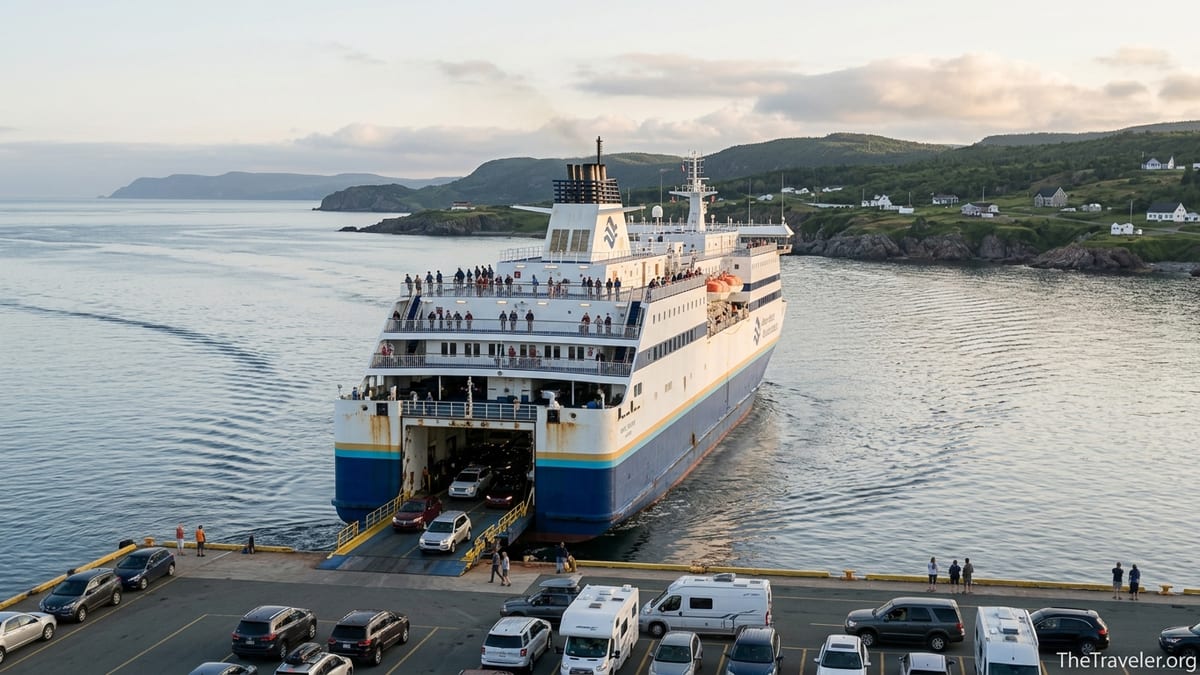
Key Atlantic Canada Ferry Routes You Need To Know
Most long-distance travelers in Atlantic Canada will encounter three main ferry networks: Marine Atlantic between Nova Scotia and Newfoundland, Northumberland Ferries between Nova Scotia and Prince Edward Island, and the CTMA ferry between Prince Edward Island and Quebec’s Magdalen Islands. Each plays a different role in regional trip planning, from overnight ocean crossings to short daytime hops.
For access to Newfoundland, Marine Atlantic operates two primary routes from North Sydney in Cape Breton, Nova Scotia. The year-round service links North Sydney with Port aux Basques in southwestern Newfoundland, typically taking about 7 hours across the Cabot Strait. A seasonal service runs between North Sydney and Argentia on Newfoundland’s Avalon Peninsula, with crossings of about 16 to 16.5 hours and a schedule that, for 2026, is extended into early October. These are large ocean-going ships carrying cars, RVs, trucks, and walk-on passengers with cabin options, lounges, and food service.
Within the Maritimes, the 75-minute Northumberland Ferries crossing between Caribou, Nova Scotia, and Wood Islands, Prince Edward Island, is often used as part of a scenic loop that combines the ferry one way and the Confederation Bridge the other. Northumberland Ferries has operated this route for generations, usually with multiple daily sailings in the main season between roughly late spring and fall.
Further out in the Gulf of St. Lawrence, travelers can reach Quebec’s Îles de la Madeleine using the CTMA ferry between Souris on eastern Prince Edward Island and Cap-aux-Meules in the islands. This route generally runs seasonally, with a typical single departure per day in each direction taking around 5 hours. It accepts passenger vehicles and is the main surface link for visitors heading to this remote archipelago.
Booking Reservations And Understanding Fares
For the major Atlantic routes, especially to Newfoundland and the Magdalen Islands, having a reservation is not just convenient but often essential in high season. Marine Atlantic allows reservations for both vehicles and foot passengers, and popular summer crossings and cabins can sell out weeks or even months ahead, particularly for July and August travel. Travelers regularly report that cabin space on the longer Argentia route is snapped up quickly, so if that sailing is central to your trip plan, book it as soon as possible once your dates are firm.
Marine Atlantic pricing is broken down by passenger fares and vehicle fares, with additional charges for cabins. Taxes also vary slightly depending on whether your sailing departs Newfoundland and Labrador or Nova Scotia, with harmonized sales tax in the mid-teens percentage range applied to the base fare. A common real-world scenario is a couple driving a mid-sized car from North Sydney to Port aux Basques: they will pay a per-person fare, a vehicle fare for a car under a specific length, plus HST, and then optionally add a cabin if they want privacy and beds. Exact numbers change regularly, so it is safest to treat online rate tables as the definitive source at booking time.
Northumberland Ferries between Caribou and Wood Islands offers both reserved and standby options. There is typically an extra fee to guarantee a specific crossing for your vehicle, and the company notes that reservations may be cancelled if you fail to check in at least 20 minutes before departure. Many regional travelers still show up as standby, especially on shoulder-season weekdays, but on busy summer weekends most locals now recommend reserving a crossing if your timing is important.
On the CTMA ferry to the Magdalen Islands, reservations are considered almost mandatory in peak season. The route has a more limited capacity and operates as the primary access for residents as well as tourists. If you are planning a July or August visit, especially with a larger vehicle or RV, plan to book your sailing at the same time you secure your island accommodations and consider building your itinerary around the ferry dates.
Vehicles, RVs, And What To Know Before You Drive Aboard
Bringing a vehicle on Atlantic ferries is straightforward if you understand the basic categories and check-in rules. Marine Atlantic, Northumberland Ferries, and CTMA all classify vehicles primarily by length and, in some cases, height. A standard passenger car, compact SUV, or small crossover usually falls into the base category. Pickup trucks with campers, vans with roof boxes, or larger RVs may fall into higher fare classes and sometimes need to be measured or declared accurately in advance.
On Marine Atlantic, for example, travelers regularly compare experiences of booking a standard vehicle versus a higher class for tall truck campers or trailers. If you underestimate your length or height when booking online, you may be reclassified at the terminal and could face higher charges or even be bumped to a later sailing if the appropriate space is already full. It is good practice to measure your full rig, including bikes on rear racks and rooftop gear, and declare it conservatively so the deck crew can plan loading.
Arriving early is another practical point that can make or break your schedule. Marine Atlantic check-in for vehicles typically opens several hours before departure and closes well before sailing time. In busy months, locals often suggest arriving at least two hours ahead, especially if you have an RV, trailer, or are hoping for a smoother boarding process. Northumberland Ferries specifically notes that reservations may be voided and moved to standby if you are not checked in by about 20 minutes prior to sailing, which can matter on summer Saturdays when traffic to Prince Edward Island spikes.
Travelers should also account for how sea conditions may affect vehicle loading and disembarkation. High winds in the Northumberland Strait, for example, have led to periodic schedule disruptions for the PEI ferry in recent years, forcing some visitors to switch at the last minute to the Confederation Bridge. On the Cabot Strait, winter storms and heavy seas can delay or cancel Marine Atlantic crossings, particularly in late fall and winter. If your trip involves time-sensitive connections, build in at least several hours of buffer after your planned arrival, or even a full day where possible.
Cabins, Seating, And Life On Board
For short daytime routes such as Northumberland Ferries between Nova Scotia and Prince Edward Island, cabins are not offered and travelers spend the 75 minutes in indoor lounges or on deck. Amenities typically include snack bars or small cafeterias, indoor seating with windows, and outdoor viewing areas for those wanting to watch the Northumberland Strait roll by.
On Marine Atlantic’s longer crossings, especially the overnight journeys, cabins are an important part of the experience. The Port aux Basques route offers both daytime and overnight departures, while the Argentia route is structured as an overnight crossing, with a journey of roughly 16 to 16.5 hours. Cabins range from simple two-berth interior options to larger four-berth or outside cabins with windows and private bathrooms. Regular travelers often aim to book a cabin even for daytime crossings on the Argentia route so they can sleep, shower, and have a private base for the long day at sea.
Cabin availability in peak season is limited, and travelers frequently find that the most popular summer sailings sell out of cabins well before vehicle spaces are gone. It is common to see social media discussions where people report booking several months ahead and still finding limited choice of cabin types. If you are planning a July or early August trip to Newfoundland and want an overnight cabin, consider booking as soon as you have confirmed vacation time, and be prepared to travel on a mid-week sailing for better availability.
For those without cabins, Marine Atlantic vessels offer a range of seating options, including reserved seating areas on some ships, general lounges, quiet zones, and children’s play spaces. Food services usually include cafeteria-style dining and snack bars, and some crossings feature lounges with alcoholic beverages. Wi-Fi is often available in the terminals and selectively on board but can be inconsistent at sea, so download maps, podcasts, and entertainment in advance. On the CTMA ferry to the Magdalen Islands, travelers can expect a more intimate ship with indoor lounges and outdoor observation decks, complemented by a distinct Acadian and Quebecois maritime atmosphere.
How Ferry Crossings Shape Your Atlantic Itinerary
Because ferry crossings are both time-consuming and constrained by fixed schedules, it is smart to treat them as the backbone of your Atlantic Canada itinerary rather than an afterthought. For a classic road trip from Halifax to Newfoundland, a common pattern is to drive to North Sydney, take an overnight Marine Atlantic sailing to Port aux Basques, and then spend a week or more driving across Newfoundland to St. John’s, Gros Morne National Park, and the Northern Peninsula before returning via another crossing.
The choice between the Port aux Basques and Argentia routes should be deliberate. Port aux Basques is the year-round gateway and shortest sea crossing, ideal if you plan to explore western Newfoundland, including Codroy Valley and Gros Morne, or if you are traveling outside the Argentia season. Argentia, on the other hand, delivers you closer to the Avalon Peninsula and St. John’s, cutting many hours of driving at the cost of a longer time at sea. For example, a traveler focused on St. John’s, Cape Spear, and the Irish Loop may prefer sailing into Argentia to avoid the long trans-island drive from Port aux Basques.
Within the Maritimes, ferry crossings can add variety and save repeat driving. A week-long loop might start in Halifax, head to Pictou and cross to Prince Edward Island via the Caribou to Wood Islands ferry, spend a few days exploring Charlottetown and the island’s north shore beaches, then exit via the Confederation Bridge into New Brunswick before returning to Nova Scotia. Another option is to incorporate the CTMA ferry to the Magdalen Islands, building a trip that includes both PEI and the islands with several nights on each side of the Gulf.
It is also worth considering how ferry timings impact your daily schedule. Marine Atlantic arrivals, particularly early morning disembarkations in Port aux Basques, often mean you land in Newfoundland before many services are fully open. Drivers who disembark around sunrise commonly head straight for breakfast in the nearest town or push on a few hours before checking into their accommodation elsewhere. On the Argentia route, late afternoon or evening arrivals close to St. John’s may pair well with a nearby overnight stay before you start a full sightseeing day in the city.
Practical Tips: Check-in, Weather, And Contingency Planning
Successful ferry travel in Atlantic Canada comes down to managing details. Always verify current schedules directly with operators close to your travel dates, because departure times and seasonal end dates can shift from year to year. For example, Marine Atlantic’s seasonal Argentia schedule in 2026 has been extended into early October, with three weekly sailings in each direction, a change that benefits fall travelers but would not have been obvious if you were relying on older guidebooks.
Check-in procedures are straightforward but time-sensitive. With Marine Atlantic, you will be directed to drive through a ticket booth area, receive boarding passes once payment is complete, and park in designated lanes until loading. Foot passengers check in at terminal counters and board via walkways or buses. On Northumberland Ferries, signage at Caribou and Wood Islands terminals directs vehicles into reservation and standby lanes, and staff indicate when to move forward. Showing up late can mean losing a reserved place, so treat the published departure time as the time the ship leaves the dock, not when you arrive at the terminal.
Weather is another factor you cannot ignore. High winds in the Northumberland Strait have caused multiple service disruptions in some recent seasons. On the open Cabot Strait, winter gales and heavy seas are more frequent, potentially lengthening crossings, causing delays, or occasionally forcing cancellations. If you are traveling in late fall, winter, or early spring, monitor marine forecasts and operator advisories, and avoid planning critical flights or events immediately after your scheduled arrival.
Having a backup plan is particularly wise if your itinerary is tight. For example, if a mechanical issue reduces Northumberland Ferries capacity or cancels sailings for a day, you may need to use the Confederation Bridge to reach or leave Prince Edward Island instead. On the Newfoundland route, a prolonged weather event could delay you by a day, so aim to leave at least one flexible day at the end of your trip in case you need to rebook to a later crossing. Travel insurance that covers delays, along with flexible hotel and car rental bookings, can reduce the stress of unexpected changes.
The Takeaway
Ferries are not just a means of getting from point A to point B in Atlantic Canada; they are part of the experience. Watching the coastline of Cape Breton recede as you sail to Newfoundland, spotting seabirds in the Northumberland Strait, or arriving at the red cliffs of the Magdalen Islands by sea are highlights that many travelers remember long after the driving miles blur together.
From a planning standpoint, treat your ferry bookings as the anchor dates of your trip. Reserve key crossings, particularly Marine Atlantic and CTMA sailings, as early as is reasonably possible, accurately declare your vehicle size, and decide whether cabins are important to your comfort on longer passages. Build in time buffers for weather, double-check seasonal schedules each year, and use ferries to create varied loops instead of simple out-and-back drives.
With a realistic understanding of routes, reservations, vehicle rules, and on-board life, Atlantic Canada’s ferries become less of a logistical hurdle and more of a rewarding part of the journey. Whether you are road-tripping to Newfoundland, looping through the Maritimes, or venturing out to the Magdalen Islands, smart ferry planning will keep your itinerary smooth and your focus where it belongs: on the sea, the coastlines, and the communities that make this region unique.
FAQ
Q1. Do I really need to reserve the Marine Atlantic ferry in advance?
Yes, advance reservations are strongly recommended, especially between late June and early September. Vehicle space and cabins can sell out, particularly on weekend and overnight sailings, so booking early greatly improves your options.
Q2. How early should I arrive at the ferry terminal with a vehicle?
Plan to arrive at least two hours before departure for Marine Atlantic and at least one hour before for Northumberland Ferries and CTMA, unless the operator specifies otherwise. This gives you time to check in, clear any inspections, and line up for boarding without stress.
Q3. What happens if I am late for a reserved Northumberland Ferries crossing?
If you miss the check-in cut-off, usually around 20 minutes before departure, your reservation may be cancelled and you may be placed in the standby line. You could still travel on the same day but may have to wait for a later sailing if the ferry is busy.
Q4. Are cabins worth the extra cost on the Newfoundland ferries?
For overnight or 16-hour Argentia crossings, most travelers find cabins very worthwhile. They provide beds, privacy, and a place to rest, especially if you have a long drive before or after. For shorter daytime Port aux Basques sailings, a cabin is more of a comfort upgrade than a necessity.
Q5. Can I travel on these ferries without a car?
Yes, all the major routes accept foot passengers. You will check in at the terminal and board via walkways or terminal buses. Once on the other side, however, you may need to rely on local taxis, shuttles, or arranged tours, especially in more remote areas.
Q6. How are vehicles priced on Atlantic Canada ferries?
Vehicle fares are usually based on length and sometimes height. A standard car or small SUV fits the base category, while longer pickups, RVs, and vehicles with trailers pay higher rates. Accurate measurements help avoid reclassification or extra fees at the terminal.
Q7. What should I pack for a long Marine Atlantic crossing?
Pack an overnight bag with toiletries, any medications, a change of clothes, snacks, and entertainment like books or downloaded shows. Even with on-board dining and shops, having your own essentials makes the journey more comfortable.
Q8. How do weather and sea conditions affect ferry travel?
High winds, heavy seas, and winter storms can delay or cancel sailings, especially across the Cabot Strait and in the Northumberland Strait. Always check operator advisories close to departure, and build flexibility into your schedule to handle possible disruptions.
Q9. Is there Wi-Fi on board Atlantic Canada ferries?
Many terminals offer complimentary Wi-Fi, but on-board connections can be limited or intermittent, particularly on open-sea routes. It is best to download maps and entertainment before sailing and treat any on-board Wi-Fi as a bonus rather than a guarantee.
Q10. Can I bring my pet on these ferries?
Pets are generally allowed on the main Atlantic Canada routes, but rules vary by operator. Expect requirements such as leashes, approved carriers, restricted access to certain decks, and sometimes the option or requirement to leave pets in vehicles for the crossing. Always confirm current pet policies before you travel.