


Baffin Island sits at the adventurous end of the travel spectrum. This is a place of floe-edge narwhal safaris, polar bears on pack ice, granite walls looming over glacier valleys, and Inuit communities that are still very much living Arctic life every day. It is also a destination where logistics, weather and trip style matter as much as the scenery. Choosing the right base community and tour style can make the difference between a trip of a lifetime and an expensive exercise in frustration.
Understanding Baffin Island as a Guided Destination
Most visitors experience Baffin Island through guided trips that start in Iqaluit, the territorial capital on the south coast. From there, small aircraft fan out to communities like Pangnirtung, Qikiqtarjuaq and Pond Inlet, which serve as gateways to hiking routes, floe-edge camps and wildlife viewing areas. Flights north typically route via Ottawa or Montreal with Canadian North or another regional carrier, and then connect onward from Iqaluit to the smaller hamlets on separate tickets. This hub and spoke model is important for planning because every extra flight segment is another point where Arctic weather can impact your itinerary.
Tour styles fall into a few broad categories: community-based cultural visits, hiking and trekking in Auyuittuq National Park, spring floe-edge safaris focused on narwhal and polar bears, summer boat-based wildlife and glacier trips, and specialist photography or film expeditions. Prices vary widely but a one-week guided floe-edge trip from Pond Inlet, including full camp support and local guides, can easily run into the high four or low five figures per person, while a half-day boat tour from Iqaluit to see icebergs and seabirds may cost a few hundred Canadian dollars.
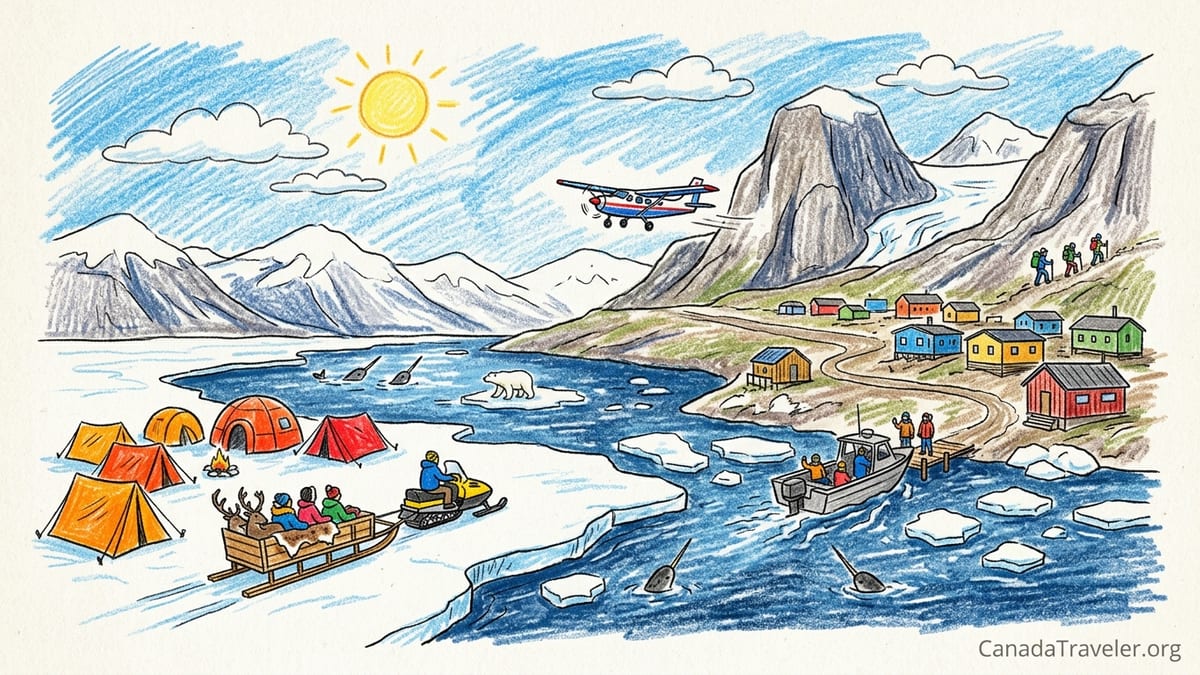
Because distances are huge and road networks are almost non-existent, tour operators rely on a mix of snowmobiles and qamutik sleds in spring, and aluminum boats or larger open skiffs in summer and early autumn. Helicopters are used only occasionally for chartered expeditions or emergency situations. Understanding when each mode is used will help you choose a trip that matches both your comfort level and your appetite for adventure.
Above all, Baffin is a place where flexibility is essential. Flight delays of a day or two between Iqaluit and smaller communities are not unusual when fog, crosswinds or low cloud move in. Many outfitters explicitly recommend that guests build one or two extra buffer days into their plans at either end of a trip, especially for Auyuittuq traverses or Pond Inlet floe-edge safaris, where missing a connection can mean missing the entire experience.
Iqaluit: The Hub for Soft Adventure and Short Stays
Iqaluit is both Nunavut’s administrative center and the practical gateway to much of Baffin Island. For travelers who want a taste of the Arctic without committing to a complex expedition, Iqaluit-based tours make the most sense. Several local outfitters offer half-day or full-day snowmobile outings in late winter and spring, dog-sled experiences, and boat excursions in summer to view sea ice remnants, seabird colonies and nearby fjords. These activities usually include pick up from hotels such as the Frobisher Inn or Discovery boutique hotel and return in time for dinner in town.
Community and cultural touring is another strength of Iqaluit. Guided walks can include visits to the Nunatta Sunakkutaangit Museum, gallery spaces showing Inuit art, and informal drop-ins at local craft markets where carvers and seamstresses sell their work. In winter, some companies arrange northern lights outings just outside town, with hot drinks and traditional snacks while you wait for the aurora to flare.
Because Iqaluit has the widest choice of accommodation on Baffin Island, it is also the natural place to build in weather buffers. Travelers heading to Pangnirtung or Qikiqtarjuaq for Auyuittuq trips often overnight in Iqaluit both on the way north and back south, in case the small-plane legs are delayed. A flexible ticket from Ottawa or Montreal to Iqaluit, combined with a night or two on either side of any more remote trip, reduces the stress if fog closes the airport or crosswinds build on the gravel runways further north.
Boat versus snowmobile use in Iqaluit follows the typical Arctic pattern. From roughly late March through early June, when sea ice is solid and daylight is long, snowmobiles and sleds are used for day trips out onto the ice or along the coast. By mid to late summer, once the sea ice has broken up, aluminum boats become the main transport, and guides may use them to reach iceberg fields or remote picnic spots along Frobisher Bay.
Pangnirtung: Gateway to Auyuittuq and Coastal Culture
Pangnirtung, usually shortened to Pang, sits on a fjord on Baffin’s Cumberland Peninsula and is one of the two access communities for Auyuittuq National Park. Flights from Iqaluit to Pang are typically operated by regional carriers like Canadian North, and visitors must connect through Iqaluit no matter where they start. Pang itself offers accommodation in a small hotel and guesthouses often associated with the local co operative, plus a limited number of home-stay style options arranged through outfitters or the hamlet office.
The village is known for its printmaking and weaving studios, and many guided trips build in time to visit the Uqqurmiut Centre for Arts & Crafts or meet local artists. For some travelers, a two or three night stay that combines gentle hiking near the community, a day trip by boat into the park’s southern fjords and cultural visits in town is enough to feel immersed in Arctic life without committing to a full Auyuittuq traverse.
For those who do want to venture into the park, Pang guides run boat shuttles to the southern entrance of Auyuittuq in summer, navigating 20 to 30 kilometers up Pangnirtung Fiord to reach the trailheads and emergency shelters. In spring, before the ice breaks, access may switch to snowmobiles towing wooden qamutik sleds. Parks Canada emphasizes that visitors must register at the park office in Pangnirtung and attend a mandatory orientation before entering Auyuittuq, whether for a guided day hike to a viewpoint like Ulu Peak or a multi day expedition through Akshayuk Pass.
Because weather in the fjords is changeable, guides and Parks staff encourage visitors to allow multiple days around any planned boat transfer. Wind, sea ice and fog can all delay shuttles, and even summer departures can be pushed back. Given the cost of flights to Pang and the commitment required to move gear and supplies into the park, many experienced visitors recommend at least one buffer day in Pang itself before a long traverse, and another on the way out, in case either the boat trip or the local flight is disrupted.
Qikiqtarjuaq: Northern Doorway to Auyuittuq and Coastal Wildlife
Qikiqtarjuaq, commonly shortened to Qik, is a small community on Broughton Island off Baffin’s east coast and the northern access point for Auyuittuq National Park. As with Pangnirtung, all flights route via Iqaluit, and there is no road or direct sea connection for visitors. Travelers typically overnight in Iqaluit, then fly onward on a separate small aircraft to Qik, where a modest local inn or co op hotel provides simple but comfortable rooms for a night or two before and after backcountry trips.
From Qikiqtarjuaq, outfitters use boats in summer to reach the park boundary roughly 30 kilometers away along North Pangnirtung Fiord. In early season or in years with lingering pack ice, snowmobiles and sleds may still be used well into spring to position hiking groups and their gear. Many commercial Auyuittuq traverses start in Qikiqtarjuaq and end in Pangnirtung or vice versa, with clients transferring between the two hamlets by boat at either end of the trail. Independent hikers swap similar logistics advice: allow at least one extra day in each community to cover flight cancellations or weather related delays.
Beyond its role as a hiking gateway, Qikiqtarjuaq’s coastline offers classic High Arctic scenery and wildlife viewing. Local guides sometimes run boat trips along steep-sided fjords to look for seals, seabird cliffs and the occasional polar bear on shore or ice floes. Because tourism volume here is still relatively low, many experiences are arranged on a custom basis. Travelers often coordinate directly with an outfitter for a tailored itinerary that might combine a day in the community, a boat tour and a short overnight camping trip.
Given the remoteness, costs add up quickly. A two week independent Auyuittuq traverse that uses Qikiqtarjuaq as an entry or exit point can easily see several thousand Canadian dollars per person spent on flights alone, plus boat transfers, park fees and a few hotel nights if weather forces unplanned stopovers. When choosing between guided and unguided options, consider not just the skill set required for glacier river crossings and navigation, but also how comfortable you are troubleshooting delayed flights and rearranging local logistics on your own.
Pond Inlet and Northern Baffin: Floe Edge and Wildlife Safaris
Pond Inlet, on the north coast of Baffin Island, is one of the best known bases for floe-edge wildlife trips. These safaris focus on the dynamic zone where land fast sea ice meets open water in late spring, attracting narwhal, seals, sometimes bowhead whales, and polar bears that patrol the edge for hunting opportunities. Tour operators based in or working with Pond Inlet typically bring guests in on scheduled flights from Ottawa or Montreal to Iqaluit, then onward to Pond Inlet on a regional carrier. The town’s small hotel, such as the Sauniq Hotel described in Nunavut tourism materials, usually serves as a first and last night base, with most of the trip spent at a semi-permanent floe-edge camp out on the sea ice.
Floe-edge trips generally run from late May into mid June, when there is still enough land fast ice to support snowmobiles and sleds but open leads of water where marine mammals gather. Guests travel by snowmobile and qamutik from Pond Inlet to camp, sometimes taking several hours to cross pressure ridges and rough ice. At camp, heated communal tents, expedition style sleeping tents and shared dining domes provide shelter from the elements. Daily excursions fan out along the floe edge by foot or snowmobile to scan for wildlife. Photography focused departures may stay out for extended periods at a single opening in the ice, waiting quietly for narwhal or polar bears to appear.
Weather variability at the floe edge demands built in flexibility. Operators typically caution guests that conditions can keep snowmobiles pinned down in whiteouts or high winds for days. Sea ice can fracture, forcing guides to move camp on short notice. Many companies recommend at least two buffer days before international flights home and sometimes more, in recognition that planes into and out of Pond Inlet are limited and easily delayed by fog or low cloud. A missed connection in Iqaluit can be particularly challenging to recover because there may only be one or two flights a day south.
Beyond the floe edge, summer in Pond Inlet shifts the focus to boat based excursions. Once the ice has broken up, guides use sturdy open boats to explore glacier fronts, calving icebergs and rich bird cliffs around nearby Bylot Island. Wildlife remains a high priority, with chances to see seals, seabirds, occasional whales and sometimes bears swimming between ice pans. Shorter community based tours may combine a day hike on the tundra with visits to local interpretive centers that explain the region’s Inuit and Thule heritage.
Choosing Between Iqaluit, Pangnirtung, Qikiqtarjuaq and Pond Inlet
For many travelers, the key decision is not whether to visit Baffin Island, but which community to base an expensive and logistically involved trip around. Iqaluit is the logical choice for short breaks, first time Arctic travel and visitors who want to keep things relatively simple. You can fly in from Ottawa or Montreal, spend three or four nights doing day trips with local guides, and have a good chance of absorbing Arctic culture and landscapes without adding extra flight legs or complex transfers.
Pangnirtung and Qikiqtarjuaq appeal more to hikers and trekkers. If your main goal is the Akshayuk Pass or other Auyuittuq routes, you will almost certainly transit both communities by boat or aircraft. The southern half of the park, accessed from Pangnirtung, offers dramatic granite spires and glacier valleys within reach of a day trip, making it suitable for travelers who want a taste of backcountry scenery while still sleeping in a bed each night. The northern half, reached from Qikiqtarjuaq, feels wilder and often features more extensive snow and ice lingering into summer, which has implications for gear and river crossings.
Pond Inlet and other northern Baffin communities such as Arctic Bay and Clyde River usually attract travelers who are comfortable investing significant time and budget into a single marquee experience like a floe-edge safari or dedicated polar bear photography trip. Here, itineraries are often fully packaged by specialist operators who include chartered camp logistics, Inuit guiding teams and sometimes bundled charter flights. For example, a top tier narwhal and polar bear photography safari might last 8 to 10 days on the ice plus travel days, with all meals and equipment included, and prices that reflect the complexity of operating in such a remote environment.
It can be useful to think in terms of your primary focus: if you want culture and easier logistics, start with Iqaluit. If you want big mountain scenery and long hikes, look toward Pangnirtung and Qikiqtarjuaq. If your dream is narwhal at the floe edge and days spent scanning for polar bears, prioritise Pond Inlet or higher latitude communities. In every case, plan to pass through Iqaluit, and allow time there for weather related disruptions.
Boats, Snowmobiles and Seasonal Timing
On Baffin Island, the choice between boats and snowmobiles is almost entirely seasonal. From roughly March through early June, when sea ice is still thick enough to support travel, snowmobiles and qamutik sleds are the main way to move people and freight between communities and out onto the land. Floe-edge safaris, early spring polar bear trips and some late winter cultural tours all rely on this network. Guests should be prepared for long hours in unheated sleds, sitting on caribou skins or foam pads, and for truly Arctic windchill even when the sun is shining around the clock.
From late June through September, as the sea ice breaks up, boats take over. Along the Cumberland Peninsula, Pangnirtung and Qikiqtarjuaq guides use aluminum skiffs with outboard motors to ferry hikers into Auyuittuq and to run day trips to glacier fronts or coastal campsites. Around Pond Inlet, larger open boats and sometimes small cabin vessels explore Bylot Island’s iceberg alley and floe remnants. Even in midsummer, passengers should expect cold spray, sudden changes in weather, and the need for proper waterproof outerwear and insulated midlayers.
Timing a trip to match your preferred mode of travel is crucial. If you have your heart set on floe-edge narwhal viewing, that generally means late spring, which in turn means snowmobiles, long sled rides and camping on sea ice. If you prefer boat travel and tundra hiking on firm ground, mid to late summer is safer, though spring snow can linger in shaded valleys of Auyuittuq well into July. Some tour operators publish detailed departure calendars that align trip styles with the local conditions they need, from March polar bear and ice trips to August Auyuittuq traverses and September northern lights-focused visits.
Regardless of season, weather delays should be treated as part of the experience rather than an exception. Travelers regularly report flight cancellations that push departures from Iqaluit to Qikiqtarjuaq or Pangnirtung back by a day or two due to low cloud on approach, and guides encourage guests to build flexible windows rather than tight chains of nonrefundable flights. In practice, that often means booking changeable tickets to and from Ottawa or Montreal, and setting aside contingency funds for extra hotel nights in Iqaluit or the smaller communities if needed.
Accommodation, Comfort Levels and Practical Budgeting
Accommodation on Baffin Island ranges from simple but comfortable hotels in Iqaluit and major communities to expedition style tents on the sea ice. In Iqaluit, properties like the Frobisher Inn or Discovery-style boutique hotels offer private rooms, restaurants and Wi Fi that will feel familiar to most travelers, albeit at prices that reflect northern operating costs. In Pangnirtung, Qikiqtarjuaq and Pond Inlet, accommodation is more limited and often revolves around co op run Inns North hotels or independent lodges such as Auyuittuq Lodge or Sauniq Hotel, where rooms are functional and meals are usually included or available on site.
On trekking and floe-edge trips, however, your “hotel” is usually a camp. Floe-edge operations near Pond Inlet may set up large heated communal tents, private sleeping tents on wooden platforms and shared toilet facilities built directly on the sea ice. In Auyuittuq, backpacking style tours involve lightweight expedition tents pitched on gravel moraines or tundra benches, with river water filtered or boiled for drinking and no permanent infrastructure beyond simple emergency shelters maintained by Parks Canada. Sleeping comfort, privacy and amenities are limited, but the surroundings are spectacular.
Costs reflect both remoteness and the need to fly in almost everything. Even on independent Auyuittuq traverses, it is common for the majority of a traveler’s budget to be consumed by flights between southern Canada, Iqaluit and the entry and exit hamlets, plus boat shuttles to reach the park proper. Guided trips that include flights from Ottawa to Pond Inlet, local guiding, camp infrastructure and safety equipment can climb into the several thousand dollars per person range for a week or slightly longer. Travellers should also allow for unplanned extra nights in community hotels if weather keeps them from flying on schedule.
Comfort level is a key filter for choosing among these options. If you prefer a real bed and hot shower every night, you will likely gravitate to Iqaluit based day tours, Pangnirtung sightseeing combined with boat day trips, or summer boat excursions from Pond Inlet that return to town each evening. If you are comfortable with expedition camping, outhouses or snow toilets and occasional days of enforced inactivity due to weather, floe-edge safaris and Auyuittuq expeditions unlock a more immersive side of Baffin Island.
The Takeaway
Baffin Island rewards those who plan carefully and travel flexibly. The same isolation that makes it a dream destination for floe-edge wildlife viewing, big wall landscapes and unfiltered Inuit culture also means that flights are few, weather is a decisive factor, and comfort can never be completely guaranteed. The upside is that guided trips here often feel genuinely remote and uncluttered, with small groups, strong local involvement and scenery that feels a world away from more crowded adventure hotspots.
As you weight options, start with your primary focus: cultural immersion and soft adventure out of Iqaluit, hiking and mountain scenery via Pangnirtung and Qikiqtarjuaq, or floe-edge narwhal and polar bears around Pond Inlet and the far north. Factor in the need to route through Iqaluit, and be honest about your willingness to camp on sea ice or in remote valleys versus staying in simple community hotels. Build generous weather buffers at each stage and choose operators who are transparent about risks and contingency plans.
With those pieces in place, a guided trip to Baffin Island can deliver some of the most powerful travel experiences available anywhere: the sound of narwhal surfacing beside the floe edge, the glow of midnight sun on granite spires, the rhythm of snowmobiles crossing the ice, and conversations with people who call this landscape home. It is not an easy trip in any sense, but for many travelers it becomes the journey against which all others are measured.
FAQ
Q1. Do I have to connect through Iqaluit for all Baffin Island tours?
Yes. Commercial visitors almost always connect through Iqaluit, then take separate regional flights to communities like Pangnirtung, Qikiqtarjuaq or Pond Inlet.
Q2. How many extra days should I build in for weather delays?
Plan at least one buffer day each way in Iqaluit, plus an extra day in smaller communities if you have critical onward flights or expensive guided trips.
Q3. When are snowmobiles used instead of boats?
Snowmobiles and sleds are used from late winter into early summer while sea ice is solid. Boats take over once the ice breaks up, typically from late June onward.
Q4. What is the best time to see narwhal and polar bears at the floe edge?
Late May to mid June is usually prime floe-edge season near Pond Inlet, when land fast ice remains but open leads of water attract marine mammals and bears.
Q5. Can I visit Auyuittuq National Park on a short trip?
Yes. From Pangnirtung or Qikiqtarjuaq, outfitters offer day trips and short overnights into the park, but you must still register and attend a Parks Canada orientation.
Q6. Are there comfortable hotels in the smaller Baffin communities?
Accommodation is simpler than in southern cities but there are functional hotels and lodges in Pangnirtung, Qikiqtarjuaq and Pond Inlet, often run as co op Inns.
Q7. How expensive are guided Baffin Island trips?
Costs vary, but multi day floe-edge safaris or Auyuittuq traverses commonly reach several thousand dollars per person once flights, guides and logistics are included.
Q8. Do I need previous Arctic experience for these tours?
Not necessarily. Many trips are designed for fit first time visitors, but remote camping expeditions demand strong outdoor skills and comfort with basic conditions.
Q9. Is it possible to travel independently without guides?
Experienced backcountry travelers sometimes visit Auyuittuq independently, but most floe-edge and wildlife trips rely on local guides for safety, logistics and cultural knowledge.
Q10. What kind of clothing and gear should I bring?
Think in terms of layered cold weather systems: base layers, insulated midlayers, windproof and waterproof shells, warm boots, mitts, and eye protection suitable for snow and ice glare.