


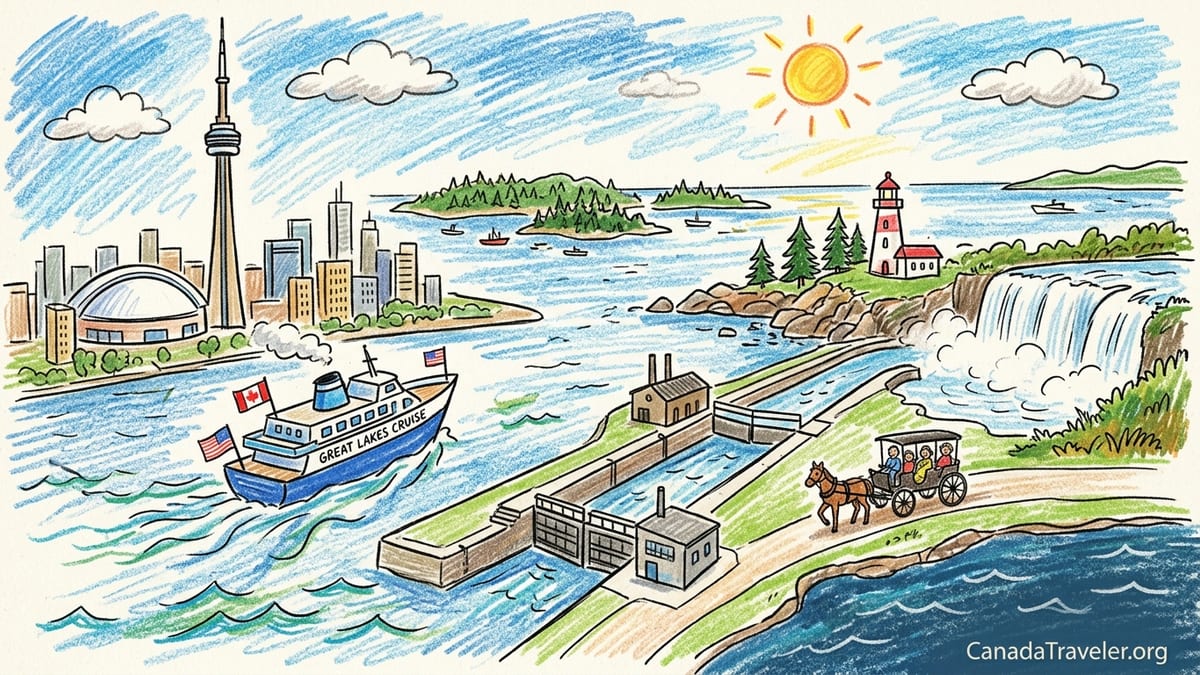
Toronto has quietly become one of North America’s most interesting cruise gateways. From late spring through early fall, small expedition-style ships now sail from Toronto across the Great Lakes toward Niagara, Georgian Bay, Mackinac Island, Chicago, Milwaukee and even up to Lake Superior. For travelers who love scenery, fresh air and boutique ships more than mega-resort vessels, 2026 is shaping up to be a strong year to board a Great Lakes cruise from Toronto.
Why Choose a Great Lakes Cruise from Toronto in 2026
Toronto sits on the western edge of Lake Ontario, making it a natural embarkation point for itineraries that zigzag through all five Great Lakes or focus on highlights like Niagara Falls and Georgian Bay. In 2026, several small-ship operators use the city’s central waterfront as either a starting or ending port for itineraries running between May and October. These cruises typically carry 190 to about 210 guests, which means a quieter on-board atmosphere than found on most ocean megaships and easier access to smaller ports such as Parry Sound or Little Current.
For many travelers, the appeal is the mix of convenience and novelty. Toronto is easy to reach from across North America, with frequent flights and rail connections, yet the routes feel off the usual cruise radar. Instead of Caribbean beaches, the draw is rugged shorelines, lighthouses, dense forests, and historic industrial towns that helped shape both Canada and the United States. You might kayak above preserved shipwrecks one day, then tour Mackinac Island by horse-drawn carriage the next.
Another advantage is climate. Great Lakes seasons are relatively short, but in June, July and August, daytime temperatures are typically comfortable for hiking and on-deck viewing, and nights cool enough for sleeping with a breeze. Shoulder months like May and September can be chillier, especially on open decks, but reward guests with fewer crowds and dramatic fall color on select late-season sailings.
Because ships are small and the season is compressed, space sells out quickly on popular dates. Many 2026 sailings, especially those including Niagara Falls and Mackinac Island, are already seeing strong advance bookings, so planning six to twelve months ahead is advisable if you have fixed vacation dates or need specific cabin types.
Key Routes and What You Actually See
Most Great Lakes cruises from Toronto in 2026 fall into a few recognizable patterns. Shorter itineraries tend to focus on Lake Ontario and Lake Erie, often including Niagara Falls via the Welland Canal and nearby Port Colborne. Longer sailings push farther into Lakes Huron, Michigan and Superior, adding dramatic coastal scenery and remote communities that are hard to reach by road.
One of the most popular patterns is the Toronto to Milwaukee or reverse route via Georgian Bay. Pearl Seas Cruises, for example, runs 11- and 12-night Great Lakes & Georgian Bay itineraries on the 210-guest Pearl Mist that include Niagara Falls, Parry Sound, the Thirty Thousand Islands area and ports like Mackinac Island and Thunder Bay. These sailings usually cover at least four of the five Great Lakes and offer a mix of nature walks, lighthouse visits and small-town stops across Ontario and the U.S. Midwest.
Another workhorse route is the “all five Great Lakes” concept between Toronto and Chicago, often with Milwaukee as an alternate turnaround port. Victory Cruise Lines, operating ships around 190 guests, typically offers 10- to 11-night itineraries where Toronto is one terminus and Chicago the other. These voyages commonly call at Detroit, Cleveland, Mackinac Island and Sault Ste. Marie and transit the Soo Locks into Lake Superior on select dates. Travelers effectively trace a freshwater arc across the continent while unpacking only once.
For those who are more interested in wilderness than cities, a small number of itineraries extend deeper into Lake Superior with calls at Thunder Bay or similar northern ports. Viking, for instance, sells a Great Lakes Collection route running between Duluth in Minnesota and Toronto. While that trip does not always embark in Toronto, it is a practical example of how a Great Lakes voyage can link major cities like Toronto with remote northern shorelines and historic maritime centers.
Niagara, Welland Canal and Shorter Great Lakes Options
Travelers with limited time or a special interest in Niagara Falls often consider shorter itineraries that highlight Lake Ontario, Lake Erie and the Welland Canal. While most 2026 Great Lakes sailings involving Toronto still run around 7 to 12 nights, there are “Niagara and the Great Lakes” style routes that keep sailing distances more compact while still delivering a sense of the region’s engineering and natural drama.
Viking’s Niagara & the Great Lakes expedition itinerary, for example, operates between Toronto and Milwaukee or the reverse, with a major focus on the Niagara region. Guests typically travel by motorcoach to the falls from a port such as Port Colborne or through the Niagara Peninsula, before the ship passes through the Welland Canal, a flight of eight locks that connects Lake Ontario and Lake Erie. Similar routings are offered by other lines on slightly different schedules, but the essential experience is the same: a close-up view of one of the world’s iconic waterfalls paired with the industrial infrastructure that makes modern Great Lakes shipping possible.
Most Niagara-focused itineraries are at least 7 nights, even if they do not reach Lake Superior. Expect prices to start in the mid to upper four figures per person for an entry-level cabin on a shoulder-season departure, often somewhere around 4,000 to 5,500 US dollars per person based on double occupancy. Peak summer departures that include Niagara plus classic leisure ports such as Mackinac Island generally command higher rates, sometimes rising into the 6,000 to 7,500 dollar range or above depending on cabin type and inclusions.
Because these cruises stay within the lower lakes, sea days are usually shorter and port calls more frequent. That structure can suit travelers who prefer daily excursions and are less interested in long stretches of open-water scenery. However, it also means locks, buses and popular viewpoints can feel busy during midsummer. Booking midweek departures or shoulder months like late May or September can help reduce crowding on the Niagara excursions.
Georgian Bay, Lake Superior and Longer Adventure Itineraries
If your priority is wild scenery, rocky islands and remote ports, look for routes that specifically highlight Georgian Bay and Lake Superior. These itineraries are typically 10 to 15 nights and often run between Toronto and either Milwaukee, Chicago or Duluth. They appeal to travelers who are comfortable with more sea days and a slightly more expedition-style approach to excursions.
On Pearl Seas’ Great Lakes & Georgian Bay programs, for instance, guests sail into the UNESCO-recognized Georgian Bay Biosphere Reserve, where the ship threads through the Thirty Thousand Islands region. Shore tours commonly include small-group hikes, local cultural presentations in Parry Sound or Little Current, and Zodiac-style scenic rides or smaller boat trips among the islands on some departures. Combined with stops at Mackinac Island and Thunder Bay, these voyages offer a strong balance of landscape and history.
Viking’s Great Lakes Collection, usually 15 days between Toronto and Duluth or the reverse, spends significant time along the north shore of Lake Superior and includes active options such as kayaking near Thunder Bay or visiting maritime heritage sites. Cabins, public spaces and equipment on Viking’s expedition ships are set up to support this style of exploring, with mud rooms, gear storage and resident experts leading nature walks and talks on geology, ecology and Indigenous history.
These longer routes are priced accordingly. A two-week, all-lakes style sailing that includes Georgian Bay and Lake Superior typically starts somewhere in the high four to mid five figures per person for entry categories, depending on the line and season. For example, mid-2020s indicative pricing for similar sailings on Pearl Mist and on Victory’s all five Great Lakes programs often falls roughly between 7,000 and 12,000 US dollars per person, with Viking’s expedition offerings generally positioned at a premium above that. As always, specific 2026 rates vary by date, promotion and cabin type, so treat these figures as directional rather than guaranteed.
Comparing the Major Operators: Viking, Pearl Seas, Victory and Others
Several small-ship operators are competing for Great Lakes guests in 2026, and their ships and onboard styles differ in ways that matter when you are choosing from Toronto departures. Viking, Pearl Seas and Victory Cruise Lines are among the highest-profile brands, with other U.S. river and coastal operators occasionally touching Toronto on longer itineraries.
Viking positions its Great Lakes ships as expedition vessels, typically carrying around 378 guests, which is larger than most of the other players in this region but still much smaller than mainstream ocean ships. Interiors feel Nordic and contemporary, and fares often bundle items like wine and beer with meals, Wi‑Fi, and a basic excursion in each port. Viking’s Great Lakes Collection and Niagara & the Great Lakes itineraries usually do not start in Toronto in both directions, but many include the city as either an embarkation or debarkation port, giving Toronto-based travelers access to a familiar brand combined with a more adventurous route profile.
Pearl Seas Cruises operates the Pearl Mist, a 210-passenger vessel focused squarely on the Great Lakes and Canadian Maritimes. The ship offers all-balcony or Juliet-balcony style accommodations and a relaxed, country-club casual atmosphere. Its Great Lakes & Georgian Bay sailings are particularly relevant to Toronto, with several departures each season either starting or ending in the city. Fares tend to include wine and beer with lunch and dinner, daily shore excursions in most ports and a one-night pre-cruise hotel package on select dates, positioning Pearl Seas in an upper-premium space.
Victory Cruise Lines, sailing the roughly 190-guest Victory I and Victory II, takes an intimate, all-inclusive approach. Recent materials emphasize that fares cover most alcoholic beverages, Wi‑Fi, gratuities and a curated selection of excursions, along with enrichment lectures branded as Lake-oriented cultural programming. Toronto features prominently in Victory’s all five Great Lakes sailings, commonly as the eastern terminus of 10- and 11-night routes to Chicago or as a turnaround point on itineraries that loop through all five lakes and back toward the lower Great Lakes.
Compared with these three, other operators that appear intermittently on Toronto cruise schedules, such as certain American coastal cruise lines, often deploy similar-size ships but may structure their seasons differently, combining Great Lakes segments with St. Lawrence River or New England coastal legs. Because fleet placement can change from year to year, it is wise to review 2026 deployment carefully if you are loyal to a particular brand or amenity level.
Ship Size, Onboard Experience, Inclusions and Price Ranges
Ship size is one of the most important practical differences among Great Lakes cruise options from Toronto. At the smaller end, vessels like Victory I and Victory II carry under 200 guests, which often translates into a more intimate feel in lounges and on deck. Boarding, tendering and exiting for excursions are typically quick, and you are likely to recognize most faces by mid-cruise. Pearl Mist and similar ships carry around 200 to 220 guests, while Viking’s Great Lakes expedition ships are larger but still well below the scale of mainstream ocean tonnage.
Inclusions vary by line. Victory tends to market itself as strongly all-inclusive, bundling beverages, gratuities and a core set of shore excursions into most fares. Pearl Seas covers excursions in most ports, along with beer and wine at meals, but may charge extra for certain premium tours or beverages. Viking typically includes at least one excursion per port, Wi‑Fi, and beer and wine at lunch and dinner, while charging à la carte for higher-end tours and some drinks. When comparing headline prices, it is important to look carefully at what is baked into the fare so you can compare apples to apples.
In terms of price level, Great Lakes cruises from Toronto sit firmly in the premium to luxury category. For 2026, it is reasonable to expect entry-level per-person fares on a 7- to 8-night Niagara or lower-lakes itinerary to start roughly between 4,000 and 6,000 US dollars, with 10- to 12-night Georgian Bay and all five Great Lakes sailings commonly priced in the 6,000 to 10,000 dollar range or more. Longer 14- to 15-night Lake Superior and all-lakes expeditions on higher-end brands can stretch beyond that, especially in peak summer or for balcony and suite accommodations.
Because capacity is limited, sales and discounts tend to be modest compared with large-ship ocean products. However, travelers can sometimes find value in shoulder-season departures, cabin guarantees, or early-booking promotions that might include onboard credit or reduced single supplements. Checking several departure dates for the same itinerary often reveals meaningful price swings that can add up on a multi-thousand-dollar trip.
Great Lakes Only vs St. Lawrence and Beyond
One of the more nuanced planning decisions for 2026 is whether to book a Great Lakes only itinerary from Toronto or a longer voyage that continues down the St. Lawrence River toward Quebec or the Atlantic. Both options exist, though not every line offers both styles in every season, and the trade-offs are significant in terms of time, cost and port focus.
A Great Lakes only sailing keeps you within the freshwater system, typically ending in a city such as Chicago, Milwaukee or Duluth. These itineraries concentrate on lake-specific highlights: Niagara Falls, Georgian Bay, Mackinac Island, the Soo Locks at Sault Ste. Marie, and coastal cities like Detroit or Cleveland. They are ideal if your interest lies in the industrial and natural history of the lakes, and if you prefer a trip length of around 7 to 12 nights.
By contrast, itineraries that extend down the St. Lawrence treat Toronto or a neighboring port as either the midpoint or starting point of a longer journey toward Montreal, Quebec City and sometimes the Gulf of St. Lawrence and the Atlantic coast. Historically, Victory and other operators have offered occasional Great Lakes and St. Lawrence combinations, linking Toronto with eastern Canada over roughly two weeks. In these cases, the Great Lakes segment is effectively half the experience, with the other half dedicated to French-Canadian culture, tidal landscapes and Atlantic maritime towns.
While these longer routes are appealing for travelers who want to see as much of eastern North America as possible in one trip, they demand more time off work and typically command higher fares. They can also feel more like two separate cruises stitched together, with a perceptible shift in landscape, language and onboard lecture content as the ship moves from lakes to river to ocean. If your primary goal is to immerse yourself in Great Lakes history and scenery, a dedicated lakes-only itinerary from Toronto may provide a more focused experience.
How to Plan and Book a Toronto Great Lakes Cruise in 2026
Planning a Great Lakes cruise from Toronto begins with being realistic about dates, budget and priorities. With a relatively short May to October season and ships that rarely carry more than a few hundred guests, you will generally want to secure your preferred sailing at least six to nine months in advance, especially if you are eyeing July or August departures that include school holidays. Flexibility on exact dates or ship can reward you with better pricing or a more spacious cabin category.
Next, match itineraries to your interests. If you are a first-time cruiser or worried about motion, consider a lower-lakes route that focuses on Niagara and the Welland Canal with frequent port calls and generally calmer waters. If you are drawn to wild landscapes and do not mind cooler weather and occasional choppy seas, a Georgian Bay and Lake Superior itinerary may be a better fit. Families might gravitate toward voyages with marquee stops like Niagara Falls and Mackinac Island, while history enthusiasts may prioritize sailings with more time in Detroit, Cleveland or Sault Ste. Marie.
Because there are relatively few ships, using a travel advisor who regularly books Great Lakes cruises can be useful. Advisors who know Victory, Pearl Seas, Viking and the other players often have up-to-date information on which 2026 dates still have availability, which cabins are best located for sensitive sleepers, and how lines handle mobility issues on excursions that involve cobblestones, uneven trails or steep gangways. They can also help sort out nuances such as whether a hotel night in Toronto is included pre-cruise or should be booked separately.
Finally, consider the full cost of the trip. Beyond the cruise fare, you will need to budget for airfare or train travel into Toronto, at least one pre- or post-cruise hotel night, insurance, and any optional premium excursions such as flightseeing over Niagara or small-group photography tours in Georgian Bay. Given that a couple can easily spend well into five figures on a two-week premium Great Lakes cruise from Toronto once all elements are included, it is wise to plan holistically rather than focusing only on the advertised per-night rate.
The Takeaway
Great Lakes cruises from Toronto in 2026 offer a compelling combination of convenience, comfort and genuine sense of discovery. With small ships, limited departures and routes that touch Niagara, Georgian Bay, Mackinac Island, Lake Superior and major cities such as Chicago and Milwaukee, these itineraries feel far from mass-market cruising while still delivering hotel-style comfort and strong onboard service.
Choosing the right voyage involves balancing time, budget and interests. Shorter lower-lakes itineraries deliver Niagara and the Welland Canal in about a week, while longer adventures weave through Georgian Bay and up into Lake Superior over 10 to 15 nights. Operators such as Viking, Pearl Seas and Victory each put their own stamp on the region, from expedition-style outings to highly inclusive, lecture-rich experiences.
Whether you book a Great Lakes only sailing from Toronto or a longer route that continues down the St. Lawrence, planning ahead is crucial. As awareness of these cruises grows and ships return to the region with refreshed hardware and expanded itineraries, cabins are filling further in advance. For travelers ready to trade palm trees for pines and ocean swells for freshwater horizons, Toronto is an excellent place to begin.
FAQ
Q1. How long are typical Great Lakes cruises from Toronto in 2026?
Most itineraries that start or end in Toronto run between 7 and 12 nights, with shorter routes focusing on Niagara and the lower lakes and longer sailings reaching Georgian Bay, Mackinac Island and sometimes Lake Superior. A few expedition-style voyages that link Toronto with Duluth or combine all five lakes can stretch to around 14 or 15 nights.
Q2. What does a Great Lakes cruise from Toronto usually cost?
Pricing varies by line, ship and season, but it is reasonable to expect entry-level fares on a 7- to 8-night itinerary to start around the mid four figures per person. Longer 10- to 12-night all-lakes or Georgian Bay routes often fall somewhere between roughly 6,000 and 10,000 US dollars per person, with premium expedition offerings and suites priced higher.
Q3. Which cruise lines sail the Great Lakes from Toronto?
In 2026, key players include Viking, Pearl Seas Cruises and Victory Cruise Lines, all of which feature Toronto on multiple Great Lakes itineraries. Other coastal and river cruise brands occasionally include Toronto on longer routes that combine the Great Lakes with the St. Lawrence River or Atlantic Canada, so checking current deployment for your preferred travel year is important.
Q4. When is the best time of year to cruise the Great Lakes from Toronto?
The main season runs from May through October. June, July and August bring the warmest temperatures and the widest range of sailings but also higher prices and more crowds. May and September can be cooler on deck yet often deliver lower fares and, on late season departures, impressive fall foliage along certain shores.
Q5. Do Great Lakes cruises from Toronto always include Niagara Falls?
Not always. Many lower-lakes and “Niagara and the Great Lakes” itineraries build in a Niagara Falls visit via Port Colborne or the Niagara Peninsula, but some longer routes prioritize Georgian Bay, Lake Superior and western ports instead. Always check the detailed day by day itinerary to confirm whether a Niagara excursion is included.
Q6. What is the difference between Great Lakes only cruises and those that continue down the St. Lawrence?
Great Lakes only sailings stay within the freshwater system and usually end in cities like Chicago, Milwaukee or Duluth, emphasizing lake-focused ports such as Mackinac Island, Sault Ste. Marie and Georgian Bay communities. Itineraries that extend down the St. Lawrence add French-Canadian cities like Montreal and Quebec City and sometimes Atlantic ports, turning the trip into a broader eastern North America journey with a mix of lake, river and coastal experiences.
Q7. How do inclusions differ between Viking, Pearl Seas and Victory?
Victory typically leans most heavily into all-inclusive pricing, bundling many drinks, gratuities and a core slate of excursions. Pearl Seas usually includes daily excursions in most ports plus wine and beer with meals, while Viking covers at least one excursion per port, Wi‑Fi and wine and beer with lunch and dinner but charges separately for some premium tours and beverages. Travelers should read the fare details carefully for their chosen sailing year.
Q8. Will I feel much motion on a Great Lakes cruise?
Conditions on the Great Lakes can vary. Lower-lakes itineraries between Toronto, Niagara and Detroit often enjoy relatively calm waters, especially in summer, while exposed sections of Lake Superior and parts of Lake Michigan can occasionally be choppy. Ships are small but built for local conditions, and many travelers find motion manageable, especially if they choose midship cabins on lower decks.
Q9. Do I need a passport for a Great Lakes cruise from Toronto?
Yes. Because most itineraries cross the border between Canada and the United States multiple times, a valid passport is normally required for all guests, including children. Exact documentation rules can vary by line and by nationality, so it is important to verify requirements with your cruise operator or travel advisor well before departure.
Q10. How far in advance should I book a 2026 Great Lakes cruise from Toronto?
Given the short season and small ship sizes, booking 6 to 12 months ahead is sensible, particularly for peak summer departures and for cabins with balconies or specific layouts. Travelers with flexible dates may occasionally find space closer in, but popular Niagara and all-lakes itineraries often sell out early.