


For many first time visitors, the dream Canadian itinerary is a single sweep from the urban energy of Toronto to the peaks of Banff and the Pacific atmosphere of Vancouver. The challenge is how to stitch together a country this large in a realistic 10, 14 or 21 days, without turning your holiday into a transport marathon. This guide breaks down your options, from domestic flights and cross country rail to car rentals in the Rockies, and offers sample routes that actually work on the ground.
Understanding the Toronto Vancouver Banff Triangle
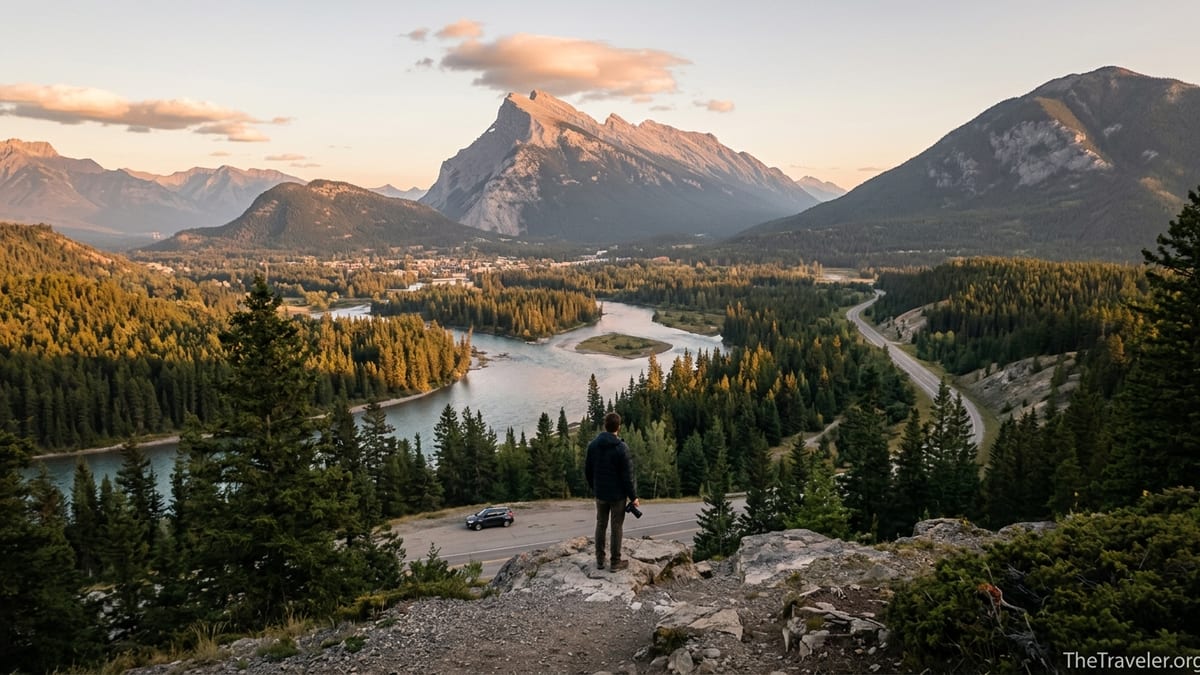
Canada looks compact on a map, but Toronto to Vancouver is more than 4,400 kilometres apart by train and a five hour flight apart in the air. Banff sits in the Rockies in Alberta, about a 90 minute drive west of Calgary, and is not directly on the Toronto to Vancouver rail corridor. That means most first time itineraries work best if you think of the trip in three pieces: an eastern city stay in Toronto, a Rockies section based around Banff with a rental car or shuttle, and a western city stay in Vancouver reached by flight, road or rail.
In practical terms, most visitors will fly into Toronto Pearson International Airport, connect through Calgary for Banff, and leave from Vancouver International Airport. A common pattern is Toronto to Calgary by air, Calgary to Banff and back by road, and then Calgary or Banff to Vancouver by air or via a combination of train and road transfers. Some travellers also reverse the route to end in Toronto if flights are cheaper that way.
Season strongly affects how you experience this triangle. Summer roughly from late June to early September brings long daylight, hiking and high prices. Winter from December to March turns Banff into a world class ski base and makes Toronto and Vancouver cooler, with shorter days and some weather related delays. Shoulder seasons in May, early June and late September into early October often balance manageable weather with slightly lower prices and thinner crowds.
How to Travel Between Toronto, Banff and Vancouver
The fastest and most common way to connect Toronto with the Rockies and Vancouver is by domestic flight. Direct flights between Toronto and Calgary typically take about four hours, while Toronto to Vancouver flights take about five hours. One way economy tickets on major airlines such as Air Canada or WestJet can range widely, but outside peak holidays it is common to see base fares in the region of 250 to 450 Canadian dollars if booked a few months ahead, with checked bags and seat selection often costing extra.
From Calgary to Banff, almost everyone travels by road. The drive is about 130 kilometres and usually takes around 90 minutes along the Trans Canada Highway, although Friday afternoons and summer weekends can take longer with traffic and construction. Visitors can either rent a car at Calgary International Airport or take a pre booked shuttle bus directly to Banff town. Airport based car rentals in Calgary average around 60 Canadian dollars per day for a compact car when booked in advance in 2026, although rates climb sharply in July and August and around Christmas.
Between the Rockies and Vancouver, you can either fly or combine a drive with a one way rental, or use rail for part of the journey. Calgary does not currently have passenger rail, so train based options to Banff and Vancouver usually focus on Jasper or on private tourist trains booked as full packages. For independent travellers, flying from Calgary to Vancouver is usually the most time efficient choice, with a flight time of roughly one hour and a half and one way fares often similar to Toronto routes if booked early.
Rail and Scenic Train Options Across Canada
For many travellers, the idea of crossing Canada by train is a major part of the appeal. The key cross country service is VIA Rail’s Canadian, which runs between Toronto Union Station and Vancouver’s Pacific Central Station several times a week. The full Toronto to Vancouver journey is roughly 4,466 kilometres and takes around four days and three nights in each direction in practice, with potential delays because the line shares track with freight traffic. The route passes through Northern Ontario’s lake country, the Prairie provinces and the Rockies between Jasper and Kamloops before descending to the Pacific coast.
The Canadian does not pass directly through Banff, which historically sat on a different rail line, but it does call at Jasper in Jasper National Park. Many visitors who want both rail and Banff will therefore book the Canadian between Toronto and Jasper, spend two or three nights in Jasper, then transfer south by road along the Icefields Parkway to Lake Louise and Banff. This highway is one of the most scenic drives in North America, with glacier views, short hikes and wildlife sightings, and is usually driven over a day with sightseeing stops or as part of a guided transfer.
Privately operated tourist trains between the Rockies and Vancouver also exist as high end options. These are typically sold as packages that include hotel nights in places such as Banff, Lake Louise, Kamloops or Jasper, with daylight only train travel so that scenery is not missed overnight. Prices for these services are significantly higher than regular rail or coach fares and are often bundled into multi day itineraries that can cost several thousand Canadian dollars per person. For first time visitors with limited time, it is worth comparing the cost of a scenic rail package with a mix of scheduled flights and car rental before deciding.
How Many Nights in Toronto, Banff and Vancouver
For a first cross country trip, a minimum of three nights in each of Toronto, Banff and Vancouver gives enough time to experience highlights without constant rushing. In Toronto, three nights provides two full days to explore the downtown waterfront, neighbourhoods such as Kensington Market or the Distillery District, and possibly a side trip to Niagara Falls. Many visitors who enjoy food and culture could easily stretch Toronto to four or five nights if they plan to include museums, sports events or day tours to nearby wine regions.
In Banff and the Rockies, three nights is an absolute minimum to adjust to the mountain environment, see Lake Minnewanka or Sulphur Mountain near Banff town, and make a day trip to Lake Louise and Moraine Lake when they are accessible. With four or five nights, you can add easy hikes such as Johnston Canyon, try canoeing or a guided wildlife tour, and still have some downtime at your lodge or hotel. In winter, staying at least four nights is sensible if you want to ski at Sunshine Village or Lake Louise and still have a weather buffer against storm days.
Vancouver also benefits from at least three to four nights on a first visit. This gives room for exploring downtown and Stanley Park on foot or by bike, visiting Granville Island’s public market, and taking a half day outing to Capilano or Grouse Mountain. With an extra night, some travellers add a day trip by ferry to Victoria on Vancouver Island or a hiking day in nearby Squamish or the Sea to Sky corridor. Shorter stays of two nights are possible if time is tight, but they often feel rushed at the end of a long cross country itinerary.
10 Day Toronto Vancouver Banff Itinerary
Ten days is the shortest realistic time to link Toronto, Banff and Vancouver on a first trip without spending most of your holiday in transit. This version relies on flights instead of long distance rail. A typical pattern for a 10 day route starting in Toronto might be three nights in Toronto, three nights in Banff and four nights in Vancouver, with flights on days four and seven.
One example could look like this. Day 1, arrive in Toronto and settle near downtown so you can walk to the waterfront and central attractions. Day 2, explore Toronto’s core sights and neighbourhoods. Day 3, take a full day tour to Niagara Falls, which is around a 90 minute to two hour drive each way, returning in the evening. Day 4, fly Toronto to Calgary in the morning, pick up a rental car or board a pre booked shuttle and arrive in Banff by mid afternoon. Days 5 and 6 are devoted to Banff National Park, with one day focused on the Banff area and one day reserved for Lake Louise and nearby viewpoints.
On day 7, drive or shuttle back to Calgary for a midday or afternoon flight to Vancouver, then use the evening for a relaxed walk along the seawall or a simple dinner in a neighbourhood like Yaletown or Gastown. Days 8 and 9 are full days in Vancouver for Stanley Park, Granville Island and viewpoints such as Kitsilano Beach. On day 10, depart Vancouver for home. This 10 day framework keeps one way flights simple with open jaw tickets into Toronto and out of Vancouver and uses a short, manageable road leg between Calgary and Banff.
14 Day Toronto Vancouver Banff Itinerary
With two full weeks, you can slow the pace, add an extra night in each city and build in time for a rail or extended Rockies experience. A balanced 14 day plan might use four nights in Toronto, five nights in the Rockies and five nights in Vancouver, with internal travel spread across the middle days. This reduces the feeling of constantly packing and checking in and out of hotels.
One commonly used pattern is to begin with four nights in Toronto, giving three full days for city explorations and Niagara. On day 5, fly to Calgary and transfer to Banff for a four night stay. This allows for two days of local Banff touring, one day largely dedicated to Lake Louise and Moraine Lake in high season using park shuttles or a guided tour, and one flexible day for a longer hike, a canoe rental or simply enjoying Banff town. On day 9, you could drive the Icefields Parkway toward Jasper, stopping at viewpoints such as Bow Lake, Peyto Lake and the Columbia Icefield, then spend two nights in Jasper for a different Rockies base.
From Jasper, day 11 might involve boarding the Canadian westbound to Vancouver for a one night, two day rail segment focused on the Rockies and interior scenery, arriving in Vancouver on day 12. Alternatively, travellers on a tighter budget could drive or take a scheduled coach west to a city such as Kamloops and continue to Vancouver by bus. Days 12 to 14, or 13 to 14 depending on the chosen route, are then spent in Vancouver with at least three nights, leaving room for an optional day trip to Victoria or a full day in the mountains north of the city. This 14 day structure gives a meaningful taste of long distance rail without committing to the full four night Toronto to Vancouver journey.
21 Day Slow Cross Canada Itinerary
Three weeks opens up the possibility of a classic slow cross country journey that links Toronto, Banff and Vancouver with a long leg on the Canadian. For visitors who value the experience of watching the landscape change from the Canadian Shield to the Prairies and the Rockies, 21 days is enough to do this without feeling constantly rushed. In this time frame, you might allocate five nights to Toronto, five or six nights to the Rockies including both Banff and Jasper, four nights to the train itself and five or six nights to Vancouver and the Pacific coast.
A sample structure could start with five nights in Toronto, including a flexible day for recovery from jet lag, one or two days of neighbourhood exploration and dining, and a full day trip to Niagara Falls and nearby wine country. On day 6, board the Canadian in Toronto for the full Toronto to Jasper leg, spending three nights aboard. Travellers in economy class will likely want to budget additional meals bought on board or brought with them, while those in sleeper plus class have meals included and access to observation cars. After two full days and three nights on board, you arrive in Jasper, ideally in time to stretch your legs and settle into a hotel.
Spend four to five nights in the Rockies split between Jasper and Banff. For example, enjoy two or three nights in Jasper for activities like the SkyTram, boat cruises on nearby lakes in summer or winter wildlife tours, then drive the Icefields Parkway over one or two days with a night near the Columbia Icefield or Lake Louise. Continue to Banff for two or three nights of hikes, hot springs visits and lakeside views. On day 15 or 16, travel back to Jasper or connect by road to a rail or coach gateway, then continue to Vancouver either on the Canadian for the Jasper to Vancouver portion or by flying from Calgary.
The final five or six nights in Vancouver give time for the city and surroundings. Visitors often break this into three or four nights in Vancouver city itself and one or two nights on Vancouver Island in Victoria or in a smaller coastal town such as Tofino, although reaching more remote areas can require additional flights or long drives. Whether you choose to add these side trips will depend on budget and travel style, but three weeks does make it possible to enjoy a coast to coast experience rather than just a series of point to point flights.
Practical Booking Tips for a First Trip
Because Canada is large and seasonal, it pays to plan transport and key accommodation several months in advance, especially for summer travel in July and August or during major Canadian holidays. Flights between Toronto, Calgary and Vancouver often see their best balance of price and schedule around two to four months out, though this can vary by airline sales and departure city. When booking open jaw international tickets, it can sometimes be only marginally more expensive to fly into Toronto and out of Vancouver than to use a simple return, particularly from major hubs in Europe or the United States.
For Banff and the Rockies, hotel availability is a more serious constraint than flights. Popular hotels and lodges in Banff and Lake Louise often sell out months ahead for peak summer and for major winter ski weeks, and prices can be significantly higher than in Toronto or Vancouver. Visitors on moderate budgets often choose mid range hotels in Banff town or nearby Canmore, a short drive away, to keep costs down. Rental cars should also be booked early for Calgary Airport pick up in summer, both to secure an automatic transmission and to avoid last minute price spikes.
On the rail side, VIA Rail’s Canadian offers different fare levels, with lower advance purchase and special offer fares selling out quickly on popular dates. If you are set on a particular direction or cabin type, look at schedules as soon as your travel dates are fixed. Keep in mind that the Canadian’s schedule can include long layovers in intermediate cities and that arrival times are often approximate. Build at least one hotel night buffer between the scheduled train arrival and any long haul flight home to avoid stress from possible delays.
The Takeaway
Linking Toronto, Banff and Vancouver in a single first trip is ambitious but entirely realistic in 10 to 21 days if you are selective about routes and transport. Air travel between Toronto, Calgary and Vancouver handles the long distances efficiently, while a rental car or shuttle between Calgary and Banff opens up classic mountain scenery without complicated logistics. Rail fans can add either a shorter Rockies segment or the full Canadian between Toronto and Vancouver if they have the time and budget to enjoy several days on board.
Whether you choose a compact 10 day snapshot or a three week coast to coast journey, success comes from allocating at least three nights in each major stop and resisting the temptation to overstuff the itinerary with extra cities. Focus on a handful of memorable experiences such as a Niagara Falls day, a sunrise at Lake Louise or a sunset walk on Vancouver’s seawall. With thoughtful planning, this cross country triangle becomes less of a logistical puzzle and more of a coherent narrative from skyscrapers and waterfalls to alpine lakes and the Pacific coast.
FAQ
Q1. Can I visit Toronto, Banff and Vancouver in just 7 days?
It is technically possible but not recommended. You would spend most of your time in airports and on the road, with only brief glimpses of each destination.
Q2. Is it better to start in Toronto or Vancouver for a first trip?
Both directions work. Many visitors start in Toronto to handle the longest flight first, then move west through Banff and finish in Vancouver for a more relaxed coastal finale.
Q3. Do I need a rental car in Banff?
A rental car offers maximum flexibility for lakes, trailheads and viewpoints, but you can manage with shuttles and guided tours if you prefer not to drive.
Q4. How far in advance should I book the Canadian train?
For peak summer dates or sleeper cabins, it is wise to look at schedules and fares several months ahead, as lower priced tickets and popular dates sell out first.
Q5. Is the Canadian train included in a rail pass?
The Canadian typically requires specific reservations and fares rather than flexible rail passes. Always check current VIA Rail conditions before planning around passes.
Q6. What is the best time of year to combine Toronto, Banff and Vancouver?
Late June to early October is popular for warmer weather and accessible hiking, while December to March works well for those focused on skiing and winter scenery.
Q7. Are one way car rentals between Calgary and Vancouver expensive?
One way rentals often include drop fees that can be significant, especially in peak season. Many visitors keep car rentals to the Calgary and Banff area only to control costs.
Q8. Can I visit Banff as a day trip from Calgary?
It is possible to drive there and back in one day, but it makes for a long outing. Staying at least one or two nights in or near Banff gives a much better experience.
Q9. Is it realistic to add Montreal to this itinerary?
Adding Montreal is feasible on 14 or 21 day trips by train or plane from Toronto, but it requires trimming nights from Toronto or the Rockies to keep the schedule balanced.
Q10. Do I need travel insurance for this kind of cross country trip?
Travel insurance is strongly advised for expensive elements such as long haul flights, rail segments and prepaid hotels, especially given the potential for weather or schedule disruptions.