


Canada is huge, and that makes one decision especially important when you are planning a trip: where to base yourself. Choose the right neighborhood or mountain town and the whole trip feels easy, with sights, food and transport on your doorstep. Pick the wrong one and you spend your holiday in traffic or on long commutes. This guide walks through Canada’s key bases for first-time visitors, families, couples, luxury travelers, nature lovers and road trippers, with real-world examples of what it is like to stay in each place in 2026.
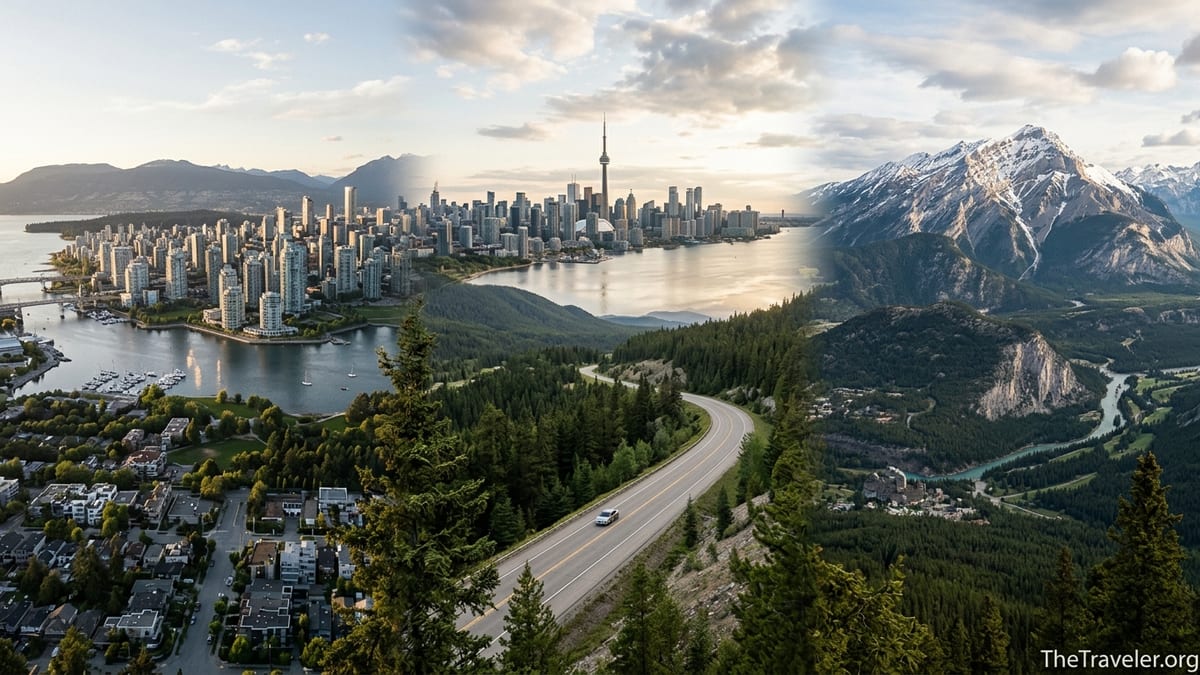
How to Choose the Right Canadian Base for Your Trip Style
Start by being clear on what kind of Canada trip you are planning. A first-time visitor flying in for four or five nights will have very different needs from a couple on a two-week Rockies road trip or a family visiting Niagara Falls with young children. In practical terms, you are choosing between big-city convenience, romantic old quarters, and mountain or lakeside towns that work as launchpads for day trips.
Think about how you want to move around. In Toronto, Vancouver and Montreal, staying central usually means you can rely on public transport and walking, using the subway or SkyTrain and saving money on car rental and parking. In the Rockies or around Niagara, however, you will almost certainly want a car so you can reach viewpoints, trailheads and smaller villages at your own pace. Many visitors now split stays, for example three nights in downtown Vancouver without a car, followed by four or five nights with a rental car in the Rockies.
Budget also shapes where you stay. In central Toronto or Vancouver in peak summer, mid-range hotel rooms commonly start around 250 to 350 Canadian dollars per night and rise quickly around large events or festivals. In smaller cities such as Quebec City or in satellite towns like Canmore near Banff, you can often find good mid-range rooms in the 180 to 260 Canadian dollar range outside the absolute peak weeks, especially if you book several months ahead.
Finally, look at season and weather. A neighborhood that feels lively and walkable in July may be much less appealing in January when snow, ice and early sunsets change how you use the city. Mountain towns such as Banff or Jasper book out far in advance for July and August hiking and again around ski season, while Niagara Falls is busiest from late spring through early autumn, when boat tours and outdoor viewpoints are fully operating.
Toronto: Best for First-Time City Trips and Urban Families
Toronto is Canada’s largest city and a natural first stop for many international visitors. For a first trip, staying in the downtown core near Union Station, the Entertainment District or the Yonge Street corridor gives you easy access to the CN Tower, Harbourfront, sports arenas and major museums. In 2026, tourism boards and recent visitor guides consistently highlight downtown as the best base for first timers because it is walkable and well connected to the subway network, avoiding long commutes at the end of a sightseeing day.
If you are visiting for a concert at Scotiabank Arena or an event at the Metro Toronto Convention Centre, hotels within a 10 to 15 minute walk can save you late-night taxi fares. Typical mid-range chains near Union Station and the Entertainment District often price from roughly 260 to 350 Canadian dollars per night in summer, while business-focused properties may be slightly cheaper on weekends. Visitors who want quieter mornings but still easy access to downtown sometimes choose the Harbourfront or waterfront condos, trading a short streetcar ride for more green space and lake views.
For couples or luxury stays, Yorkville stands out. This uptown neighborhood is known for high-end boutiques, galleries and some of Toronto’s most upscale hotels, with room rates commonly starting above 400 Canadian dollars in peak season. The subway makes it straightforward to drop down to the waterfront or entertainment areas, so you do not need a car. Families who prefer more space sometimes look at short-term rentals in neighborhoods such as the Annex or Leslieville, where tree-lined streets, playgrounds and local cafes make it easier to balance sightseeing with downtime.
If you plan to use Toronto mainly as a base for day trips, prioritize proximity to Union Station, where intercity trains, buses and the UP Express to the airport all depart. From here, many travelers do day trips to Niagara Falls by coach tour or rail and bus combinations, returning in the evening to a central hotel without moving luggage.
Vancouver: Harborside Base for West Coast and Rockies Trips
Vancouver offers one of the most compact and scenic city bases in Canada. For most first-time visitors, downtown Vancouver is the simplest choice. The peninsula collects a dense spread of hotels, restaurants and shops within walking distance of Stanley Park, the seawall and the cruise terminal. Current neighborhood guides highlight that you can realistically walk across most of downtown in under an hour, which makes it easy to return to your hotel between activities without long transit rides.
Different downtown sub-areas suit different travelers. Near the waterfront and convention center, modern high-rise hotels cater to business and cruise travelers. Coal Harbour feels polished and quieter, with harbour views and easy access to the seawall. The West End, near English Bay, has a more residential feel and is ideal if you want to end the day with a sunset walk on the beach. Yaletown mixes converted warehouses, loft-style hotels and a strong restaurant scene, popular with couples who want nightlife options close by.
For a more relaxed, beach-town vibe while still being close to the city, some visitors base themselves in Kitsilano on the south side of the bay. Here you trade the skyscraper skyline for low-rise streets, independent shops and wide beaches looking back towards downtown and the North Shore mountains. In summer, staying within a 10 to 15 minute walk of Kits Beach means you can swim, paddleboard and watch the sunset without getting on a bus. However, you will depend more on buses or short rideshares to reach downtown attractions.
Vancouver is also the gateway to many western Canada road trips. Travelers often spend two or three car-free nights downtown, then pick up a rental car to drive the Sea to Sky Highway to Whistler, continue into the interior, or connect to the Rockies via Kamloops. Staying close to a SkyTrain station, such as near Vancouver City Centre or Waterfront, keeps your airport transfers straightforward without dealing with parking during your city days.
Montreal and Quebec City: Historic Quarters and Food-Focused Stays
Montreal and Quebec City offer some of the most atmospheric city bases in Canada, especially for couples and culture-focused travelers. In Montreal, neighborhood comparisons published in 2026 frequently highlight Old Montreal, the Plateau and downtown as the three most common bases. Old Montreal’s cobblestone streets, stone façades and the Old Port make it ideal for a romantic long weekend. You will wake up close to landmarks such as the Notre-Dame Basilica and be within walking distance of riverfront paths and many of the city’s best-known restaurants.
The Plateau-Mont-Royal, by contrast, is better for travelers who prefer a lived-in neighborhood over postcard-perfect streets. Expect colorful triplexes with outdoor staircases, cafes on corner sidewalks and small parks scattered through residential blocks. Many accommodations here are small guesthouses or apartments rather than large hotels, and rates can be a bit lower than in Old Montreal, especially outside festival weeks. You will still be a short metro ride from downtown museums and the river but with more everyday Montreal life on your doorstep.
Downtown Montreal suits visitors who want straightforward metro connections, modern hotels and easy access to events at Place des Arts or the Bell Centre. Business travelers often base themselves here, but it also works well for families who value chain hotels with pools and predictable amenities. In all three areas, mid-range hotel prices in 2026 typically range from roughly 220 to 320 Canadian dollars per night in high season, with notable spikes during major festivals such as the jazz festival or Grand Prix weekend.
In Quebec City, most visitors choose between staying inside the walls of Old Quebec or just outside in the upper or lower town. Old Quebec’s historic core offers narrow streets, stone buildings and small inns that make you feel like you have landed in a European city. Room rates here reflect the location, commonly starting around the mid-200s in Canadian dollars in summer for a standard room in a well-rated boutique hotel. Staying a little outside the old walls, in Saint-Roch or Saint-Jean-Baptiste, can offer better value while still keeping you within a 15 to 20 minute walk or short bus ride of the main sights.
Banff, Jasper and the Rockies: Bases for Nature Trips and Road Journeys
The Canadian Rockies are where your choice of base matters most for how you experience the landscape. Banff townsite, located in Banff National Park, is the busiest and most developed base. It offers a dense mix of hotels, lodges, restaurants and shops arrayed along a compact main street, with shuttles connecting to nearby attractions such as Lake Louise and Moraine Lake in peak season. You can expect higher average room rates here than in many Canadian cities, particularly in July and August, when standard hotel rooms in central Banff often start in the 350 to 450 Canadian dollar range or more.
Jasper, further north in Jasper National Park, has a more low-key, spread-out feel. Guides comparing Banff and Jasper in 2026 note that Jasper has fewer luxury properties but often better availability and slightly lower prices, particularly for last-minute trips. The town makes an excellent base for hiking, wildlife viewing and dark-sky stargazing. A typical trip might involve three nights in Banff to visit headline spots like Lake Louise, followed by two or three nights in Jasper to explore the Icefields Parkway, Maligne Lake and lesser-known trails.
If you prefer a quieter alternative to Banff but still want easy access to the national park, consider Canmore, just outside the Banff park gates. Canmore has grown into a sizeable town with supermarkets, local breweries and a strong vacation rental scene. Apartments and condo-style hotels can be more spacious and occasionally better value than similar accommodation in Banff, which appeals to families and groups traveling together. The trade-off is a short highway drive into the park each day and potential parking challenges at peak times.
For true nature immersion, some visitors split their stay between a main town base and one or two nights at a lodge along the Icefields Parkway or near a specific lake. These properties often cost more per night and may have simpler amenities, but they let you catch sunrise or sunset at lakes and viewpoints without long drives. Booking well ahead is essential in peak season, as rooms at both Banff and Jasper fill quickly for July, August and the early autumn foliage period.
Niagara Falls and Other Handy Bases for Day Trips
Niagara Falls is one of Canada’s most visited natural attractions, and many travelers debate whether to stay overnight or visit as a day trip. The Canadian side of the falls, centered around Niagara Falls, Ontario, offers a dense cluster of hotels, from budget motels to large towers with falls-view rooms. In high season, a mid-range hotel without a direct falls view might start around 220 to 280 Canadian dollars per night, while a room with floor-to-ceiling falls views and breakfast at a name-brand hotel can cost significantly more.
Staying overnight allows you to see the falls illuminated after dark and to visit early in the morning before the largest tour groups arrive. It also makes it easier to combine boat tours, the tunnels behind the falls and a visit to nearby attractions such as the Niagara Parks botanical gardens without feeling rushed. Families often appreciate being able to return to the hotel pool or room during the hottest part of the afternoon and head back out in the evening.
If you prefer a quieter setting, the small town of Niagara-on-the-Lake, about a 20 to 30 minute drive from the falls, provides a different kind of base. Here the focus shifts to historic streets, theaters and nearby vineyards. Many visitors pair a night near the falls with one or two nights in or near Niagara-on-the-Lake, particularly if they are interested in wine touring or the Shaw Festival’s theatre program. Rates for charming inns and bed-and-breakfasts in this area can be similar to mid-range Niagara Falls hotels but with a distinctly different atmosphere.
Elsewhere in Canada, similar trade-offs appear. For example, on Vancouver Island, many travelers base in Victoria’s Inner Harbour for a few nights of museums, afternoon tea and whale-watching trips, then move to smaller coastal towns such as Tofino or Ucluelet for beaches and storm watching. In Atlantic Canada, Halifax works as a city base for exploring the South Shore and Bay of Fundy on day trips, with many travelers choosing hotels around the waterfront so they can walk to restaurants and ferry terminals.
Road Trip Strategies: Splitting Stays Across Canadian Regions
Because Canada is so spread out, a smart base strategy often means planning a route with two or three key hubs instead of packing and unpacking every night. For a classic western Canada itinerary, one common pattern is three nights in Vancouver without a car, two in the Okanagan Valley for wineries and lakes, and four or five split between Banff and Jasper for hiking and sightseeing. This lets you enjoy both city and nature without constant driving days.
In eastern Canada, many first-timers combine three or four nights in Toronto with a night or two in Niagara Falls or Niagara-on-the-Lake, then travel onward to Montreal and Quebec City by train or domestic flight. In that case, staying near major train stations such as Toronto’s Union Station or Montreal’s Gare Centrale minimizes transfer stress. You can then choose more characterful neighborhoods, such as Old Quebec or the Plateau, once you reach smaller, more walkable cities.
Families traveling with children often benefit from building in longer stays in places with kitchen facilities, laundry and outdoor space. For example, a family road trip through the Rockies might include a four-night condo stay in Canmore, followed by two nights at a cabin near Jasper, giving time for rest days without driving. Similarly, a road trip around Nova Scotia might center on a rental cottage near Lunenburg or along the Cabot Trail, with day trips to beaches, lighthouses and small fishing communities.
Whatever route you choose, pay attention to one-way rental car fees and the timing of long drives. In remote areas and mountain passes, driving after dark or in poor weather can be stressful, so plan base changes with enough daylight to spare. Booking cancellable hotel rates when possible gives you flexibility if wildfires, storms or other disruptions affect particular regions during your travel dates.
The Takeaway
Choosing where to stay in Canada is less about chasing the single “best” neighborhood and more about matching a base to your style of travel. Big-city centers like downtown Toronto, Vancouver and Montreal work beautifully for first timers and anyone who wants to rely on transit and walking. Historic quarters in Montreal, Quebec City and Niagara-on-the-Lake offer atmosphere that is ideal for couples and slower-paced cultural trips. Mountain and lakeside towns such as Banff, Jasper and Canmore anchor nature-heavy itineraries and road trips through the Rockies.
Look at your itinerary, think about how often you want to move hotels, and weigh the trade-off between paying more to be in the center of things and saving money with a slightly more distant base. In many Canadian destinations, staying central saves time, especially on short trips. With a bit of research and realistic expectations around prices and distances, you can build a set of Canadian bases that turn a big, complex country into a string of memorable, easy-to-manage stays.
FAQ
Q1. What is the best city to base in for a first trip to Canada?
For a first urban-focused trip, Toronto or Vancouver are strong choices, as both have good international flight connections, reliable transit and a wide range of day trips.
Q2. Is it better to stay in Banff or Canmore when visiting the Rockies?
Banff puts you inside the national park and close to shuttles and major sights, while Canmore usually offers slightly better value and more condo-style lodging but requires a short daily drive.
Q3. How far in advance should I book hotels in Banff and Jasper?
For July and August, it is sensible to book several months ahead, especially for popular weekends and lakefront lodges, as both towns see very high demand.
Q4. Do I need a car if I stay in downtown Toronto or Vancouver?
In both cities, most visitors manage well without a car by using transit, walking and occasional rideshares, and they often rent a car only when leaving the city for side trips.
Q5. Where should couples stay in Montreal for a romantic weekend?
Old Montreal is the classic pick, with cobblestone streets, historic buildings and many boutique hotels, while the Plateau suits couples who prefer a bohemian, local-neighborhood feel.
Q6. Is staying in Niagara Falls overnight worth it, or is a day trip enough?
An overnight stay lets you see the falls illuminated after dark and visit early in the morning before major crowds, which many travelers find worth the extra hotel cost.
Q7. Are Canadian city centers safe for walking at night?
Central areas of major Canadian cities are generally considered safe for typical urban walking at night, though it is still wise to stick to well-lit streets and stay aware of your surroundings.
Q8. How can families save money on accommodation in Canada?
Families often reduce costs by choosing condo-style hotels or apartments with kitchens, staying a bit outside the most touristy cores, and traveling just outside peak school holiday periods.
Q9. Is it better to stay inside or outside Old Quebec in Quebec City?
Staying inside Old Quebec gives you the most atmospheric experience, while basing just outside the walls in nearby neighborhoods can offer better value with only a short walk to the sights.
Q10. What is a good base city for exploring eastern Canada by train?
Toronto and Montreal both work well, with central stations that connect to Quebec City, Ottawa and other cities, so staying within walking distance of the main station simplifies travel days.