


Eastern Canada rewards travelers with big-city skylines, historic old towns, ocean cliffs and maple forests, often within a few hours of each other. From Toronto’s CN Tower to the wind-battered headlands of Cape Breton, it is one of North America’s most varied regions and a smart alternative or complement to a classic European trip. This guide compares the region’s headline destinations so you can match the right city, nature escape or road trip to your style, whether you are planning a romantic week for two, a summer family vacation or a longer coastal drive.
How to Think About Eastern Canada: Regions and Routes
For trip planning, Eastern Canada usually means Ontario, Quebec and Atlantic Canada. Most international visitors fly into Toronto or Montreal, then build an itinerary that links 2 or 3 cities with one scenic nature base or coastal drive. A classic first-time loop combines Toronto, Niagara Falls and Ottawa, then continues by train to Montreal and Quebec City over 10 to 14 days. Another popular route focuses on the Atlantic side, flying into Halifax and then driving the Cabot Trail on Cape Breton Island or crossing to Prince Edward Island for red sand beaches and farm landscapes.
Distances look intimidating on the map, but many key stops are within half a day’s travel of each other. For example, Toronto to Niagara Falls is roughly a 90-minute drive in normal traffic, while Ottawa to Montreal by train is often around two hours. That makes it realistic to enjoy urban museums one day and small-town river cruises the next without exhausting travel days. Travelers who prefer not to drive can stitch together VIA Rail trains and regional coaches between Toronto, Ottawa, Montreal and Quebec City, then rent a car only for the coastal sections in Nova Scotia or Prince Edward Island.
Season plays a big role. Summer from late June to early September brings festival energy, patio culture and the warmest weather for boat tours and beaches. Fall foliage, typically peaking from late September through mid October in most of Ontario and Quebec, can make a simple drive along the St. Lawrence or through the Laurentians a highlight in itself. Winters are cold but atmospheric, especially in Quebec City and Ottawa where skating rinks, winter carnivals and snow-covered historic districts are part of the appeal for travelers comfortable with sub-zero temperatures.
Budget is another deciding factor. Major cities such as Toronto and Montreal have hotel rates and restaurant prices that feel comparable to mid-range US or Western European cities, especially in peak summer and during big events. Smaller centers like Kingston, Charlottetown or many Cape Breton villages can bring down nightly costs if you are willing to stay in simple inns or vacation rentals. Rental cars, parking and fuel add up on longer road trips, while city-only itineraries can lean on public transit, walking and occasional taxis or ride-hail services to keep costs manageable.
Toronto and Niagara Falls: Urban Energy and Iconic Views
Toronto is Eastern Canada’s most cosmopolitan gateway and makes sense for travelers who want big-city variety. The CN Tower remains its signature landmark and a practical way to get your bearings, with observation levels more than 300 meters above the harbor and a glass floor section that looks straight down to the streets below. Combination tickets that bundle the CN Tower with nearby attractions like an aquarium or museum can reduce costs for families who plan to visit several paid sights in a short stay, and tourist passes that group multiple attractions are regularly promoted through official city tourism channels.
Toronto’s neighborhoods help it stand out compared with other Canadian cities. Kensington Market mixes independent cafes with vintage shops and produce stands, while the Distillery District concentrates Victorian-era industrial brick buildings into a walkable enclave of design shops, galleries and restaurants that often host seasonal light shows or holiday markets. Families often base days around the harborfront for island ferry rides and urban beaches, then head inland for kid-friendly science centers or the Toronto Zoo. Couples might prioritize restaurant districts on King Street West or Queen Street, cocktail bars along Ossington Avenue and a baseball or basketball game if the Blue Jays or Raptors are in season.
Niagara Falls, about an hour and a half from Toronto by car or tour bus, is one of the world’s most recognizable natural attractions and pairs naturally with a Toronto visit. Boat cruises that motor into the mist at the base of Horseshoe Falls are a signature experience and usually operate from spring through late fall, with ponchos included in the fare. Package tickets that combine a boat ride with viewpoints such as a behind-the-falls tunnel walk and a set of smaller attractions are widely advertised, and pricing for adult passes often lands in the range that makes sense for anyone planning two or more paid activities in a single day, especially for couples and families.
Beyond the immediate falls area, the Niagara region has enough variety for at least one overnight stay. The Parkway along the river connects viewpoints, parks and historic sites, while the town of Niagara-on-the-Lake about 30 minutes north of the falls offers a very different mood, with tree-lined streets, boutique inns and dozens of wineries in the surrounding countryside. Itineraries for couples often include a late-afternoon wine tasting and dinner in Niagara-on-the-Lake after the falls, while families tend to favor hotels near Clifton Hill, where arcades, small attractions and casual restaurants keep children entertained after dark.
Ottawa, Montreal and Quebec City: Culture, History and Food
Ottawa, Canada’s capital, is more relaxed than Toronto but punches above its weight in museums and national symbolism. Parliament Hill, facing the Ottawa River, remains a must-see, with free tours of the Senate or House of Commons offered on a reservation system when available. The Rideau Canal, which runs past the parliamentary precinct and through the city, offers boat cruises in the warmer months and famously transforms into one of the world’s largest naturally frozen skating surfaces in winter, drawing both locals and visitors. Many travelers pair visits to national museums, such as the Canadian Museum of History across the river in Gatineau or the National Gallery of Canada, with time wandering in the ByWard Market area, where produce stalls, bakeries and restaurants cluster in a compact grid.
For food lovers and night owls, Montreal often feels like the standout city in Eastern Canada. Old Montreal packs centuries of history into a walkable harbor district of stone facades, cobbled lanes and a grand basilica that regularly appears on lists of the most impressive churches in North America. Just uphill, the slopes of Mount Royal provide an accessible dose of nature within the city, with a network of trails used year-round for walking and jogging in summer and snowshoeing or cross-country skiing in winter. The viewpoint at the Kondiaronk Belvedere looks over downtown skyscrapers and the St. Lawrence River, making it a favorite spot for sunset photographs and picnic snacks.
Montreal’s modern neighborhoods add a different energy. The Plateau and Mile End districts are known for murals, independent fashion boutiques and classic bagel shops that often have lines out the door on weekend mornings. Food travelers plan their days around smoked meat sandwiches, Portuguese-style grilled chicken, markets such as Jean Talon and a wide range of bistros that reflect the city’s French heritage. Hotel pricing in Montreal is often a bit lower than in Toronto outside peak festival periods, which makes it attractive for longer stays or for travelers looking to balance overall trip budgets.
Quebec City, about a three-hour train or drive from Montreal, is where Eastern Canada feels most European. The fortified Old Quebec occupies a bluff above the St. Lawrence with steep streets, stone buildings and a distinctive skyline dominated by a grand castle-like hotel. The compact Lower Town along the riverfront includes art galleries, boutiques and bistros, while the Upper Town offers terrace viewpoints and access to the city’s historic ramparts. Even a two-night stay allows visitors to explore the old quarter, take a half-day side trip to Montmorency Falls on the edge of the city and sample classic Quebec dishes in cozy dining rooms that lend themselves to romantic evenings.
Nature Highlights: Thousand Islands, Laurentians and Beyond
For many travelers, the appeal of Eastern Canada lies in its balance between cities and nature. The Thousand Islands region along the St. Lawrence River, straddling the border between Ontario and New York State, is a good example. Towns such as Gananoque and Rockport serve as jumping-off points for boat cruises that weave among tree-covered islands, some home to elaborate summer mansions and others to simple cottages or wildlife habitat. Cruises typically range from short one-hour loops to half-day excursions that include stops at castles or lighthouses, and many operate from late spring through early fall, making the area a comfortable addition to a driving route between Toronto and Montreal.
North of Montreal, the Laurentian region offers a more mountainous landscape of lakes, forests and ski villages that transform into summer activity hubs. Towns such as Mont-Tremblant market themselves as four-season resorts, with gondolas that run for hiking and sightseeing in the warm months and full ski operations in winter. Many city dwellers treat the Laurentians as a weekend escape, renting chalets with access to lakes for canoeing and paddleboarding. For international visitors who prefer not to drive, shuttle services link Montreal to major Laurentian resorts, making it possible to combine a car-free city break with a few days of fresh air and hiking.
In Ontario, Algonquin Provincial Park, located between Toronto and Ottawa, is a classic destination for canoe camping and wildlife watching. Outfitters around access towns such as Huntsville and Whitney rent canoes, camping gear and bear-safe food barrels and can arrange guided trips for travelers nervous about navigating lakes or portage trails on their own. Families with older children often opt for simple lodge stays on the park’s perimeter, where day hikes and canoe outings are possible without committing to multi-night backcountry routes. Autumn visits can be particularly memorable as maples and birches change color and moose sightings along highway corridors become more common.
If time is short, you can still work meaningful nature into predominantly urban itineraries. Both Ottawa and Montreal have easy access to large parks and green corridors along their rivers and canals, with bike rentals widely available in the warmer months. Toronto’s ferry-accessible islands sit only a short ride from downtown office towers but feel worlds away, with picnic lawns, car-free lanes and skyline views that are especially appealing at sunset. Simple choices like booking a hotel near a waterfront path or major park can make it much easier to fit early morning walks or evening strolls into city-heavy days.
Atlantic Canada: Halifax, Cape Breton and Prince Edward Island
Atlantic Canada introduces a very different coastal flavor to an Eastern Canada itinerary. Halifax, the capital of Nova Scotia, functions as the main air hub and a lively port city in its own right. The waterfront boardwalk stretches for several kilometers and anchors museums, seafood restaurants, markets and public art, with harbor tour boats departing regularly in the summer. The hilltop Citadel offers historic reenactments and city views, while neighborhoods south of the harbor have an easygoing mix of pubs, cafes and independent shops that appeal to both students and visitors.
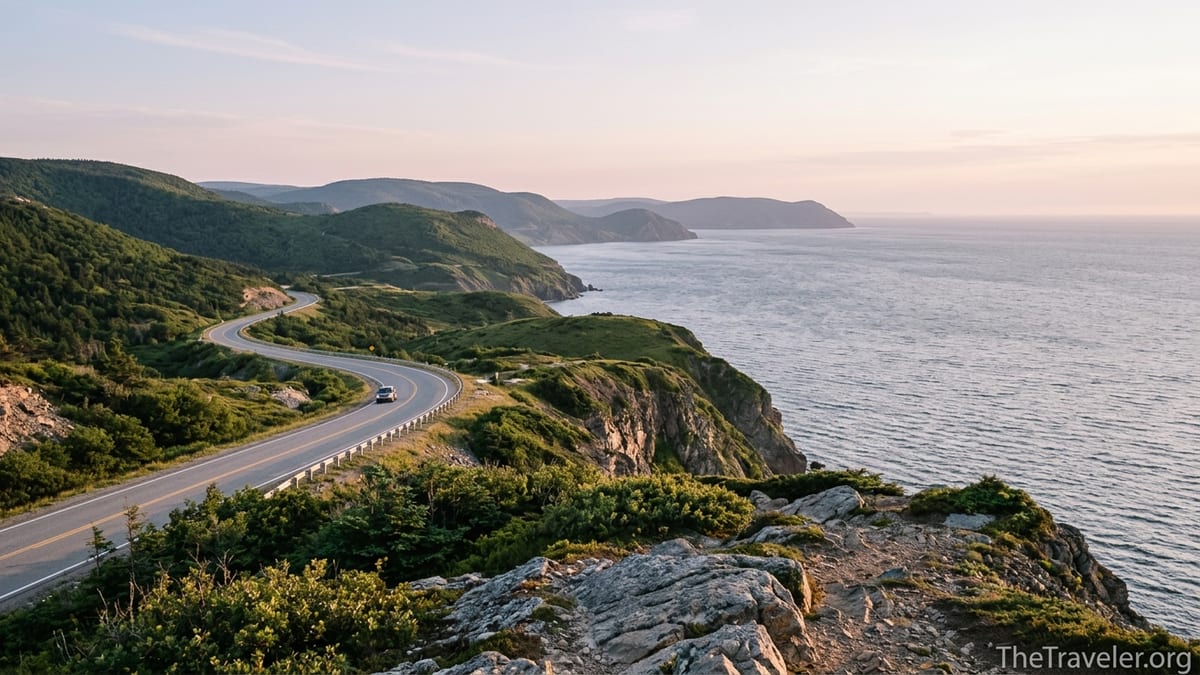
From Halifax, many travelers head north to Cape Breton Island to drive the Cabot Trail, a loop road that hugs cliffs and headlands around the northern section of the island. The route, which passes through communities like Chéticamp and Ingonish and extensive stretches of Cape Breton Highlands National Park, is famous for ocean views, whale-watching excursions and hiking trails that range from short boardwalks to half-day climbs. Key trails such as Skyline have become popular enough that the provincial government now requires seasonal parking reservations during the busiest months, a detail planners should check before arrival, especially for trips between late June and late October.
Prince Edward Island, accessible by bridge from New Brunswick or seasonal ferries, offers a softer coastal landscape of rolling farms, lighthouses and red sand beaches. Charlottetown serves as a compact base with theaters, historic streets and harbor restaurants, while national park sections on the north shore protect long beaches and dune ecosystems. Families often split days between beach time, ice cream stands and simple cycling routes through gently rolling countryside. Fans of literature still seek out Anne of Green Gables sites near Cavendish, where farmsteads and museums reference the island’s most famous fictional resident.
Atlantic Canada rewards slow travel. Driving distances are shorter than many visitors expect, but narrow rural roads and frequent scenic stops naturally slow progress. Many repeating visitors build trips that spend a full week or more within Nova Scotia alone, combining the Cabot Trail with days in small coastal villages such as Lunenburg or Mahone Bay south of Halifax, known for colorful waterfront houses and working fishing harbors. Lodging ranges from small family-run motels and bed and breakfasts to boutique inns in renovated heritage buildings, so booking early for peak summer weekends and local festival dates is advisable.
Matching Destinations to Couples, Families and Road-Trippers
Different travelers gravitate to different parts of Eastern Canada. Couples on a short break often prioritize atmosphere, food and walkability. Montreal and Quebec City fit that brief especially well, with compact historic centers, candlelit restaurants and lively nightlife. A long weekend in Montreal that includes a day in Old Montreal, an afternoon on Mount Royal and evenings exploring wine bars or live music venues is a common pattern. Quebec City, with more limited nightlife but a concentrated old quarter and dramatic river views, often functions as a slow-paced romantic choice, especially in winter when snow decorates the ramparts and rooftops.
Families tend to seek a mix of kid-friendly attractions, parks and straightforward logistics. Toronto and Niagara Falls form a strong combination, thanks to direct flights, a large selection of chain hotels with pools, big-name attractions such as aquariums and towers, and the sheer entertainment value of the falls for children and teenagers. Ottawa also works well for school-age children, who can appreciate hands-on exhibits at national museums and enjoy outdoor activities along the Rideau Canal. Many parents plan around seasonal events such as tulip festivals in spring, Canada Day celebrations in early July or winter skating seasons, while keeping at least one slower day for playgrounds and simple park time.
Road-trippers often design itineraries around scenery and regional character more than specific attractions. A classic route strings together Toronto, Kingston and the Thousand Islands, Ottawa, Montreal, Quebec City and then either the Saguenay and Charlevoix regions of Quebec or the Atlantic provinces accessible via New Brunswick. Rental-car contracts in Canada typically allow cross-province travel without extra paperwork, but drivers should pay attention to one-way drop fees if planning to start and end in different cities. Fuel stations are common along major highways such as the 401 in Ontario or Route 20 in Quebec, but long stretches of rural roadway in northern New Brunswick or Cape Breton may have fewer services, so topping up tanks before the evening is a simple safety measure.
Travelers who do not enjoy driving still have strong options. The rail corridor between Toronto and Quebec City offers multiple departures per day on key segments, and many stations are located centrally enough that taxis, local buses or rideshares can handle the last mile to hotels. In the Maritimes, small group tours using minibuses operate out of Halifax to destinations like Peggy’s Cove lighthouse or the Annapolis Valley wineries, letting visitors enjoy scenery and tastings without navigating unfamiliar rural roads. Multi-day coach packages, often marketed through North American tour operators, bundle transportation, hotels and several meals and can be cost-effective for those who value simplicity over complete independence.
Seasonality, Practical Tips and Itinerary Ideas
Eastern Canada’s seasons are pronounced, and they shape what each destination offers. Summer is peak tourist season, with long daylight hours that can stretch to 9 p.m. or later in June and July and comfortable temperatures for outdoor patios, festivals and water activities. It is also when accommodation prices and crowds hit their highest levels, particularly in Niagara Falls, Old Quebec, downtown Halifax and along the Cabot Trail. Travelers who can visit in late May or early June or again in September often enjoy milder crowds and slightly lower room rates while still experiencing decent weather and most attractions open.
Winter changes the script but does not eliminate travel possibilities. Quebec City’s old streets take on a storybook quality under snow, and events such as winter carnivals, though subject to annual scheduling and weather, give structure to cold-season visits. Ottawa’s Rideau Canal skating season varies based on conditions, so travelers who prioritize skating should remain flexible and monitor local reports in the weeks before arrival. In very cold months, city-center hotels with indoor access to shopping complexes, museums reachable by short transit rides and cafes for frequent warm-up stops can make the experience more comfortable.
Shoulder seasons in spring and fall appeal to hikers, photographers and travelers sensitive to heat. In October, drives through the Laurentians, along the St. Lawrence east of Quebec City or around Cape Breton’s highlands are often lined with foliage in shades of red and gold. Daytime temperatures can still be comfortable for walking and light hiking, but evenings cool quickly, so layers and lightweight packable jackets are useful. Many boat tours and some coastal accommodations close for the winter, so travelers targeting shoulder-season trips should double-check operating dates for cruises and smaller inns before committing to specific days.
For a first-time 10 to 14 day itinerary that samples both city and nature without excessive rushing, one common pattern starts with three nights in Toronto, including a day trip or overnight to Niagara Falls, then moves to Ottawa for two nights to see Parliament and the canal. From there, travelers continue to Montreal for three nights of food and culture before ending with two or three nights in Quebec City. Those willing to add a second trip can then focus a separate journey around Halifax, Cape Breton and Prince Edward Island, giving the Atlantic region the time and slow pace it deserves rather than compressing everything into one long and tiring tour.
FAQ
Q1. How many days do I need to see the main Eastern Canada cities?
Most travelers spend about 10 to 14 days to visit Toronto, Ottawa, Montreal and Quebec City at a relaxed pace, with three nights in the largest cities and two in the smaller ones.
Q2. Is it better to rent a car or travel by train and bus?
Between Toronto, Ottawa, Montreal and Quebec City, trains and intercity buses work well. A rental car becomes more useful for Niagara wineries, Thousand Islands, Laurentians, Cape Breton and Prince Edward Island.
Q3. When is the best time to visit Niagara Falls?
Late spring through early fall offers the fullest range of boat tours and viewpoints, with July and August being the busiest months for crowds and higher hotel prices.
Q4. Which city is best for food lovers, Montreal or Toronto?
Both cities have strong food scenes, but Montreal feels more compact and distinctive, with classic bagels, smoked meat, French bistros and lively neighborhood restaurants close together.
Q5. Is Quebec City worth visiting in winter?
Yes, if you are comfortable with cold temperatures. Its historic streets, snow-covered rooftops, winter festivals and cozy restaurants make it particularly atmospheric between December and February.
Q6. How far is Niagara Falls from Toronto and can I visit as a day trip?
Niagara Falls is roughly a 90 minute drive from central Toronto in normal traffic. Many visitors see it as a long day trip, while others stay one night to enjoy evening views.
Q7. Do I need to book Cabot Trail accommodations far in advance?
For July, August and fall foliage season, it is wise to reserve Cape Breton lodgings and popular trailhead parking several months ahead, as small inns and motels often sell out.
Q8. Is Ottawa interesting for children?
Yes. Kids often enjoy the changing of the guard style ceremonies when scheduled, interactive exhibits at national museums, boat or amphibious tours and, in winter, skating on the Rideau Canal when conditions allow.
Q9. Can I visit Prince Edward Island without a car?
It is possible but limiting. Charlottetown is walkable, yet beaches, lighthouses and countryside attractions are scattered, so most visitors either rent a car or join organized day tours.
Q10. Are coastal road trips in Eastern Canada safe for first-time international drivers?
Yes, for most people. Roads in Nova Scotia and Prince Edward Island are generally well maintained, but speeds are moderate, wildlife crossings are possible and weather can change quickly, so cautious driving is important.