


Few journeys capture Canada’s diversity quite like an Eastern Canada road trip. Within a single loop you can move from Toronto’s glittering skyline to the cobblestone streets of Old Quebec, then on to the rugged coasts of Nova Scotia and New Brunswick or the wind‑swept cliffs of Newfoundland. This guide walks you through how to plan it all, from rental cars and fuel to realistic driving days, scenic routes, national parks and three practical itineraries of 7, 14 and 21 days.
Planning Your Eastern Canada Road Trip Basics
For most international visitors, Toronto Pearson, Montreal Trudeau and Halifax Stanfield airports are the main entry points for an Eastern Canada road trip. Toronto generally has the widest choice of rental cars and flight connections, which makes it a common starting point for loops that cover Ontario, Quebec and the Atlantic provinces. Montreal is ideal if you want to focus more heavily on Quebec and the Maritimes, while Halifax works best when the priority is Nova Scotia, New Brunswick and Prince Edward Island with only a short hop into Quebec.
Car rental prices change with the season and demand, but recent summer searches at Toronto Pearson show typical compact or midsize cars starting around 40 to 60 Canadian dollars per day with unlimited mileage when booked in advance, with airport locations often costing a little more than downtown branches. In winter and shoulder seasons, those daily rates often drop into the 20 to 40 Canadian dollar range. Booking early, avoiding one‑way drop fees where possible and choosing a single driver can keep costs under control for a multi‑week road trip.
Fuel is one of the biggest ongoing expenses once you are on the road. Gasoline in Eastern Canada is sold by the litre, not the gallon, and recent pump prices in Ontario and Quebec have often hovered in the range of roughly 1.60 to 1.90 Canadian dollars per litre, with the Atlantic provinces sometimes a little higher or lower depending on local regulations and oil markets. For a typical compact hatchback or small SUV, many travelers budget around 12 to 15 Canadian dollars per 100 kilometres as a planning figure, which covers both fuel and a margin for price fluctuations.
Distances are long by European standards but manageable with smart planning. Toronto to Montreal is roughly 540 kilometres, usually six hours of driving without heavy traffic. Montreal to Quebec City is around 250 kilometres, about three hours. From Quebec City to Rimouski is about 315 kilometres, while the onward stretch to Fredericton or Moncton pushes you into 500 to 600 kilometre days if you try to do it all at once. Building in two‑hour coffee or viewpoint stops and avoiding rush‑hour departures from major cities will make each segment feel more relaxed and enjoyable.
Ontario and Quebec: Core Scenic Corridors
The backbone of many Eastern Canada itineraries is the corridor between Toronto, Ottawa, Montreal and Quebec City. The most direct option between Toronto and Montreal is Highway 401, which hugs the north shore of Lake Ontario and the St. Lawrence River. While it is efficient, some travelers prefer to slow down by leaving the 401 near Gananoque to explore the Thousand Islands region or diverting north to Algonquin Provincial Park for canoeing and wildlife viewing before rejoining the main route toward Ottawa and Montreal.
Ottawa, Canada’s capital, sits conveniently between Toronto and Montreal and rewards a one or two night stay. Parking once and exploring on foot or by bike keeps city driving to a minimum. From there, Autoroute 50 and Highway 148 allow a scenic route along the Ottawa River into Quebec, while Autoroute 40 carries you quickly into Montreal. Visitors often combine a day for Montreal’s neighbourhoods, markets and Mount Royal viewpoints with a second day in Quebec City’s UNESCO‑listed Old Town, which is compact and walkable despite the steep hills.
Quebec City makes a natural pivot point. East of the city, Route 138 follows the north shore of the St. Lawrence with views toward Charlevoix’s dramatic hillsides and the river widening toward the Gulf. Many drivers take this route as far as Baie‑Saint‑Paul or La Malbaie before looping back, though it can also be extended toward Tadoussac for whale‑watching on longer trips. Alternatively, Highway 20 on the south shore is the faster way toward Rivière‑du‑Loup, Rimouski and the Gaspé Peninsula, where quieter roads hug cliffy coastlines and pass through traditional fishing villages.
In central and eastern Quebec, provincial “parcs nationaux” such as Parc national de la Jacques‑Cartier just north of Quebec City or Parc national du Bic near Rimouski offer day hikes, canoe rentals and scenic lookouts. These are run by the province of Quebec rather than the federal government and usually charge modest per‑person or per‑car daily access fees. In practice that means you might pay a small amount, often comparable to a movie ticket, to park and use trails and facilities for the day, with seasonal passes available if you spend longer in the province.
Atlantic Canada Extensions and Coastal Highlights
From Quebec, travelers aiming for the Atlantic provinces typically cross into New Brunswick around Rivière‑du‑Loup or Edmundston. The Trans‑Canada Highway provides the most efficient path toward Fredericton and Moncton, but those with extra time often detour through the Upper Saint John River Valley or along the Acadian coast near Caraquet. These routes thread through farmland, spruce forests and small bilingual communities where roadside diners still serve hearty plates of seafood chowder, poutine râpée and fresh blueberry desserts.
New Brunswick’s Fundy coast is one of the region’s major natural attractions. The area between Saint John and Moncton includes the famous Hopewell Rocks, where travelers time their visit to see the world‑class tides empty and refill the bay. Nearby, Fundy National Park protects a stretch of rugged shoreline, mixed Acadian forest and tumbling waterfalls. A federal Discovery Pass or daily park permit covers entry to the park and similar sites across Canada, while private campgrounds and modest inns in Alma and nearby villages accommodate drivers who want to spend a full day on the trails instead of racing through in a few hours.
Prince Edward Island is reached via the Confederation Bridge from New Brunswick or by ferries restoring the link to Nova Scotia. The drive from the bridge up to the famous red‑sand beaches and dunes of Prince Edward Island National Park typically takes a little over an hour, with country lanes threading through farmland and small communities painted in pastel tones. Many road trippers pair a day at the beach with stops at seafood shacks, sampling lobster rolls or fried clams before looping back to Charlottetown and onward connections.
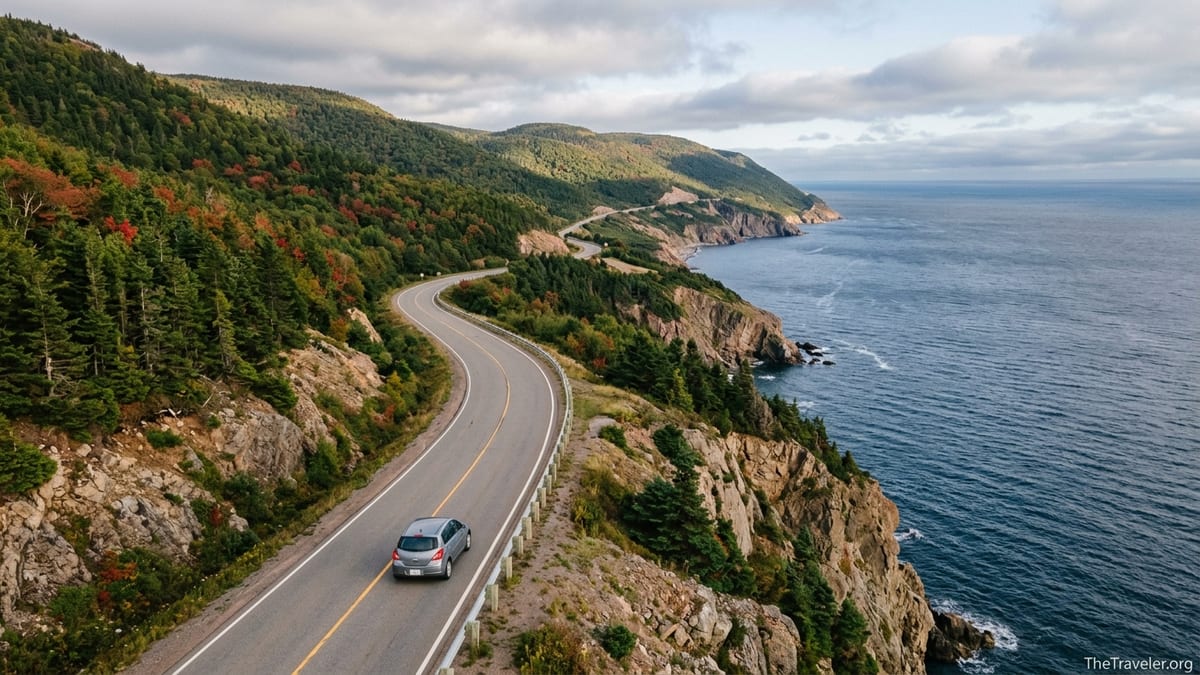
Nova Scotia offers both compact loops and deeper explorations for those willing to drive longer distances. From Halifax, a classic road trip segment runs southwest along the Lighthouse Route past Peggy’s Cove, Mahone Bay and Lunenburg, with the option of continuing toward Yarmouth and then looping back inland. To the northeast, Cape Breton Island and the Cabot Trail provide some of the most dramatic coastal driving in Eastern Canada, with switchbacks, clifftop lookouts and opportunities to spot moose and whales. Many drivers base themselves in communities like Baddeck, Cheticamp or Ingonish to break the Cabot Trail into two or three laid‑back days instead of a single marathon push.
National Parks, Passes and Nature Stops
Eastern Canada’s parks offer everything from short boardwalks suitable for families to multi‑day backcountry treks. In Ontario, many visitors heading from Toronto toward Ottawa or Montreal make side trips to Algonquin Provincial Park or Thousand Islands National Park. Algonquin is known for misty lakes and possible moose sightings at dawn, while Thousand Islands National Park mixes small mainland properties and island‑based picnic areas that combine well with a boat tour.
Quebec and the Atlantic provinces feature a blend of federal national parks and provincial parks, each with its own fee structure. On the federal side, parks such as Fundy in New Brunswick, Cape Breton Highlands and Kejimkujik in Nova Scotia, Prince Edward Island National Park, and Gros Morne and Terra Nova in Newfoundland and Labrador all fall under the Parks Canada umbrella. Travelers who expect to visit several of these within a single trip often consider an annual Discovery Pass, which provides entry to dozens of national parks and historic sites across the country for a fixed price per adult or family group, while youth typically benefit from free or reduced admission.
Provincial parks like Nova Scotia’s Cape Chignecto or Quebec’s Parc national de la Gaspésie generally charge their own modest day‑use and camping fees, collected at entrance kiosks or self‑registration posts. Systems vary by province, but in practice visitors either pay per vehicle or per person for day access, and separately for campsites or roofed accommodations like yurts and cabins. It is sensible to carry a credit card that works reliably in Canada, as many small park offices are cashless and some remote campgrounds are only reservable online in advance during peak summer weeks.
Even short roadside stops can be rewarding in this region. Boardwalks in Kouchibouguac National Park lead through sphagnum bogs and dunes, while lookouts in Cape Breton Highlands National Park occasionally reveal pods of whales or dolphins offshore. In Newfoundland’s Gros Morne National Park, most visitors at least sample easy trails near Norris Point and Rocky Harbour for views of steep fjord‑like valleys and glacier‑carved plateaus, then continue along the coastal highway toward the fishing villages of the Northern Peninsula.
Driving Distances and Three Practical Itineraries
Because distances are significant, structuring your Eastern Canada road trip into logical circuits is key. A compact 7‑day itinerary works best when focused on Ontario and Quebec, with perhaps a short foray into New Brunswick. A 14‑day plan can comfortably reach New Brunswick and Nova Scotia, while a 21‑day loop opens up time for both Nova Scotia and Newfoundland or a slower circuit of all three Maritime provinces combined with Ontario and Quebec.
On a 7‑day circuit starting and ending in Toronto, a common pattern is two nights in Toronto, one in Ottawa, two in Montreal and two in Quebec City, or a variation that substitutes Ottawa for more time in Montreal and Quebec. Daily driving distances on such an itinerary usually range between 200 and 550 kilometres, leaving room for half‑day city walks or museum visits. Some travelers add a side trip from Quebec City to Montmorency Falls or the Île d’Orléans but still return the rental car in Toronto to avoid one‑way fees.
A 14‑day loop from Montreal might look like three nights shared between Montreal and Quebec City, a night around Rimouski or Rivière‑du‑Loup, two or three nights exploring Fundy National Park and the Hopewell Rocks, two nights in Prince Edward Island, and four or five nights spread across Halifax, the South Shore and Cape Breton’s Cabot Trail. That itinerary typically covers 3,000 to 3,500 kilometres in total, with a mix of three‑ to six‑hour driving days and rest days focused solely on hiking, beaches or coastal villages.
With 21 days, adventurous drivers can extend even further, either by adding Newfoundland and Labrador or by slowing the pace between existing stops. One popular pattern is to start in Halifax, spend a week in mainland Nova Scotia and Cape Breton, take the overnight ferry to Newfoundland for a week split between Gros Morne National Park and the Viking archaeology sites around L’Anse aux Meadows, then fly back from St. John’s while returning the rental car in Newfoundland. Another approach keeps the rental local to Quebec or Ontario, exploring the Gaspé Peninsula or the Saguenay and Charlevoix regions at a leisurely pace instead of piling on extra provinces.
Road Conditions, Seasons and Safety Tips
Road standards in Eastern Canada are generally good, with major arteries such as Highway 401 in Ontario and the Trans‑Canada Highway through Quebec and the Maritimes maintained for year‑round traffic. Secondary highways to coastal communities and national parks are often two‑lane, with slower limits and occasional construction zones in summer. Fuel stations are frequent along main corridors but can thin out in more remote stretches of northern New Brunswick, the Gaspé Peninsula or western Newfoundland, so it is wise to refill when the tank drops below half in rural areas.
Summer and early autumn are the most popular seasons for road trips in this region. June through September usually offer mild temperatures, long daylight hours and mostly clear roads, though fog and rain are common along the Atlantic coasts. Late September and early October bring fall colours to Ontario and Quebec in particular, attracting leaf‑peepers to corridors like the Laurentians and the Ottawa Valley. Winter driving between December and March is best left to experienced drivers with appropriate tires and flexible schedules, as snowstorms and freezing rain can quickly close highways or reduce visibility.
Wildlife presents another factor. Moose and deer frequently move near roads at dawn and dusk, especially around forested parks such as Algonquin in Ontario or Cape Breton Highlands in Nova Scotia. Keeping speeds within posted limits, using high beams on rural roads when there is no oncoming traffic, and watching for roadside animal warning signs all help reduce risk. In some national parks there are reduced nighttime speed limits on key stretches for this reason.
Standard safety precautions apply as anywhere: never leave valuables visible in a parked car, carry a paper map or offline mapping app in case mobile coverage drops, and store a small emergency kit in the trunk with water, snacks, a flashlight and a basic first‑aid kit. In Atlantic Canada especially, sudden weather changes can occur even on summer days, so having a light waterproof jacket and warm layers within reach is useful for shoreline walks and viewpoints as well as unexpected delays.
Budgeting, Fuel and Practical Costs
When budgeting for an Eastern Canada road trip, most travelers think in terms of daily averages. A small group sharing a compact rental car often finds that accommodation and food dwarf fuel costs, but the combination of long distances and multiple weeks on the road still adds up. Using rough figures, a 3,000 kilometre two‑week loop in a fuel‑efficient car might require 250 to 350 litres of gasoline. At recent average prices in the region, that translates to several hundred Canadian dollars for fuel over the trip, depending on your exact route and driving style.
Rental car costs vary more widely. Booking early for July and August, when demand peaks, can be crucial. A two‑week midsize rental picked up at a major airport such as Toronto or Montreal may run into the low four figures once taxes, fees and optional insurances are included, but traveling in May, June or September can trim hundreds of dollars from that figure. Drivers under 25 should factor in young driver surcharges common among major rental brands, while adding extra named drivers can also increase the rate, especially for spouses or friends.
Park fees and activity costs are another important line item. Travelers who plan to visit several federal national parks and historic sites typically compare the cost of individual daily admission fees with the price of an annual pass. Even if the breakeven point is only a handful of park days, the convenience of showing a single pass at multiple entry gates across Ontario, Quebec and the Atlantic provinces can simplify logistics. Provincial parks, museums and paid attractions such as boat tours to see puffins in Newfoundland or whale‑watching cruises off the coasts of Quebec and Nova Scotia add texture to the trip, so it is worth setting aside a flexible activity fund for such spur‑of‑the‑moment experiences.
Food and lodging span a wide range. At the lower end, camping in provincial or national parks and cooking your own meals can keep daily costs relatively modest, though campsite reservations in popular parks like Fundy or Cape Breton Highlands should be made well ahead of peak season. Midrange travelers typically mix family‑run motels and small inns with a few nights in city hotels in places like Montreal, Quebec City or Halifax. Breakfast‑included rates, grocery store picnics and local diners help balance restaurant splurges, such as a seafood feast on Prince Edward Island or a fine‑dining evening in Old Quebec.
The Takeaway
An Eastern Canada road trip is less about ticking off a list of provinces and more about enjoying the rhythm of the journey itself. The contrasts are striking: glass towers and lakefront paths in Toronto, Gothic Parliament buildings in Ottawa, historic stone walls in Quebec City, red‑cliff beaches in Prince Edward Island, cloud‑brushing headlands on Cape Breton and glacial valleys in Newfoundland. With realistic daily driving goals, a careful eye on fuel and rental costs, and a flexible approach to weather and wildlife, it is entirely possible to cover impressive distances while still feeling that you have time to linger.
Whether you opt for a compact 7‑day Ontario and Quebec loop, a 14‑day foray into the Maritimes or a 21‑day epic that climbs aboard ferries and curls around remote coasts, the key is to balance driving days with genuine pauses. Build in occasional two‑night stays to catch your breath and look beyond the main highways for scenic byways, provincial parks and small communities where you can talk with locals. Do that, and your road trip through Eastern Canada will be more than a line on a map. It becomes a collection of lived experiences that you will remember long after the odometer stops.
FAQ
Q1. Do I need a car for an Eastern Canada trip, or can I rely on trains and buses?
The main cities of Toronto, Ottawa, Montreal and Quebec City are linked by trains and intercity buses, but reaching coastal regions, national parks and smaller towns in New Brunswick, Nova Scotia, Prince Edward Island and Newfoundland is far easier with a car. A rental gives you flexibility for scenic detours and trailheads that are not served by public transport.
Q2. What is the best time of year to drive through Ontario, Quebec and Atlantic Canada?
Most road trippers aim for late May through October. Summer brings the warmest weather and longest days, while September and early October add fall colours in Ontario and Quebec. Winter driving is possible but requires experience with snow and ice and a flexible schedule to handle storms.
Q3. How many kilometres per day should I plan to drive?
Many travelers find 200 to 400 kilometres per day comfortable, leaving room for sightseeing stops. On long transit days between regions you might cover 500 to 600 kilometres, but doing that several days in a row can feel tiring, especially if you are the only driver.
Q4. Is it worth getting an annual national park pass for this kind of trip?
If your itinerary includes several Parks Canada sites such as Fundy, Cape Breton Highlands, Prince Edward Island National Park, Gros Morne or multiple historic sites in Quebec and Ontario, an annual pass often pays for itself compared with buying individual day passes. It also speeds up entry at gates and simplifies budgeting.
Q5. Are roads and fuel stations reliable in remote areas like Newfoundland or the Gaspé Peninsula?
Major highways and primary regional roads are generally well maintained, but fuel stations and services can be farther apart in remote stretches. It is sensible to fill up when you reach half a tank in rural areas and to carry water, snacks and a charged phone for peace of mind.
Q6. Can I start my road trip in one city and drop the rental car in another?
One‑way rentals between major cities such as Toronto, Montreal and Halifax are often possible, but they usually involve additional drop fees that can be significant. It is worth comparing a one‑way rental with the cost of a return loop before deciding which works better for your budget and schedule.
Q7. Do I need special permits or equipment to drive in Canadian national parks?
You do not need special equipment beyond what is required on public roads, but you do need a valid park permit or pass when driving on certain roads inside national parks. Standard safety gear, appropriate clothing for changing weather and awareness of wildlife are more important than any special permits.
Q8. How easy is it to find accommodation without booking ahead?
Outside of peak summer weeks and holiday weekends, many motels and small inns have same‑day availability, especially in larger towns. In July and August, or near popular parks like Fundy and Cape Breton Highlands, it is much safer to reserve in advance, particularly if you want specific campgrounds or waterfront properties.
Q9. Are there toll roads on typical Eastern Canada road trip routes?
Most major routes in Ontario, Quebec and the Atlantic provinces are toll‑free, but there are exceptions such as Highway 407 near Toronto, which uses electronic tolling. Some bridges and ferries also charge vehicle fees, so it is wise to check for any toll segments when planning your exact route.
Q10. What type of vehicle is best for an Eastern Canada road trip?
A compact or midsize car is sufficient for most travelers, offering a good balance between comfort and fuel economy. Families or groups who value space may prefer a small SUV or minivan, but for standard paved roads and typical park access, four‑wheel drive is not essential in summer and early autumn.