


Planning an Eastern Canada trip usually means facing one big decision: do you follow the classic city-and-river corridor through Ontario and Quebec, or head for the wild coasts and fishing villages of Atlantic Canada? Both regions are rich in culture, scenery and food, but they deliver very different travel experiences. This guide compares the two in practical detail so you can decide which one fits your time, budget and travel style.
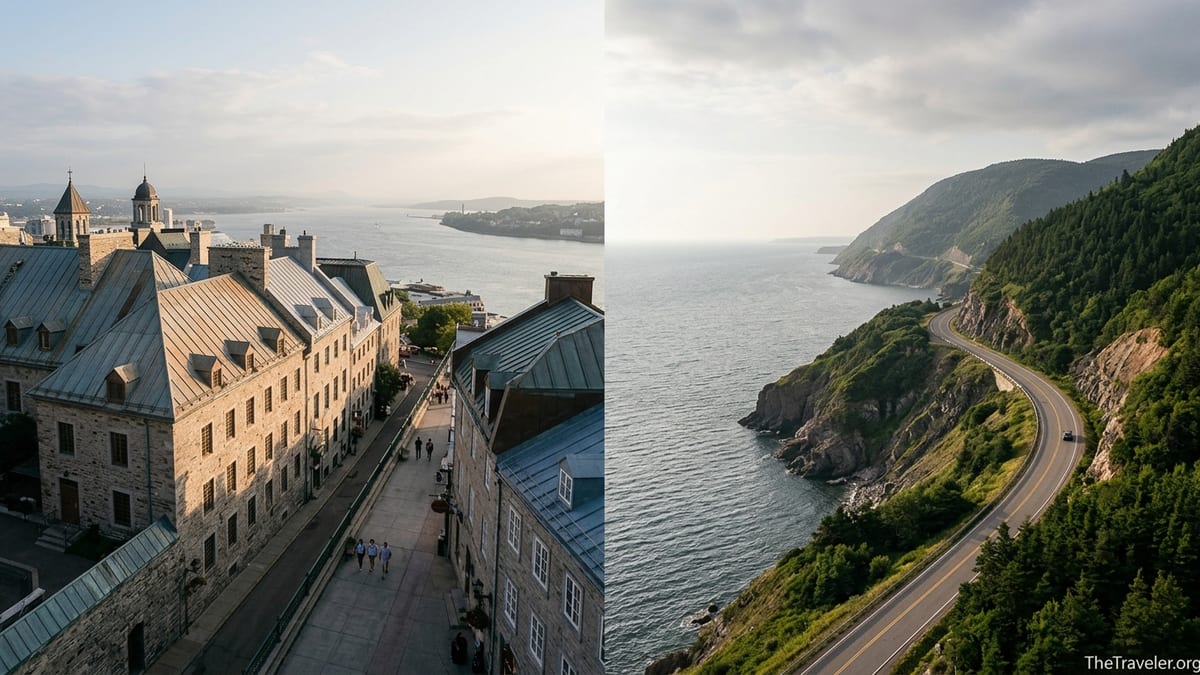
Big Cities vs Small Coastal Towns
Ontario and Quebec are defined by Canada’s largest and most visited cities. Toronto, Montreal, Ottawa and Quebec City form a dense travel corridor of museums, festivals, nightlife and historic neighborhoods. A typical first-time itinerary might include three nights in Toronto for the CN Tower, waterfront walks and multicultural dining, two nights in Ottawa for Parliament Hill and the National Gallery, and three nights split between Montreal’s Plateau district and Old Quebec’s cobblestone streets. Distances are manageable and well served by trains and highways, so you can see multiple urban centers in a single week without flying.
Atlantic Canada, by contrast, is about smaller cities and characterful coastal towns. Halifax is the main hub, with a lively harborside boardwalk, maritime museums and pubs, but beyond that the appeal lies in places like Lunenburg’s colorful wooden houses, Cavendish and Charlottetown on Prince Edward Island, coastal New Brunswick communities near the Bay of Fundy, and fishing villages around Newfoundland’s Avalon Peninsula or Gros Morne. You trade skyscrapers and big museums for harbors, lighthouses and locally owned inns.
If you prefer gallery-hopping, major concerts and easy transit between large urban centers, Ontario and Quebec are the stronger choice. If your ideal evening is a stroll past clapboard houses to a wharf-side restaurant, with a lighthouse on the horizon instead of a skyline, Atlantic Canada will feel more rewarding. Many travelers who have done both say the Ontario–Quebec corridor feels like a European-style city break, while the Atlantic provinces feel more like a relaxed coastal road trip.
For a compromise, some visitors fly into Montreal or Quebec City, then drive east along the St Lawrence River toward the maritime provinces, combining a few days of city time with a week of coastal exploration. That sort of hybrid trip works best if you have at least 14 days and are comfortable driving long distances.
Scenery, National Parks and Outdoor Adventure
Ontario and Quebec offer classic Canadian lake-and-forest scenery, plus dramatic river landscapes. Algonquin Provincial Park in Ontario is one of the country’s best-known canoe destinations, with multi-day paddle routes, portages and wolf howls in late summer. Closer to the main cities, Thousand Islands National Park on the St Lawrence River offers island cruises and kayaking around pine-topped granite islets, while Quebec’s La Mauricie National Park, roughly between Montreal and Quebec City, features quiet lakes, wooded hills and good chances to spot loons or beavers.
Atlantic Canada’s landscapes are more overtly coastal and often more rugged. Fundy National Park in New Brunswick protects cliffs and forested valleys along the Bay of Fundy, famous for its extreme tides that expose mudflats and sea floor twice a day. On Nova Scotia’s Cape Breton Island, Cape Breton Highlands National Park combines highland plateaus with steep drops into the Gulf of St Lawrence, and the Cabot Trail road delivers sweeping ocean vistas along the clifftops. Farther north, Gros Morne National Park in Newfoundland, a UNESCO World Heritage Site, showcases fjord-like inlets, exposed ancient rock and alpine plateaus, with boat tours on Western Brook Pond and well-marked hiking trails.
In practical terms, Ontario and Quebec’s nature access works well if you want day trips from cities or are trying canoeing and hiking for the first time. You might ride a VIA Rail train between Toronto and Montreal, then rent a car locally for a night or two in a lakeside lodge, without committing your whole trip to the road. Atlantic Canada generally suits travelers who are ready to drive more and build their route around scenery. Trails like Skyline Trail in Cape Breton Highlands or the coastal paths near Hopewell Rocks in New Brunswick reward those who are happy to lace up hiking boots and spend full days outdoors.
Season also matters. In Ontario and Quebec, autumn is famous for maple foliage, especially in places like the Laurentians north of Montreal or Gatineau Park near Ottawa. In Atlantic Canada, late June to early September is prime for coastal hiking and boat tours, with cooler air and ocean views rather than blazing heat. If you want a shoulder-season trip focused on fall color with some city comforts and easy train links, Ontario and Quebec have the edge. For a classic summer holiday of sea air and rugged cliffs, Atlantic Canada comes out ahead.
Road Trips, Distances and Getting Around
Distances in Ontario and Quebec can be deceptively long, but the main tourist corridor is compact by Canadian standards. Toronto to Ottawa is roughly a 4.5 to 5 hour drive, Toronto to Montreal is around 5 to 6 hours, and Montreal to Quebec City is about 2.5 to 3 hours by car. Intercity buses and trains cover the same stretches, and competition on these routes means you can often find advance-purchase rail fares that are competitive with driving once you factor in parking in downtown cores. Car rentals from major airports and city centers are straightforward, and roads are generally wide, well signed and busy.
Atlantic Canada looks small on a map, but travel times stretch out due to two-lane highways, ferries and indirect coastal routes. Halifax to Cape Breton Highlands National Park, for example, is a 4.5 to 5 hour drive each way, and the Cabot Trail loop itself can easily fill a long day or, more comfortably, two days with photo stops and short hikes. Reaching Prince Edward Island often involves the Confederation Bridge from New Brunswick or a ferry from Nova Scotia; many visitors drive in one way and leave the other. Newfoundland adds another layer, with either a flight from mainland cities like Halifax or Toronto, or an overnight or long daytime ferry crossing from Nova Scotia.
If you are reluctant to rent a car, Ontario and Quebec are clearly easier. You can base yourself in Toronto and Montreal, use local transit and rideshares, and perhaps join organized day tours to Niagara Falls or Laurentian villages. In Atlantic Canada, public transportation is limited outside the main cities, and many fishing villages, beaches and trailheads are inaccessible without a private vehicle or prearranged tour. Some travelers join multi-day escorted coach tours that bundle transport, hotels and sightseeing across Nova Scotia, New Brunswick and Prince Edward Island, which can be worth the premium if you do not drive.
When comparing the two regions for a one-week trip, factor in how much of your time you want to spend in the car. A loop like Toronto–Ottawa–Montreal–Quebec City can be planned so that no single driving day exceeds six hours, with several days of no driving at all. In the Atlantic provinces, a popular loop from Halifax through Lunenburg, the Annapolis Valley, the Bay of Fundy and back can involve shorter hops but more frequent driving days, especially if you add Cape Breton or a sidetrip to Prince Edward Island.
Costs, Accommodation and Practical Budgeting
Travel costs in Canada have risen in recent years, and Eastern Canada is no exception. Ontario and Quebec’s major cities generally command the highest nightly hotel rates, especially in peak summer and during festivals in Montreal and Quebec City. Downtown chain hotels in Toronto or Montreal can easily run into the mid-range to upper range per night in July and August, while more basic motels on city fringes or in smaller towns are often significantly cheaper. Apartment-style rentals and guesthouses can offer savings for families or longer stays but may be regulated differently in each city.
Atlantic Canada tends to be slightly cheaper on a per-night basis outside a few premium coastal hotspots, but costs add up differently. In Nova Scotia, New Brunswick and Prince Edward Island, you are more likely to stay in small inns, bed-and-breakfasts and roadside motels than in global hotel brands. Rates in peak July and August in popular areas like Cavendish or the Cabot Trail can climb quickly, especially for waterfront rooms, but shoulder-season stays in June or September are often more affordable. Newfoundland’s daily costs for food and lodging can be moderate, but flights or ferry crossings to reach the island can form a larger share of the total budget.
Activities in both regions range from free to splurge. In Ontario and Quebec, you might pay admission for attractions like the CN Tower, major museums or guided tours of Old Montreal, but many experiences are low-cost: urban parks, waterfront promenades and neighborhood walks. Provincial and national parks in both regions charge day-use or entry fees, which for a carload of visitors typically remain a modest part of the budget. In Atlantic Canada, big-ticket items often include boat tours for whale watching or fjord cruising, sea kayaking excursions, or lobster boat experiences, while many coastal walks and beach days remain free.
Transportation is often the deciding factor. Travelers focusing on Ontario and Quebec’s cities can lean on rail passes, intercity buses and occasional rideshares, limiting car rental to a couple of days for specific nature side trips. In Atlantic Canada, most itineraries assume you will have a car for the majority of the trip, and fuel, ferry crossings and parking all need to be built into the budget. For cost-conscious travelers who still want some Atlantic flavor, a concentrated week in and around Halifax, with a rental car for three or four days rather than the full week, can offer a reasonable compromise.
Food, Culture and Local Experiences
Ontario and Quebec offer the widest culinary variety and cultural institutions. Toronto’s neighborhoods serve everything from Korean barbecue to Caribbean roti, while Montreal is famous for bagels, smoked meat and creative bistros. Quebec City’s Old Town blends French-influenced cuisine with modern Canadian ingredients, and even mid-sized cities like Ottawa now support thriving craft beer, coffee and food-truck scenes. Food lovers who enjoy hopping between markets, wine bars and chef-driven restaurants will find more options here on any given night than in small Atlantic towns.
Atlantic Canada’s food scene leans more heavily on seafood and regional specialties. In Nova Scotia you can order fresh lobster at casual shacks along the South Shore or sample chowders and fish cakes in Halifax pubs. Prince Edward Island is known for mussels, oysters and potatoes, with farm-to-table restaurants in Charlottetown and seasonal eateries near the beaches. New Brunswick and Newfoundland add their own dishes, from cod tongues and fish-and-brewis to moose burgers in more remote communities. Upscale dining exists in Halifax, St John’s and a handful of resort properties, but the daily rhythm is more about simple, fresh meals in informal surrounds.
Culturally, Ontario and Quebec deliver marquee attractions like the National Gallery of Canada and the Canadian Museum of History in Ottawa, major festivals in Montreal and Toronto, and historic sites such as the fortified walls of Old Quebec and the Plains of Abraham. You can fill entire days with art, history and performance without leaving city centers. Atlantic Canada’s culture is more dispersed and rooted in smaller communities, with folk music sessions in pubs, cultural centers dedicated to Acadian or Mi’kmaw heritage, and local museums that interpret shipwrecks, fishing and emigration stories.
Travelers who thrive on big-city culture, nightlife and international cuisine will likely get more out of Ontario and Quebec. Those who prefer meeting innkeepers, listening to live fiddle music in a small bar and learning about local history from guides who grew up in the village they describe often come away feeling that Atlantic Canada delivered a more personal connection, even if there were fewer big-name museums on the schedule.
Beaches, Wildlife and Seasonal Highlights
Beaches are not what most people associate with inland Ontario and Quebec, but warmer-lake swimming and riverside lounging have their place. In Ontario, sandy stretches along Lake Ontario or Lake Huron become busy in July and August, and provincial parks like Sandbanks or Wasaga Beach draw crowds from Toronto and Ottawa on hot weekends. Quebec’s coastal feel is most noticeable along the lower St Lawrence and Gaspé Peninsula, but these areas lie beyond the typical first-time Ontario–Quebec city loop and require extra driving days.
Atlantic Canada, on the other hand, is built around the ocean. Nova Scotia’s beaches range from family-friendly sweeps of sand near Halifax to cooler, windier Atlantic-facing coves that are ideal for walking rather than swimming. Prince Edward Island offers classic red-sand beaches and dunes in its national park, with seasonal lifeguards at popular spots. New Brunswick’s coast shifts between warmer, shallow waters in the Gulf of St Lawrence and dramatic tidal flats on the Bay of Fundy, while Newfoundland’s shores run from wave-pounded cliffs to quiet coves. Even in midsummer the Atlantic can be brisk for extended swims, but beach days here are as much about scenery as water temperature.
Wildlife experiences also differ between the regions. In Ontario and Quebec, you are more likely to see loons, beavers and possibly black bears or moose in forested parks, plus migratory birds along rivers and lakes. Whale watching is limited to certain coastal areas of Quebec if you push east along the St Lawrence. In Atlantic Canada, whale-watching tours run in season from ports in Nova Scotia, New Brunswick and Newfoundland, with chances to see humpbacks, minke and other species. Seabird colonies, puffin-viewing excursions and frequent seal sightings add to the appeal for nature enthusiasts.
Seasonal timing can tip the balance. Ontario and Quebec are attractive from late spring through fall, with winter drawing visitors for Quebec City’s carnival and Montreal’s winter festivals. Atlantic Canada’s main tourist window is narrower, concentrated from roughly late June to early October, when coastal routes are fully open, ferries are frequent and boat tours operate daily. Outside that period, many coastal accommodations reduce operations, and weather can be cool, wet and windy. If your vacation time falls in May or late October and you want more guaranteed openings, Ontario and Quebec may be the safer bet.
Which Region Fits Which Traveler?
For first-time visitors to Canada who want to combine iconic sights with straightforward logistics, Ontario and Quebec usually make more sense. A nine or ten day trip that includes Toronto, Niagara Falls, Ottawa, Montreal and Quebec City offers a clear structure, plenty of public transportation, and a familiar big-city rhythm. This route works especially well for travelers without cars, families who prefer shorter daily journeys, and visitors who want nightlife, varied cuisine and a mix of English and French Canada without long detours.
Atlantic Canada best suits travelers who value scenery over skyline and are comfortable with driving as a core part of the experience. Couples or friends planning two weeks in summer might fly to Halifax, rent a car, and spend time on the South Shore, the Annapolis Valley, Cape Breton and Prince Edward Island, perhaps adding a separate trip later to Newfoundland and Labrador. This style of trip appeals to photographers, hikers and anyone who dreams of quiet evenings near the water rather than busy downtown streets.
Budget-minded travelers might find it easier to keep daily expenses predictable in Ontario and Quebec by staying slightly outside downtown cores and using public transport, while those willing to travel in Atlantic Canada’s shoulder seasons and avoid the busiest resort communities can find good value in family-run motels and guesthouses. Conversely, if you plan to eat most meals in restaurants and book central hotels regardless of region, overall trip costs between the two areas may converge more than expected.
In the end, it comes down to rhythm. Ontario and Quebec offer a city-focused trip with optional forays into lakes and forests, while Atlantic Canada delivers a road-trip centered on coasts, national parks and villages. If time and budget allow, many travelers tackle the Ontario–Quebec corridor on one visit and return a year or two later for a dedicated Atlantic circuit, rather than trying to cover both in a single, rushed itinerary.
The Takeaway
Choosing between Ontario and Quebec or Atlantic Canada for an Eastern Canada trip is less about which region is objectively better and more about what kind of journey you want. The Ontario–Quebec corridor is about accessible big cities, cultural institutions, food diversity and manageable rail-linked distances, with lakes and forests available as rewarding side trips. It is a strong fit for travelers without cars, those traveling outside summer, and anyone who wants a dense program of museums, festivals and historic neighborhoods.
Atlantic Canada offers a different kind of richness. Its appeal lies in the sweep of coastal roads, the drama of cliffs and tides, the hum of small harbors and the chance to slow down in places where the main evening entertainment is a sunset over the water. It rewards visitors who can travel in summer, rent a car and allow for longer driving days, and it often leaves the strongest impression on hikers, photographers and travelers seeking quieter, more personal encounters.
If you are trying to decide for an upcoming trip, a simple rule of thumb helps: if you picture yourself on a city terrace with a plate of modern cuisine and a skyline view, start with Ontario and Quebec. If your mental image is a lighthouse, a boardwalk and a bowl of chowder after a windy hike, begin with Atlantic Canada. Either way, you will be sampling only one part of a large and varied country, and many travelers find that whichever region they choose first simply gives them a reason to return and explore the other next time.
FAQ
Q1. Is Ontario and Quebec or Atlantic Canada better for a first trip to Canada?
For a first trip, Ontario and Quebec are usually easier due to big-city hubs, good public transport and shorter learning curves, while Atlantic Canada is better for road-trip and coastal scenery fans.
Q2. Do I need to rent a car to explore Eastern Canada?
You can visit Toronto, Ottawa, Montreal and Quebec City by train and local transit, but in Atlantic Canada a car is strongly recommended to reach beaches, villages and trailheads.
Q3. When is the best time to visit Atlantic Canada?
The most reliable period is late June through early October, when coastal routes, ferries, boat tours and seasonal accommodations operate on full schedules and weather is milder.
Q4. Are hotels more expensive in Ontario and Quebec or Atlantic Canada?
Downtown hotels in Toronto, Montreal and Quebec City are often pricier, but Atlantic hotspots in peak summer can be comparable; overall costs depend heavily on season and location.
Q5. Which region is better for wildlife and whale watching?
For whales, seabirds and marine life, Atlantic Canada has the edge, while Ontario and Quebec are stronger for inland wildlife like loons, beavers and occasional moose in forested parks.
Q6. Can I combine Ontario, Quebec and Atlantic Canada in one trip?
It is possible on a longer itinerary of at least two to three weeks, but for ten days or less it is usually better to focus on either the Ontario–Quebec corridor or the Atlantic provinces.
Q7. Which area is more family friendly?
Both are family friendly, but Ontario and Quebec offer more big attractions like museums, aquariums and festivals, while Atlantic Canada suits families who enjoy beaches, picnics and scenic drives.
Q8. How does language differ between the two regions?
Ontario is predominantly English-speaking, Quebec is mainly French with strong bilingual services, and most Atlantic provinces are primarily English with some French communities in New Brunswick.
Q9. Is it easy to find vegetarian or vegan food in Eastern Canada?
Major cities in Ontario and Quebec have abundant vegetarian and vegan options, while Atlantic Canada’s smaller towns may have fewer choices, though larger centers like Halifax offer variety.
Q10. Which region works better for travel on a tight schedule?
Ontario and Quebec work better if you have limited time, since you can see several major cities with minimal domestic flights and shorter transfers between key stops.