


Northern Canada delivers the kind of travel experiences that still feel genuinely remote: dancing aurora over frozen lakes, tundra valleys carved by ancient glaciers, and small communities where you are more likely to meet a local elder than another tourist. Choosing where to go, however, is not simple. Whitehorse offers comfortable hotels and easy tours, Yellowknife is a global aurora hotspot, Tombstone and Nahanni are wilderness heavyweights, and Baffin Island feels closer to Greenland than to Toronto. This guide compares the key northern destinations, with concrete examples of what you can actually see, do and expect to pay, so you can match the right place to your style of adventure.
How to Choose Your Northern Canada Base
Before comparing specific places, it helps to be clear about what kind of northern trip you want. Many first-time visitors picture a single destination where they can see northern lights, go dog sledding, meet Indigenous hosts and stand by the Arctic Ocean. In reality, these experiences are spread across a vast region. Whitehorse and Yellowknife specialize in aurora viewing with strong tourism infrastructure. Dawson City, Tombstone Territorial Park and the Dempster Highway focus on road-accessible wilderness. Nahanni and remote Baffin Island communities lean toward expedition-style journeys with charter flights and outfitted trips.
Your budget and comfort level with cold and isolation matter. In aurora season, typical three-night northern lights packages from established operators in Whitehorse or Yellowknife often start around a few hundred Canadian dollars per person for basic hotel plus evening viewing tours, and can climb into the low thousands for small-group lodge stays that include meals and daytime excursions. Remote fly-in destinations like Nahanni National Park Reserve and Baffin Island usually cost significantly more because you pay for charter flights or scheduled small-plane services on top of commercial flights to the gateway town.
Season timing is just as important as location. For aurora, most operators in Yukon and Northwest Territories run main viewing seasons from roughly late August to late April, with peak cold, clear skies in midwinter. For serious hiking in Tombstone or on Baffin Island, you are realistically looking at late June to early September, when trails are largely snow free and river levels are manageable. If you want both strong aurora chances and access to hiking, the shoulder seasons of late August to late September can work well around Whitehorse, Dawson City and Yellowknife.
Finally, think about how independent you want to be. Whitehorse and Yellowknife support rental cars, supermarket shopping and self-guided days combined with evening tours. By contrast, Nahanni river trips or polar bear and narwhal trips on Baffin Island almost always require joining an outfitted expedition with guides, equipment and logistics bundled together. Being honest about how much planning and risk you are comfortable with will naturally point you toward the right northern hub.
Whitehorse vs Yellowknife: The Aurora Capitals
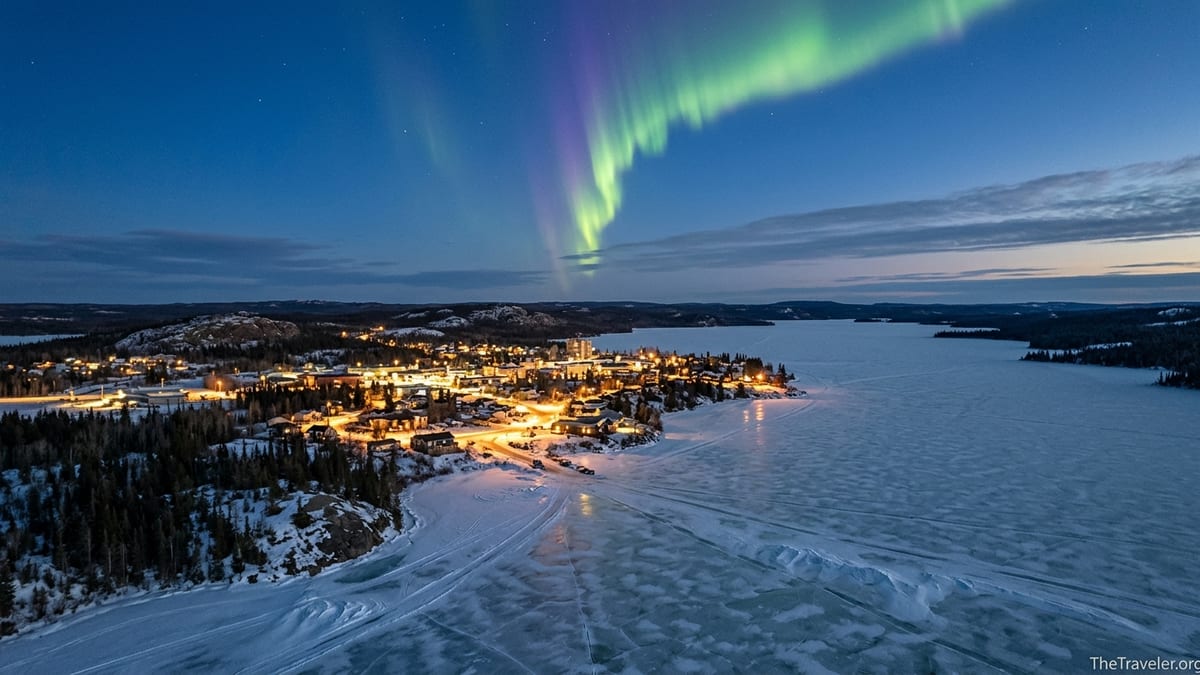
Whitehorse in Yukon and Yellowknife in the Northwest Territories are the two most popular starting points for northern lights trips in Canada. Both sit under active auroral oval zones and both offer multiple evening tour operators, yet their feel on the ground is different. Whitehorse markets itself as the “Wilderness City,” with forested hills and the Yukon River right beside town, plus easy side trips to places like Kluane National Park and nearby hot springs. Yellowknife feels more like a compact frontier capital perched on the edge of Great Slave Lake, with rocky outcrops, houseboats and purpose-built aurora viewing lodges around town.
If you want maximum comfort and flexibility, Whitehorse is a strong choice. Well-established companies there run nightly aurora excursions between roughly late August and April, often picking you up from downtown hotels around 9 or 10 p.m. and driving 20 to 40 minutes out of town to heated cabins and yurts with open sky views. A typical evening tour might include hot drinks, basic snacks and warm-up breaks, and you can expect to pay in the low hundreds of Canadian dollars per person for a single night, with discounts when bundled into three or four night packages. During the day, you can snowshoe or fat bike on local trails, join a dogsled run, or simply wander the riverfront and cafes.
Yellowknife leans more heavily into aurora specialization. Tour operators there advertise high viewing success rates across their core winter season, using heated “aurora villages,” movable snowmobile or van-based viewing and dedicated photography support. A common approach is to combine two or three nights of aurora tours with a city and culture tour, where you visit the Old Town, climb Pilot’s Monument for views over the lake and stop by local galleries for Indigenous art. Prices for multi-night packages that include hotel, airport transfers and nightly tours commonly sit in the mid-hundreds to low-thousands of dollars per person, depending on room standard and whether winter clothing rental is included.
In practical terms, Whitehorse often appeals to travelers who want aurora plus varied daytime activities like dog sledding, snowmobiling, ice fishing and easy hiking in warmer months, all with a softer, small-city atmosphere. Yellowknife is ideal if your number-one priority is maximizing aurora viewing time, you want multiple specialized tour options, and you do not mind spending most of your trip focused on late-night sky watching rather than long day trips into the surrounding wilderness.
Dawson City, Tombstone & the Dempster Highway: Road-Trip Wilderness
For travelers drawn to gravel roads, tundra valleys and historic frontier towns, Dawson City and Tombstone Territorial Park in Yukon, along with the Dempster Highway up to the Arctic Ocean at Tuktoyaktuk, deliver a very different northern experience than the aurora capitals. Dawson City itself is a small gold rush town with false-front buildings, wooden boardwalks and a cluster of hotels, hostels and restaurants that mostly operate from late spring to early fall. It makes a natural base for classic Klondike sightseeing, such as visiting historic dredges and trying a short paddle on the Yukon River.
Two hours’ drive north of Dawson on a maintained but fully gravel road lies Tombstone Territorial Park, a 2,200-square-kilometre protected area of jagged peaks, permafrost landforms and caribou habitat that straddles the Dempster Highway. Because the highway cuts right through the park, you can drive to viewpoints, trailheads and the park’s interpretive centre. There is a single road-accessible territorial campground and several backcountry campsites that require permits. Planning documents emphasize that overnight camping anywhere in the park requires registration, including winter camping, and that visitors need to check weather and road conditions for Dawson City and the Dempster before setting out.
Continuing north on the Dempster Highway becomes a full-scale Arctic road trip. The route runs roughly 740 kilometres from near Dawson City to Inuvik, crossing mountain ranges, the Arctic Circle and vast stretches with no services. Beyond Inuvik, an all-season extension allows you to drive to Tuktoyaktuk on the shore of the Arctic Ocean, giving road trippers the rare chance to stand by sea ice and pingos after days of wilderness highway. In summer, travelers typically space the journey out with overnight stops at basic territorial campgrounds or motels in Eagle Plains and Inuvik, budgeting for higher fuel prices and being prepared for long stretches without cell coverage.
Compared with Whitehorse or Yellowknife, this corridor is best suited to confident drivers comfortable on lengthy gravel roads and willing to carry extra food, water and at least one full-size spare tire. Rental car agencies may restrict travel on the Dempster, so you should confirm written permission and insurance conditions before leaving Dawson. The reward for that extra effort is a combination of aurora potential, especially in autumn, and daytime landscapes of tundra and mountains that feel dramatically removed from city life.
Nahanni National Park Reserve: Fly-in Rivers and Iconic Falls
Nahanni National Park Reserve in the Northwest Territories is one of Canada’s most storied wilderness parks, famous for the South Nahanni River and Náįlįcho, also known as Virginia Falls, where the river drops over a precipice roughly twice the height of Niagara. Unlike Tombstone, there are no public roads into the park. Current Parks Canada information is explicit that visitors must access Nahanni by air or by long overland journeys that end in backcountry hiking or paddling approaches. In practice, nearly all leisure visitors arrive via chartered floatplane or small wheeled aircraft from gateway communities such as Fort Simpson, with scenic flights often built into the experience.
Landing sites within the park are tightly controlled, with designated aircraft landing zones at Virginia Falls, Rabbitkettle Lake, Glacier Lake, Island Lakes, Bunny Bar and a handful of other lakes. Some are day-use only, while others are set up for overnight stays associated with river trips. This structure means independent travelers cannot simply “drop in” anywhere; you need to coordinate with a licensed air charter company and, for river expeditions, with one of the legally authorized guiding and outfitting companies that operate multi-day trips on the South Nahanni.
Most visitors choose one of two broad trip styles. The first are shorter fly-in sightseeing trips, often one full day, where you take a small plane or floatplane from Fort Simpson to Virginia Falls, land on the river, walk to viewpoints, have a picnic lunch and then fly back the same day. These trips command premium pricing because aircraft and fuel are expensive in the North, and you should expect to pay in the high hundreds of dollars per person at a minimum. The second style are guided river expeditions ranging anywhere from about a week to three weeks, combining rafting or canoeing, camping, side hikes and flights in and out of remote landing spots.
Nahanni is best for travelers who value world-class wilderness scenery over convenience and are comfortable with the idea that weather, river levels and aircraft availability can disrupt itineraries. There are no restaurants, hotels or stores inside the park, and you must be self-sufficient or rely fully on your outfitter. For many, though, watching morning mist rise off Virginia Falls or drifting through towering canyons far from any road justifies the logistical and financial investment.
Iqaluit & Baffin Island: Arctic Culture and Rugged Coastlines
On the eastern side of the Canadian Arctic, Baffin Island and its communities, including the territorial capital Iqaluit, offer a different blend of experiences. Here, the focus shifts from highway road trips to Arctic seaside landscapes, Inuit culture and, on more specialized trips, polar wildlife and expedition cruising. Iqaluit itself, on Frobisher Bay, is the main air gateway, connected by scheduled flights from southern Canada. It has a small selection of hotels, government and commercial offices, and local outfitters who can arrange boat trips, hiking and winter activities on sea ice when conditions are safe.
Travelers interested in everyday Arctic life can spend several days in Iqaluit visiting cultural centers, walking along the bay at low tide and joining short excursions with local guides. In peak summer, day trips might include boat rides to nearby inlets for hiking or wildlife viewing, while in winter you could join snowmobile journeys or community-led outings to learn about traditional travel routes and hunting practices. Because all supplies arrive by air or annual sealift, prices for food and lodging are typically higher than in Whitehorse or Yellowknife, and advance booking is strongly recommended.
Beyond Iqaluit, more remote Baffin Island communities and parks such as those around towering fjords and granite walls are usually accessed through pre-arranged expeditions rather than spontaneous travel. Common options include fly-in hiking trips that use local guides and camping gear cached near major routes, or ship-based Arctic cruises that call at several communities and natural sites along the island’s coast. These itineraries often target late July and August, when sea ice is at its minimum and daylight is nearly round-the-clock, providing extended time to watch for whales, seabirds and, with luck and appropriate safety measures, distant polar bears along shorelines.
This region suits travelers attracted to stark coastal scenery, Indigenous culture and the feeling of being at the edge of the world more than those who prioritize easy access or budget-friendly trips. Weather can delay flights for days, and the cost of guided experiences, especially anything involving boats or ships, tends to be high. For those who accept these constraints, evenings spent under an Arctic twilight sky, listening to local stories and watching icebergs drift by, can be among the most memorable in the North.
Tuktoyaktuk & the Arctic Ocean: Reaching the End of the Road
Tuktoyaktuk, or Tuk, on the shore of the Arctic Ocean in the Northwest Territories, has become an iconic endpoint for overland travelers since the completion of the all-season highway from Inuvik. The road forms the last leg of a longer network that begins in southern Yukon and climbs north along the Dempster Highway through mountain ranges and tundra plateaus before crossing into the Mackenzie Delta and finally reaching Tuk on a separate stretch of gravel. This connection created the first continuous road route from the Canadian highway system to the Arctic Ocean, making it possible for visitors in ordinary vehicles, subject to rental contracts and road conditions, to dip a toe into frigid saltwater at the top of the continent.
In practice, driving to Tuk is not a casual detour. Travelers must contend with hundreds of kilometres of gravel, changing weather and limited services, especially outside the short summer season. Fuel, accommodation and basic groceries are available in Inuvik, and Tuk has modest options such as small lodges and local tour operators who offer cultural tours, boat trips in open water season and opportunities to visit the famous ice-rich landforms known as pingos by boat or along a boardwalk accessed from town. Organized half-day tours commonly include storytelling, home-cooked snacks and a drive around key landmarks like the community’s churches and coastline.
The experience here is less about formal attractions and more about the satisfaction of reaching the Arctic Ocean by road and meeting residents who have long lived with permafrost, sea ice and seasonal extremes. In summer, you might walk along a gravel beach at midnight under a sun that barely sets. In shoulder seasons and early winter, road conditions can change rapidly, requiring up-to-date checks with territorial highway information services and flexibility in timing. For many road trippers, incorporating Tuk into a longer loop that includes Dawson City and Tombstone Territorial Park creates a coherent narrative: from gold rush streets, through mountain tundra, to Arctic sea.
Matching Destinations to Your Travel Style
Once you understand what each northern hub specializes in, it becomes easier to pair destinations with traveler profiles. Someone on a first northern trip, with limited time and a mid-range budget, will usually be happiest basing in Whitehorse or Yellowknife for three to five nights. In that time, you can join two or three aurora outings, add a dogsled or snowmobile excursion, sample local restaurants and still have room for a day hike or a cultural museum visit. Packages at this level often include airport transfers, hotel, northern lights tours and at least one daytime activity, meaning you do not have to manage many logistics after booking.
By contrast, experienced hikers and photographers might aim for Dawson City combined with Tombstone Territorial Park in late summer. A typical plan could see you flying into Whitehorse, renting a vehicle, driving the paved Klondike Highway to Dawson and then pushing up the gravel Dempster into Tombstone. You would spend days tackling ridge walks above the tundra, photographing fall colors and, after dark, watching for aurora from roadside pullouts or campground clearings. Costs here shift from guided tour fees toward vehicle rental, fuel and camping gear, though joining at least one guided hike or interpretive program at the park centre can deepen your understanding of the Trʼondëk Hwëchʼin cultural landscape.
Travelers with higher budgets and a taste for true expedition style might design itineraries that link a gateway city with a fly-in add-on, such as combining Yellowknife with a multi-day paddling trip in Nahanni, or pairing a southern Canadian hub with a week-long visit to Iqaluit and a Baffin Island coastal camp. In these cases, guided experiences and charter flights dominate costs, and it is wise to allow buffer days at the start and end of the trip in case weather grounds aircraft. Insurance that covers trip interruption and evacuation becomes more relevant here than on a simple city-based aurora holiday.
Families or cautious travelers may prefer to stick to destinations with year-round emergency services, hospitals and relatively good connectivity. Whitehorse, Yellowknife and Iqaluit all have regional hospitals, while Dawson, Inuvik and Tuk have health centers and scheduled flights, though not the same level of facilities. The Dempster Highway and remote backcountry areas of Nahanni and Baffin Island, on the other hand, demand a higher tolerance for isolation, with stretches where you may not see another vehicle for hours or have any cell coverage. Matching your comfort level to your route is as important as choosing between aurora and wildlife.
The Takeaway
Northern Canada is not one destination but a constellation of very different places, each with its own strengths. Whitehorse and Yellowknife excel at making the northern lights accessible, with clear logistics, plenty of tour options and enough comfort that first-time visitors can enjoy the magic of winter skies without feeling overwhelmed. Dawson City, Tombstone Territorial Park and the Dempster Highway offer a more independent, road-trip-oriented version of the North, where gravel roads and tundra valleys are as much the attraction as any single viewpoint.
Further afield, Nahanni National Park Reserve and Baffin Island demand more time, money and flexibility, but reward you with deep wilderness, powerful rivers, sheer fjords and close contact with Arctic communities. Tuktoyaktuk closes the loop for overland travelers, symbolizing the point where gravel highway finally meets ice-fringed sea. There is no single “best” place, only the best match for your priorities, whether that is catching the aurora, hiking among permafrost-sculpted peaks, learning about Indigenous histories or simply standing in silence under a sky that feels bigger than anywhere in the south.
Whichever destination you choose, the keys to a successful northern trip are realistic expectations and preparation. Build extra time into your schedule for weather delays, budget for higher prices on fuel and food, dress in layers suitable for temperatures well below freezing, and be honest about your comfort level on remote roads or in small aircraft. If you do, the North will likely exceed your expectations, replacing bucket-list items with lived memories: the crunch of snow underfoot on a silent night, the soft crackle of aurora arching overhead, or the rumble of distant river water beyond the glow of your campfire.
FAQ
Q1. When is the best time of year to see the northern lights in northern Canada?
The strongest combination of dark skies and frequent aurora activity typically runs from about late August to late April, with the clearest, coldest nights often occurring between November and March. In September and early October you can sometimes pair aurora viewing with late-season hiking in places like Tombstone Territorial Park or around Whitehorse and Yellowknife.
Q2. Is Whitehorse or Yellowknife better for a first-time aurora trip?
Both are excellent, but they offer slightly different experiences. Whitehorse tends to feel more like a small, outdoorsy city with easy access to hot springs, day hikes and national parks. Yellowknife is more focused on aurora-specific infrastructure, with several large viewing facilities and multiple operators running nightly tours. If you want variety in daytime activities, Whitehorse may be better; if your top priority is maximizing nights under the lights, Yellowknife is often the stronger choice.
Q3. Do I need a 4x4 vehicle to drive the Dempster Highway and reach Tuktoyaktuk?
In good summer conditions some travelers complete the Dempster and the road to Tuktoyaktuk in standard two-wheel-drive vehicles, but a high-clearance or all-wheel-drive vehicle is strongly recommended. The roads are long gravel stretches with changing conditions, and you should carry at least one full-size spare tire, emergency supplies and regularly check territorial road reports. In shoulder seasons and winter, experience with winter driving and studded tires are important.
Q4. How expensive are guided trips to Nahanni National Park Reserve?
Because there is no road access and aircraft and fuel are costly, trips to Nahanni sit at the higher end of Canadian adventure travel pricing. Scenic day flights to Virginia Falls with a landing and time to walk to viewpoints often cost in the high hundreds of dollars per person, sometimes more depending on group size and aircraft. Multi-day guided rafting or canoeing expeditions that include charter flights, food, gear and guiding typically run into the several-thousand-dollar range per person.
Q5. Can I travel independently on Baffin Island or do I need a tour?
You can book flights and accommodation to Iqaluit independently and explore town and nearby areas with local taxis or short guided outings. However, for more remote parts of Baffin Island, such as coastal fjords, iceberg viewpoints or multi-day hikes between communities, it is standard to arrange services with local outfitters or join a ship-based expedition. These operators provide guides, safety equipment and local knowledge that are difficult to replicate on your own in such a remote Arctic environment.
Q6. Is Dawson City worth visiting outside the summer season?
Dawson is liveliest from roughly late May through September, when most historic sites, tour operators, hotels and restaurants are open and the Dempster Highway is popular with travelers. In the colder months, some businesses reduce hours or close, and road conditions become more challenging. That said, shoulder seasons can offer quieter streets, lower accommodation demand and good aurora chances for prepared visitors who are comfortable with limited services and winter driving.
Q7. How many nights should I plan for a northern lights trip?
Planning at least three to four nights in a place like Whitehorse or Yellowknife gives you a reasonable chance of seeing the aurora, because cloud cover and solar activity vary from night to night. Many travelers book four or five nights to build in a buffer, spending some evenings on guided tours and others watching the sky from hotel outskirts or rental accommodations on the edge of town.
Q8. What kind of clothing and gear do I need for winter in northern Canada?
For midwinter trips, you should plan on a warm base layer, insulating mid-layer, windproof and waterproof outer shell, insulated winter boots, thick wool or synthetic socks, a warm hat, neck gaiter, insulated gloves or mitts and hand warmers. Many aurora tour operators and hotels in Whitehorse and Yellowknife offer rental packages that include heavy parkas, snow pants and boots. Even if you use rentals, packing your own high-quality base layers and accessories will make evenings outside more comfortable.
Q9. Are there hospitals and emergency services in these northern destinations?
Whitehorse, Yellowknife and Iqaluit all have regional hospitals that serve as medical hubs for their territories. Dawson City, Inuvik and Tuktoyaktuk have health centres and access to medevac services, though care is more limited than in major southern cities. On routes like the Dempster Highway and in backcountry areas of Nahanni or remote Baffin Island, services are sparse or absent, so travelers should carry emergency supplies, communicate their plans and understand that help may take time to arrive.
Q10. How far in advance should I book flights and tours for a northern trip?
For peak seasons such as Christmas to early January, March school breaks and late August to late September aurora periods, it is wise to book flights, key tours and popular lodges several months in advance. Remote expeditions to places like Nahanni or Baffin Island often fill even earlier, sometimes a year ahead, especially for prime summer weeks. Shoulder-season visits to Whitehorse or Yellowknife may offer slightly more flexibility, but booking early still helps with securing preferred dates and better fares.