


Northern Canada feels like an entirely different country from the urban south. Distances are vast, roads are few, weather can turn quickly and flights are expensive. Yet the Yukon, Northwest Territories and Nunavut reward the prepared traveler with tundra horizons, midnight sun, northern lights and strong Indigenous cultures. This guide walks through realistic 7, 10, 14 and 21 day itinerary ideas, explaining how to link flights, where you can actually drive, which legs are best done with local guides, and why most visitors should focus on just one or two territories rather than trying to do everything at once.
Understanding the Scale of Northern Canada
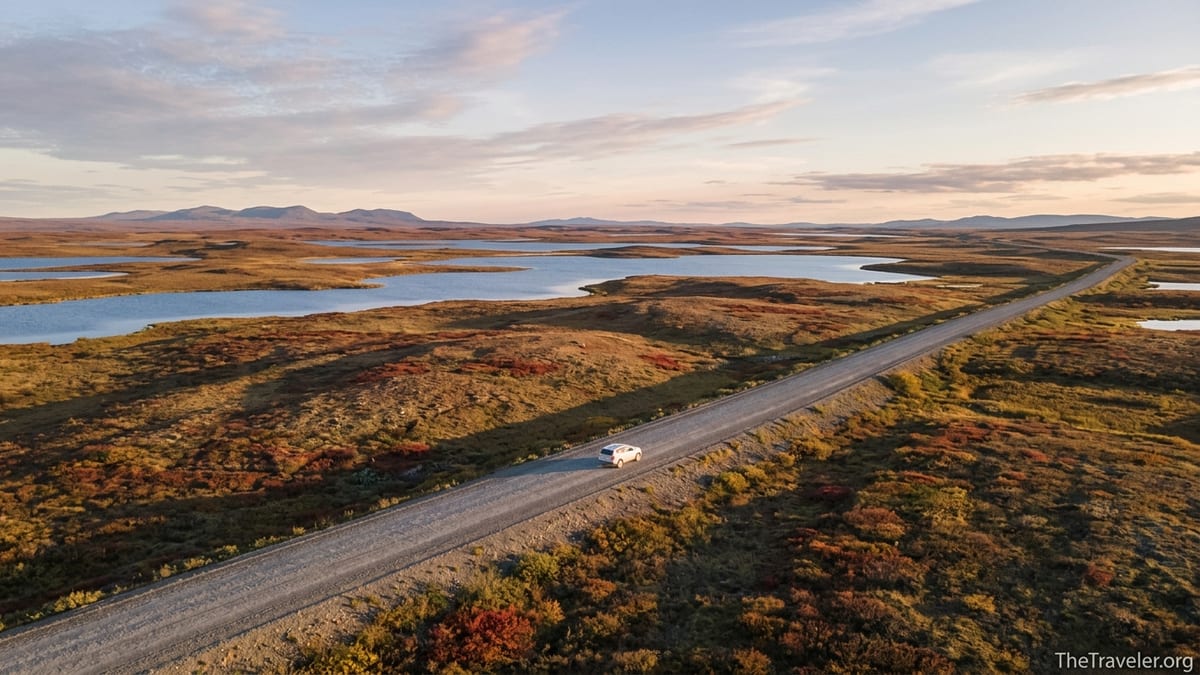
On a map, Yukon, Northwest Territories and Nunavut look like neighbors you might hop between in a week. In reality, this region covers roughly a third of Canada’s landmass with a population smaller than a mid-size city. Many communities are fly-in only. There are few highways, and a gravel road that looks short on a map can take a full day behind the wheel. For context, the Dempster Highway from near Dawson City in Yukon to Inuvik in Northwest Territories is about 740 kilometers of mostly gravel, typically driven over two or three days in each direction rather than as a single push.
Flight networks reinforce this sense of scale. Whitehorse usually connects south to cities like Vancouver or Calgary, Yellowknife links to Edmonton or Calgary, and Iqaluit has scheduled service to Ottawa and Montreal. Direct flights between the three northern capitals are limited or non-existent in many seasons. That means combining Yukon, Northwest Territories and Nunavut in a single trip often requires backtracking through the south, with each one-way northern flight commonly costing several hundred dollars or more.
Seasonality matters just as much as geography. Summer road trips in Yukon or along the Dempster Highway into Northwest Territories are typically possible from around June to early September, depending on snowmelt and maintenance. Winter and early spring bring aurora, snowmobiling and ice roads in the Northwest Territories, while Nunavut’s prime season for many community-based trips runs roughly from March to early October, varying by region and activity. Shoulder seasons can see river break-up, muddy roads and limited tour operations, so itineraries need to be tailored to both month and weather.
Because of these factors, experienced operators and local tourism boards consistently recommend that first-time visitors concentrate on one territory, or at most two connected regions, rather than racing across all three. Doing less but going deeper generally leads to better cultural experiences, safer travel and more value for the considerable cost of getting to the North in the first place.
Why Most Travelers Should Focus on One or Two Territories
The main constraint in northern itinerary planning is not a lack of things to do but the combination of cost and travel time. A summer return flight from Toronto or New York to Whitehorse or Yellowknife can easily land in the 700 to 1200 Canadian dollar range, depending on season and how early you book. Flights to Iqaluit or smaller Nunavut communities are typically higher on a per-hour basis, often surpassing 1000 dollars return just from southern Canada. Trying to string together three separate northern hubs in a single vacation multiplies those costs rapidly.
Time penalties are equally significant. A realistic travel day for a long-haul flight plus connection into the North means you often lose the better part of 24 hours. If you try to see Whitehorse, Yellowknife and Iqaluit in one 10 day trip, you may end up spending four days largely in transit and only six days actually on the ground. That is before accounting for potential weather delays, which are common on smaller northern routes, particularly in shoulder seasons or stormy winter periods.
In practice, most visitors get more from a focused trip. For example, a 10 day Yukon loop by car from Whitehorse through Kluane National Park, Haines Junction and Dawson City can include glacier flightseeing, short hikes, hot springs, Indigenous cultural centers and Gold Rush history without a single internal flight. Similarly, a 7 to 10 day stay in and around Yellowknife can combine aurora viewing, day trips on Great Slave Lake, guided visits with Dene hosts and perhaps a short bush plane excursion, all from one base.
Nunavut, with its largely fly-in communities and limited roads, particularly rewards depth over breadth. Travelers might spend a full week in one community like Pond Inlet or Arctic Bay, joining guided day trips for hiking, boat excursions among sea ice or cultural performances. Those with more time could add a second community such as Qikiqtarjuaq or Pangnirtung, but each hop usually requires another expensive flight leg, so it makes sense to slow down and spend several days in each place.
7 Day Itineraries: Quick Northern Immersions
In seven days, the most realistic and rewarding approach is to choose a single hub: Whitehorse for Yukon, Yellowknife for Northwest Territories or Iqaluit for an introductory Nunavut trip. Each of these hubs has daily or near-daily flights from southern Canadian cities in summer and offers a compact mix of culture and outdoors within day-trip range.
A classic 7 day Yukon idea is a Whitehorse and Kluane National Park combo. Travelers might arrive in Whitehorse on day one, explore the riverside trails and local museums, then pick up a rental car and drive roughly 160 kilometers to Haines Junction on day two. Over the next three or four days, they can join guided hikes in Kluane’s front-country, book a scenic flight over the icefields with a local aviation company and spend evenings at small lodges watching long northern sunsets. On the final day or two, they drive back to Whitehorse for a soak at a nearby hot springs facility and perhaps a half-day canoe outing on the Yukon River before flying south.
In the Northwest Territories, a 7 day Yellowknife-based itinerary works well year-round. In summer, visitors can paddle on Great Slave Lake, join a guided fishing day trip, and explore art galleries showcasing northern artists. In winter and early spring, many travelers book 3 or 4 night aurora packages that include evening trips to heated cabins or teepees outside town, plus daytime snowmobile tours, dog sledding, or ice road excursions when conditions permit. Yellowknife’s compact size makes it easy to get around on foot or via pre-arranged shuttles from hotel to tour meeting points.
For those interested in Nunavut within one week, Iqaluit offers the most straightforward start. A 7 day stay might include guided hiking on the tundra near Sylvia Grinnell Territorial Park, cultural performances or craft workshops with Inuit artists, and boat trips in season to look for seals, seabirds or, occasionally, whales. Because Iqaluit has no road links to other communities, moving around relies on local outfitters running boats, snowmobiles or small aircraft depending on the time of year, so pre-booking with established operators is essential.
10 Day Itineraries: Adding a Loop or Second Base
Ten days opens up the possibility of a one-way road journey or a two-base trip within the same territory. In Yukon, a popular 10 day loop links Whitehorse and Dawson City via the Klondike Highway. Travelers often spend two nights in Whitehorse, then drive north roughly 530 kilometers to Dawson over a full day, stopping at viewpoints and historic sites. Dawson itself, with its preserved Gold Rush architecture, First Nation cultural centers and small museums, can easily fill three nights. From there, confident drivers with appropriate vehicles might venture partway up the Dempster Highway for a day or two of tundra scenery and short hikes before returning to Whitehorse.
Another 10 day Yukon option focuses more heavily on Kluane National Park. Visitors might split their time between Haines Junction and smaller communities or lodges closer to the park’s trailheads, staying long enough to book a flexible scenic flight day. Weather can ground planes, so having multiple potential days for flightseeing reduces disappointment. Tour companies and local guides in the region increasingly offer packaged 7 to 10 day “Yukon Explorer” style trips that include accommodation, transportation, interpretive walks and some meals, which can be easier than self-organizing for first-time northern drivers.
In the Northwest Territories, 10 days allow travelers to combine Yellowknife with a regional excursion. For example, in summer, visitors might spend four nights in Yellowknife, then join a 3 or 4 night package to a remote fishing or wilderness lodge accessible only by floatplane. These lodges typically bundle flights from Yellowknife, meals, guiding and equipment into a single price, which can run into several thousand dollars but includes otherwise complicated logistics. In winter, 10 days in Yellowknife enable flexibility around aurora conditions, with free nights to explore local cafes and galleries between guided nights out under the sky.
A 10 day Nunavut itinerary usually means two hubs in the same general region. Travelers might fly from Ottawa to Iqaluit, spend three or four nights there, then connect to a smaller community like Pangnirtung or Qikiqtarjuaq for hiking, fiord scenery or cultural experiences. Each additional leg often adds hundreds of dollars and at least half a day of travel, so it is sensible to schedule generous layovers and avoid tight same-day connections to southern flights in case of weather delays.
14 Day Itineraries: Combining Two Territories
Two weeks is typically the minimum to comfortably include two territories without feeling rushed, and even then it helps to choose regions that connect relatively cleanly via flights or roads. One practical combination pairs Yukon and Northwest Territories using the Dempster Highway, which runs from near Dawson City in Yukon into the Mackenzie Delta and Inuvik in the Northwest Territories. Summer travelers with gravel-road experience and a suitable vehicle might spend a week exploring Whitehorse, Kluane and Dawson, then take 4 to 6 days to drive the Dempster to Inuvik, making overnight stops at basic lodgings such as Eagle Plains and then onward toward the Arctic Ocean via the road to Tuktoyaktuk.
This kind of self-drive needs careful planning. The Dempster is a remote route with limited services, variable gravel surfaces and long distances between fuel stops. Rental companies in Yukon may restrict travel on the Dempster or require high-clearance vehicles, so travelers must check contracts closely. Access to Inuvik is generally possible year-round, but spring break-up and fall freeze-up can affect river crossings and road conditions, so current highway information from Yukon and Northwest Territories authorities is essential before departure.
Another 14 day approach is a flight-based combination, such as 7 days in Whitehorse and area followed by 5 or 6 days in Yellowknife. In practice, this often requires flying from Whitehorse south to Vancouver or Calgary, connecting onward to Edmonton or Calgary again, then continuing to Yellowknife, consuming most of a day. The reward is the contrast between Yukon’s mountains and rivers and Yellowknife’s rocky Precambrian Shield landscape. Travelers might do hiking and river activities in Yukon, then finish with culture and aurora viewing in Yellowknife if visiting in late summer or autumn when nights are dark enough.
Yukon plus Nunavut or Northwest Territories plus Nunavut combinations within 14 days are more challenging due to flight patterns. A feasible plan might be to spend a week in Yellowknife, then return south to Ottawa for a flight to Iqaluit, spending four or five days in Nunavut’s capital. Transport costs for this are significant, and tight connections are risky, so this idea suits travelers for whom seeing both regions in one trip matters more than minimizing budget.
21 Day Itineraries: Deep Dives and Limited Tri-Territory Trips
With three weeks available, travelers can either explore one or two territories in considerable depth or attempt a carefully structured visit to all three. The deep-dive approach often produces the richest experiences. For example, a 21 day Yukon and Northwest Territories itinerary might include a week based in Whitehorse and Kluane, five days around Dawson City and the Klondike, then a 7 to 9 day expedition-style journey up and down the Dempster Highway to Inuvik, with side trips to Tombstone Territorial Park and the Arctic Ocean near Tuktoyaktuk. This allows time to slow down, wait out bad weather, detour for hikes and spend unhurried evenings in small communities.
Alternatively, a 21 day Nunavut-focused trip can link multiple communities or even combine a scheduled small-ship sailing with community stays. Travelers might fly to Iqaluit for a few days, then continue to a Baffin Island community like Pond Inlet for wildlife viewing and ice-edge excursions in early summer, or to Arctic Bay for dramatic cliffs and fjords. Given the high cost of each flight leg, many visitors work through a specialized Nunavut operator that bundles flights, accommodation, guiding and local permits into a single itinerary.
For those set on touching all three territories in one journey, 21 days is the minimum that usually makes sense. A realistic pattern could look like roughly a week in Yukon, a week in Northwest Territories and four or five days in Nunavut, with southern city connections in between. For example, travelers might fly into Whitehorse, explore Yukon by road, then return south to connect to Yellowknife for a shorter stay focused on aurora or lake activities, and finally head to Ottawa for a flight to Iqaluit. This schedule demands flexibility and a generous budget, as each connecting flight adds both cost and potential weather-related disruption.
Even on a long tri-territory itinerary, the guiding principle remains to avoid over-programming. Building in unscheduled days in each hub allows travelers to shift activities if a planned flightseeing tour is grounded by cloud in Yukon, if an aurora night in Yellowknife is overcast, or if a boat excursion in Nunavut is rescheduled due to wind or ice. The North rewards those who can adapt.
Road Access, Guided Components and Safety Considerations
One of the biggest distinctions between the three territories lies in road access. Yukon has the most developed network, with paved and gravel highways linking Whitehorse to Dawson City, Haines Junction, Carcross and south into British Columbia and Alaska. The Dempster Highway connects Yukon to the Northwest Territories, continuing to Inuvik and linking with the newer all-season road to Tuktoyaktuk on the Arctic coast. In contrast, Northwest Territories has internal road links around Yellowknife and along key corridors, but vast areas remain accessible only by air or, in winter, by ice roads. Nunavut, apart from a few short local roads in communities, has no highway system connecting its towns.
These realities shape which parts of a northern itinerary are best tackled independently and which are best left to guided trips. Driving in Yukon and along major Northwest Territories highways in summer is well within the capability of experienced road-trippers, provided they are comfortable with long distances, changing weather and sections of gravel. However, remote routes like the full Dempster Highway, ice roads in winter or logging-style tracks are better approached with cautious planning, high-clearance vehicles, spare tires and a clear understanding of rental restrictions. Some Yukon rental companies, for instance, explicitly prohibit driving on certain gravel highways or charge additional insurance for them.
Guided components add both safety and cultural depth. In Yellowknife and across much of the Northwest Territories, aurora-viewing operators provide heated shelters, local knowledge of cloud patterns and transportation outside town away from light pollution. In Yukon, guided river trips on the Yukon River, canoe expeditions, glacier flightseeing and Indigenous cultural tours in Dawson City or Carcross all benefit from local expertise about weather, wildlife and history. In Nunavut, almost all excursions beyond a community are arranged with local outfitters who know sea ice conditions, wildlife behavior and the appropriate etiquette for visits to cultural sites.
Travelers should budget for these guided experiences as core elements, not optional extras. While a day of guided hiking in Kluane or an aurora night in Yellowknife adds cost, it also maximizes the chance of safely experiencing the landscapes and phenomena you have come to see. Travel insurance, flexible tickets and a willingness to adjust plans at short notice round out a sensible safety strategy in regions where nature remains firmly in charge.
The Takeaway
Northern Canada rewards slow, thoughtful travel. The Yukon, Northwest Territories and Nunavut each offer distinct landscapes and cultures, from Yukon’s accessible mountains and rivers to the Northwest Territories’ big lakes and aurora, and Nunavut’s deeply rooted Inuit communities scattered across an immense Arctic archipelago. Trying to fit all three territories into a short vacation usually leads to high costs and rushed experiences.
Building itineraries around realistic flight connections, road-accessible routes and targeted guided components is the key to a successful trip. In seven days, one hub like Whitehorse, Yellowknife or Iqaluit is enough. Ten days allows a loop or second base, 14 days makes combining two territories feasible, and 21 days opens the door to deeper exploration or a carefully constructed tri-territory journey. Throughout, focusing on one or two regions and allowing time for weather and logistics to unfold will give travelers the best chance of seeing the North at its wild, unhurried pace.
FAQ
Q1. Can I realistically visit Yukon, Northwest Territories and Nunavut in one 10 day trip?
It is technically possible but not advisable. Flight schedules usually force you to route through southern cities between northern capitals, so you would lose several days to travel and spend a lot on airfare. Most travelers are better off focusing on one territory, or at most two, in a 10 day window.
Q2. Do I need a 4x4 to drive in Yukon and on the Dempster Highway?
In summer, many major Yukon highways are paved or well-graded gravel that a regular car can handle in good weather. The Dempster Highway is a long, remote gravel route where high clearance and sturdy tires are strongly recommended, and some rental companies may require or restrict certain vehicle types. Travelers should check current road conditions and rental contracts carefully before committing.
Q3. When is the best time to see the northern lights in Yellowknife?
Aurora can appear whenever skies are dark and clear, but Yellowknife’s main aurora season typically runs from roughly late August to April. In autumn and spring, temperatures are less extreme, while midwinter offers longer nights but much colder conditions. Booking a few extra nights improves your chances of catching clear skies.
Q4. How expensive are internal flights in Nunavut?
Internal flights in Nunavut are generally costly relative to the distances involved, reflecting the high costs of operating in remote Arctic conditions. One-way fares between Iqaluit and smaller communities can easily run into several hundred dollars or more. Many travelers work with local operators or package tours that bundle these flights with accommodation and guiding.
Q5. Is it safe to self-drive in winter in the North?
Winter driving in northern Canada requires experience with ice, snow, low visibility and very cold temperatures. While local residents drive year-round, visitors unfamiliar with such conditions may find it challenging. For most winter trips, especially first-time visits, it is usually safer to base yourself in a hub like Yellowknife or Whitehorse and rely on guided tours and shuttles rather than long independent drives.
Q6. Can I rent a car in Whitehorse and drive it into the Northwest Territories?
Some rental companies in Whitehorse allow travel into the Northwest Territories, including along the Dempster Highway, while others restrict this or impose additional conditions. Policies can change, so it is important to confirm in writing before booking and to make sure you understand any limitations on gravel roads, mileage and roadside assistance coverage.
Q7. How far in advance should I book tours and accommodation?
In peak summer and during popular winter aurora periods, demand can exceed supply in small northern communities. Booking accommodation and key tours at least a few months in advance is wise, especially for places like Dawson City, Yellowknife or popular Nunavut communities. For very specialized trips, such as remote lodges or small-ship sailings, a year or more of lead time is common.
Q8. Are there budget options for traveling in the North?
Costs are generally higher than in southern Canada due to freight, fuel and limited competition, but there are still ways to control spending. Self-catering using local supermarkets where available, choosing simple guesthouses rather than full-service hotels, traveling in shoulder seasons where appropriate, and focusing on one hub rather than multiple flights all help manage the budget.
Q9. What kind of clothing and gear do I need?
Layering is essential in all seasons. In summer, you will want a windproof and waterproof shell, warm mid-layers, sturdy hiking shoes and sun protection, plus bug protection in some areas. In winter, insulated boots, down or synthetic parkas, mitts, hats and thermal base layers are critical. Many winter tour operators can provide heavier outerwear and boots as part of their packages.
Q10. Do I need special permits to visit parks and Indigenous lands?
National and territorial parks often require entry or camping permits, which are usually straightforward to obtain online or at visitor centers. Some guided activities on Indigenous lands are arranged entirely through local communities or tour operators, who handle permissions as part of their packages. Independent travelers should always check local regulations, respect signage and follow community guidance about where visitors are welcome.