


Northern Canada is one of the world’s great frontiers, a region of vast tundra, Arctic coastline and boreal forest that stretches across Yukon, Northwest Territories and Nunavut. It is also one of the most expensive parts of Canada to visit. From high airfares and seasonal hotel spikes to fuel surcharges on tiny bush planes and five-figure expedition cruises, costs add up quickly. This guide breaks down what a realistic budget looks like for trips in northern Canada today and explains why prices are so much higher than in the south.
Why Northern Canada Costs So Much More
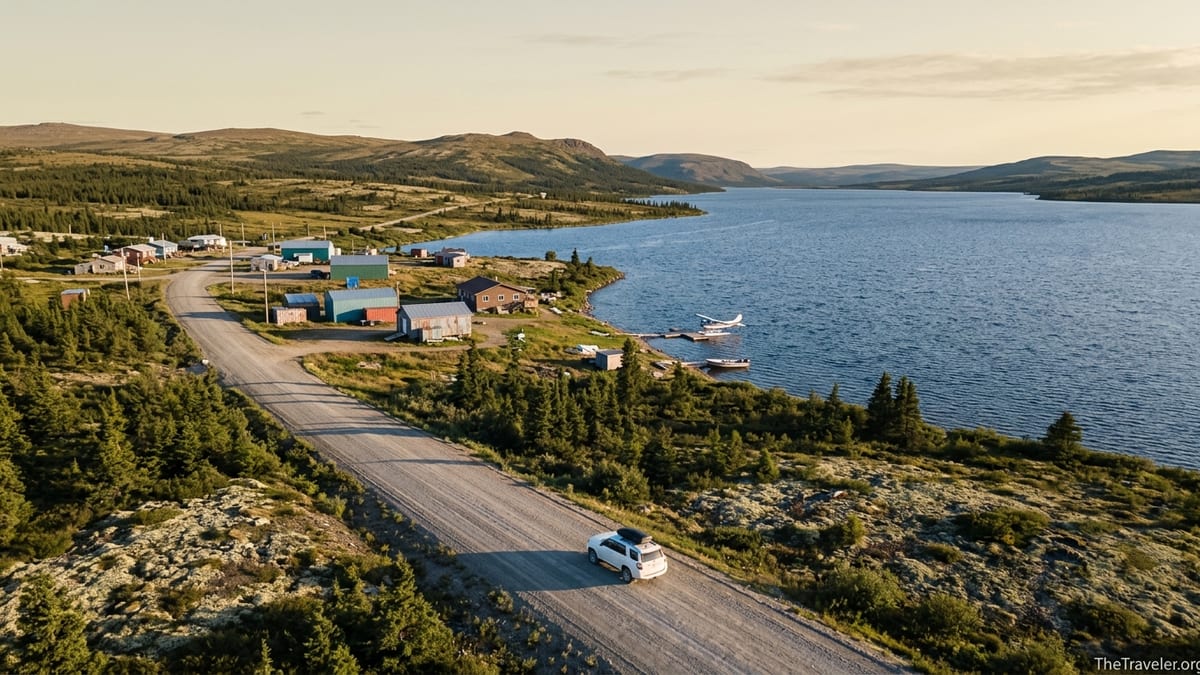
The first shock many travelers experience is how different northern prices are from Toronto, Vancouver or Montreal. A big part of the reason is simple geography. Northern communities are scattered across immense distances, with small populations and limited road access. Everything from diesel for generators to fresh produce, hotel linens and building materials generally has to be shipped in by truck over long highways, flown in by cargo aircraft, or brought by seasonal barge. Those logistics costs are baked into what you pay for rooms, meals, fuel and tours.
Operating costs for tourism businesses are also significantly higher. Lodges in Yukon or the Northwest Territories often run on their own generators, import specialized staff for short seasons and pay steep insurance premiums to operate in remote conditions. A wilderness lodge on a fly-in lake in Yukon, for example, may only be reachable by charter floatplane from Whitehorse. One lodge near Kluane National Park advertises four-day fishing packages around 4,800 Canadian dollars per person, explicitly including the round-trip floatplane flight of roughly 200 miles from Whitehorse. That one line item, invisible in most southern resort budgets, is a major driver of price.
Seasonality magnifies the effect. In much of the North, tourism seasons are measured in weeks, not months. Many northern lights operators run intensively only from about late August to April, while Arctic coastal lodges may only open in July and August. They need to earn most of their annual income in a very short window, which pushes per-night prices higher than comparable operations in southern Canada, where hotels and tour companies can spread fixed costs over a longer season.
On top of this, there is minimal competition in many communities. In a city like Yellowknife or Iqaluit, you might have a handful of hotels and a limited number of tour providers. On Baffin Island or at a fly-in polar bear lodge in northern Manitoba, there may be just one operator. With high operating costs and little volume, rates rarely resemble the discount-heavy environment of major southern cities.
Flights to the North: What You Can Expect to Pay
Airfare is often the single biggest shock for travelers. While sales can appear occasionally, it is common to see round-trip economy fares from major southern cities to northern gateways in the several-hundred-dollar range, even for relatively short distances. Travelers pricing a pre-Christmas escape from Toronto to Yellowknife, for example, frequently report round-trip fares well over 1,000 Canadian dollars per person if booking close to departure or during peak aurora season. Even with advance purchase, prices under 700 to 800 dollars are not guaranteed.
Routes to other northern hubs show similar patterns. Whitehorse, which sits at the end of the Alaska Highway and has somewhat more competition, can be less expensive than more isolated destinations, but it is still common to see summer and aurora-season fares several hundred dollars higher than flights of comparable length within southern Canada. Flights to Iqaluit in Nunavut, or to smaller Arctic communities such as Cambridge Bay or Pond Inlet, typically cost substantially more again because they rely on northern-based carriers with higher operating costs and limited seat capacity.
International travelers must also factor in positioning flights. Many Arctic expedition cruises, such as Northwest Passage voyages that call at remote Nunavut communities, bundle or require charter flights from southern cities. An expedition cruise line operating in the Canadian Arctic may estimate internal charter flights in the range of roughly 1,000 to 2,000 US dollars per person for the segments between the southern gateway, northern embarkation point and final disembarkation city. Even if you arrange your own travel for those legs, you are still paying for expensive northern air segments on top of the cruise fare itself.
Overall, it is prudent to assume that getting to and from northern Canada will cost significantly more per kilometer than flying within the southern provinces. For budgeting purposes, many travelers planning aurora trips or Arctic adventures now allocate close to 30 to 40 percent of their total budget just for flights, particularly if they are traveling at peak times or connecting multiple northern destinations.
Hotels, Wilderness Lodges and Remote Stays
Accommodation is where the range of prices in northern Canada becomes very clear. In road-accessible gateway cities like Whitehorse or Yellowknife, standard chain hotels and local properties might run for a few hundred dollars per night in busy seasons. Travelers planning northern lights trips in winter have reported totals around 6,000 Canadian dollars for two people covering flights from Toronto, five nights at a high-end hotel in Whitehorse, two nights at an intimate inn in Dawson City, several guided tours and most meals. While that total includes activities, it illustrates how quickly a week of mid to upper mid-range travel can climb into four-figure territory in the North.
Move from town-based hotels to wilderness lodges and the prices increase sharply. Remote fly-in lodges in Yukon and the Northwest Territories commonly charge package rates rather than nightly room prices. Four or five-day stays that include charter flights, meals and guided activities regularly cost several thousand dollars per person. One long-established lake lodge in Yukon, accessible only by floatplane, lists four-day trip packages priced near 4,800 Canadian dollars, covering return air from Whitehorse, lodging, meals, boats and guiding. Another Yukon wilderness property charges per-night rates in the high hundreds of dollars per person, including full board and activities, reflecting its isolation 170 kilometers from the nearest town.
Specialized wildlife and polar bear programs illustrate the upper end of land-based pricing. A polar bear lodge operator on the Hudson Bay coast, accessible only by charter and focusing on walking safaris, prices some nine-day Arctic discovery trips at more than 16,000 Canadian dollars per person before taxes. Those rates include flights from the regional hub, accommodation, meals and guiding, but they demonstrate how expedition-style lodge experiences in the North can easily rival or exceed the cost of high-end African safaris.
At the more modest end, basic inns and guesthouses in smaller communities might still charge as much or more than big-city Canadian hotels simply because of overheads. In villages where building materials, heating fuel and food all arrive by ship or plane, there is no way to offer true budget rates. Travelers hoping to save money on accommodation in northern towns often focus more on choosing simpler properties than on finding dramatic price differences between hotels.
Tours, Rental Vehicles, Fuel and Food on the Ground
Once you arrive in the North, local transportation and daily costs follow the same pattern of higher pricing. Car rentals in Whitehorse, Yellowknife or other hubs typically cost more than in southern cities, especially in peak seasons when fleets are small and demand is high. Daily rates for a basic compact car may be comparable to or slightly above big-city prices, but one-way fees for remote drop-offs, pickup trucks for rugged roads and last-minute bookings are where costs climb. Travelers driving long distances on the Alaska or Dempster highways need to budget for higher rental bills and build in extra days for weather or road conditions.
Fuel is another major factor. In late 2024, residents in Whitehorse were discussing gasoline prices around 1.85 Canadian dollars per liter, a level that had not fallen at the same rate as in many southern provinces. In even more remote communities, prices can be higher again due to the cost of trucking or shipping fuel north. For road trips covering thousands of kilometers, particularly in vehicles that are less fuel-efficient, fuel can become one of the larger line items in the budget. Travelers planning a loop through Yukon and Northwest Territories often find that fuel and accommodation together dwarf what they would usually spend on a similar-length road trip in southern Canada or the United States.
Guided activities and tours, from aurora viewing to cultural excursions and hiking trips, reflect the same structural costs as lodges. Northern lights operators around Whitehorse or Yellowknife generally charge in the low to mid hundreds of dollars per person for an evening tour that includes transportation, warm facilities and guiding. Multi-day winter lodge programs that combine aurora viewing with snowmobiling, dog sledding and cultural elements may cost several thousand dollars per person, especially when including transfers and full board. In remote regions, specialized tours like tundra vehicle safaris, boat-based wildlife viewing or fly-out glacier hikes carry price tags that are far higher than analogous tours in more accessible parts of the world.
Food and groceries in northern communities are also noticeably more expensive than in southern cities. While exact prices vary by community and shipping route, it is normal to pay a premium for fresh fruit, vegetables and dairy. Dining out in hotels or standalone restaurants will typically cost at least as much as in major Canadian cities and often more, reflecting higher input costs and smaller customer bases. For independent travelers self-catering on road trips, stocking up in larger hubs before heading to smaller communities can soften the impact, but the overall food budget will still land above what you might be used to in the south.
Expedition Cruises and Remote Transportation
For many visitors, the ultimate northern Canada experience is an expedition cruise through the Arctic Archipelago or along the Northwest Passage. These voyages are both spectacular and very expensive. Small-ship expedition operators that transit the Canadian Arctic commonly publish brochure prices in the five-figure range per person for 12 to 18-day itineraries. One set of 2024 Arctic rates shows Northwest Passage sailings with early booking prices starting around the mid-teens in thousands of US dollars per person for lower-category cabins, rising substantially for suites. Another operator marketing Canadian Arctic voyages lists early booking prices for a remote Arctic itinerary that begin under 2,000 US dollars for short segments but quickly climb into the high teens and low 20,000s for longer Northwest Passage routes and higher cabin categories.
Those prices generally include onboard accommodation, meals and excursions, but they often exclude mandatory or recommended charter flights between southern gateways like Calgary or Toronto and northern embarkation points such as Cambridge Bay or Resolute. As noted earlier, operators may estimate these internal flights at roughly 1,000 to 2,000 US dollars per person, depending on distance and routing. Travelers must also add international flights to and from the southern gateways, pre- and post-cruise hotel nights and personal expenses, pushing many full-trip budgets for a couple well into the tens of thousands of dollars.
Shorter and more focused expedition-style trips, such as coastal voyages in Hudson Bay or Baffin Island, can be somewhat less expensive but still command premium prices. Likewise, ship-based polar bear or narwhal-focused voyages in Nunavut cost significantly more than equivalent-length cruises in more temperate regions. There is currently no budget version of a Northwest Passage transit; industry insiders and travelers alike note that options are limited to a range of high-end expedition lines rather than mainstream cruise brands.
Outside of cruises, remote transportation is another category that can surprise first-time visitors. Chartering a small aircraft to access a fly-in community, photo location or lodge may cost thousands of dollars for even a short flight once aircraft time, positioning and fuel are factored in. Floatplane legs included in lodge packages, such as round-trip flights from Whitehorse to a remote Yukon lake, are a major reason why those packages carry such high base prices. On top of that, weather delays are common in the Arctic. Travelers should plan both time and budget contingency for possible extra hotel nights or rebooking costs if flights are disrupted by fog, storms or sea ice conditions.
Sample Budgets and How to Plan Realistically
Because of the many moving parts, it is helpful to look at realistic scenario-based budgets when planning a trip to northern Canada. For a one-week aurora-focused getaway for two people in winter, starting from a major Canadian city such as Toronto, a mid-range budget might look like this in broad strokes: several thousand dollars for two round-trip flights to Whitehorse or Yellowknife during peak aurora season, roughly 2,000 to 3,000 dollars for six or seven nights in a comfortable but not ultra-luxury hotel, another 1,500 to 2,500 dollars for a few guided aurora nights and daytime activities, plus meals and incidentals. That can easily total between 5,000 and 8,000 Canadian dollars for two, and more if you opt for premium lodges or private tours.
For a two-week summer road trip in Yukon and Northwest Territories, beginning and ending in Whitehorse, a pair of travelers might budget around 1,000 to 1,500 dollars per person for flights from southern Canada if traveling in high season, 1,500 to 2,500 dollars for a two-week car rental depending on vehicle type, several thousand dollars for accommodation at hotels, cabins and a possible short wilderness lodge stay, and perhaps 1,000 to 1,500 dollars for fuel given long distances and northern pump prices. Add in meals, park fees and a handful of guided excursions, and it is reasonable to anticipate an overall spend in the neighborhood of 7,000 to 10,000 dollars for two, even without any expedition cruise component.
At the top tier, a couple planning a full Northwest Passage expedition cruise might expect brochure prices starting in the low to mid-20,000s US dollars for two people in an entry-level cabin, depending on the operator and season, with potential deals or early booking savings reducing that somewhat. Adding charter flights, international air travel, pre- and post-cruise hotels and extras easily pushes total trip costs above 30,000 US dollars for two, and often higher for more spacious cabins or longer itineraries. Land-based polar bear safaris or luxury Arctic lodge stays can similarly reach five figures per person once flights are factored in.
The most important takeaway for planning is to work backwards from your top-line budget and decide what kind of northern experience fits. If your budget for two people is under 5,000 Canadian dollars, you are generally looking at a shorter northern lights break or a tightly managed road trip focused on a single territory, with careful control of accommodation and activity costs. Budgets in the 5,000 to 10,000 dollar range open up more flexibility in seasons, lodges and guided experiences. Above that level, the door opens to expedition cruises, multi-week adventures and higher-end wilderness stays, as long as you remain realistic about how quickly each upgrade adds to the cost.
The Takeaway
Travel in northern Canada is expensive because it takes place at the intersection of isolation, harsh climate, limited infrastructure and short tourism seasons. Everything that makes the region so compelling to visit also pushes prices upward: communities perched on Arctic shorelines accessible only by plane or ship, lodges that rely on their own power and supply chains, and ships capable of safely navigating ice-choked channels. The costs embedded in this logistical reality appear in your airfare, room rates, tour prices and even the cost of a tank of gas.
For travelers who prepare for those realities and budget accordingly, the payoff is immense. Whether you are watching the aurora ripple above a frozen lake near Yellowknife, paddling beneath Yukon mountains, walking alongside polar bear tracks on a Hudson Bay beach or standing at the rail of an expedition ship as it threads between Arctic ice floes, the experiences are unlike anything in southern Canada. Understanding the true cost range, and why those numbers are so different from typical vacations, helps you plan a northern journey that is both financially realistic and deeply rewarding.
FAQ
Q1. Why are flights to northern Canada so expensive compared with the south?
Flights are costly because routes are long, traffic is limited and airlines face higher operating expenses in harsh climates, so they spread those costs over fewer passengers and less frequent services.
Q2. Is it possible to visit northern Canada on a tight budget?
A very tight budget is challenging, but you can reduce costs by traveling in shoulder seasons, choosing road-accessible areas like Yukon over fly-in communities and focusing on simple accommodation and a few key tours.
Q3. How much should I budget for a one-week northern lights trip for two?
For a mid-range experience with flights from a major Canadian city, a comfortable hotel and several guided aurora excursions, a realistic budget for two is often in the 5,000 to 8,000 Canadian dollar range.
Q4. Are wilderness lodges worth the high prices?
For many travelers they are, because prices include remote transport, meals, guiding and exclusive access to pristine areas, but they can easily consume the bulk of a trip budget, so it is important to match the lodge style to your priorities.
Q5. Why is fuel so expensive in places like Yukon and the Northwest Territories?
Fuel costs more because it must be trucked or shipped long distances, often on seasonal roads or barges, and fuel taxes and storage costs in isolated communities add further to the pump price.
Q6. How much does an Arctic expedition cruise or Northwest Passage trip usually cost?
Most Canadian Arctic expedition cruises start in the low to mid five figures per person before flights, and full-trip budgets for a couple commonly reach or exceed the tens of thousands of dollars.
Q7. Are there cheaper alternatives to a full Northwest Passage cruise?
More affordable options include shorter Arctic coastal voyages, land-based bear or beluga trips, or aurora-focused lodge stays, all of which provide strong Arctic experiences at lower cost than a full passage transit.
Q8. How far in advance should I book to get better prices?
Booking six to twelve months in advance is often ideal for flights, lodges and cruises in the North, as it secures limited inventory and takes advantage of early booking offers that are rarely available close to departure.
Q9. Do I need travel insurance for a northern Canada trip?
Comprehensive insurance is strongly recommended because weather disruptions, medical evacuations and missed connections are more likely in remote regions and can be extremely expensive without coverage.
Q10. Can I save money by self-driving instead of taking tours?
Driving yourself can reduce per-person costs for short excursions, but in the North you must weigh rental and fuel prices against safety, road conditions and the value of local guides who know the terrain and weather patterns.