


Northern Canada stretches across three vast territories, each with its own rhythm of darkness and light, deep cold and brief but intense summer. Choosing the best time to visit for northern lights, midnight sun or Arctic adventures is less about a single “perfect” month and more about matching your priorities to the very different seasons in Yukon, Northwest Territories and Nunavut. This guide compares what each part of the North offers month by month, from road-trip access and hiking conditions to winter temperatures, daylight and aurora action.
Understanding Northern Seasons: Light, Dark and Extreme Weather
In much of southern Canada, travel planning revolves around four familiar seasons. North of roughly 60 degrees latitude, light and darkness are more important than the calendar. Winter can hold on for six months or more in places like Nunavut, with long stretches of polar night in communities such as Alert, where the sun stays below the horizon from around mid-October to late February and shines 24 hours a day from early April to early September. The Northwest Territories and Yukon sit mostly south of that extreme, but still experience very short winter days and summer evenings that never get fully dark.
That extreme light cycle shapes everything a traveler experiences. In January in Yellowknife, capital of the Northwest Territories, you might see only six hours of usable daylight, framed by a glowing blue twilight and a long, aurora-friendly night. By contrast, in late June in Whitehorse, Yukon, the sun can shine for 18 to 20 hours, and even after “sunset” it remains bright enough to read outside without a headlamp. Tourism boards in both territories highlight this contrast: Yukon promotes 18 to 22 hours of daylight at the height of summer, while Yellowknife markets its long, clear winter nights as prime aurora time.
Temperatures swing just as dramatically. In midwinter, communities along the Arctic coast or high Arctic islands can see air temperatures drop near minus 40 degrees Celsius or lower, while even more “moderate” hubs like Whitehorse and Yellowknife often sit between minus 15 and minus 30 with colder snaps. In summer, both Yukon and Northwest Territories can reach daytime highs above 20 degrees, and occasionally higher, with cool nights that still feel gentle compared to the deep cold. These swings mean that when you travel matters as much as where you go, especially if you are not used to prolonged cold.
Because of these extremes, northern destinations cluster their activities around key windows. Aurora-focused tour operators in Yellowknife and the Yukon generally run strong seasons from late August to early April. Parks Canada notes that high Arctic parks experience 24-hour sun in summer and require careful planning for charter flights and sea-ice conditions. Understanding these broad seasonal patterns is the starting point before narrowing down a specific month for your trip.
Aurora Season: When and Where to Chase Northern Lights
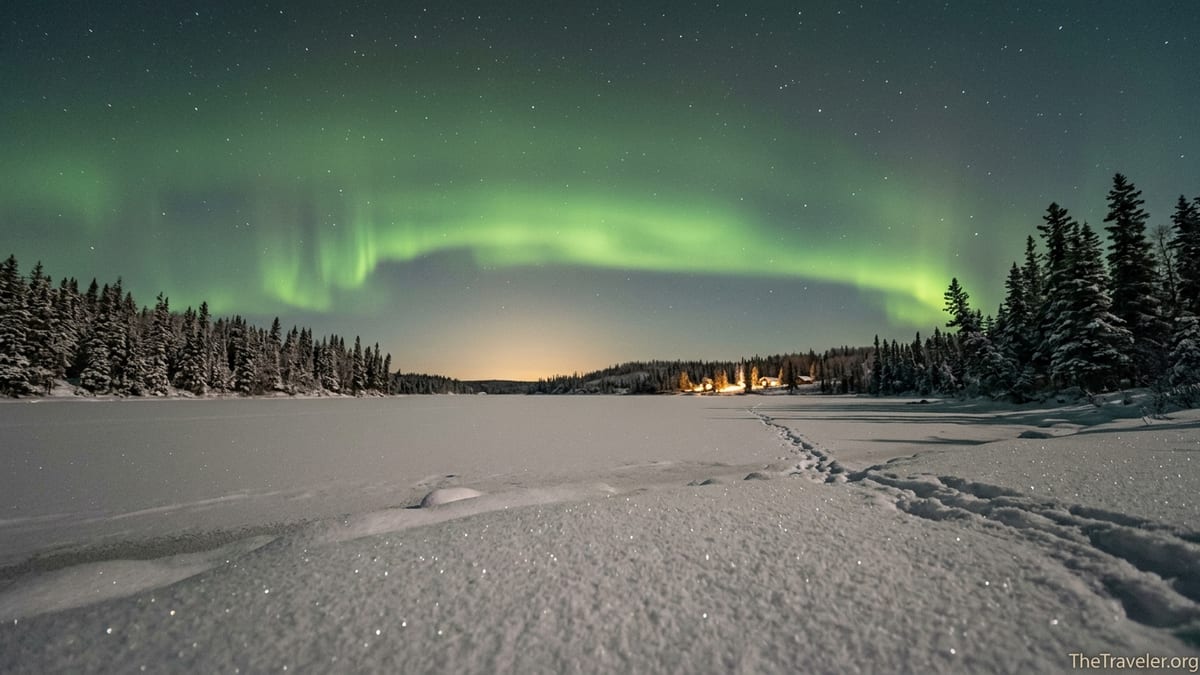
For many travelers, the northern lights are the main reason to head north. In the Canadian territories, aurora viewing is excellent where skies are dark, clear and often cloud-free. Yellowknife in the Northwest Territories sits directly under the auroral oval in a relatively dry subarctic climate, which is why local tourism sites often call it one of the best places in the world to see the northern lights. City information for Yellowknife suggests that the most reliable viewing season runs from roughly mid-November to early April, when long, cold nights and frequent clear skies work in your favor.
However, aurora season in practical travel terms is usually longer. Local guides in Yellowknife and Yukon often describe an “extended” season from late August through April. In Yellowknife, operators begin their nightly tours again in mid or late August once the sky is finally dark enough after summer twilight. September is a particularly attractive month for many visitors because you can combine comfortable temperatures, unfrozen lakes that reflect the aurora and the fiery red and gold foliage of tundra and boreal forest. In Yukon, aurora-focused lodges near Whitehorse or the Southern Lakes region highlight the period from late August to mid-April as their prime viewing window.
Yukon and Northwest Territories both offer strong aurora seasons, but Nunavut is more complicated. Because communities like Iqaluit and farther north sit closer to or within the polar day and night zones, the presence or absence of darkness is more extreme. In the high Arctic, from late spring to late summer, continuous daylight means you will not see aurora even if solar activity is strong. For practical aurora tourism, shoulder seasons around late August to October and February to April work better, especially in more southerly Nunavut communities along Baffin Island where flights and basic visitor services are more available.
From a commercial standpoint, the best compromises between darkness, weather and infrastructure tend to be February and March in Yellowknife, Whitehorse and nearby regions. Winter aurora packages marketed by Yukon lodges, for example, commonly bundle three or four nights of guided viewing with activities like dog sledding and hot springs visits from November through March. Some operators even advertise sample deals such as round-trip flights from Vancouver to Whitehorse with Yukon’s regional airline and several nights of aurora tours included, illustrating how integrated aurora travel has become in the local economy.
Midnight Sun and Summer Hiking: Peak Months by Territory
If your dream is to walk along tundra ridges at midnight under a glowing sky, you need the opposite of aurora conditions. Midnight sun, or at least prolonged twilight, dominates the northern summer, especially above the Arctic Circle. In the high Arctic parts of Nunavut, such as the area around Alert, the sun stays above the horizon for most of the period from early April into early September. Even in more accessible communities like Iqaluit, you will experience very short nights and a lingering orange glow around the horizon at midnight in June and early July.
In Yukon, tourism authorities describe summer days with 18 to 22 hours of daylight. That means that in places like Dawson City and Whitehorse, you can start a hike after dinner and still be returning under bright skies near midnight in late June. Trails in Kluane National Park, the Tombstone Mountains and along the Southern Lakes region usually open up from late May onward, once snowpack melts at lower and mid elevations. By July, most popular valley and ridge routes are accessible, with wildflowers peaking and rivers running brisk with snowmelt.
Northwest Territories offers a similar pattern but with even more extreme light the farther north you go. In mid-summer, communities on the Arctic Ocean such as Tuktoyaktuk enjoy 24-hour sun for weeks. Around Yellowknife, you will not have true midnight sun, but nights are still very bright; some locals note that in late June you can sit by Great Slave Lake and read without a headlamp well after 11 pm. Summer is the time for long paddling trips in places like Nahanni National Park Reserve or the East Arm of Great Slave Lake, accessible via charter flights or river outfitters.
For hikers, the most practical window across all three territories is late June through early September. In Nunavut’s more visited parks, such as Auyuittuq on Baffin Island, trekking season is short, roughly July and August, when snow has receded from valley bottoms and river crossings are lower than the early melt period. Commercial outfitters that guide backpacking or rafting expeditions in Nunavut and Northwest Territories typically schedule their trips in this narrow window to balance ice, river levels and reliable charter flight conditions.
Road-Trip Access and Summer Wildlife Watching
One of the big differences between the territories is how you actually move around. Yukon and parts of Northwest Territories are laced with gravel and paved highways that become fully accessible from late spring to early fall. Iconic road trips such as the Dempster Highway from Dawson City into the Northwest Territories, or the Klondike and Alaska highways that link Whitehorse to Skagway and Alaska, generally open to regular drivers from late May, once snow and ice retreat, through September before early storms return. In summer, travellers regularly rent vehicles in Whitehorse and drive to viewpoints near Tombstone Territorial Park for midnight sun photography and wildlife spotting.
In Northwest Territories, road access is improving but still limited. All-weather highways reach communities like Inuvik and Tuktoyaktuk on the Arctic Ocean, creating the possibility of a road trip from the prairie provinces all the way to the Arctic coast in July or August. However, many smaller communities and nearly all major national parks such as Nahanni remain fly-in only, with float planes and small charter aircraft operating chiefly from June to August when rivers are open and weather windows are more predictable.
Nunavut has almost no inter-community roads, so even in high summer you travel primarily by air or boat. That said, this is also when wildlife tourism is at its peak. Outfitters operating from communities like Pond Inlet, Arctic Bay or Qikiqtarjuaq offer boat-based trips during the short ice-free season to view narwhal, beluga, seals and, in some regions, polar bears on shore or ice floes in late summer. These trips typically run from late June through August, depending on local ice breakup. Because everything depends on sea ice, the exact dates can shift year to year, and travelers often need flexible itineraries.
For wildlife elsewhere in the North, June and July are prime birding months. Migratory birds arrive in huge numbers to nest on tundra ponds and cliffs in Yukon’s northern mountains, on the Mackenzie Delta in Northwest Territories and along Nunavut’s coasts. Caribou viewing varies widely by herd and year, but late summer and early fall can bring dramatic movements across river valleys and tundra, which Indigenous communities and experienced guides may incorporate into cultural tours or hunting support services.
Winter Experiences: Deep Cold, Festivals and Ice Roads
Winter in northern Canada is long, but the most rewarding period for visitors is usually from late January through March. By this point, the deepest dark of December has begun to ease, but nights are still long enough for reliable aurora viewing. Yellowknife, for example, often promotes late winter as the ideal combo season: you can see aurora at night and spend your days out on the frozen Great Slave Lake for ice fishing, dog sledding or simply exploring the seasonal ice road network. Local guides frequently describe February and March as their busiest months, because temperatures are cold but more manageable than the extreme lows sometimes seen in December and early January.
Yukon’s winter tourism follows a similar curve. Whitehorse hosts its Yukon Sourdough Rendezvous festival in February, and nearby hot springs become popular evening stops for visitors watching the sky. Commercial packages often pair guided aurora viewing outside Whitehorse with snowmobiling or dogsled tours. One winter operator north of the city, for instance, sells multi-night stays that include nightly aurora watching around a bonfire and a day trip through the Southern Lakes region, illustrating how tightly aurora and winter adventure are bundled together from November to March.
In Nunavut, winter experiences are more niche and logistics-intensive, but can be spectacular. Outfitted trips in March and April might include traveling by snowmobile or traditional sled out from communities like Igloolik or Pond Inlet for seal or polar bear viewing, learning about Inuit winter hunting practices, or camping in iglu-style snowhouses. Because temperatures in the high Arctic can remain extremely cold well into April, visitors must rely on local guides for appropriate clothing systems and safety planning. Inuit outfitters typically time their trips for that later winter window when there is more daylight but sea ice remains solid and travel is safer.
Across all three territories, late winter ice roads add a unique dimension for self-drive adventurers. In Northwest Territories, temporary highways built over frozen lakes and rivers connect Yellowknife to remote mines or smaller communities for part of the season. While not all are open to tourists, some stretches can be driven in March under local regulations and weather conditions, allowing a memorable experience of traveling across a frozen landscape under a sky alive with aurora.
Comparing Ideal Months: Yukon vs Northwest Territories vs Nunavut
When travelers ask for the “best” month to visit, they are really asking for a trade-off: how much cold, how much darkness and how much effort they are willing to accept for the experiences they value most. For a first-time aurora-focused trip with easy logistics, many operators in both Yukon and Northwest Territories quietly steer visitors toward late February or March. In Yellowknife, this period still falls within the city’s recommended aurora window from mid-November to early April, but also allows you to walk safely on the snow-packed streets, join dogsled tours and enjoy winter festivals. In Whitehorse, similar advice applies, with the added benefits of milder average temperatures and the option to extend your trip down the Alaska Highway or up to Dawson City if roads are clear.
For summer hiking and midnight sun in Yukon, late June through mid-August is ideal. Kluane National Park’s lower-elevation trails are usually in shape by late June, and Dawson City’s hills and viewpoints make the most of late-night light. If your goal is a mix of aurora and trekking, some travelers target early September in the Yukon: nights are dark enough again for northern lights, fall colors are vivid and tourism infrastructure like car rentals and campgrounds is still fully open.
In the Northwest Territories, September and March often stand out as balanced months for flexible travelers. September brings open water near Yellowknife and along the Ingraham Trail, so you can photograph aurora reflected on lakes and still enjoy relatively mild nights. March, by contrast, is the quintessential winter aurora month, when snow structures, festivals and ice highways are all in play. Farther north in the territory, the window for visiting coastal communities like Tuktoyaktuk by road is generally late spring to fall, but true high Arctic experiences still require charter flights or expedition-style tours.
Nunavut, with its extreme light and limited infrastructure, tends to suit travelers with very specific goals. For high Arctic midnight sun and wildlife cruises, July and August are the prime months, when expedition ships can navigate through sea ice in places like Lancaster Sound and Baffin Bay. For land-based trekking in Auyuittuq National Park, local guides often concentrate trips in July and August as well. Aurora chasers looking for a Nunavut experience might focus on October or March in communities like Iqaluit, when nights are dark and flights from southern hubs operate on regular schedules, but temperatures and storm risks are still manageable. In all cases, expect higher costs and longer lead time than comparable trips to Yukon or Northwest Territories.
Temperature, Daylight and Comfort: Planning for Real Conditions
Planning by month rather than marketing seasons helps set realistic expectations. In February in Whitehorse or Yellowknife, daytime highs might hover around minus 15 to minus 20 degrees Celsius, dropping lower at night. Visitors commonly rent or borrow heavy parkas, insulated boots and mittens from local gear shops or tour operators as part of their package. Aurora outfits often provide heated cabins or vans at their viewing sites so people can warm up between sky-watching sessions, which can make multi-hour nights outdoors feasible even for those new to Arctic cold.
In contrast, summer trips in Yukon or Northwest Territories feel relatively gentle. July afternoons can reach 20 to 25 degrees in the Whitehorse and Yellowknife regions, with cool evenings that still call for a fleece and windbreaker. The main comfort challenges are insects and bright nights rather than cold. Many visitors pick up bug jackets or head nets from outdoor shops in Whitehorse or Yellowknife, and pack eye masks to sleep through the midnight glow in tents or cabin bedrooms without heavy curtains.
Nunavut’s comfort curve is steeper. Even in July, temperatures in coastal communities like Pond Inlet may only reach high single digits or low teens, and wind from sea ice can make it feel colder. In the high Arctic, midsummer highs might still sit close to freezing. Outfitters typically supply heavy insulated suits and boots for boat excursions or sea-ice trips, and visitors are encouraged to layer with wool or synthetic base layers under windproof shells. Because weather changes quickly, itineraries often build in extra days in case flights are delayed by fog or low cloud ceilings.
Daylight also matters for safety. In midwinter, driving long distances on northern highways can be challenging because of darkness, blowing snow and wildlife on the road. Many rental companies caution visitors not to plan long night drives between communities and to check highway hotlines for conditions each day. In summer, by contrast, there is so much light that fatigue rather than darkness becomes the concern, so pacing your road days and taking regular breaks becomes part of safe planning.
The Takeaway
Northern Canada rewards travelers who match their timing carefully to their priorities. If your main focus is seeing the northern lights with reliable infrastructure and a wide choice of tours, late February or March in Yellowknife or Whitehorse offers an excellent balance of darkness, activity options and manageable cold. If you dream instead of hiking under the midnight sun, watching caribou cross a tundra valley or boating through ice-studded fjords, plan on July or early August in Yukon’s mountain parks, the Mackenzie Delta or Nunavut’s coastal communities.
For many, a shoulder-season visit in early September or late October can be the sweet spot: darker skies for aurora, less extreme temperatures and quieter trails or roads. Yukon and Northwest Territories lend themselves especially well to this kind of hybrid trip, combining fall colors, open roads, and strong chances of northern lights. Nunavut, although more complex to reach and pricier, delivers some of the world’s most intense Arctic experiences for those prepared to work with short seasons and flexible plans.
Whatever month you choose, build in a few nights of flexibility, work closely with local operators and remember that in the North, light and weather always have the final word. With thoughtful timing, the Canadian Arctic and subarctic can deliver exactly the blend of aurora, midnight sun and wild landscape you have in mind.
FAQ
Q1. What is the best month to see the northern lights in Yellowknife?
For most visitors, February or March offers the best mix of long dark nights, active aurora tours, workable temperatures and plenty of winter activities around Yellowknife.
Q2. When is the best time to visit Yukon for both hiking and northern lights?
Early September is ideal for combining shorter dark nights for aurora around Whitehorse or Dawson City with good trail conditions, fall colors and still-open campgrounds.
Q3. Can I see the northern lights in Nunavut as easily as in Yukon or Northwest Territories?
You can see aurora in Nunavut, especially in October or March, but viewing is less commercialized and often more expensive, with fewer dedicated aurora tours than in Yellowknife or Whitehorse.
Q4. When does the midnight sun occur in Nunavut?
In high Arctic parts of Nunavut, the sun stays above the horizon roughly from early April to early September, while more southern communities still experience very short nights in June and July.
Q5. What is the warmest time to visit northern Canada for outdoor activities?
Late June through August is the warmest period across Yukon, Northwest Territories and Nunavut, making it the most comfortable time for hiking, paddling and wildlife viewing.
Q6. Are winter temperatures too extreme for first-time visitors to the Arctic?
They can be very cold, but visiting in late February or March and using local outfitters’ clothing rentals, heated shelters and guided tours helps most first-timers stay safe and comfortable.
Q7. Is it possible to do a summer road trip across all three territories?
You can drive through Yukon and much of Northwest Territories in summer, but Nunavut has almost no inter-community roads, so travel there typically requires flights or boat trips instead of driving.
Q8. How far in advance should I book aurora tours in Yukon or Northwest Territories?
For peak winter months like February and March, booking several months ahead is wise, especially for popular operators, lodges and limited winter flight seats from southern Canadian cities.
Q9. Will I see wildlife like polar bears on a typical aurora trip?
Usually not. Polar bear viewing tends to be part of specialized summer or early fall expeditions in Nunavut or coastal areas, not standard winter aurora packages around Yellowknife or Whitehorse.
Q10. If I have only one week, which territory should I choose for a first Arctic trip?
For a first-time one-week trip focused on northern lights and accessible activities, most travelers find either Yellowknife in the Northwest Territories or Whitehorse in Yukon the most practical choice.