


The Canadian Rockies are spectacular in every season, but what you experience in May is radically different from a trip in September or January. Snow, road openings, shuttle schedules, campground dates and even wildfire smoke can all reshape your plans. Instead of naming a single “best month,” this guide walks through the year, helping you match your timing to what you actually want to do: first-time sightseeing, serious hiking, photography, camping or winter sports.
How Seasons Shape a Rockies Trip
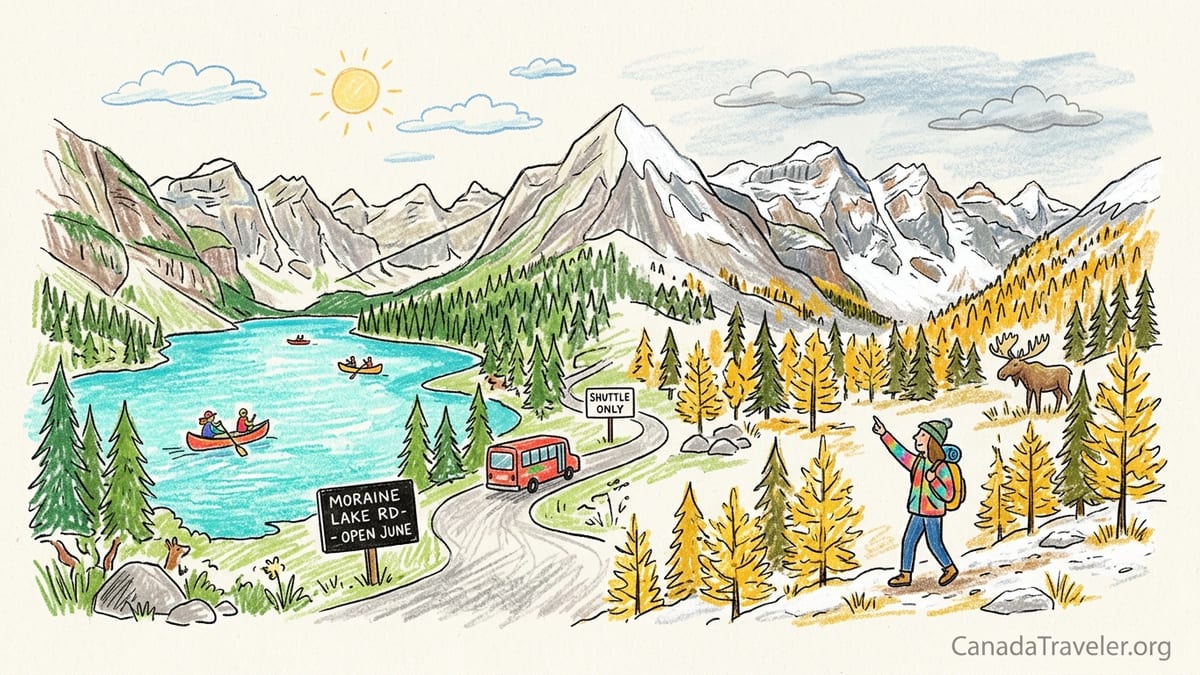
The Canadian Rockies stretch from Banff and Lake Louise through the Icefields Parkway to Jasper, with side trips into Yoho, Kootenay and Kananaskis. Conditions change quickly with elevation. In early June you can be walking on dry pavement in Banff town while trails at Moraine Lake still hold knee-deep snow. By late September, golden larches glow above Lake Louise while the Columbia Icefield parking lot gets its first dusting of winter.
Access is a key factor. The Moraine Lake road now closes to personal vehicles, with shuttle seasons typically running from mid May to roughly mid October, and the lake itself often snowbound until around early June. Lake Louise lakeshore is accessible most of the year, but its paid parking and shuttle system in high season mean you need to pick time slots carefully. On the Icefields Parkway between Lake Louise and Jasper, roadside viewpoints are open year-round, yet services like the Columbia Icefield Skywalk and glacier bus tours generally operate from spring through early October only.
Campgrounds, hotel pricing and even where wildlife tends to be visible all track the seasons. Front-country campgrounds in Banff, Yoho and Jasper usually start opening in May and shut down by early October, while a few campgrounds like Wapiti in Jasper offer limited winter sites. Hotel rates in Banff or Lake Louise spike in July and August, ease off in shoulder months like May and October, then rise again at Christmas when ski season peaks. Wildlife viewing is often best in June and September when animals are more active at lower elevations and traffic is slightly lighter.
The right time to visit depends on your priorities. First-timers who simply want to see turquoise lakes and classic viewpoints may prefer June or September, when most roads are open but crowds and prices are slightly more manageable than peak summer. Dedicated hikers who dream of alpine passes and wildflower meadows often aim for July and August. Photographers chasing golden larches typically target the two to three week window from mid to late September, while skiers and ice climbers think in terms of deep winter months. The sections below break the year into practical decision points.
Late Spring: May and Early June
Late spring in the Rockies is a study in contrasts. In Banff town and Canmore, May often brings dry sidewalks, running rivers and green valley bottoms. Up at Lake Louise, you might still find a half-frozen lake and snowbanks in the parking lot, especially in early May. Moraine Lake’s access road typically does not open until around early June, so May visitors usually cannot reach its famous shoreline at all, even by shuttle. For many travelers this is a worthwhile tradeoff: quieter viewpoints, lower hotel rates and far easier restaurant reservations.
For first-time sightseeing, May and early June can be rewarding if you arrive with realistic expectations. You may walk along the Lake Minnewanka shoreline in light jackets and then stop at Bow Lake on the Icefields Parkway to see ice floes and fresh snow on the peaks. Parks Canada plows the Icefields Parkway year-round, so you can usually drive from Lake Louise to Jasper in late spring, but some side roads and trailheads remain snowbound. Guided experiences like Columbia Icefield snowcoach tours, lake cruises on Maligne Lake and gondola operations often begin sometime in May or early June, depending on the year, so checking exact 2026 opening dates before you book flights makes sense.
Hiking options in late spring are mostly lower elevation trails and paved or well-packed paths. In Banff that means Tunnel Mountain, Fenland Trail, Johnston Canyon to the Lower and Upper Falls and the easy lakeshore loops at Lake Louise once the ice thins out. In Yoho, Emerald Lake’s loop can be partly snow covered yet still manageable with waterproof boots. Higher routes like Plain of Six Glaciers, Larch Valley, Sentinel Pass, Wilcox Pass or Cavell Meadows often remain under snow, requiring microspikes or snowshoes and avalanche awareness if trail reports still warn of hazards. Spring is also shoulder season for camping: campgrounds such as Tunnel Mountain or Monarch near Field tend to open in May, with more loops coming online as snow melts.
Costs and crowds are relatively forgiving in late spring. A midweek stay in Banff in late May commonly prices below July highs, and you may find same-day availability at chain hotels in Canmore that would be sold out in August. Parking at Lake Louise, while still in demand, is less cutthroat than during school holidays. On the flipside, shoulder season increases the chance that a key experience is not yet available, from closed teahouses above Lake Louise to seasonal wildlife closures on certain trails.
High Summer: Late June to August
By late June the Rockies feel fully open. Snow retreats from most mid-elevation trails, Moraine Lake shuttles are in full swing, and the Icefields Parkway becomes one of North America’s great scenic drives with nearly all viewpoints and picnic areas accessible. This is when first-time visitors see the postcard version of the region: canoes gliding on vivid turquoise water at Lake Louise, families picnicking at Peyto Lake’s viewpoint, and tour buses stacking up in the parking lot at Johnston Canyon by 10 a.m.
For hikers, July and August are prime time. Flagship routes such as Plain of Six Glaciers, Larch Valley (in its green, wildflower phase), Sentinel Pass, Lake Agnes to the Beehive, Sulphur Mountain, Parker Ridge and Wilcox Pass are typically snow free and well signed. Guided hiking operators in Banff and Jasper schedule their most demanding day hikes in this window, when trails are dry, daylight runs long and afternoon thunderstorms are predictable but usually brief. On a typical July day you could eat breakfast in Banff, drive the Icefields Parkway, hike Parker Ridge to the Saskatchewan Glacier overlook, and still reach Jasper by evening with plenty of daylight to spare.
Campground operations hit full stride in summer. Popular front-country sites like Lake Louise, Two Jack Lakeside, Wapiti and Whistlers are usually reservable and book out months ahead for July and early August weekends. Families pull in with rental motorhomes from Calgary or Edmonton, and walk-in tent sites in hubs such as Lake Louise often disappear early each afternoon. For travelers flexible enough to camp midweek or in lesser-known campgrounds like Waterfowl Lakes or Mosquito Creek, summer still offers a chance to sleep close to trailheads and wake up within minutes of alpine sunrise.
Summer is also when logistical pressure is highest. Lake Louise lakeshore parking fills very early, sometimes near dawn, and Moraine Lake can only be reached by shuttle, tour or bike. Roam Transit buses and Parks Canada shuttles sell out popular time slots in advance, so a traveler planning a mid-July photography outing at Moraine Lake would need to book a pre-sunrise or early-morning shuttle weeks ahead. Hotel rates in Banff and Lake Louise can climb to some of the highest in Canada during this period. On top of that, wildfire season typically peaks between mid July and August; in smoky years, long-distance views from Sulphur Mountain or the Icefields Parkway can turn hazy for days at a time, impacting photographers most.
September and the Larch Season
September is many locals’ favorite time in the Rockies. Daytime highs are cooler, children are back in school, and the mountains begin to collect fresh snow dustings that make their shapes pop in photos. For much of September, the Icefields Parkway remains fully open with summer-like driving conditions, yet parking lots at Bow Lake, Peyto Lake and Columbia Icefield tend to be calmer on weekdays. Seasonal attractions such as lake cruises and skywalks generally keep running until late September or the Canada Thanksgiving long weekend in October.
The real star of September is larch season. In most years, alpine larches around Banff, Lake Louise and Kananaskis turn gold somewhere between about mid September and early October, with peak color usually landing for a handful of days around the third week of September. That is when classic hikes such as Larch Valley and Sentinel Pass above Moraine Lake, Saddleback Pass and Paradise Valley near Lake Louise, and Sunshine Meadows near Banff transform into golden forests under fresh snow-capped peaks. These hikes are so popular that even in shoulder season, Moraine Lake shuttle reservations for prime weekends can sell out quickly.
For first-time sightseeing, September balances summer access with calmer energy. You can still paddle a rental canoe on Lake Louise or Moraine Lake in early to mid month, but you might need gloves in the morning and a fleece jacket on the shore. For hikers, September is arguably the best overall month: most alpine routes remain snow free or just see early dustings, temperatures are ideal for long days, and bugs that plagued July meadows have mostly vanished. Serious backpackers often plan classic trips like the Skyline Trail near Jasper or multi-day treks to Mount Assiniboine during this window.
Travel logistics shift as September rolls along. Campgrounds that were fully booked in August start to show availability midweek, and some close entirely by late September or early October. Hotel rates in Banff, Canmore and Jasper usually drop compared to peak summer, especially after Canadian Labour Day, though larch weekends still see high demand. For photographers, this is the sweet spot: the sun rises later and sets earlier, making golden-hour shoots at Lake Louise, Moraine Lake or along the Icefields Parkway less punishing, and the combination of larches, fresh snow and still-open alpine roads offers images you simply cannot capture in July.
Autumn Shoulder: October and Early November
After the larches drop their needles and seasonal businesses close for the year, the Rockies slide into a quieter autumn. In early October, you may still catch color at lower elevations around Banff, Canmore and Yoho, and the first significant snowfalls drape the peaks. By late October, many trails above treeline are snow covered. The Moraine Lake road and other seasonal roads often close by mid October, which means that famous vista is gone from the itinerary until the following June. Lake Louise remains accessible, but its turquoise color dulls as sediment settles and ice begins to form.
For visitors focused on sightseeing rather than hiking, October can be appealing. Crowds thin dramatically, tour buses become rare, and parking at popular roadside stops on the Icefields Parkway or around Banff town is easy most weekdays. Gondolas in Banff or at Lake Louise frequently transition from summer sightseeing into shoulder maintenance or early ski preparation, so hours can be reduced. Restaurant waits drop, and you can find mid-range hotel rooms in Canmore or Jasper at prices significantly lower than those in August, especially outside holiday weekends.
Hiking becomes more variable and should be approached cautiously. Lower trails like Johnson Lake, the Bow River path in Banff or easy viewpoints around Jasper townsite can remain accessible, sometimes with packed snow or ice that calls for microspikes. Higher objectives like Wilcox Pass, Skyline or Sentinel Pass may already be in early winter conditions, with short daylight and avalanche-prone snowfields on lee slopes. Many guided hiking companies wind down their operations for the season, switching to winter product development or ski guiding instead.
Camping largely winds down as well. A few campgrounds offer limited late-season or winter loops, especially in Jasper where certain areas stay open into the cold months with basic services, but the mainstream summer camping experience is effectively over. For photographers, autumn shoulder season offers stark, minimalist images: frost on riverbanks at Vermilion Lakes, thin sheets of ice on Herbert Lake at sunrise, and elk in their rutting season near roads like the Minnewanka Loop, where early morning encounters are common.
Deep Winter: Late November to March
From late November through March, the Rockies transform into a winter destination. Banff, Lake Louise and Jasper become ski towns first and hiking bases second. Major ski resorts such as Sunshine Village, Lake Louise Ski Resort and Marmot Basin in Jasper generally aim to open by late November, building snowpack through December and often staying open into late April or early May. Winter sports travelers time their trips for mid winter storms or spring snow conditions rather than open alpine hiking, which is mostly off the table until late spring.
Access patterns change dramatically. The Icefields Parkway remains open year-round, but winter driving can be serious: packed snow, black ice, reduced services and occasional closures or restrictions after major storms. Rental cars in Calgary with winter tires can be limited in supply, so booking early is wise. Lake Louise and Maligne Lake freeze solid enough for classic winter images of people walking across the ice or skating on cleared rinks when conditions allow. Popular summer spots like Moraine Lake and Takkakaw Falls are simply not accessible by road at all, and instead attract experienced ski tourers approaching along long, snow-covered routes.
For first-time sightseeing, winter offers a different but equally memorable experience. Rather than turquoise water, you come for frozen waterfalls in Johnston Canyon, the snow-covered meadows around Chateau Lake Louise and night skies with a chance of aurora on clear, cold nights. Short daylight hours and sub-zero temperatures mean itineraries are simpler: perhaps a mid-morning snowshoe around Emerald Lake, a hot chocolate at the lodge, then an evening soak at Banff Upper Hot Springs. Many commercial tours pivot to winter products such as ice walks, snowshoe safaris and dog sledding outside the national parks.
Camping is mostly the realm of specialists in winter. Instead, accommodation demand centers on hotels, ski lodges and hostels. Prices spike over Christmas, New Year’s and long weekends, and mid-winter powder chasers often book ski-and-stay packages months ahead. For photographers, winter is about clean compositions and soft light. Snow-covered peaks rise over the frozen Bow River in Banff, steam from the hot springs drifts into cold air, and the Icefields Parkway offers scenes of blowing snow and dramatic, low-angle sunlight. Wildlife sightings can be good but require respect: animals conserve energy, and you should never approach or feed them in winter conditions.
Matching Timing to Your Trip Style
Because the Rockies change so much by season, the “best” time depends on what type of traveler you are. For first-time sightseeing, late June, July, August and early September are the safest bets if your non-negotiables include seeing Moraine Lake, driving the Icefields Parkway in its full summer glory and having plenty of guided tour options. For a quieter yet still accessible trip, look to early to mid June and mid to late September, accepting that snow or early closures might alter a few hikes.
Hikers who prioritize big mileage and open alpine passes should concentrate on July, August and early September. That is when Sentinel Pass, Wilcox Pass, Skyline, Cory Pass, the Iceline Trail in Yoho and other marquee routes are usually clear. Strong hikers who want golden larches without deep snow often gamble on the third week of September, booking flexible itineraries that let them swap trails depending on where color is peaking and what restrictions are in place. Carrying microspikes and checking daily trail reports becomes part of the routine.
Photographers, especially those chasing specific looks, may choose different timing again. For mirror-calm turquoise lakes at dawn, late June through August is hard to beat, though early mornings can be busy at iconic spots like Moraine Lake’s rock pile. Larch season photographers plan meticulously around mid to late September, basing in Lake Louise, Banff or Canmore and targeting hikes like Larch Valley, Saddleback Pass, Sunshine Meadows and lesser known larch basins in Kananaskis to avoid shuttle bottlenecks. Winter photographers come from December through March for frozen canyons, hoarfrost and night skies.
Campers and budget-conscious travelers have their own considerations. The main camping season runs from roughly May through late September, with peak pressure in July and August. Those who prefer quieter campgrounds and fewer bugs might target early June or early September, when nights are cooler but sites are easier to book. Winter sports enthusiasts, by contrast, focus on late December through March for skiing, snowboarding and ice climbing, sometimes stretching into April for spring skiing at higher resorts. In all cases, the month you choose will dictate whether your trip features paddling on Moraine Lake, hiking through golden larches, or skating under floodlights on a frozen mountain lake.
The Takeaway
There is no single best month to visit the Canadian Rockies, only better or worse months for specific goals. Late spring trades some closed trails and partially frozen lakes for lower prices and fewer people. High summer unlocks nearly every alpine road and trail, at the cost of crowding, premium hotel rates and potential wildfire smoke. September offers the rare combination of mostly open access, cooler temperatures and the magic of golden larches, while October and early November pivot toward quieter viewpoints and early snow. Deep winter turns the region into a playground for skiers, snowshoers and ice photographers, but many iconic summer sights are literally buried.
The most successful trips start by defining what matters most. If seeing Moraine Lake’s water rather than its snow is essential, avoid early May and late October. If your dream is a week of backpacking on snow-free high routes, July through early September is worth the extra planning and cost. If you want to photograph larches at their peak, build a flexible itinerary around mid to late September and monitor local updates as your travel dates approach. And if you are a skier or snowboarder, think of the mountains as a winter destination first, choosing January through March for the deepest snow and most reliable winter conditions.
Whatever month you choose, the key is to plan with the season, not against it. Check road, shuttle and campground updates as you book, match your clothing and gear to likely conditions, and be willing to swap a closed trail for an unexpected viewpoint or hot springs soak. The Rockies reward that kind of flexibility. Timing shapes the trip, but the scale of the mountains, the color of the lakes and the feeling of standing under those peaks remain unforgettable year-round.
FAQ
Q1. When is the best month for a first-time sightseeing trip to the Canadian Rockies?
For first-time sightseeing, late June through mid September is usually best, because Moraine Lake, Lake Louise, the Icefields Parkway viewpoints and most gondolas and boat tours are operating, roads are fully open and you have long daylight hours for flexible plans.
Q2. When do larches typically turn golden around Banff and Lake Louise?
In a typical year, alpine larches around Banff, Lake Louise and Kananaskis start changing color around mid September, peak for a few days in the third week of September and usually hold color into late September or very early October, though exact timing varies with weather and elevation.
Q3. If I want to hike big alpine trails like Sentinel Pass and Wilcox Pass, when should I come?
Most alpine hiking routes are reliably snow free from roughly early July through early or mid September, with the very best conditions for long, high-elevation days usually between mid July and early September, assuming an average snow year.
Q4. How does timing affect access to Lake Louise and Moraine Lake?
Lake Louise is reachable by road year-round, but from roughly May to October it has paid parking and heavy demand that often requires very early arrival or shuttle reservations, while Moraine Lake’s road is typically open only from around June to mid October and now requires shuttles, tours or biking rather than personal vehicles.
Q5. Is it worth visiting the Icefields Parkway in winter?
Yes, but it is a very different experience: the road is plowed yet can be icy or snow covered, many services such as restaurants and visitor centers close for the season, and you should carry winter tires, emergency supplies and be prepared for sudden weather changes when driving between Lake Louise and Jasper.
Q6. When is the best time for camping in the Canadian Rockies?
The main front-country camping season runs from about May through late September, with full services and warmest nights in July and August, quieter campgrounds and cooler but comfortable nights in June and early September, and only limited winter camping options outside that window.
Q7. How do hotel prices change through the year in Banff and Lake Louise?
Hotel rates are generally highest in July and August and around Christmas and New Year’s, lower in May, June and September, and often significantly cheaper in late October and November, although specific events and holidays can still push prices up.
Q8. What months are riskiest for wildfire smoke affecting views?
Wildfire smoke is most likely to affect visibility and air quality between roughly mid July and late August, when regional fires in Western Canada or the United States are most active, so travelers especially sensitive to smoke sometimes target June or September instead.
Q9. When is the best time for winter sports like skiing and snowshoeing?
Major ski resorts around Banff, Lake Louise and Jasper usually operate from late November into April, with the most reliable combination of snow coverage and daylight for downhill skiing, snowshoeing and other winter sports typically from late December through March.
Q10. If I care mainly about photography, which season should I choose?
For classic turquoise lake and wildflower photographs, late June to August is ideal; for golden larches and fresh snow on peaks, aim for mid to late September; and for frozen waterfalls, clean white landscapes and night sky images, plan for December through March.