


Western Canada is one of the world’s great playgrounds for outdoor travelers, but choosing between British Columbia’s wild Pacific coast and Alberta’s soaring Canadian Rockies can feel like an impossible decision. Vancouver and the Inside Passage offer ocean views, temperate rainforests and a thriving food scene, while Calgary and the Rockies deliver glacier-fed lakes, big-sky prairies and some of the most famous national parks on the planet. This guide compares the two provinces in practical detail so you can decide where your time and travel budget will go furthest.
Big Picture: Two Very Different Western Canada Experiences
British Columbia and Alberta share a border but offer quite different moods. British Columbia (BC) feels coastal, lush and a little bohemian, built around Vancouver and the fjord-like inlets of the Pacific. Expect dense evergreen forests, island-hopping, whale watching and easy access to both ocean and mountains in one trip. The climate is milder, especially along the coast, with more rain in shoulder seasons but less intense winter cold than inland.
Alberta, by contrast, is defined by the Canadian Rockies and the rolling prairies that stretch east from them. The marquee names here are Banff, Lake Louise, Jasper and the gateway city of Calgary. Landscapes feel bigger and drier, with dramatic peaks, turquoise lakes and wide-open skies. Winters are colder, summers are often sunnier than on the coast, and the whole region feels geared to classic mountain adventures like hiking, alpine skiing and road tripping.
In practical terms, BC often suits travelers who want variety in a compact area: urban culture in Vancouver, seaside towns like Tofino or Victoria, plus mountain time in places such as Whistler. Alberta tends to appeal to those who want to maximize time in the Rockies or experience a North American city-and-national-parks combo by pairing Calgary with Banff and Jasper.
Because the provinces are side by side, many visitors try to do both in a single trip, for example flying into Vancouver, taking the Sea-to-Sky Highway to Whistler, then driving or taking a tour across to the Rockies. That can work if you have at least 10 to 14 days and are prepared for longer driving days, but if you only have a week it usually makes more sense to choose one province and do it well.
Vancouver vs Calgary: City Gateways Compared
For most international visitors, the first question is whether to fly into Vancouver in BC or Calgary in Alberta. Both airports handle plenty of long-haul flights and are well connected domestically. Vancouver International is closer to the ocean and to cruise ship terminals, while Calgary International sits only about a 90-minute drive from Banff on a good traffic day, making it an efficient gateway to the Rockies.
Vancouver is a destination in its own right. Travelers routinely spend three to four days exploring neighborhoods like Gastown, Kitsilano and Commercial Drive, walking the seawall around Stanley Park, and taking day trips to places such as North Vancouver’s Grouse Mountain or Capilano Suspension Bridge. The city’s food scene is a major draw, from sushi on Robson Street to Chinese and South Asian cuisine in Richmond. A typical mid-range downtown hotel might cost the equivalent of roughly 200 to 300 Canadian dollars per night in peak summer, with budget motels or suburban stays somewhat cheaper.
Calgary is more compact, and many travelers treat it as a one- or two-night stop before or after the mountains. The downtown core is walkable, anchored by the Bow River pathway, the Calgary Tower and the hip Inglewood and Kensington neighborhoods. The city has evolved into a serious restaurant town, with everything from upscale steakhouses to craft breweries in the Beltline. Mid-range hotels in central Calgary often price a bit below Vancouver in peak season, so travelers on tighter budgets sometimes choose to base more nights here and visit the Rockies on day or overnight trips, although that does involve more driving.
If your dream trip includes an Alaska or Inside Passage cruise, Vancouver and nearby port facilities on the BC coast naturally make more sense. If your priority is maximizing time on the hiking trails of Banff or Jasper, landing in Calgary and heading straight west is the most efficient move, especially in the short peak season between late June and early September.
National Parks & Wild Landscapes: Coast Rainforests vs High Rockies
BC and Alberta both offer outstanding protected areas, but the feel of the landscapes is quite different. On the BC coast, Pacific Rim National Park Reserve near Tofino is a signature stop. Here you get misty surf beaches backed by temperate rainforest, with boardwalk trails like the Rainforest Trail and long stretches of sand such as Long Beach. It is ideal for storm watching in autumn and winter, beach walking year-round and beginner-friendly surfing in summer.
In the Rockies on the Alberta side, Banff and Jasper National Parks are the stars. Visitors come for iconic sights like Lake Louise, Moraine Lake, Peyto Lake and the Icefields Parkway, which links Banff and Jasper through some of the most impressive mountain scenery in North America. Parks Canada charges daily entry fees that support trails and facilities, and in busy areas like Lake Louise you now need to think about parking reservations or shuttle buses during peak periods in July and August.
Both provinces share some parks. Yoho and Kootenay National Parks sit technically in BC but function as part of the larger Rockies circuit that people often explore from a Banff or Lake Louise base. On a realistic one-week Rockies itinerary, for example, you might base for three nights in Banff townsite, two in Lake Louise or Field for Yoho, and two in Jasper to see Maligne Lake and the Athabasca Falls area.
If you prefer moody, mossy forests and dramatic coastlines with sea stacks and driftwood, you will likely feel more at home on Vancouver Island or along the BC coast. If snow-capped summits, glacial valleys and alpine meadows are your mental picture of Canada, Alberta’s Rockies will line up more closely with that dream.
Road Trips & Scenic Drives: Sea-to-Sky vs Icefields Parkway
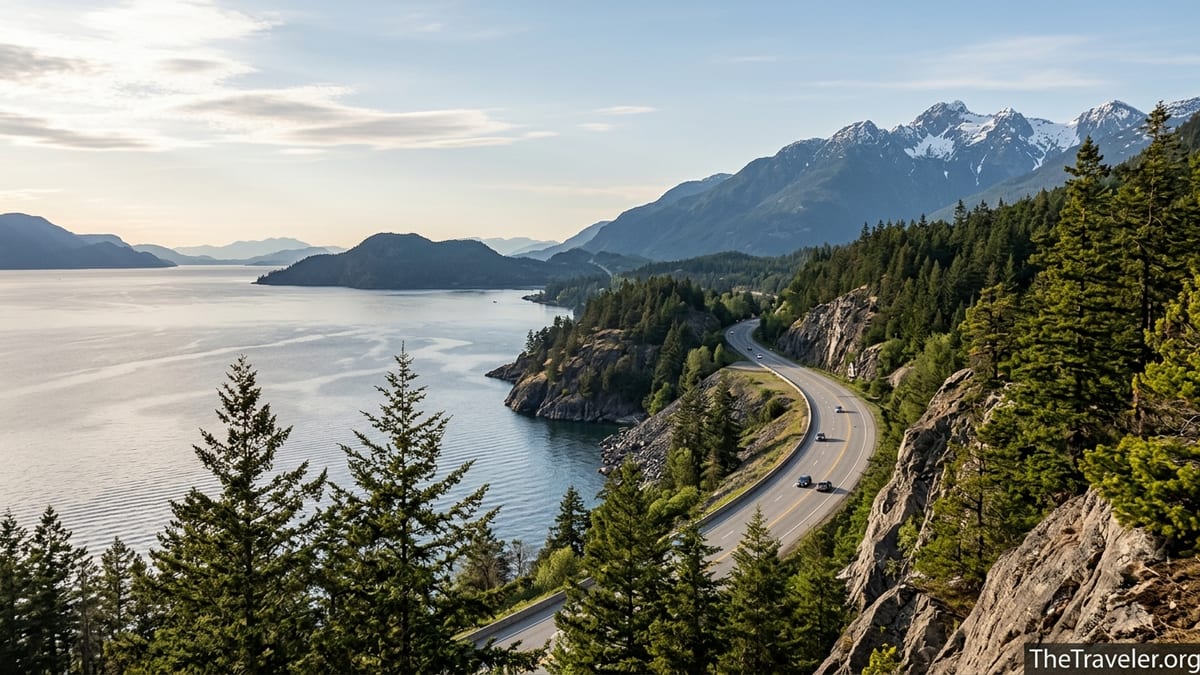
Both provinces excel at classic road trips, but with different flavors. In BC, the Sea-to-Sky Highway from Vancouver to Whistler is the best-known drive. It hugs Howe Sound with frequent pullouts for views of ocean and peaks, passes the cliffside Shannon Falls and the Sea to Sky Gondola near Squamish, then climbs toward Whistler’s alpine village. Many visitors do this as a long day trip from Vancouver, but spending one or two nights in Whistler gives you time for gondola rides, hiking or mountain biking.
Further afield, driving from Vancouver to the Okanagan Valley introduces a whole different side of BC, with vineyards around towns such as Kelowna and Penticton, warm lakes and sandy beaches. This loop is particularly appealing in late summer when temperatures are hot and local wineries are in full swing. It is feasible to combine Vancouver, Whistler and the Okanagan in a 10-day road trip entirely within BC, with driving days of three to six hours between key stops.
In Alberta, the Icefields Parkway between Lake Louise and Jasper rivals any mountain drive in the world. The distance is roughly 230 kilometers, but most travelers plan at least a full day with many stops for glaciers, waterfalls and short hikes. Common pauses include Bow Lake, Saskatchewan River Crossing, the Columbia Icefield area, Sunwapta Falls and Athabasca Falls. Pulling into Jasper by evening, you feel you have been in a rolling mountain panorama all day.
Another classic Alberta drive is the loop through Kananaskis Country south of Canmore, a less developed alternative to the Banff townsite area. Roads such as Highway 40 offer wide-open views without the same level of visitor traffic. If you are anxious about winter driving, note that mountain passes in both provinces can receive snow from October into April. Visitors without snow-driving experience often time trips to late June through September for easier conditions and fully open passes.
Accommodation, Costs & Value for Money
One of the key differences between BC and Alberta lies in how your accommodation budget will stretch. Overall, coastal BC hotspots like downtown Vancouver, Whistler and Tofino often run more expensive per night than many equivalent stays in Calgary or even Banff outside the very peak of summer. Beach towns on Vancouver Island are particularly limited in inventory, so oceanfront lodges and boutique hotels can command premium pricing, especially in July and August or over holiday weekends.
In the Rockies, Banff and Lake Louise are not cheap, but you have a more visible range: historic hotels and high-end resorts at the top, chain hotels and basic motels in the middle, and hostels or campgrounds for budget travelers. Travelers watching their spending often base in Canmore, just outside Banff National Park, where condo-style units and hotels can be more affordable while still leaving you within about a 20-minute drive of the park gates. In peak season, it is common for even mid-range rooms to climb above 300 Canadian dollars per night in Banff or Jasper, so booking early is crucial.
Transportation costs also differ. In Vancouver, you can rely heavily on public transit and walking, using the SkyTrain from the airport to downtown and buses or rideshares to reach most urban attractions. That can reduce car rental days and parking costs. In Calgary and the Rockies, a rental car is often much more practical, especially if you want to explore beyond a few group tours. Fuel and parking, particularly in resort town centers or at popular lakes, should be factored into your budget.
When it comes to day activities, headline experiences can be similarly priced in both provinces. A gondola ride in Whistler or Banff, a guided whale-watching trip from Vancouver Island, or a Columbia Icefield glacier experience all sit in a broadly comparable price range. Ski lift tickets at major resorts like Whistler Blackcomb or Lake Louise are substantial winter expenses, with day tickets varying by season and how early you buy. Travelers who plan multiple days of skiing often look at multi-day passes or season products to manage costs.
Wildlife, Outdoor Activities & Skiing
Wildlife encounters are a major reason people come to Western Canada. On the BC coast, visitors commonly see harbor seals, bald eagles and, on dedicated excursions, whales and orcas. Spring and early summer boat tours from Vancouver, Victoria or Telegraph Cove on northern Vancouver Island may offer chances to observe humpback whales, porpoises and occasionally bears foraging along shorelines. Simple experiences, such as watching seals near the seawall in Vancouver’s Stanley Park, give a taste of coastal biodiversity without leaving the city.
In Alberta and the interior BC Rockies, large mammals dominate. It is not unusual to spot elk grazing near the Banff townsite, bighorn sheep at road pullouts, or black bears and the occasional grizzly from a safe distance along highways or trails. Responsible wildlife viewing is crucial everywhere: keep distance, never feed animals and use zoom lenses rather than approaching. Parks staff frequently remind visitors about food storage regulations at campgrounds, especially in bear country.
For skiing and snowboarding, both provinces are heavyweights. BC’s Whistler Blackcomb is one of the largest ski areas in North America, with a long season that can run from late November into spring most years. Interior BC resorts such as Sun Peaks or Big White offer deep snow and a more relaxed feel. In Alberta, Sunshine Village and Lake Louise Ski Resort near Banff provide high-elevation snow and dramatic scenery, while smaller hills closer to Calgary, such as Nakiska, give locals quick access for day trips. Lift ticket pricing changes seasonally, but in all major resorts it pays to buy in advance and watch for multi-day or dynamic pricing discounts.
In summer, both provinces transform into hiking and biking hubs. Around Vancouver and Whistler, coastal trails offer everything from short family walks to full-day alpine hikes accessible by gondola. In the Rockies, classic treks like the Plain of Six Glaciers, Larch Valley, or Parker Ridge provide big mountain payoffs in exchange for moderate to strenuous effort. Because of avalanche risk and lingering snow, some high-elevation routes in the Rockies do not fully open until late June or even early July, whereas lower coastal trails in BC can be hikeable much earlier in the season.
When to Go: Summer Sunshine vs Shoulder Season Savings
Picking the right time is as important as choosing the right province. For both BC and Alberta, the main summer window runs from roughly late June through early September. In this period, mountain passes are fully open, lakes are thawed, and almost all tours and seasonal restaurants are running at full capacity. However, it is also when accommodation is priciest and the busiest spots, such as Lake Louise or Tofino’s most famous beaches, feel most crowded.
On the BC coast, shoulder seasons in May and late September or October can be excellent for travelers who do not mind some rain. Vancouver in spring sees cherry blossoms and café patios filling up, while ferry routes to Vancouver Island are less congested than in midsummer. Tofino in autumn is famous for storm watching, with many oceanfront lodges offering off-peak packages that cost less than peak-season summer weekends.
In Alberta’s Rockies, September is often a sweet spot, with cooler nights, golden larch trees high in the alpine and somewhat thinner crowds than July and August. Snow can arrive early at elevation, so pack layers, but roads typically remain clear. Winter, from December through March, is prime time for skiers and for visitors keen on activities like snowshoeing and ice walks in canyons. Those less comfortable with icy driving might consider shuttle buses or guided tours from Calgary or Banff during this period.
In terms of costs, both provinces reward early planners. Securing key summer dates six to nine months ahead often means more choice and better rates, especially in small mountain towns and on popular ferry crossings. Travelers flexible enough to visit in spring or fall can usually find noticeably better deals on accommodation and flights while still enjoying many of the core experiences that bring people to Western Canada.
Which Province Suits Which Traveler?
BC tends to be the better fit for travelers who want a mix of urban culture, ocean scenery and accessible mountains without committing to a fully alpine itinerary. If you imagine starting your morning with coffee at a waterfront café, taking a short ferry to explore an island community, then finishing the day with sushi or West Coast seafood, BC will likely feel right. It is also ideal for those combining a land trip with a cruise, especially along the Inside Passage or toward Alaska.
Alberta shines for visitors whose main goal is iconic mountain landscapes. If photos of turquoise glacial lakes, jagged peaks and big open roads are what drew you to Western Canada in the first place, centering your trip on Banff, Lake Louise and Jasper delivers that consistently, day after day. Families who enjoy simple scenic drives and short viewpoint walks will be just as satisfied as serious hikers who plan a different trail each day.
Travel style also matters. Backpackers and budget-conscious travelers often find it slightly easier to manage costs in Alberta by using hostels and campgrounds in and around the national parks, or by staying in Canmore and driving into Banff. In BC, staying in Vancouver without a car, using transit and focusing on city-based adventures can keep spending in check, but small coastal towns with limited bus service can make you more dependent on car rentals or tours.
For many visitors, the deciding factor is time. With a week or less, choose one province and focus: a Vancouver, Whistler and Vancouver Island loop in BC, or a Calgary, Banff, Lake Louise and Jasper circuit in Alberta. With 10 days or more, you can consider starting in Vancouver, driving to the Okanagan or Kamloops region, then continuing to the Rockies and flying out of Calgary, blending both coastal and mountain experiences in a single, memorable journey.
The Takeaway
Choosing between British Columbia and Alberta is less about which province is “better” and more about which landscape fits the trip you have in mind. BC offers a layered experience of city life, islands, rainforests and ski resorts, with Vancouver as a cosmopolitan base and the Pacific as a constant backdrop. Alberta centers on mountain drama, postcard lakes and straightforward access from Calgary into a concentrated stretch of world-class national parks.
If you want waves, whales and a lively, walkable city with good transit, lean toward BC and the coast. If you are dreaming of summits, glaciers and long days on the trail or ski hill, Alberta’s Rockies are likely your match. Either way, planning around seasonality, driving distances and realistic daily budgets will matter more than the provincial boundary on a map.
For many travelers, the ideal Western Canada adventure eventually includes both: perhaps a first trip to the Rockies, then a second focused on the Pacific coast, or a longer journey linking Vancouver’s harbor to the peaks of Banff and Jasper. Whether you pick coast or mountains this time, Western Canada offers enough variety and scale that it rarely feels like a one-and-done destination.
FAQ
Q1. Is British Columbia or Alberta better for a first-time visitor to Canada?
For a first visit focused on classic mountain scenery, Alberta’s Rockies usually deliver the most concentrated “wow” factor. If you prefer a balance of city culture, ocean views and mountains, BC and Vancouver make a more varied introduction.
Q2. Which is cheaper for a one-week trip, BC or Alberta?
Costs vary by season, but accommodation in Vancouver, Whistler and Tofino can be higher than in Calgary or some Rockies towns. Overall, many travelers find a car-based week in Alberta’s Rockies comparable or slightly less expensive than a peak-summer week split between Vancouver and a BC coastal resort.
Q3. Do I need a car in Vancouver or Calgary to explore properly?
In Vancouver, you can see most city sights on foot or by transit and only rent a car for side trips like Whistler or Vancouver Island. In Calgary and the Rockies, a rental car offers much more flexibility, especially for reaching trailheads and viewpoints that are not served by frequent shuttles.
Q4. When is the best time to visit Banff and Jasper compared to the BC coast?
Banff and Jasper are at their most accessible from late June to early September, when high mountain roads and trails are snow-free. The BC coast is more flexible, with pleasant conditions from May into October, though you should expect more rain outside midsummer.
Q5. Can I realistically visit both Vancouver and Banff in one trip?
Yes, but you will want at least 10 to 14 days to avoid spending most of your time driving. A common pattern is to fly into Vancouver, explore the coast and Whistler, then drive or take a one-way tour toward the Rockies and fly out of Calgary.
Q6. Which province is better for wildlife viewing?
BC’s coast excels for marine wildlife like whales, orcas and seals, often seen on dedicated boat tours. Alberta and the interior Rockies are better for land-based wildlife such as elk, deer, bighorn sheep and bears, typically viewed from roadsides or hiking trails at a safe distance.
Q7. Where will I find better skiing, BC or Alberta?
Both provinces have excellent skiing. BC’s Whistler Blackcomb is huge with a lively après scene, while Alberta’s Sunshine Village and Lake Louise offer high-elevation snow and classic Rockies views. Interior BC resorts add uncrowded slopes and deep, often lighter snow. Your choice may come down to where flights and accommodation work best for your dates.
Q8. Is it easier to travel without a tour in BC or Alberta?
Independent travel is straightforward in both, but BC’s larger cities and coastal transit options make car-free travel more practical in places like Vancouver and Victoria. In Alberta’s Rockies, you can still rely on shuttles and organized excursions, yet having your own vehicle gives much more flexibility for spontaneous stops and hikes.
Q9. How far in advance should I book hotels in peak season?
For July and August stays in Banff, Jasper, Whistler or Tofino, aim to book at least three to six months ahead, and earlier if you need specific room types or are traveling on holiday weekends. City hotels in Vancouver and Calgary can sometimes be booked closer to arrival, but prices often rise sharply as dates approach.
Q10. Which province is better for families with young children?
Both work well for families. BC offers beaches, aquariums and gentle coastal walks close to Vancouver, plus gondolas and easy trails in Whistler. Alberta’s Rockies provide short, stroller-friendly paths to big viewpoints, roadside picnic spots and plenty of wildlife sightings from the car. The better choice depends on whether your children are more excited by beaches and boats or by mountains and lakes.