


Planning a first trip to Canada can feel overwhelming. Distances are huge, weather shifts quickly and the choice between trains, flights and rental cars has a big impact on how much you actually see. This guide breaks Canada down into realistic 7, 10, 14 and 21 day itineraries for Eastern Canada, Western Canada and cross-country combinations, using real-world travel times, example prices and practical overnight allocations.
How Long You Really Need in Canada
Canada is almost 7,500 kilometers wide, and that scale is what catches many visitors off guard. A direct flight from Toronto to Vancouver routinely takes around five hours gate to gate, similar to flying across Europe. That means trying to “do it all” in one short trip almost always leads to rushed days and a lot of time in transit rather than on the ground.
For a one-week visit, it is usually best to focus on a single region, such as Ontario and Quebec in the east or the Rockies and coast in the west. With 10 days, you can add a second base or include a scenic rail leg. Two weeks opens up the option of combining Eastern and Western Canada if you are comfortable taking at least one domestic flight. At three weeks, an ambitious cross-country journey that mixes flights, trains and road trips becomes realistic for travelers who enjoy changing locations frequently.
Costs vary by season and style, but as a rough indication, summer nightly hotel rates in major cities like Vancouver, Toronto and Montreal often run from 220 to 350 Canadian dollars for midrange properties, with rental cars starting around 70 to 100 dollars per day before insurance and fuel. Long-distance trains and internal flights can add several hundred dollars per person. Building your itinerary around a smaller number of bases, and being honest about how much moving you actually enjoy, will usually give you a better experience than chasing every landmark.
The sample itineraries below are built to be realistic: driving legs stay under about five hours, train and flight options reflect current schedules, and overnight allocations give you at least one full day in each main stop. You can shorten or lengthen them, but keeping the same travel rhythm will help maintain a comfortable pace.
7-Day Itineraries: Focus on One Region
Seven days is just enough to taste one part of Canada without feeling rushed. In the east, a classic week links Toronto, Ottawa and Montreal or Quebec City. In the west, travelers often combine Vancouver with the mountain town of Whistler or the nearby Vancouver Island capital of Victoria. The key is to pick two or three main bases and avoid long one-way loops.
A practical Eastern Canada option is a Toronto and Montreal split. You might spend Days 1 to 3 in Toronto, then take a four-and-a-half to five-hour train to Montreal on Day 4 and stay there until departure on Day 7. The Toronto to Montreal rail corridor is served multiple times per day, and standard economy fares, booked in advance, are often in the range of 80 to 160 dollars per person one way depending on promotions and timing. This gives you two full sightseeing days in each city plus a travel day that is short enough to arrive in time for an afternoon walk and dinner.
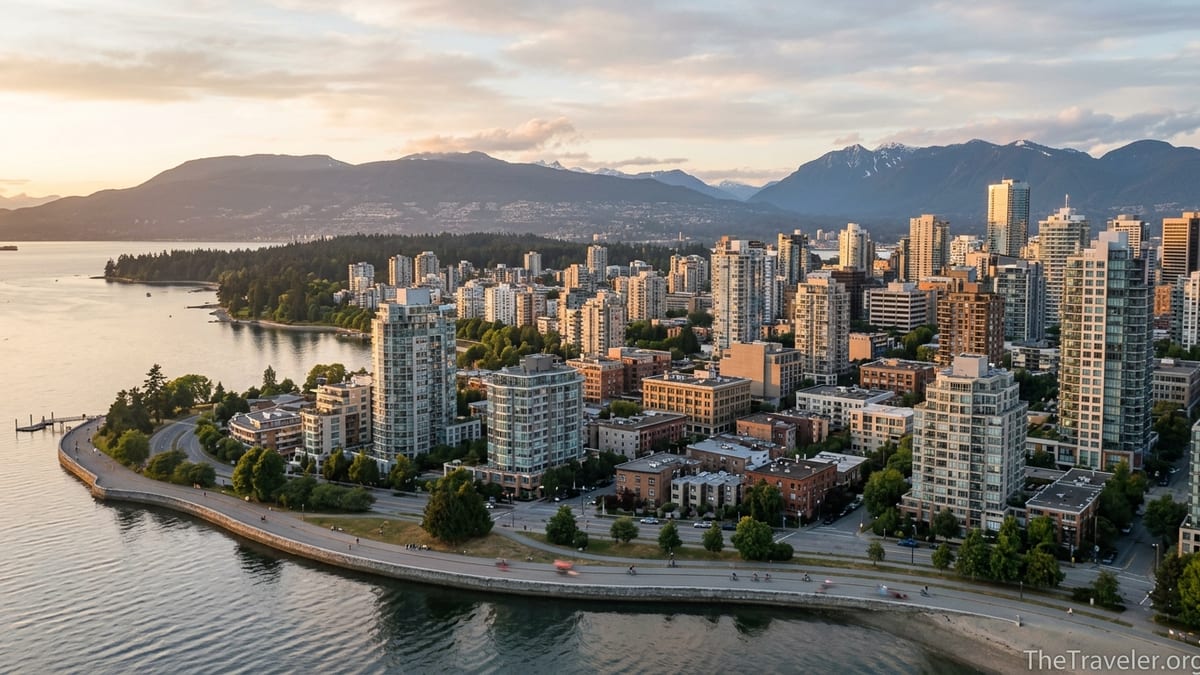
In Western Canada, a compact one-week route would keep you in British Columbia. Many visitors arrive in Vancouver, stay three or four nights, then either rent a car or take a bus north to Whistler for two nights before returning for a final night near the airport. Vancouver to Whistler by road is roughly 120 kilometers via the Sea to Sky Highway and usually takes about two hours in normal traffic. This leaves plenty of time to stop at viewpoints or visit the gondola near Squamish rather than spending the entire day behind the wheel.
If you prefer more nature and less city time, you can fly into Calgary instead and focus your week on the Rockies. Calgary to Banff is about 130 kilometers and typically a 90-minute drive on a divided highway. Spending three nights in Banff and three nights in Jasper with a drive along the Icefields Parkway in between gives you a concentrated week in the mountains, though this option works even better once you have 10 days or more.
10-Day Itineraries: Adding the Rockies or Quebec City
With 10 days, you can add variety without packing and unpacking every night. In Eastern Canada, many travelers are keen to include both French and English-speaking regions. A solid 10-day loop might be Toronto for three nights, Ottawa for one, Montreal for three and Quebec City for three. High-frequency trains connect Toronto, Ottawa and Montreal, while Montreal to Quebec City by rail usually takes around three and a half hours. Booking tickets 2 to 3 months ahead often yields more favorable fares and seat selection.
To keep the pace comfortable, aim to schedule city-to-city travel in the late morning. For instance, leave Toronto around 10 a.m., arrive in Ottawa early afternoon, spend one night near Parliament Hill, then continue to Montreal the next day. This pattern lets you explore each town center on foot, using short walks or inexpensive metro rides rather than relying on cars in dense downtown areas.
In Western Canada, 10 days lets you blend the coast with the Rockies. A common pattern begins with three nights in Vancouver to adjust to the time zone and explore neighborhoods like Gastown or Commercial Drive. On Day 4, you fly to Calgary, a flight that typically runs about 90 minutes. From there you pick up a rental car and drive the 90 minutes to Banff. Four or five nights split between Banff and Jasper, connected by the Icefields Parkway, gives you ample time for viewpoints, short hikes and glacier tours. You then return to Calgary for an overnight near the airport and fly out on Day 10.
Travelers drawn to scenic rail journeys may consider inserting a leg on the overnight train between Vancouver and Jasper instead of flying into Calgary. Long-distance trains in Canada do not run daily year-round, so you need to check departure days and adjust your itinerary around them. When they fit, they create an appealing contrast to highway driving, with spacious lounge cars and bunk or cabin options for overnight comfort.
14-Day Itineraries: Combining East and West
Two weeks is often the sweet spot for first-time visitors who want to see both Eastern cities and Western mountains without attempting a full cross-country rail journey. Most itineraries at this length use at least one nonstop flight between Toronto or Montreal and Calgary or Vancouver. Average flight times between Toronto and Vancouver are around five hours, while Toronto to Calgary and Montreal to Calgary are usually closer to four hours.
One balanced 14-day plan starts with five nights split between Toronto and Montreal. You might arrive in Toronto for three nights, including a possible day trip to Niagara Falls by bus or organized coach tour, then board the train to Montreal for two nights. After a domestic flight to Calgary on Day 6 or 7, you pick up a rental car and spend the next six nights in the Rockies, perhaps three nights in Banff, two in Jasper and one in Lake Louise or Canmore. Your final night is back in Calgary before flying home.
Another approach is to focus the city portion on Montreal and Quebec City, then end with a west coast city and mountains combination. This could look like three nights in Montreal, two in Quebec City, then a flight to Vancouver for three nights, followed by four nights divided between Whistler and Victoria on Vancouver Island. Ferries operate between the mainland and the island, and while schedules vary by season, it is common to find several sailings per day, each taking about 90 to 100 minutes. Allow time on either side for driving to and from the terminals.
With 14 days, budget-conscious travelers sometimes try to include one major overnight train segment to save on hotel nights. For example, instead of flying from Toronto to Western Canada, you could board the transcontinental train partway, traveling from Winnipeg to Jasper over two nights. Berth or cabin accommodations on these long-distance trains tend to cost more than economy seats on flights, but they add scenic value and can make sense when weighed against the price of hotels and airport transfers.
21-Day Itineraries: Cross-Country Combinations
Three weeks allows for a true cross-country experience that mixes trains, flights and road trips. A full Toronto to Vancouver rail journey on the flagship transcontinental train typically takes four nights and roughly four days of continuous travel, covering about 4,500 kilometers of forest, prairie and mountains. Many travelers then layer city and mountain stays on either side of that journey, turning it into the centerpiece of a 21-day trip.
One sample structure would be to start in Eastern Canada with a week split between Toronto, Ottawa and Montreal. You could then board the long-distance train in Toronto, spending four nights on board in a sleeper cabin. After arriving in Vancouver, stay three or four nights to recover from the journey and explore the city. The remaining days can be dedicated to a shorter road trip to Whistler, a ferry trip to Victoria or a flight to Calgary for three or four nights in Banff before returning home.
Travelers keen on a more flexible mix might break the rail journey into segments and use one domestic flight to avoid backtracking. For example, you might begin with Montreal and Quebec City, then fly to Winnipeg and board the train there for the western half of the route through the Prairies and Rockies into Vancouver. Once in Vancouver, you either stay on the coast or add a five-day loop through the Rockies by flying to Calgary and driving to Banff and Jasper before departing.
Because 21-day itineraries are intensive and involve many moving parts, travelers should factor in rest time. After a four-night train segment with limited internet access and shifting sleep patterns, having at least two unscheduled days in Vancouver or Calgary can make the rest of the trip feel more enjoyable. Similarly, rest days during long driving stretches in the Rockies will help avoid burnout and give you time to enjoy local cafes, hot springs or short walks that are not in every guidebook.
Choosing Between Flights, Trains and Rental Cars
Transport choices shape both your budget and your experience of Canada’s geography. For long cross-country jumps, domestic flights are usually the most time-efficient. Nonstop flights between major hubs such as Toronto and Vancouver or Montreal and Calgary are frequent in peak season, and promotional economy fares booked several months in advance can sometimes be comparable to or even cheaper than long-distance train seats, especially once you add sleeper cabins.
Trains are best seen as scenic experiences rather than pure transportation. In the busy Quebec City to Windsor corridor, intercity trains connect Toronto, Ottawa, Montreal and Quebec City multiple times a day and are competitive with flying once you factor in airport transfers and security queues. On the transcontinental route, the train operates a few times per week in each direction, with the full Toronto to Vancouver journey scheduled at roughly four days and four nights. Because the line shares tracks with freight traffic, delays are possible, so itineraries that follow should include some flexibility.
Rental cars are almost unavoidable for exploring the national parks and smaller coastal or rural regions. In the Rockies, for example, the most famous viewpoints along the Icefields Parkway between Lake Louise and Jasper are dozens of kilometers apart, and public buses or tours, while available in peak season, do not always stop at every trailhead. In summer, mid-size rental cars collected at major airports such as Calgary, Vancouver or Toronto often start in the 70 to 100 dollar per day range before insurance, with higher rates during holiday weekends and for one-way drop-offs between provinces.
Some travelers choose hybrid approaches. They might rely on trains and city transit in Eastern Canada where stations are downtown and parking is expensive, then rent cars for five to seven days in Western Canada. Doing so often reduces both rental costs and parking headaches while still giving you the freedom of the open road in the places where it matters most.
Realistic Daily Distances and Overnight Allocations
When looking at a map, it can be tempting to string together many destinations in a short time. In practice, Canada’s long distances and variable weather mean it is wise to cap most driving days at around four to five hours behind the wheel. That distance, roughly 300 to 400 kilometers on major highways, allows for fuel and lunch stops, plus time to enjoy short walks or viewpoints along the way.
In the Rockies, for example, the drive from Banff to Jasper along the Icefields Parkway is about 290 kilometers. Without stops, it might take three and a half hours, but most visitors take a full day, pausing at lakes, waterfalls and short trails. Allocating at least two nights in each of Banff, Jasper and Lake Louise or nearby Canmore gives you breathing room for weather changes and popular activities like gondola rides or boat tours, which can sell out during summer weekends.
In Eastern Canada’s corridor, train travel between cities like Toronto, Ottawa, Montreal and Quebec City usually falls within three to five hours per leg. That makes it reasonable to travel mid-morning and still enjoy an afternoon in your next destination. Many travelers find that three nights in a major city such as Toronto, Montreal or Vancouver feels about right, providing two full days to explore, while smaller stops like Ottawa or Victoria can be appreciated comfortably over one or two nights.
On a 21-day cross-country plan, resisting the urge to add every side trip is important. It is often better to choose a main route and sprinkle in a handful of carefully selected excursions, such as a single whale-watching tour on Vancouver Island or one guided hike in Banff, rather than trying to tick every possible box. Leaving one or two evenings deliberately unplanned in each major stop also allows room for local recommendations from hoteliers, restaurant servers and tour guides, which often turn into the most memorable moments of a trip.
FAQ
Q1. Is it realistic to travel across Canada by train in one trip?
Yes, but you need enough time and flexibility. The full Toronto to Vancouver train journey usually takes about four days and four nights in each direction, operates a few times per week and can experience delays. Many travelers make it part of a longer 14 or 21 day itinerary rather than relying on it as the only way to cross the country.
Q2. For a 7-day trip, should I choose Eastern or Western Canada?
With only one week, it is usually best to choose either Eastern Canada, focusing on cities like Toronto and Montreal, or Western Canada, focusing on Vancouver or the Rockies. Trying to combine both in seven days would mean spending a large portion of your time in airports and on planes.
Q3. How far in advance should I book trains and internal flights in Canada?
Booking two to three months in advance is a good target for most travelers, especially for summer trips. Popular long-distance train cabins and peak-season weekend flights can sell out or increase in price closer to departure, while midweek departures and shoulder-season dates may remain more flexible.
Q4. Do I need a rental car for visiting Banff and Jasper?
A rental car gives you the most freedom for exploring Banff, Jasper and the Icefields Parkway, since many viewpoints and trailheads are spread out along the highway. There are shuttle buses and guided tours in peak season, but they may not stop at every place you want to see and can limit your schedule compared to driving yourself.
Q5. Is it safe to drive long distances in Canada in winter?
Winter driving can be challenging, especially in the Rockies and rural areas, due to snow, ice and reduced daylight. Highways are maintained, but visitors without winter driving experience may prefer to rely on trains and buses or to plan their road trips for late spring, summer or early autumn when conditions are usually more forgiving.
Q6. How much should I budget per day for a midrange Canada trip?
Budgets vary widely, but many midrange travelers find that planning for several hundred Canadian dollars per day per couple is reasonable once you include accommodation, food, local transport and activities. Adding long-distance trains, flights or rental cars will increase overall costs, so it helps to price out key transport segments early in the planning process.
Q7. Are domestic flights in Canada usually on time?
Performance varies by airline, route and season. Major city pairs like Toronto to Vancouver or Montreal to Calgary tend to have multiple daily flights, which offers some backup options. Weather, particularly winter storms, can still cause disruptions, so building in buffer time around key connections is sensible.
Q8. Can I see the Northern Lights on a 10- or 14-day trip to Canada?
Seeing the Northern Lights depends on being in the right place, at the right time of year and having clear skies. Many classic itineraries in the corridor and Rockies do not reach far enough north to make sightings common. Visitors focused on cities such as Toronto, Montreal, Vancouver, Banff and Jasper should treat auroras as a bonus rather than a guarantee unless they specifically plan a detour to northern regions.
Q9. Is it better to visit Canada in summer or shoulder season?
Summer offers the warmest weather and the broadest range of tours, but it also brings higher prices and more crowds. Late spring and early autumn can be attractive alternatives, with cooler temperatures, some seasonal color and generally fewer visitors, though certain mountain roads, boat tours or remote lodges may operate on reduced schedules outside peak months.
Q10. How many destinations should I include in a 21-day itinerary?
Many travelers find that focusing on four to six main bases works well for a three-week trip, such as a combination of two or three cities and a couple of nature-focused regions. This keeps travel days manageable and allows for deeper exploration in each area instead of constantly packing and unpacking.