


Canada invites big trips: glacier-lined highways through the Rockies, glass-domed trains, grizzly bear estuaries and week-long rail journeys across the Prairies. The challenge is not whether to go, but how. Should you book a fully escorted Canadian Rockies tour, splash out on a glass-domed rail vacation, join a small wildlife group trip or piece everything together independently on VIA Rail and rental cars? This guide breaks down the main Canada tour styles, with real-world examples of routes, inclusions and typical price ranges, so you can decide when organized touring is worth the cost and when it makes sense to go it alone.
Understanding Canada’s Main Tour Types
Most Canada itineraries aimed at international visitors fall into a few clear categories. In the west, Canadian Rockies tours link Calgary, Banff, Lake Louise, Jasper and often Vancouver, sometimes paired with a Rocky Mountaineer rail leg or an Alaska cruise. In the center and east, cross-country rail tours use VIA Rail’s flagship train The Canadian between Toronto and Vancouver, with add-ons in Montreal, Quebec City or the Maritimes. Along the Pacific coast and in remote inlets, wildlife tours focus on grizzly bears, whales and coastal rainforests, usually reached by floatplane or small boats.
Within those destination themes, you can choose between escorted coach tours, independent rail-and-hotel packages, high-end rail vacations, specialist wildlife lodges and DIY trips using regular VIA Rail services or car rentals. For instance, you might compare an 8-day escorted Rockies coach tour starting around the mid-3,000 Canadian dollars per person with a shorter independent self-drive that costs less but requires more planning. Understanding what each style actually includes in practice is the key to spotting value rather than just chasing the lowest sticker price.
Tour length also shapes the experience. Classic Rockies itineraries run 7 to 10 days, often with two nights in Banff and two in Jasper, while cross-country rail journeys can be as short as four nights onboard between Toronto and Vancouver or stretched to 12 to 15 days with stops in Jasper and the BC coast. Wildlife lodge stays typically range from three to seven nights, with most packages bundling lodgings, excursions, meals and transfers into a single price. Knowing these norms helps you compare like with like when you see very different price points in brochures.
Canadian Rockies Tours vs Independent Travel
Calgary, Banff, Lake Louise, the Icefields Parkway and Jasper form the backbone of most Rockies trips. An escorted tour, such as a 9 or 10-day “Rockies Trail” style itinerary featured by several international operators, usually includes hotel stays in Calgary, Banff, Jasper and Vancouver, sightseeing stops like the Columbia Icefield, and some guided excursions. Prices for these mid-range coach tours often fall in the neighborhood of 3,000 to 4,500 Canadian dollars per person, depending on room type and season, and they typically include transportation, a tour director, many breakfasts and some dinners.
By contrast, independent travelers might rent a car in Calgary, spend two nights in Banff, a night near the Icefields Parkway and two nights in Jasper, then drive to Vancouver or return to Calgary. With modest hotels in high season commonly running 300 to 500 dollars per night in Banff and Jasper, plus car rental, fuel and park passes, a 7-night self-drive for two can easily reach 3,000 dollars or more in total, especially in July and August. The headline savings versus an escorted tour may be smaller than expected once you add in parking, meals and hard-to-get excursions you book à la carte.
The main advantage of an escorted Rockies tour is convenience in a region that sells out months in advance. Operators often hold blocks of rooms at in-demand properties in Banff or Jasper that individual travelers cannot access close to departure. They also handle logistics on the busy Icefields Parkway, where parking at key viewpoints and the Athabasca Glacier can be tight mid-season. Independent travelers gain flexibility to linger on trails, pick boutique inns or cabins, or travel in shoulder seasons like May or late September when hotel rates and crowds ease off, but they carry all the planning risk themselves.
Rail Vacations: Rocky Mountaineer vs VIA Rail
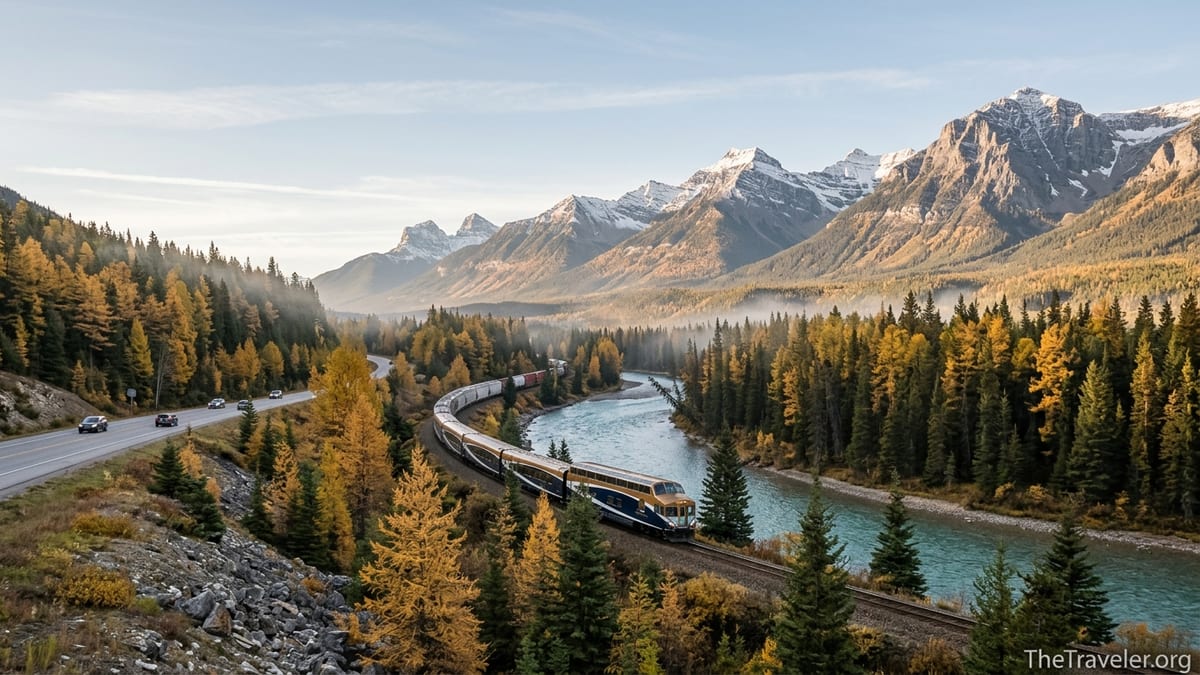
Rail is often at the heart of dream Canada itineraries, but there is a big difference between sightseeing rail vacations like Rocky Mountaineer and point-to-point travel on VIA Rail. Rocky Mountaineer is a private tourist train that runs daylight-only routes such as Vancouver to Banff or Jasper via Kamloops, with hotel nights off the train. Its flagship GoldLeaf service uses bi-level glass-domed coaches with fine-dining meals and outdoor viewing platforms. Sample 2-day Vancouver to Banff rail packages with one hotel night in Kamloops routinely start in the low-to-mid 2,000s per person in SilverLeaf and higher in GoldLeaf, with multi-day packages combining the train and hotels often rising to several thousand dollars per person.
VIA Rail’s services, by contrast, are Canada’s national passenger trains. The Canadian runs four nights between Toronto and Vancouver, with sleeper classes that include meals and access to dome cars, or more basic Economy seating without beds. Recent pricing guides suggest that short economy segments on VIA can start around 50 to 400 Canadian dollars on busy corridor routes, while cross-country sleeper fares for The Canadian typically range from the low 2,000s into 7,000 dollars or more in Prestige Class, depending on season and promotions. Economy seats on The Canadian can be far cheaper than sleepers, sometimes under 1,000 dollars for the full route, but do not include a bed or meals.
Dedicated rail-vacation companies combine these services into turnkey tours. One example is a 9 to 12-day package that uses The Canadian between Toronto and Jasper, adds a coach or private transfer over the Icefields Parkway to Banff and then finishes with a Rocky Mountaineer leg to Vancouver. These bundled trips, often marketed by specialist Canadian rail operators, commonly start in the 4,000 to 7,000 dollar range per person including hotels, rail segments and some touring. The markup reflects the complexity: coordinating rail timetables, luggage transfers, and hotel blocks in small mountain towns where rooms are limited in peak season.
Cross-Country Tours and When to Book a Package
Cross-country Canada tours knit together multiple regions that can be difficult to link independently. One 12-day “Rail Across Canada” style escorted package from a mid-sized operator illustrates this well: the itinerary runs from Vancouver to Halifax using VIA Rail’s The Canadian between Vancouver and Toronto, a connecting corridor train to Montreal, and The Ocean between Montreal and Halifax, with hotels and sightseeing tours at various stops. A recent brochure listed prices around the high 9,000s Canadian per person for a shared cabin, including over 25 meals, flights back to the starting point, city tours and baggage handling.
Attempting to mirror that independently, you would need to secure multiple VIA Rail segments, each with dynamic pricing and limited sleeper capacity, plus internal flights, city tours and hotels. While you might undercut the package price if you diligently watch for sales, especially shoulder-season sleeper promotions, you would assume more risk if a long-distance train runs late or a connection is missed. Escorted and semi-escorted cross-country tours typically include contingency plans for delays, pre-arranged transfers and a guide or local hosts to troubleshoot along the way.
Packages also shine for travelers with limited vacation time. A cross-country rail holiday that combines two major trains, multiple provinces and city sightseeing in 10 to 14 days requires tight coordination. Tour designers build in recovery time, such as an extra night in Toronto between trains or a buffer day before your international flight home, which solo planners might overlook. For travelers comfortable with open-ended adventures and flexible dates, booking individual VIA Rail legs and padding the schedule by a night or two in key hubs can reduce costs. For those wanting a once-in-a-lifetime, tightly scripted trip, organized cross-country tours can be worth the premium.
Wildlife Tours and Small-Group Trips
Some of the most memorable Canada trips revolve around wildlife. Grizzly bear viewing in British Columbia’s Great Bear Rainforest and Knight Inlet, whale watching off Vancouver Island, and polar bear trips in Manitoba all rely on specialist operators and tightly regulated seasons. For instance, Indigenous-owned Knight Inlet Lodge in BC offers 4 to 7-night floating lodge packages in a remote fjord. Recent tariff sheets show multi-night stays commonly running into several thousand Canadian dollars per person, but those rates include floatplane transfers from a coastal town, lodging, all meals and daily bear-viewing or marine-wildlife excursions led by guides.
Similar pricing frameworks apply at other remote lodges such as Great Bear Lodge or Khutzeymateen Wilderness Lodge, where 4 or 5-night bear-viewing programs bundle boat trips, guiding, gear, accommodation and meals into one rate. In these cases, independent travel is rarely an option because access is by charter boat or floatplane and wildlife viewing is controlled to protect habitats. The decision is not between escorted and independent, but rather which lodge and season to choose, and whether to add a pre- or post-stay in cities like Vancouver, Victoria or Prince Rupert.
Small-group wildlife and nature tours elsewhere in Canada, such as multi-day trips through the Canadian Rockies, the Yukon or Atlantic Canada, often cap group sizes around 12 to 16 guests and use minibuses or vans rather than full-size coaches. Per-person costs can look high at first glance, sometimes 400 to 800 dollars per day, but that often covers guiding, transportation, national park entry fees and a mix of included meals. For travelers interested in specific themes like photography, birding or First Nations culture, these focused trips usually provide far more depth than self-guided visits and remove the need to manage complex logistics in remote areas.
Escorted Coach Tours vs Small-Group and Private Options
Traditional escorted coach tours remain one of the most cost-efficient ways to see large swaths of Canada, especially the Rockies and the Maritimes. A typical 9 or 10-day Rockies coach itinerary might include daily coach transport, a tour director, local guides in national parks, hotel stays in Banff, Jasper and Vancouver, and some included sightseeing like Banff Gondola or a lake cruise. Per-day costs can work out to a few hundred dollars per person, especially outside peak summer, partly because coach capacity spreads fixed costs over 30 to 45 passengers.
Small-group tours trade that economy of scale for intimacy and flexibility. A 10-day small-group Rockies hiking trip, capped at 12 or 14 travelers and using a minibus, can cost more per person than a large coach tour, even if accommodation is similar. In return, guests typically get more time on trails, the ability to adjust daily plans around weather, and closer contact with guides. For travelers who dislike early morning luggage calls and tightly timed photo stops, the extra cost can be justified by a more relaxed pace and deeper engagement with nature rather than roadside viewpoints.
Private touring sits at the top end of the market. In the Rockies, it is common to find local companies offering private day tours from Banff or Jasper for a flat rate that covers up to four or six people. When that is scaled across a family or group of friends, a fully private experience with a dedicated vehicle and guide can sometimes rival per-person pricing of high-end small-group trips, especially in shoulder season. Across Canada, private arrangements become most cost-effective when shared by multiple travelers with similar interests and when time is more valuable than absolute budget.
Independent Rail and Self-Drive: When DIY Makes Sense
Independent travel shines in Canada in a few clear scenarios. The first is when you are primarily using rail or rental cars as transport, not as the core experience. If your main goal is to visit friends in Toronto and then spend a week in Vancouver, a basic Economy ticket on VIA Rail or a domestic flight combined with independently booked hotels and car rentals is usually cheaper than a formal rail vacation. On busy corridor routes like Toronto to Montreal or Quebec City, frequent trains and a range of fare classes allow flexible, lower-cost bookings if you can travel outside peak holiday periods.
The second scenario is shoulder-season Rockies and coastal trips, where lodging and car rentals are more available and rates drop compared with July and August. Travelers comfortable booking direct with Parks Canada campgrounds, local motels and independent activity providers can stitch together high-value itineraries in May, early June or late September. A week-long self-drive with a mix of mid-range hotels and simple cabins might come in under what a comparable escorted tour costs in midsummer, even after factoring in fuel and park passes, especially if you share expenses across three or four people.
DIY rail travel also appeals to slow travelers who prefer long stops in fewer places. For example, you might book The Canadian from Toronto to Jasper in Economy, spend five nights in Jasper self-catering, then travel on to Prince Rupert on VIA’s Jasper–Prince Rupert train and connect with BC Ferries along the Inside Passage. This kind of trip rarely appears as a standard tour, yet it can be organized directly with rail, ferry and local lodging providers. The trade-off is that you must pay close attention to seasonal schedules, limited weekly departures and potential delays, padding your plans with buffer days.
When Organized Touring Is Worth the Cost
Organized tours in Canada command a premium over pure DIY, but in several situations that extra cost often represents good value. One is scarcity of capacity, whether cabins on long-distance trains, quality hotel rooms in small mountain towns at peak times, or berths at remote wildlife lodges. Packages that combine VIA Rail sleeper cabins with hotel stays in Jasper and Banff, or that secure coveted spots at grizzly bear lodges during prime salmon season, can turn an otherwise unbookable dream into a firm reservation. For many travelers planning a once-in-a-lifetime visit, the cost of missing out entirely is higher than the package markup.
Another situation is complexity of logistics. Cross-country itineraries that involve two or more long-distance trains, internal flights, and several hotel stays leave little margin for error if weather, wildfires or freight traffic disrupt schedules. Escorted and semi-escorted tour providers build in transfer windows, backup plans and 24-hour support that reduce the personal risk of missed connections and unexpected overnight stays. Families traveling with children or older relatives often find this hand-holding invaluable, even if they are otherwise confident planners.
Finally, organized touring is often worth it for specialized experiences and deeper interpretation. In grizzly bear estuaries, on First Nations cultural tours, on guided glacier walks or in remote Arctic regions, expert guides manage safety, regulations and environmental impact while explaining landscapes and wildlife in detail. Small-group Rockies hiking tours that include naturalist guides can transform the experience from a scenic drive to a richer understanding of geology, ecology and Indigenous history. When comparing prices, look beyond the per-night rate to what your time in Canada will actually feel like on the ground.
The Takeaway
Canada rewards both meticulous planners and travelers who prefer a guide to lead the way. Escorted coach tours and cross-country rail packages provide structure, security and access, particularly in high-demand regions like the Rockies and along iconic train routes where space is limited. Rail-focused vacations on Rocky Mountaineer and VIA Rail’s The Canadian turn the journey itself into the headline attraction, while specialist wildlife tours in British Columbia and beyond open doors to fragile ecosystems that cannot be visited independently.
Independent travel retains clear advantages in flexibility, pace and sometimes cost, especially in shoulder seasons and on shorter, point-to-point routes. A carefully planned self-drive through the Rockies or a DIY rail-and-ferry adventure along the west coast can deliver exceptional value for those willing to handle the bookings and contingencies. The key is to match the tour style to your priorities: if you prize simplicity, guaranteed logistics and curated experiences, lean toward escorted or small-group tours; if you value freedom to linger and adjust plans on the fly, consider building your own itinerary using regular rail services and rental cars.
In practice, many of the most satisfying Canada trips use a hybrid approach. You might start with a packaged Rockies or wildlife component that covers the hardest-to-book elements, then add independently organized city stays in Vancouver, Toronto or Montreal at the beginning or end. By mixing organized touring where it adds the most value with DIY segments where logistics are straightforward, you can keep costs under control while still enjoying the best of what Canada’s rails, roads and wild landscapes have to offer.
FAQ
Q1. Is a Canadian Rockies tour worth it compared with renting a car?
For many travelers in peak summer, an organized Rockies tour is worth it because it secures scarce hotel rooms and manages busy sightseeing stops. If you travel in May, June or late September and are comfortable driving mountain roads, a self-drive can offer more flexibility and sometimes lower overall cost, especially when expenses are shared across several people.
Q2. How far in advance should I book VIA Rail’s The Canadian or a cross-country package?
For summer departures on The Canadian, booking several months ahead is wise, and sleeper classes can sell out even earlier. Cross-country packages that combine multiple trains and hotels are often planned 6 to 12 months in advance, particularly for popular dates such as late June to early September.
Q3. Is Rocky Mountaineer worth the premium over regular trains?
Rocky Mountaineer is a luxury sightseeing train with glass-domed coaches, gourmet meals and daylight-only travel, and its prices reflect that. If the rail experience itself is your priority and your budget allows, many travelers regard it as a highlight. If you mainly need transportation and are watching costs, VIA Rail in Economy or Sleeper Plus is usually far better value.
Q4. Are wildlife tours in places like Knight Inlet or the Great Bear Rainforest suitable for families?
Most remote wildlife lodges can accommodate families with older children and offer family-focused departures or private charters, but they may not be ideal for very young kids because of boat transfers, safety rules and long days outdoors. Check minimum age policies and trip intensity with the lodge or operator before booking.
Q5. Can I visit Canada’s grizzly bear areas or polar bear regions on my own?
In most prime bear-viewing areas, independent access is restricted for safety and conservation reasons, so you must join an authorized operator or stay at a licensed lodge. In Arctic and sub-Arctic regions where polar bear viewing takes place, specialist guides, vehicles and safety protocols are essential and are only available through organized tours.
Q6. Are small-group tours in Canada much more expensive than big bus tours?
On a per-day basis, small-group tours typically cost more than large coach tours because costs are shared among fewer people and itineraries often include more guiding and active experiences. For travelers who value extra flexibility, longer stops and deeper engagement with guides, the higher price can be justified, especially for hiking, photography or wildlife-focused trips.
Q7. When is independent travel in Canada cheaper than taking a tour?
Independent travel is often cheaper on short routes, in the off-season and when you are willing to book simpler accommodations. Examples include self-driving the Rockies in May or late September, booking basic VIA Rail seats between major cities, or combining budget hotels and vacation rentals in places like Vancouver and Montreal.
Q8. Do organized tours in Canada include all meals, or will I still need a food budget?
Few Canada tours include every meal. Cross-country rail packages and wildlife lodges usually include most or all onboard or lodge meals, while many coach tours in the Rockies or Maritimes include breakfasts and some dinners but leave lunches and several evenings free. Always read the “included meals” section of an itinerary and budget for local restaurants and snacks.
Q9. Is it realistic to plan a coast-to-coast Canada trip in two weeks?
It is possible but requires careful planning. Many cross-country packages compress Vancouver to Halifax or vice versa into about 12 to 14 days with limited time in each stop. If you want unhurried exploration in multiple regions, consider focusing on either the west plus Prairies or the center and east, or extend the trip by several days.
Q10. Do I need travel insurance for a Canada rail or wildlife tour?
Comprehensive travel insurance is strongly recommended for any major Canada tour, particularly those involving long-distance trains, small aircraft, ferries or remote lodges. Policies that cover trip interruption, medical care and evacuation can protect you if weather, wildfires or other disruptions affect your itinerary.