


The Great Bear Rainforest on British Columbia’s remote Pacific coast has become one of the world’s most coveted wildlife destinations. It is also one of the most confusing to book. Between “Great Bear” cruises that barely skim the coastline, expensive lodge stays, rustic kayak expeditions and specialized Spirit Bear trips, it can be hard to tell which experiences actually immerse you in this vast temperate rainforest, and which are simply generic BC bear tours with elevated branding. This guide breaks down the main ways to explore the Great Bear Rainforest, when to go, what drives the high prices and how to choose a trip that truly matches your expectations.
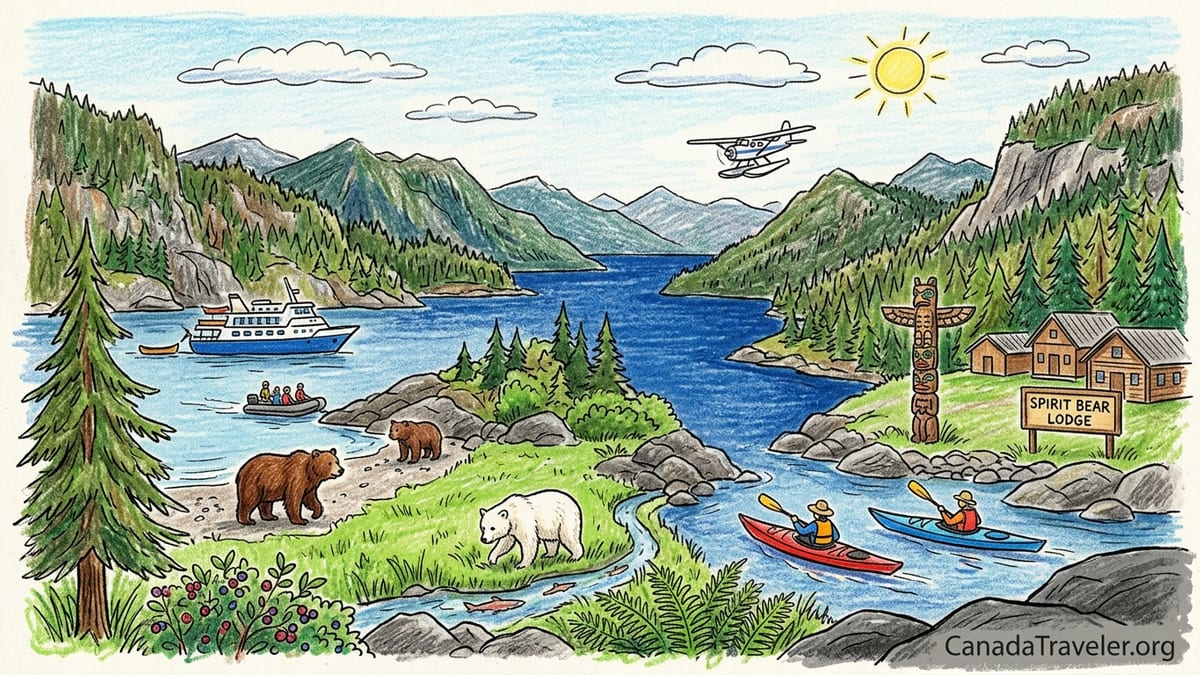
Understanding the Great Bear Rainforest and Its Gateways
The Great Bear Rainforest stretches along roughly 400 kilometers of British Columbia’s central and north coast, covering millions of hectares of fjords, islands and old-growth valleys. Access is almost entirely by boat or small aircraft. That reality shapes every tour style and is a big reason trips here are more complex and costly than typical road-accessible wildlife holidays.
Most multi-day expeditions use small coastal communities as gateways. Bella Bella and nearby Shearwater, reachable by scheduled flights from Vancouver, are major jumping-off points for small-ship cruises and kayak expeditions exploring the central coast. Klemtu, a tiny First Nations village further north, is home to Spirit Bear Lodge, one of the best known Indigenous-owned wildlife lodges in the region. Bella Coola, connected to the interior of BC by road and by short flights from Vancouver, is a practical starting point if you prefer to arrive by car. Farther north, Prince Rupert serves as a gateway for some small-ship itineraries, sea kayaking routes and shorter bear-viewing excursions into areas such as the Khutzeymateen.
Because the region is so spread out, two trips that both claim to be “Great Bear Rainforest” experiences can actually focus on very different corners of the coast. A lodge-based grizzly itinerary west of Bella Coola, a Spirit Bear-focused stay out of Klemtu and a small-ship voyage between Prince Rupert and Bella Bella are all authentic Great Bear journeys, but the scenery, wildlife emphasis and level of remoteness will feel quite distinct. When comparing options, always note which gateway community you will actually use and how much time is truly spent in the heart of the rainforest rather than in transit.
Shorter day tours out of Campbell River, Telegraph Cove, Port Hardy or even Vancouver Island eco-lodges sometimes use the phrase “Great Bear” in marketing, even if they technically operate outside the core Great Bear Rainforest management area. These can still offer rewarding bear viewing or whale watching, but travelers who have dreamed specifically of the Great Bear’s fjords, spirit bears and First Nations territories should double-check maps and itineraries to be sure the trip aligns with that vision.
Seasonality, Bears, Salmon and Spirit Bear Chances
Wildlife drives Great Bear trips and seasonality matters. On the central and north coast, bear viewing typically begins in May, when black and grizzly bears emerge onto estuary grasses and sedge meadows. In spring at lodges such as Spirit Bear Lodge and Great Bear Lodge, guests often see bears grazing in open tidal flats or turning over rocks for crabs, with lush green backdrops but relatively little salmon activity yet.
Through June and July, whale watching and general wildlife viewing improve, with humpback whales, porpoises and coastal wolves more frequently encountered on boat-based trips. Some operators, including Maple Leaf Adventures and Bluewater Adventures, run Great Bear Rainforest small-ship sailings in this period that emphasize broader natural history rather than concentrated bear viewing. The classic bear-and-salmon spectacle intensifies from late August through October, when salmon runs peak in many rivers and creeks and bears congregate to feed. Lodges such as Great Bear Lodge specifically highlight autumn bear-viewing seasons from about late August to mid October, coinciding with significant salmon arrivals in local rivers.
Chances of seeing the white “spirit bear,” a rare color morph of black bear found primarily in Kitasoo Xai’xais and Gitga’at territories, are highest on dedicated spirit bear trips based out of Klemtu or nearby communities. Spirit Bear Lodge typically operates multi-day packages from late August into early October, with boat trips to specific creeks and valleys where spirit bears are known to fish. Even here, sightings are never guaranteed and many travelers plan 4 to 7 night stays to improve their odds. Outside of these specialized itineraries, glimpsing a spirit bear on a general Great Bear cruise or kayak trip is possible but quite unlikely.
Weather also shifts as the season advances. May and June can bring more stable conditions and slightly less rain, but the coast is never dry for long. September and October, when bear activity at salmon streams peaks, are often wetter, cooler and stormier. That means higher chances of dramatic, misty fjord scenery but also a real possibility of itinerary changes, delayed floatplanes or rougher seas. Travelers prioritizing maximum bear action over blue-sky cruising generally target late August and September, accepting that waterproof layers and flexibility are essential.
Small-Ship Expeditions: Moving Through the Heart of the Coast
Small-ship expeditions are one of the most immersive ways to experience the full scale of the Great Bear Rainforest. Companies such as Maple Leaf Adventures and Bluewater Adventures operate vessels that typically carry 8 to 24 guests, using shallow-draft ships, classic wooden schooners or expedition catamarans to navigate narrow inlets and anchor in quiet coves. Itineraries often run 6 to 10 days between ports like Bella Bella, Kitimat and Prince Rupert, with daily shore landings, zodiac cruises and, on some trips, sea kayaking sessions.
On a typical fall voyage from Bella Bella to Prince Rupert, for example, guests might wake to humpbacks bubble-net feeding in a channel, then go ashore with guides to a salmon creek where black bears feed in the riffles. Later in the trip, the ship might anchor off a First Nations village for a cultural visit or slip into a remote estuary, with guides scanning for grizzlies along sedge flats. Cabins on these ships are compact but comfortable, usually with shared or semi-private bathrooms, and most departures include all meals, snacks and non-alcoholic drinks. A 6-day Great Bear Rainforest sailing or catamaran tour commonly falls in the range of several thousand Canadian dollars per person, reflecting the high fuel, crew and provisioning costs in these remote waters.
Guide-to-guest ratios on small ships are usually favorable, often one naturalist guide for every 8 to 12 travelers, plus specialized crew such as a captain, deckhand and chef. This allows for flexible activities: one zodiac might head up a river to a viewing area while another explores a shoreline rich in intertidal life. Some departures emphasize photography and may bring along a professional photographer, while others partner with organizations such as Canadian Geographic to offer more interpretive content. For travelers who want to cover a lot of coastline, visit multiple bear habitats and sample kayaking and whale watching along the way, without committing to more rustic camping, these ships offer a strong balance of comfort and exploration.
When comparing “Great Bear” cruises, read the fine print. Large mainstream cruise ships that list “Great Bear Rain Forest” on a route map or shore excursion menu may simply be passing through the general region or offering a short wildlife cruise from Prince Rupert. Those itineraries can be scenic, but they are not the same as a dedicated multi-day expedition on a small vessel that anchors in secluded bays and spends days inside narrow fjords. Authentic Great Bear small-ship expeditions will usually limit passenger numbers, include at least one or two key gateways such as Bella Bella or Klemtu and highlight time spent with local First Nations partners and in protected estuaries rather than emphasizing onboard entertainment.
Lodge-Based Wildlife Trips: Stationed in Bear Country
Lodge-based trips plant you in the middle of prime bear habitat and send you out on daily excursions. These are typically 3 to 7 night stays that bundle accommodation, meals, guiding and local transport. Great Bear Lodge, reached by floatplane from Port Hardy on northern Vancouver Island, is a well-known example. Its packages in 2026, for instance, include 4-night options with three nights at the wilderness lodge and a final night in town, covering seaplane flights, meals and guided bear-viewing sessions in seasons spanning May to October.
Spirit Bear Lodge in Klemtu, accessed via scheduled flights from Vancouver to Bella Bella and then lodge boats onward, offers a different style of lodge experience deep within First Nations territory. Multi-night packages combine excursions to spirit bear viewing areas, grizzly and black bear habitats and cultural sites such as ancient village locations and petroglyphs. Rooms here are simple but comfortable, with ocean views, and stays include all meals prepared by local chefs, often highlighting regional seafood and Indigenous culinary traditions. Per-person costs for these inclusive packages are typically several thousand dollars for 4 to 7 nights, reflecting both the remoteness of Klemtu and the specialized nature of spirit bear guiding.
Daily routines at wildlife lodges are structured around wildlife and tides. In fall, you may have early breakfast before boarding small boats to reach salmon streams, then rotate between riverside viewing blinds and shoreline scanning from skiffs, returning to the lodge in the afternoon for hot drinks and interpretation sessions. In spring, outings might focus more on estuary meadows, whale sightings and coastal wolves. Guide-to-guest ratios tend to be low, often around 1:4 to 1:6 on bear platforms or boats, to minimize disturbance and maintain safety.
Prices at these lodges can surprise first-time visitors to British Columbia. Factors include limited capacity (often fewer than 20 guests at a time), charter aircraft or scheduled flights to reach the community, high costs for fuel and food deliveries, wages for experienced guides, permits and conservation fees. Many lodges also contribute to local conservation initiatives and employ community members, meaning your trip cost helps fund bear research, salmon habitat monitoring or cultural programming. For travelers who place a premium on reliable, concentrated bear viewing with comfortable beds and hot showers every night, these lodge stays provide some of the most focused wildlife experiences in the Great Bear Rainforest.
Kayaking Expeditions and Human-Powered Coastal Travel
Sea kayaking offers a slower, more elemental way to experience the Great Bear Rainforest. Commercial outfitters run multi-day kayak expeditions that often use Bella Bella or Prince Rupert as start or end points. An 8-day Great Bear Rainforest kayaking trip, for example, might include a water taxi transfer from Bella Bella to the Goose Group Islands, then several days of paddling among islets with white sand beaches, camping each night above the high tide line and scanning for humpbacks, sea otters and the occasional bear foraging along shore.
These kayak journeys are usually fully outfitted, with the company providing sea kayaks, safety gear, group cooking equipment and guides, while participants bring personal clothing and sleeping bags. Some are one-way coastal traverses linking communities like Prince Rupert and Bella Bella, using water taxis or floatplanes to position groups in remote starting coves. Group sizes are typically small, often 6 to 10 paddlers with 2 guides, keeping the experience intimate and allowing for conservative decisions in changing weather or currents.
Compared with ship or lodge trips, kayak expeditions demand more physical fitness and tolerance for rustic conditions. Paddlers may need to handle several hours of activity per day, including loading and unloading gear on beaches, carrying kayaks above the tide line and living in tents without fixed bathrooms or electricity. In exchange, they gain a sense of solitude that is hard to match, drifting quietly along forested shorelines where waterfalls drop straight into the sea and loons call in the evening. Costs for guided 7 to 10 day expeditions typically run in the mid to high four-figure range in Canadian dollars per person, depending on trip length and included transfers.
Independent kayakers with strong coastal experience sometimes thread their own routes between Bella Bella, Klemtu and Prince Rupert, but this is serious wilderness paddling with complex tides, strong currents and frequent storms. For most travelers, a guided expedition strikes the right balance of adventure and safety. When evaluating options, look closely at daily distances, whether the outfitter uses water taxis to skip exposed crossings and how many contingency days are built in for weather.
Day Bear-Viewing Tours and Shorter BC Wildlife Trips
Not every traveler has a week or the budget for an all-inclusive expedition. Around the edges of the Great Bear Rainforest and nearby regions, shorter bear-viewing options exist that can fit into broader BC itineraries. From Prince Rupert, operators run day trips by boat into the Khutzeymateen area, a renowned grizzly sanctuary, where guests spend several hours watching bears graze in estuaries from small vessels. Out of Bella Coola, companies offer half-day and full-day bear-viewing along local rivers and estuaries during the salmon run, often combined with scenic fjord cruising on the inlet.
On northern Vancouver Island, places like Telegraph Cove and Port Hardy act as bases for day grizzly tours to mainland inlets and for whale-watching trips that, while not technically inside the formal Great Bear Rainforest boundaries, share many of the same ecological dynamics. These tours generally cost a few hundred dollars per person per day, including lunch and guiding but not accommodation or long-distance flights. They are a practical way to see wild grizzlies or whales without the commitment of a multi-day expedition.
The key distinction for travelers is that most of these shorter trips, even those marketed with “Great Bear” language, are focused on a single estuary or inlet and return to a town each night. They are rewarding wildlife experiences but do not immerse you in the full remoteness of the central and north coast, where there are no roads and only a few scattered villages. If your dream is to wake up to rainforest-clad mountains all around and have bears or humpbacks as a near-daily presence, a true lodge stay or ship-based expedition within the central Great Bear is more likely to deliver that.
When browsing tour listings, look for clues in the itinerary. A genuine Great Bear-focused day trip will usually specify that it visits a named estuary or inlet on the mainland coast and often mentions the need for specific permits or working with First Nations guardians. More generic bear tours may simply describe “coastal grizzly viewing” without additional geographic context and might operate closer to more developed corridors of BC’s coast.
Trip Duration, Fitness, Comfort and What Drives the Cost
Choosing between a 3 night lodge getaway, a 6 to 10 day small-ship sailing or an 8 day kayak expedition comes down partly to budget, but also to your appetite for movement, rusticity and weather. Lodge trips as short as three or four nights can work for travelers who want high-probability bear viewing with minimal packing complexity. If you are flying in from afar, many travelers find 4 to 7 nights more comfortable, building in a buffer for any seaplane or ferry delays caused by storms.
Small-ship expeditions usually sit in the middle in terms of comfort. Cabins are compact and sometimes have shared bathrooms, but you have a bed, heating and chef-prepared meals. Activity levels can be adjusted: one guest might join every shore hike and kayak outing, while another chooses to stay on deck and watch from the rail. Fitness requirements are moderate, but guests should be comfortable walking on uneven, slippery terrain and climbing in and out of zodiacs. Kayak expeditions demand the most stamina and flexibility, involving full days outdoors in variable weather and sleeping in tents, yet experienced outfitters can accommodate a broad range of ages with realistic daily distances and plenty of breaks.
Prices in the Great Bear Rainforest can feel high compared with other destinations, but they reflect real logistical challenges. Fuel must be shipped in, food is often brought by barge or small vessel, staff need specialized training in navigation, bear safety and interpretation, and strict wildlife viewing and waste management protocols require investment in infrastructure such as viewing platforms and composting systems. Many operators also pay user fees or conservation levies and are committed to fair agreements with First Nations whose territories they traverse.
Another driver of cost is group size. A lodge hosting 12 guests at a time with a ratio of one guide for every four guests and including flights, meals and daily boat trips cannot spread expenses over hundreds of people the way a large cruise ship can. Similarly, a 70-foot sailing ship carrying 12 travelers and 5 crew members on a remote itinerary has limited economies of scale. When evaluating price, consider the included seaplane transfers, meals, guiding and gear, rather than only comparing headline numbers. A seemingly cheaper tour that requires you to add your own flights, meals and local charters may end up costing more in practice than a higher-priced but more inclusive package.
How to Spot a True Multi-Day Great Bear Expedition
Because the phrase “Great Bear Rainforest” has strong marketing appeal, it appears on an increasing number of itineraries, some of which only brush the edge of the region. To distinguish genuine multi-day Great Bear expeditions from shorter or more generic BC bear tours, start by checking the map. Authentic trips will spend most of their time between roughly Bella Coola and Prince Rupert along the mainland and adjacent islands, often naming specific inlets, channels or islands that align with that geography.
Next, look at gateways and logistics. Journeys that require flights to Bella Bella, Bella Coola, Klemtu or Prince Rupert, along with boat transfers or floatplanes into small bays, are more likely to be true Great Bear experiences than tours that depart exclusively from major hubs like Vancouver or Victoria and return the same day. Multi-day expeditions will generally list remote anchorages or lodge locations without road access, and they will emphasize working relationships with local First Nations or mention specific Indigenous territories.
Trip duration is another clue. Most meaningful Great Bear expeditions run at least 4 days, and more commonly 6 to 10, to allow for weather, tides and multiple wildlife encounters. Itineraries packed into one or two nights may still be enjoyable coastal getaways but are unlikely to deliver the depth of experience that comes from several dawns and dusks in the rainforest. Pay attention as well to activity descriptions. Tours that highlight viewing platforms at salmon rivers, quiet estuaries, multiple wildlife species and cultural elements such as longhouse visits are more likely to be rooted in the place, while those that focus primarily on “scenic cruising” or onboard amenities are likely using the Great Bear name more as a scenic label.
Finally, consider how operators talk about group size, wildlife ethics and seasonality. Guides who are upfront about the unpredictability of spirit bear sightings, limit group numbers at viewing sites and explain why some departures run only in late August and September for salmon are signaling a genuine, ecology-driven operation. Marketing that promises guaranteed sightings, runs the same itinerary every month of the year or avoids mentioning any collaboration with First Nations should prompt more questions before you book.
The Takeaway
Exploring the Great Bear Rainforest is less like booking a standard resort week and more like joining a small, finely tuned expedition into one of the planet’s last large coastal temperate rainforests. Whether you choose a small-ship voyage between Bella Bella and Prince Rupert, a multi-night stay at a wildlife lodge in Klemtu or an 8 day kayak expedition through island groups off Bella Bella, the common threads are remoteness, rich wildlife, complex logistics and a heavy dependence on weather and tides.
By understanding the seasonal rhythms of bears and salmon, recognizing the practical differences between ship, lodge and kayak-based travel, and carefully checking gateways and maps, you can select a trip that truly matches your expectations and budget. Focus less on marketing language and more on where you will sleep, how you will move each day, who owns and guides the operation and how much time you will actually spend inside the core Great Bear Rainforest. With that clarity, the journey you choose is far more likely to deliver the misty fjords, watching eyes of grizzlies and quiet moments on rain-darkened shores that have made this coast a dream destination for wildlife travelers around the world.
FAQ
Q1. When is the best time of year to see bears in the Great Bear Rainforest?
The most reliable bear viewing, especially at salmon rivers, is from late August through September and often into early October, when salmon runs peak and bears concentrate at streams. Spring and early summer can still offer excellent sightings, particularly of bears grazing in estuaries, but may lack the classic fishing scenes many travelers imagine.
Q2. How many days do I need for a meaningful Great Bear Rainforest trip?
For a true sense of the region, plan at least 4 days on the ground or on the water, with 6 to 10 days ideal for small-ship or kayak expeditions. Shorter day trips or overnight tours can be rewarding introductions to coastal wildlife, but they will not provide the same immersion in remote fjords and multiple bear habitats.
Q3. Are Spirit Bear sightings guaranteed on Spirit Bear Lodge trips?
No operator can guarantee a spirit bear sighting. Spirit Bear Lodge and similar Indigenous-owned experiences operate in areas with known spirit bear populations and run multi-day trips in peak viewing months to improve your chances, but sightings depend on weather, salmon timing and individual animal movements.
Q4. Do I need to be very fit to join a Great Bear Rainforest trip?
Fitness requirements vary by trip style. Lodge and small-ship guests should be comfortable walking on uneven, slippery terrain and getting in and out of small boats, but daily distances are usually moderate. Multi-day kayak expeditions require greater stamina, comfort with camping and several hours of paddling most days.
Q5. Why are Great Bear Rainforest tours more expensive than many other wildlife trips?
High costs reflect the region’s remoteness, limited group sizes and intensive logistics. Fuel, food and equipment must be shipped in, staff are highly trained, many trips include seaplane or boat charters and operators pay conservation and access fees, often while partnering closely with local First Nations communities.
Q6. What is the difference between a Great Bear Rainforest cruise and a regular Alaska or BC cruise?
True Great Bear Rainforest small-ship expeditions carry far fewer passengers, focus on narrow inlets and estuaries between communities such as Bella Bella, Klemtu and Prince Rupert, and prioritize shore landings, bear viewing and cultural visits. Large cruise ships may pass through the general region but usually cannot access the shallow fjords or spend long periods in specific bear habitats.
Q7. Is it possible to self-drive to the Great Bear Rainforest?
You can drive to Bella Coola from the BC interior and join boat-based tours from there, but most of the Great Bear is accessible only by water or air. Gateways like Bella Bella, Klemtu and Prince Rupert require flights or ferries, and the wildest parts of the coast have no road access at all.
Q8. What kind of accommodation should I expect at wildlife lodges?
Most Great Bear lodges offer comfortable, often rustic-chic rooms with private or semi-private bathrooms, hot showers and cozy common areas. Power may be supplied by generators or renewable systems, and Wi-Fi, if present, is often limited. The focus is on warmth, good food and proximity to wildlife rather than luxury amenities.
Q9. How do weather and rain affect trips in the Great Bear Rainforest?
Rain is part of the experience year-round, especially in late summer and fall. Operators provide or recommend high-quality rain gear and build flexibility into itineraries to work around storms. Heavy weather can delay floatplanes or alter daily plans, but it also brings dramatic light, waterfalls and the lush green landscapes that define the rainforest.
Q10. How can I be sure my trip benefits local communities and conservation?
Look for operators that are Indigenous-owned or that clearly outline partnerships with First Nations, employ local staff, mention specific conservation projects and are transparent about group size limits and wildlife viewing guidelines. Asking how your fees are used and how the company supports local stewardship is a good way to gauge their commitment.