


Northern Canada feels far away on the map, but getting there is easier when you understand how flights, roads and regional connections fit together. Whether you are chasing midnight sun in Whitehorse, northern lights in Yellowknife or Arctic culture in Iqaluit, planning your transportation is the single most important step for a smooth trip. This guide walks you through real-world options, from major airline routes to gravel highways and tiny airstrips, and explains when you can travel independently and when an organized transfer or tour becomes essential.
Understanding the Geography of Northern Access
For trip planning, it helps to think of northern Canada in three broad gateways: Whitehorse in Yukon, Yellowknife in the Northwest Territories and Iqaluit in Nunavut. Whitehorse and Yellowknife are connected to the rest of Canada by all-weather roads and year-round commercial flights. Iqaluit, on the other hand, has no road access at all and is reachable only by air, plus the occasional seasonal ship for cargo and expedition cruises. How you get in and move around will depend heavily on which of these hubs you choose.
Distances are larger than they appear on most maps. Whitehorse is roughly a two-and-a-half hour flight from Vancouver and more than 1,400 kilometres by road from Edmonton via the Alaska Highway. Yellowknife sits at the northern end of Highway 3, about a 1,500 kilometre drive from Edmonton. Iqaluit lies on Baffin Island in Nunavut, and the nearest road you can drive is still several hundred kilometres and an ocean away. This geographic reality explains why regional airlines and small aircraft play such an outsized role in the North.
Weather and season make a practical difference. In winter, frozen rivers and lakes become part of the transport system through ice roads serving communities such as Tuktoyaktuk from Inuvik, while in spring those same routes may be closed during the thaw. Even where highways are technically open year-round, such as the Dempster Highway in Yukon and Northwest Territories, snow, freezing rain, smoke from wildfires or soft shoulders during shoulder seasons can temporarily interrupt access. Build flexibility into your itinerary and avoid scheduling critical connections too tightly.
Because of these variables, it is smart to treat every leg of your journey like a separate project: getting to the northern hub, moving around within that territory, and then reaching any remote community or wilderness lodge. In practice, that can mean booking a Vancouver to Whitehorse flight on a national carrier, a separate ticket on a regional airline onward to Dawson City or Old Crow, and then arranging a pre-paid transfer with a tour operator or lodge to reach trailheads or river put-ins far from town.
Flying to the Main Hubs: Whitehorse, Yellowknife and Iqaluit
Most travelers from North America or Europe will first fly to a major Canadian city like Vancouver, Calgary, Edmonton, Ottawa or Montreal, then connect north. Whitehorse’s Erik Nielsen Whitehorse International Airport is typically served by at least one major national airline from Vancouver and sometimes Calgary, along with Yukon-based carrier Air North, which operates routes linking Whitehorse with Vancouver, Kelowna, Victoria, Edmonton and smaller Yukon communities. In summer, schedules usually increase, giving more options for daylight arrivals and departures that connect more easily with same-day car rentals or regional flights.
Yellowknife’s airport functions as the primary air hub for the Northwest Territories. It is commonly served by national carriers from Edmonton and Calgary and sometimes from Vancouver, as well as by northern airlines such as Canadian North, WestJet’s seasonal services, and local operators like Air Tindi on regional routes. For example, it is typical to see multiple daily flights between Edmonton and Yellowknife on a mix of national and northern carriers in high season, which allows some flexibility if weather or operational issues affect a specific flight.
Iqaluit is different because it sits in Nunavut, a territory connected exclusively by air. Canadian North is the main scheduled carrier linking Iqaluit with Ottawa and Montreal, and with a network of smaller Nunavut communities such as Rankin Inlet and Pangnirtung. Air Greenland also operates seasonal flights between Iqaluit and Nuuk, typically once weekly in summer. There are no direct flights from the continental United States; travelers usually route via Ottawa or Montreal and then north. Because seat capacity to Iqaluit is limited compared with southern destinations, it is wise to book several months in advance, especially for peak summer and early autumn.
As a practical example, a traveler from Denver heading to Iqaluit might book Denver to Ottawa on a large international carrier, overnight near the airport, and then take a morning Canadian North flight to Iqaluit the next day. Someone bound for Whitehorse from London might fly London to Vancouver, clear immigration, then connect onto an Air North or major-carrier flight to Whitehorse. In both cases, it is usually safer to allow longer connection times than you might in more densely connected regions because rebooking options can be limited if a single northern flight is delayed or cancelled.
Regional Air Connections and Remote Community Access
Once in the northern hub, regional airlines become the backbone of further travel. In Yukon, Air North and smaller operators such as Alkan Air use a mix of jets and turboprops to reach communities like Dawson City, Old Crow and Watson Lake. In practice, you might land in Whitehorse around midday and catch an afternoon turboprop flight to Dawson City, arriving at a small but modern terminal where baggage is unloaded a few metres from the parking lot. Many lodges in the region will time their check-in windows and shuttle pickups around these scheduled flights rather than expecting guests to arrive by car.
In the Northwest Territories, airlines such as Canadian North, Air Tindi and Northwestern Air Lease provide scheduled and charter service linking Yellowknife with communities like Inuvik, Hay River, Norman Wells, Fort Simpson and Lutselk’e. Travelers heading for fishing lodges on Great Slave Lake or paddling expeditions on the Nahanni River often fly to Yellowknife on a jet, then continue in a smaller turboprop or even a floatplane to a lodge dock or gravel strip. For example, a Nahanni rafting trip might bundle a Yellowknife to Fort Simpson segment on a scheduled flight and then a short charter hop into a gravel bar near the river put-in.
Nunavut has perhaps the most complex patchwork of regional airlines. Canadian North and Calm Air act as primary scheduled carriers, with charters and medical flights provided by outfits such as Air Nunavut and other local operators. Much of the territory is on a spoke-and-hub pattern: small coastal communities feed into larger centres like Iqaluit, Rankin Inlet or Cambridge Bay, which in turn connect south. For travelers, that means you may overnight in Iqaluit or Rankin Inlet en route to destinations like Pond Inlet or Kugluktuk, because same-day connections are often not guaranteed.
Because flight loads are small and aircraft are often fully booked with residents traveling for medical, school or work reasons, tourists should treat seats as a scarce resource. Tour operators in Nunavut, the NWT and Yukon frequently hold blocks of seats on certain flights during short peak seasons such as spring polar bear viewing near Resolute or August hiking in Auyuittuq National Park. Booking a packaged trip that includes these regional flights can be more reliable and at times even cheaper than trying to piece together standalone tickets, especially when extra baggage like camera gear or expedition equipment enters the equation.
Driving North: Highway Access and the Dempster Highway
Driving to northern Canada is a classic road-trip experience, but it requires realistic expectations. Whitehorse is reachable via the Alaska Highway from Edmonton through northern British Columbia, with services every few hundred kilometres but sometimes long gaps without fuel at night. Yellowknife is accessed from Edmonton via Highways 16, 35 and then the Mackenzie Highway north through Hay River, before turning toward Yellowknife on Highway 3. Both routes are paved, though frost heaves, wildlife and occasional construction zones demand slower speeds and careful driving.
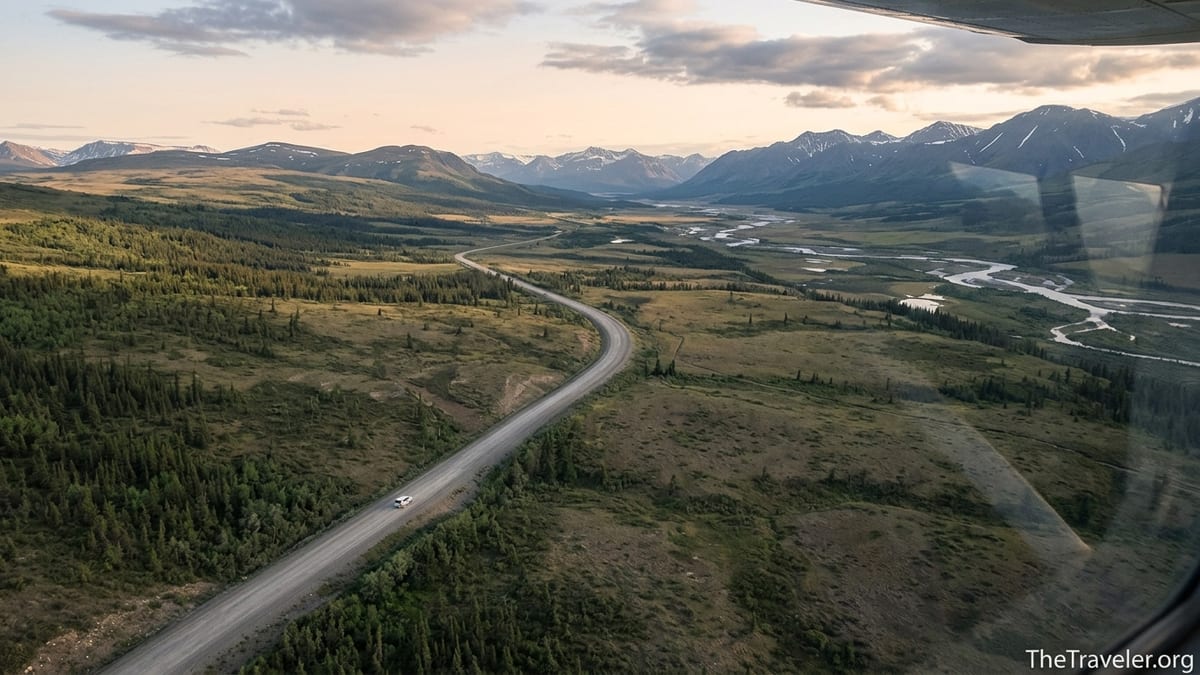
The Dempster Highway, which branches off near Dawson City in Yukon, is a different kind of road entirely. Approximately 740 kilometres of mostly gravel, it crosses the Arctic Circle and continues past Tombstone Territorial Park to Inuvik in the Northwest Territories, then links to Tuktoyaktuk on the Arctic Ocean via an all-weather extension. This is not an ordinary scenic byway. Long sections lack cell coverage, fuel and services are limited to a handful of stops such as Eagle Plains and Fort McPherson, and weather can change quickly even in midsummer. Travelers report that road conditions can be excellent one day and slick or deeply rutted the next, depending on rain, maintenance and traffic.
A crucial factor is rental car policy. Many mainstream rental companies in Whitehorse and Dawson City explicitly prohibit their vehicles from being taken onto the Dempster Highway or other remote gravel routes. Violating this can lead to large penalty charges and denial of insurance coverage for damage from flying rocks or blown tires. Some travelers who attempted the Dempster in standard rental cars have later reported four-figure “miscellaneous” damage bills. If you plan to drive this road, look for smaller regional agencies or specialist outfitters that specifically allow gravel-highway use, or consider guided overland tours that provide an appropriate vehicle and mechanical support.
As an illustrative itinerary, a couple might fly into Whitehorse, rent a vehicle approved for gravel travel, drive to Dawson City over two days, then continue up the Dempster to Eagle Plains for an overnight, and onward to Inuvik and Tuktoyaktuk. That journey could easily take five or more days of driving, with prudently short daily distances to allow for photo stops, wildlife sightings and slow going in wet conditions. Factoring in fuel, accommodations and specialized insurance, such a self-drive adventure often costs as much as, or more than, flying to Inuvik and joining a local operator for a return day trip to Tuktoyaktuk by van or small bus.
Rental Cars, Luggage Rules and Practical Constraints
Car rental in the North functions differently than in big cities. Whitehorse and Yellowknife have outlets of international brands at the airport, but fleets are relatively small and in high summer it is common to see “sold out” notices weeks ahead. Local agencies may be more flexible about one-way rentals to smaller communities or gravel-road permissions, but they also tend to book out early. Daily rates are usually higher than in the south, and additional fees for kilometers beyond a set limit can apply. Securing a vehicle should be treated as a core part of your planning, not an afterthought.
Luggage rules can surprise first-time visitors, especially on regional flights. Big jets serving hubs like Vancouver to Whitehorse typically follow standard national or international checked-bag allowances, but turboprop flights onward to communities often use weight-based systems. On some routes, you might be allowed a single 20 to 23 kilogram checked bag and a smaller carry-on, with excess charged per kilogram and carried on a space-available basis. Soft duffel bags are generally more forgiving than hard suitcases for small aircraft holds, and some outfitters in the NWT and Nunavut will provide large expedition duffels at the starting point to repack your gear.
Sports equipment and specialized gear deserve particular attention. Hunters flying to remote Nunavut communities with rifles and coolers, or photographers traveling with long lenses and tripods, may quickly hit weight limits, even if they only bring two pieces of luggage. In many cases, airlines will carry excess baggage on later flights if the aircraft is at maximum weight, which can leave you separated from tents, skis or food for 24 hours or more. A practical solution is to travel with one compact, high-quality checked bag and a well-organized carry-on that includes at least one warm layer, critical medication, and anything you cannot begin the trip without.
Vehicle storage and one-way logistics also come into play. If you plan to drive the Dempster and then fly back from Inuvik or Tuktoyaktuk, you will need permission from your rental company and a drop-off arrangement, which only a subset of agencies offer. More commonly, travelers either return the same way by road or park their vehicles in Dawson City or Whitehorse and join a guided excursion north. When comparing costs, remember to budget for items such as windshield damage waivers, satellite communications rentals, and fuel surcharges that can significantly increase the price of independent driving in remote regions.
When to Choose Organized Transfers and Tours
The more remote your destination, the more sense it makes to let specialists handle at least part of your transportation. In Yukon, that might mean joining a small-group tour that includes transportation from Whitehorse up the Dempster Highway, accommodation at lodges along the route and guided excursions in Tombstone Territorial Park. Such trips often bundle costs for vehicle, fuel, guiding and meals, and they usually include contingency planning for weather delays that an individual traveler would otherwise need to manage alone.
In the Northwest Territories, many aurora viewing and fishing packages from Yellowknife include airport pickup, transfers to a wilderness lodge by van, snowcoach or charter aircraft, and return transport to town. For example, a lodge on Great Slave Lake might meet guests at Yellowknife airport, drive them 20 minutes to a floatplane base, and then fly them directly to the lodge dock, eliminating the need for guests to arrange anything beyond the initial ticket to Yellowknife. In winter, similar lodges might use snowmobiles or tracked vehicles over frozen lakes, methods that would be difficult to arrange independently without local knowledge and equipment.
In Nunavut, organized logistics are even more important. Trips to places like Pond Inlet for floe edge wildlife viewing, or to Qausuittuq and Auyuittuq national parks, typically include all internal flights, boat transfers, snowmobile shuttles, and sometimes even park permits. Independent travel is possible but requires extensive advance planning and a willingness to navigate local freight schedules, weather holds and last-minute changes. For most visitors, buying a package that bundles Iqaluit or Rankin Inlet flights with guiding and accommodation represents the most realistic way to experience remote communities safely.
As a rule of thumb, if your journey involves charter aircraft, long stretches of unpaved roads without services, or winter travel beyond the main highways, you should seriously consider a guided tour or pre-arranged transfer. Not only does this reduce risk, it also channels money into local businesses and ensures that your travel respects community protocols, especially in Indigenous regions where land use is governed by modern treaties and local decision-making.
Seasonal Timing, Weather and Contingency Planning
Choosing when to travel north has direct transportation consequences. Summer, from roughly June to early September, offers the most reliable road conditions, long daylight hours and the fullest regional flight schedules. This is also when fly-drive combinations are most popular: driving the Alaska Highway to Whitehorse, then flying home from there, or flying to Yellowknife and renting a car for day trips around Great Slave Lake. However, summer is also peak season, so flights, rental cars and organized tours should be booked as far ahead as possible.
Shoulder seasons in May and late September to October can be rewarding but pose specific challenges. On gravel routes like the Dempster Highway, shoulder-season travel may coincide with thaw or early freeze, when roads become muddy, slippery and more vulnerable to washouts. Some travelers and local drivers caution against tackling the Dempster in late September without winter driving experience and very flexible timing. In Nunavut, spring shoulder season around April and May is prime time for snowmobile-based trips on sea ice, but visibility and winds can ground aircraft and delay departures for days.
Winter brings its own advantages and drawbacks. While temperatures in Yellowknife or Iqaluit might plunge well below freezing, skies are often clear and flights can be surprisingly reliable in cold, stable weather. That said, storms can still ground smaller aircraft and close ice roads. If you are flying to the North specifically for an aurora-viewing trip, plan at least three nights on the ground to give yourself a buffer in case of an inbound delay, and avoid same-day connections to international long-haul flights on the way home.
No matter the season, build redundancy into your plans. Avoid planning critical obligations like weddings or important meetings immediately after a northern trip. Consider changeable or refundable airfares on key segments, and make sure travel insurance covers missed connections caused by weather. On remote routes, always carry extra food, water and warm clothing, even if you plan only a few hours’ drive. The farther north you go, the more you should assume that schedules are targets rather than guarantees.
The Takeaway
Traveling to northern Canada is less about ticking off distances than about understanding how the transport puzzle fits together. Whitehorse and Yellowknife offer a blend of familiar infrastructure and wild landscapes, reachable by both highway and jet. Iqaluit and the wider communities of Nunavut rely almost entirely on regional aircraft and carefully coordinated logistics, making advance planning essential. In every case, what looks straightforward on a map often hides practical complications of weather, remoteness and limited capacity.
The reward for this extra work is access to some of the most remarkable landscapes and cultures in the country, from the mountains flanking the Dempster Highway to the tundra and sea ice of Baffin Island. By combining major airline routes with realistic driving plans, choosing regional flights thoughtfully, and recognizing when to rely on organized transfers, you can build a trip that is both adventurous and safe. Approach the journey with flexibility, respect for local conditions, and a willingness to let the North set the pace, and getting there becomes part of the experience rather than an obstacle.
FAQ
Q1. Can I drive all the way to Iqaluit or other Nunavut communities?
Iqaluit and other Nunavut communities have no road links to the rest of Canada. You must fly, and in some cases continue by smaller aircraft, boat or snowmobile.
Q2. Do I need a 4x4 vehicle to drive the Dempster Highway?
A high-clearance vehicle with good tires is strongly recommended, but four-wheel drive is less important than careful driving and proper preparation. Always confirm that your rental company allows travel on the Dempster.
Q3. How far in advance should I book flights to Yellowknife or Whitehorse?
For peak summer and popular aurora seasons, booking three to six months ahead is sensible, especially if you need specific travel dates or plan to connect with tours.
Q4. Are regional flights in the North often delayed or cancelled?
Weather and operational issues can cause disruptions, particularly in winter and shoulder seasons. Build in buffer days and avoid tight same-day links to long-haul flights.
Q5. What kind of luggage is best for small northern aircraft?
Soft-sided duffel bags are usually better than rigid suitcases, as they fit more easily into small holds. Pack light and keep must-have items in your carry-on.
Q6. Can I rely on public transport instead of renting a car?
Outside the main towns, public transport is extremely limited. In most cases you will either need a rental vehicle, pre-arranged shuttle or an organized tour to reach trailheads and remote sites.
Q7. Is it cheaper to travel independently or book a package tour?
Independent travel can be cheaper around main hubs, but for remote communities and lodges, packages that include flights and transfers are often comparable in cost and far simpler.
Q8. Do I need special permits to visit northern national parks?
Many parks in Nunavut and the Northwest Territories require permits and sometimes mandatory guiding. Tour operators frequently handle these as part of a package, which simplifies logistics.
Q9. How much extra time should I allow for connections in northern hubs?
Allow at least a few hours between flights, and consider overnighting when changing from major carriers to small regional airlines, especially in winter or early spring.
Q10. When is an organized transfer or tour essential rather than optional?
Organized logistics become essential when your plan involves charter aircraft, sea ice or snowmobile travel, long gravel roads without services, or visits to very small Arctic communities.