


For many travelers, northern Canada is a once-in-a-lifetime dream: emerald aurora swirling overhead, caribou on the move, jagged peaks and ice-choked seas at the edge of the map. Yet that dream quickly runs into a practical question. If you have time and budget for just one territory, should you go to the Yukon, the Northwest Territories or Nunavut? Each offers northern lights, wild landscapes and Indigenous culture, but in very different ways and at very different price points. This guide breaks down how the three territories compare so you can match the right destination to your travel style.
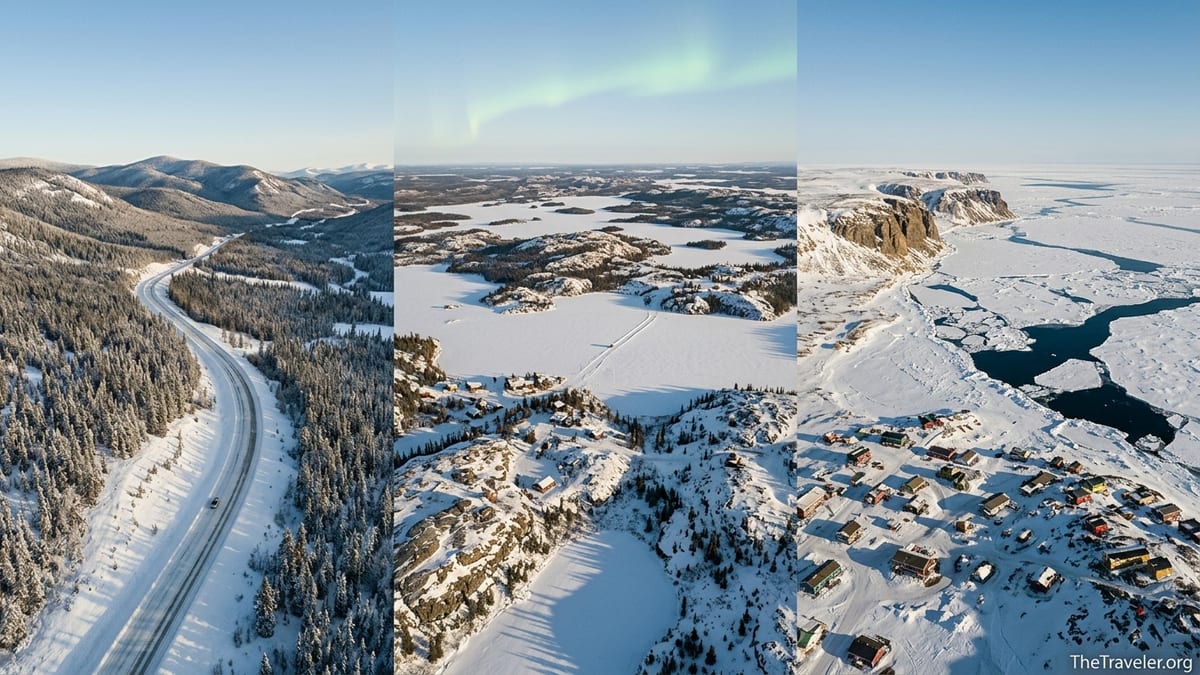
Getting There and Getting Around
In terms of pure accessibility, the Yukon is the easiest northern territory for most travelers. Whitehorse is linked to southern Canada by the Alaska Highway and year-round paved roads, so you can fly in and rent a car or even drive your own vehicle from British Columbia or Alberta. Multiple airlines run daily flights from cities like Vancouver and Calgary to Whitehorse, often with advance-sale fares that can be comparable to flying to a major Canadian city in peak season. Once on the ground, you can drive paved highways to places such as Haines Junction near Kluane National Park or Dawson City on the Klondike Highway, and continue north on the Dempster Highway toward the Arctic Circle.
The Northwest Territories sit in the middle ground for access. Yellowknife is not connected by road to southern Canada in quite the same straightforward way as Whitehorse, but it is reachable by all-season highways from Alberta via the Mackenzie Highway and Highway 3, and by frequent flights from Edmonton and Calgary. For many visitors it is still most convenient to fly. From Yellowknife, road access extends to communities such as Behchokǫ̀ and Fort Providence, while the Dempster Highway links into the western Arctic near Inuvik and onward to Tuktoyaktuk on the Arctic Ocean. Seasonal conditions can affect driving, and in some shoulder seasons remote communities are only accessible by air when river ice is forming or breaking up.
Nunavut is by far the most remote of the three territories. There are no road connections from the rest of Canada into Nunavut, and even communities within the territory are not linked by highways. Travelers typically fly from Ottawa, Montreal, Winnipeg or Yellowknife into hubs such as Iqaluit on Baffin Island, Rankin Inlet in the Kivalliq region or Cambridge Bay in the Kitikmeot. From there, smaller aircraft connect to outlying communities and national parks or, in summer and early fall, expedition cruise ships call at a series of coastal settlements and wilderness sites. The lack of roads means that once you are in Nunavut, getting around usually involves charter boats in summer, snowmobiles and dog teams in winter, and short local flights between communities.
If you prefer to be independent and keep logistical complexity low, the Yukon is the clear winner, with the Northwest Territories in second place for those comfortable driving in northern conditions or booking regional flights. Nunavut is best suited to travelers who accept that reaching the Arctic archipelago means higher costs and more structured logistics, whether through a specialist tour operator or an expedition cruise.
Northern Lights: Where and When They Shine Brightest
All three territories sit under the auroral oval and each offers excellent chances to see the northern lights in the right season. The Yukon has built a particularly strong reputation among first-time aurora travelers because of the combination of good viewing and comfortable infrastructure. Whitehorse has dozens of operators running evening northern lights excursions in winter, with heated cabins, yurts, hot drinks and photography support. Peak viewing season typically runs from late August through early April, with the most reliable conditions from about November to March when nights are longest. Many visitors base themselves in a Whitehorse hotel, then join night tours out of town, or stay in dedicated aurora lodges accessed by shuttle or short drives.
The Northwest Territories, and Yellowknife in particular, are serious contenders for the title of top aurora destination in Canada. The area benefits from clear winter skies and a location almost directly under the auroral oval, so even short visits in mid-winter can yield multiple nights of strong displays. Numerous operators around Yellowknife provide aurora-viewing camps with heated teepees or cabins, and some offer multi-night packages that bundle dog sledding, snowmobiling and ice road tours with nightly aurora viewing. In the western Arctic, Inuvik and Tuktoyaktuk on the Arctic Ocean also see vivid aurora, and some road trip itineraries on the Dempster Highway are designed around both tundra scenery and night-sky viewing.
Nunavut also lies firmly within aurora country, but the experience is different because tourism infrastructure is lighter and the focus is often as much on cultural immersion or wildlife as on the lights themselves. In Iqaluit, winter visitors may see aurora simply by walking out of town on a clear night, and some outfitters offer evening snowmobile or qamutik sled outings that combine local storytelling with sky-watching. In smaller communities, such as Arctic Bay or Pond Inlet, aurora can be extraordinarily bright under very dark skies, but organized tours may be limited and weather or flight delays can significantly affect trip timing.
For travelers whose primary motivation is a comfortable and relatively convenient aurora holiday, the Yukon and Northwest Territories have the strongest offerings, with the Northwest Territories often edging ahead on raw viewing reliability and the Yukon offering a slightly broader mix of urban comforts and easy road access. Nunavut is a good choice if you want aurora as a bonus to a deeper Arctic cultural or wildlife experience rather than the sole focus.
Arctic Landscapes, Wildlife and Road Trips
The Yukon offers a classic subarctic and mountain landscape, with some of Canada’s most dramatic peaks. Kluane National Park protects part of the Saint Elias Mountains and the largest non-polar icefield on Earth, and flightseeing tours from Haines Junction or nearby airstrips take visitors over crevassed glaciers and massive peaks on clear days. Along the Alaska Highway and Klondike Highway it is not unusual to spot Dall sheep, moose or even grizzly bears from the road in summer. The Dempster Highway, which begins near Dawson City and heads north into the Northwest Territories, delivers tundra vistas, chances to cross the Arctic Circle and views of rugged ranges like the Tombstone Mountains. Because of the relatively extensive road network, independent road trips are one of the Yukon's biggest draws.
In the Northwest Territories, landscapes shift from boreal forest and shimmering Great Slave Lake near Yellowknife to the treeless tundra and river deltas of the western Arctic. Road trippers can drive north from the Yukon border along the Dempster Highway to Inuvik, then continue on the all-season road to Tuktoyaktuk, where the gravel meets the Arctic Ocean. Along the way, territorial parks and viewpoints provide access to pingos, river valleys and wide horizons where you may see caribou in season or migratory birds in summer. In winter, some years allow for ice roads on frozen waterways, which become attractions in their own right, although driving conditions can be challenging and require local knowledge.
Nunavut is where you encounter the archetypal Arctic: tide-cracked sea ice, drifting pack ice, calving glaciers and high, rockbound coasts. On Baffin Island, communities like Pond Inlet and Clyde River serve as gateways to towering fiords and floe-edge wildlife viewing in spring, where travelers on guided trips may see polar bears, narwhal and seals from safe distances under the supervision of Inuit guides. In the Kivalliq region, places like Arviat offer polar bear viewing in autumn, often using boats before freeze-up. National parks such as Auyuittuq and Quttinirpaaq are among the most remote in the country, and visiting usually requires charter flights, permits and fully supported expeditions, but reward hikers and paddlers with enormous glacial valleys, ice caps and a sense of isolation that is hard to match.
If self-drive exploration, roadside wildlife sightings and flexible itineraries are key for you, the Yukon and the highway-accessible parts of the Northwest Territories fit best. If you are drawn to sea ice, floe-edge safaris and the feeling of being at the top of the world, Nunavut is unmatched, provided you are prepared for the higher costs and tighter safety protocols that accompany polar bear country and expedition-style travel.
Indigenous Cultural Experiences and Community Life
All three territories are home to vibrant Indigenous cultures, and spending time with local hosts is often the most rewarding part of a northern trip. In the Yukon, many First Nations communities and cultural centers welcome visitors. Carcross, for instance, features carved totems and clan houses created by Carcross/Tagish First Nation artists, while cultural centers in Whitehorse and Dawson City interpret long histories that predate the Klondike Gold Rush. Some tour operators partner with local First Nations guides for activities such as storytelling evenings, traditional food tastings or interpretive walks that highlight the relationship between people and land.
In the Northwest Territories, Dene and Inuvialuit culture is woven through daily life, and visitors can join activities that range from fish-smoking demonstrations and hand-games evenings to community feasts and craft workshops. In Yellowknife, some aurora operators employ Indigenous guides who share perspectives on the lights and regional history. Inuvik and Tuktoyaktuk host cultural tours that might include visits to the landmark igloo-shaped church in Inuvik, pingo viewpoints near Tuktoyaktuk and traditional drum dancing or throat singing performances, depending on the season and community schedule. For travelers who want to pair northern lights or road trips with community-based experiences, this territory offers many options.
Nunavut is majority Inuit, and cultural experiences there are less a curated add-on and more the fabric of everyday life. In Iqaluit, visitors may find local artists selling carvings or prints in hotel lobbies and restaurants, and outfitters often combine outings on the land with explanations of traditional tools, clothing and survival skills. In smaller communities, multi-day stays with local hosts might include learning how to travel by qamutik behind a team of Inuit sled dogs, seeing traditional sewing and carving practices, or joining a community event such as a spring festival on the ice. Because tourism numbers are relatively small, many interactions feel personal and unscripted, but that also means travelers should arrive with flexibility, respect for privacy and an understanding that community priorities always come first.
For visitors whose main goal is engaging deeply with Inuit culture, Nunavut offers the most immersive setting, though this often comes with higher costs and simpler accommodations. The Yukon and Northwest Territories provide a somewhat more structured range of cultural experiences, with interpretive centers and scheduled tours that can be easier to slot into a short itinerary while still supporting local communities.
Accommodation, Tours and Overall Costs
Costs vary depending on season and comfort level, but in broad terms the Yukon tends to be the most budget-friendly, especially for independent travelers. Whitehorse has a range of hotels, motels, cabins and vacation rentals, and in summer there are campgrounds along major highways. A mid-range hotel room in high season can often be priced similarly to rooms in southern Canadian cities, while winter aurora packages that bundle three or four nights of accommodation, nightly northern lights excursions and optional daytime tours such as dog sledding or hot springs visits are sold by multiple operators. Renting a car and self-catering some meals can keep daily expenses moderate, even as you splurge on a flightseeing tour over Kluane or a guided hike in Tombstone Territorial Park.
In the Northwest Territories, prices for accommodation and tours are generally somewhat higher than in the Yukon, reflecting the more limited road network and the cost of shipping supplies north. Yellowknife offers a good selection of hotels and B&Bs, along with lodges on nearby lakes that host multi-day aurora or fishing packages. In western Arctic communities like Inuvik and Tuktoyaktuk, visitor accommodation options are fewer and may consist of modest hotels, inns and seasonal lodges that cater largely to road trippers and small tour groups. Multi-day packages that combine aurora viewing, dog sledding, ice road travel and cultural visits can add up quickly, though many travelers find that bundling experiences with one operator simplifies logistics and provides good value compared with booking everything separately.
Nunavut is typically the most expensive destination of the three on a per-day basis. Flights from southern Canada into Iqaluit or other hubs are priced at a premium due to limited competition and long distances, and onward flights to smaller communities or charter flights to national parks increase costs further. Accommodation is often in simple but comfortable inns, hotels or community-run guesthouses, with rates that reflect the high cost of construction, heating and food in remote regions. Guided polar bear viewing trips, floe-edge expeditions and visits to remote national parks usually operate as fully supported packages that include guides, safety equipment, meals and sometimes specialized cold-weather gear. Expedition cruises that call in Nunavut communities and visit remote coastal sites can run into the high-end travel bracket, though they offer a way to see multiple locations in one trip without dealing with complex local flight schedules.
Travelers on tighter budgets will generally find the Yukon the most accessible, especially if they travel in shoulder seasons or are willing to camp and self-drive. The Northwest Territories suit those comfortable spending a bit more to reach slightly more remote communities and enjoy high-quality aurora or fishing lodges. Nunavut is best approached with the expectation that this is a premium, remote destination where costs are higher but access to pristine polar environments and Inuit culture is unparalleled.
Hiking, Active Adventures and Seasonality
The Yukon is the standout territory for accessible hiking and road-based adventure. In summer and early fall, trails near Whitehorse, Dawson City and Haines Junction range from short viewpoints over rivers and canyons to full-day treks into alpine basins. Kluane National Park has well-marked routes to places like King’s Throne and Sheep Creek, and experienced backpackers can plan multi-day trips with appropriate preparation. Spring and autumn are shoulder seasons for hiking, with snow lingering at higher elevations in May and returning in late September or October. Winter then becomes the season for dog sledding, snowmobiling, snowshoeing and cross-country skiing, often combined with aurora viewing in the evenings.
In the Northwest Territories, hiking is more dispersed and often wilder in feel. Around Yellowknife there are trail networks through rock and jack pine forest, and boat-access cabins or lodges on Great Slave Lake provide opportunities for paddling and shoreline walks. Along the Dempster Highway and further north toward Inuvik, the trekking is more off-trail, with tundra hiking that requires navigation skills and an understanding of weather and wildlife. Canoe and river trips are a major draw, particularly on iconic rivers such as the Nahanni and the Mackenzie, which are typically undertaken as guided expeditions of a week or more during the short northern summer.
Nunavut’s standout adventures lean heavily toward expedition-style travel. In Auyuittuq National Park, guided backpacking trips follow glacial valleys between sheer granite walls, often in July and August when snow cover is reduced and river crossings are manageable. Quttinirpaaq National Park on Ellesmere Island is one of the most remote hiking destinations in the country and requires charter flights, park orientation and careful planning, but rewards those who make the journey with high Arctic desert landscapes, ice caps and wildlife such as muskoxen. On the water, sea kayaking among icebergs or along coastal cliffs is possible in certain regions with experienced guides, while spring floe-edge trips by snowmobile combine travel over sea ice with wildlife viewing and cultural immersion.
For travelers wanting a broad menu of day hikes, scenic drives and relatively easy active outings, the Yukon is again the most approachable. Those drawn to wilder rivers and less developed backcountry routes might gravitate toward the Northwest Territories, especially with the support of a guiding company. Nunavut suits experienced and well-prepared adventurers who are comfortable joining fully guided expeditions in remote environments where weather and wildlife dictate the daily schedule.
Which Territory Fits Which Traveler?
For first-time Arctic visitors who want a balance of comfort, independence and northern spectacle, the Yukon is often the best starting point. Whitehorse functions as a small, friendly city with good restaurants, shops and cultural venues, yet it is only a short drive from mountain parks, canyons and historic mining towns. Families or couples might fly into Whitehorse in winter for a four or five night trip that includes hotel accommodation, two or three nights of aurora tours, a day of dog sledding and a soak in nearby hot springs. In summer, a similar-length trip could swap northern lights for canoeing on local lakes, hiking in Kluane and a drive to Dawson City with its wooden sidewalks and gold rush heritage.
The Northwest Territories are a strong fit for travelers whose top priority is world-class northern lights or a sense of frontier adventure. A winter visit to Yellowknife might center on three to five nights of aurora viewing from lakeside camps, complemented by snowmobile tours, ice road excursions and cultural experiences hosted by Dene or Métis guides. Summer visitors could road trip the Dempster Highway from Dawson City to Inuvik and Tuktoyaktuk, camping in territorial parks and taking part in boat tours on the Mackenzie River delta. This territory suits those comfortable with a bit more remoteness and higher trip costs in exchange for powerful experiences and fewer crowds.
Nunavut is ideal for travelers who prioritize cultural immersion, wildlife and extreme landscapes and who are prepared to invest significantly in both planning and budget. A typical first trip might involve flying into Iqaluit for several days of community exploration, short outings on the land by boat or snowmobile with Inuit guides, and perhaps a regional flight to a second community for a different perspective. More specialized journeys could focus on polar bear viewing near communities such as Arviat, or on a spring floe-edge safari from a Baffin Island hamlet where narwhal and seals are often seen. Expedition cruisers might choose an itinerary that sails through the eastern Arctic, visiting multiple Nunavut communities, historic sites and remote wildlife areas over ten to fourteen days.
Ultimately, all three territories deliver the essence of the North, but in distinct ways. If you want accessible adventure and flexibility, start with the Yukon. If you crave intense aurora, big rivers and the feeling of driving or flying to the end of the road, look to the Northwest Territories. If your dream is standing on sea ice watching the Arctic Ocean breathe while an Inuit guide points out distant wildlife, then Nunavut is where that dream comes to life.
FAQ
Q1. When is the best time to see the northern lights in these territories?
The most reliable months for aurora viewing across the Yukon, Northwest Territories and Nunavut are generally from late August to early April, with peak conditions from roughly November to March when nights are longest and skies are darkest. March is a popular compromise month, offering long dark evenings along with milder temperatures and easier travel conditions compared with midwinter.
Q2. Which territory is most affordable for a first-time northern trip?
The Yukon is usually the most affordable choice, especially if you fly into Whitehorse and rent a car or join a short aurora or summer adventure package. Accommodation options are broader, grocery prices are lower than in more remote communities, and you can save money by combining self-drive exploration with a few carefully chosen guided experiences.
Q3. Do I need a guided tour, or can I explore independently?
In the Yukon and parts of the Northwest Territories, confident drivers can explore independently on major highways, visiting towns, trailheads and roadside viewpoints at their own pace while using day tours for specific activities like dog sledding or flightseeing. In Nunavut, and for remote river trips or polar bear country in any territory, guided tours are strongly recommended or effectively required due to safety, permitting and logistical complexity.
Q4. How cold does it actually get in winter?
Winter temperatures vary, but it is common for the Yukon and Northwest Territories to see lows below minus 20 degrees Celsius, with colder snaps in January and February. Nunavut communities, particularly in the high Arctic, can experience even lower temperatures and stronger winds. Proper layered clothing, insulated boots and good face protection are essential for any extended outdoor activity during the coldest months.
Q5. Which territory is best for seeing polar bears and other Arctic wildlife?
Nunavut offers the most focused polar bear and floe-edge wildlife experiences, particularly around communities in the Kivalliq and eastern Baffin regions where specialized trips operate in spring and autumn. The Yukon and Northwest Territories are better known for species such as caribou, Dall sheep, muskoxen and migratory birds, although bears and other large mammals can be seen with luck and guidance in certain areas.
Q6. Is driving safe in winter in the Yukon and Northwest Territories?
Winter driving is possible and common for locals, but it requires experience with snow and ice, comfort with limited daylight and preparedness for changing weather. Visitors who are not used to such conditions often find it easier to base themselves in a town like Whitehorse or Yellowknife and join guided excursions, leaving longer highway or ice road driving to professional drivers and tour operators.
Q7. How far in advance should I book my trip?
For popular aurora seasons in the Yukon and Northwest Territories, booking several months ahead is sensible, especially if you want specific lodges or small-group tours. Nunavut trips, remote river expeditions and expedition cruises often need to be planned a year or more in advance because departures are limited, group sizes are small and flights or permits can sell out.
Q8. What kind of fitness level is required for these destinations?
All three territories can accommodate a wide range of fitness levels. Many aurora tours, sightseeing flights and cultural experiences require only short walks on uneven ground. More demanding options, such as multi-day backpacking in Kluane or Auyuittuq, whitewater expeditions in the Northwest Territories or floe-edge camping in Nunavut, call for good physical conditioning and comfort in remote, outdoor environments.
Q9. Are there family-friendly options in the North?
Yes. The Yukon in particular is well suited to families, with easy day hikes, wildlife viewing opportunities from the road, visitor centers and short, child-friendly activities like canoe rentals or introductory dog sled rides. Yellowknife also offers family-oriented aurora viewing and cultural programs. In Nunavut, family trips are possible but often involve more complex logistics and higher costs, so they are best planned with specialist operators.
Q10. How do I choose between the three territories if I only have one week?
If you have one week and want a mix of comfort, road-accessible scenery and a good chance of aurora, choose the Yukon. If your priority is maximizing northern lights and you are comfortable with a slightly more rugged feel, the Northwest Territories are a strong choice. If your dream focuses on Inuit culture, polar wildlife and extreme Arctic landscapes and you are ready for a higher budget, dedicate that week to a carefully planned Nunavut itinerary.