


Northern Canada offers some of the clearest night skies on the planet, along with wild landscapes and Indigenous cultures that many travelers only ever see in documentaries. Deciding where to stay is one of the most important choices you will make for a trip built around aurora viewing and wilderness experiences. From downtown hotels to fly-in lodges and simple cabins far from the road system, each option shapes what you see, how you get there, what is included and how adventurous your days and nights will feel.
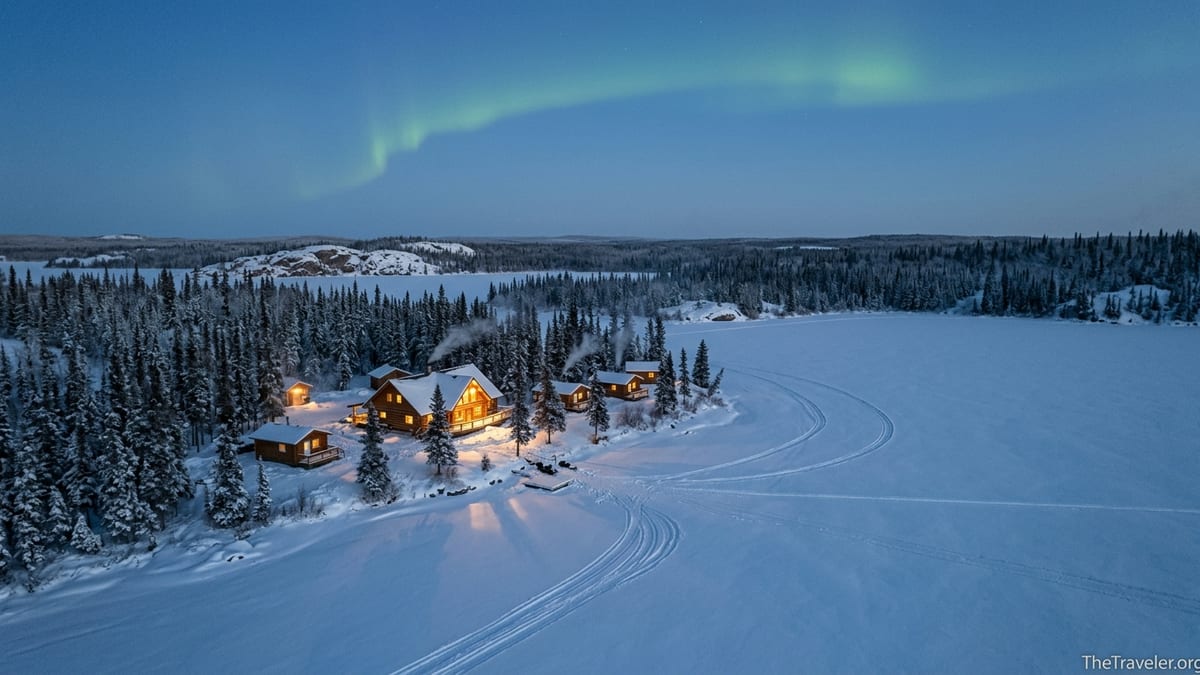
How to Think About Where to Stay in Northern Canada
Accommodation in northern Canada is not simply a place to sleep. Your base determines your chances of seeing the aurora, how much time you actually spend in the wilderness and how much logistics you must handle yourself. In Whitehorse, Yellowknife and Iqaluit, you can choose between conventional hotels with streetlights and sidewalks, aurora-focused resorts just outside town and fully remote wilderness lodges that require a floatplane or bush plane to reach.
Costs are higher than in most southern Canadian destinations, and choice is limited in smaller communities. A standard midrange hotel room in Yellowknife or Whitehorse often starts around the low to mid 200 Canadian dollars per night in peak aurora season, while all-inclusive wilderness lodges commonly charge several thousand dollars per person for three to five nights including flights from the nearest city, meals and guided activities. Packages from major tour operators for places like Blachford Lake Lodge near Yellowknife or Northern Lights Resort & Spa near Whitehorse are typically sold per stay rather than per night, with transportation, gear and meals bundled together.
Before you book, be clear on your priorities. If you want to walk to restaurants and museums during the day and join guided aurora outings at night, staying in town makes sense. If a dark sky right outside your door matters most, an aurora lodge or cabin on the edge of town is often the sweet spot. Travelers who dream of true off-grid wilderness, trophy fishing or multi-day snowmobile trips are usually happiest at remote lodges and camps where the price includes the high cost of getting you there and hosting you in extreme conditions.
City Hotels: Easy Bases in Whitehorse, Yellowknife and Iqaluit
For first-time visitors, especially in winter, a city hotel is often the most straightforward option. In Whitehorse and Yellowknife, you will find familiar, hotel-style rooms, reliable heating, on-site restaurants and front desks that can help arrange tours. In Iqaluit, which is not connected to any road network and is accessible mainly by air, hotels are often tied to larger building complexes that also house offices and services.
In Yellowknife, midrange hotels and inns in the downtown area typically offer private bathrooms, strong heating and in-room Wi-Fi. Many travelers use them as a base and join aurora tours that pick up at the lobby and drive 20 to 40 minutes out of town to darker locations. Some packages bundle three or four nights of accommodation with night excursions, winter clothing rental and airport transfers, which can be reassuring for visitors unused to driving on ice roads or in very low temperatures.
Whitehorse has a similar pattern. Most hotels sit along the Yukon River or within a short walk of the compact downtown. Here you can spend your days visiting local museums and cafes, then join evening aurora viewing tours or short drives to viewpoints outside the city. Because Whitehorse markets itself as a “wilderness city,” it is common to combine one or two nights in town with a few nights at a nearby lodge.
Iqaluit, as the capital of Nunavut, has a small cluster of hotels and inns servicing government travelers, residents and visitors. Properties such as the Frobisher Inn are part of the Astro Hill complex and often include on-site dining and conference space, while other hotels and boutique properties such as The Discovery operate as independent lodgings aimed at both business and leisure guests. Rooms here command higher prices than southern Canadian cities due to freight and supply costs, and availability can be tight during government sittings or community events, so booking several months ahead is wise.
Aurora Lodges and Cabins Near Whitehorse
The Whitehorse region in Yukon offers several dedicated aurora lodges and cabins within an hour or so of the city, providing a blend of accessibility and dark skies. A leading example is Northern Lights Resort & Spa, located just outside Whitehorse. It positions itself as a luxury boutique resort focused on aurora viewing, with glass-fronted chalets or log cabins, on-site spa facilities and minimal light pollution. All-inclusive aurora packages typically include accommodation, gourmet meals, guided activities, airport transfers and nightly aurora viewing from the property’s grounds and lounges.
Further west toward Kluane National Park, lodges such as Mount Logan Lodge near Haines Junction provide cozy rooms and cabins in a mountainous setting that feels much more remote than its drive time from Whitehorse suggests. These operations usually offer breakfast and dinner in a communal dining room, while lunch is taken out on hikes, snowshoe trips or sightseeing drives. Travelers pay a flat per-night rate or multi-night package covering meals and in some cases guided excursions. Because these lodges are road-accessible, airport transfers are most often arranged by shuttle or private vehicle rather than by air.
More off-grid options include fly-in wilderness lodges like Wolf Lake Wilderness Lodge or Tincup Wilderness Lodge in Yukon’s lake country. These are typically accessed by floatplane or small charter from Whitehorse. At Wolf Lake, for example, packages commonly include return floatplane flights from Whitehorse, cabin accommodation, all meals and use of fishing boats and equipment. Tincup Wilderness Lodge on Tincup Lake is similar, with meals, use of canoes, kayaks, motorboats and often a hot tub and sauna included, while specific guided fishing or trekking may be an add-on. These lodges operate on a short summer and early autumn season, and while aurora sightings are possible from mid August, the focus often remains on fishing and hiking.
For many travelers, the sweet spot is a combination itinerary: two nights in a downtown Whitehorse hotel to explore the city, followed by three nights at a lodge such as Northern Lights Resort & Spa or Sky High Wilderness Ranch’s lodge on Fish Lake Road, which sits 20 to 30 minutes outside town. That way, you keep transfers simple, rely on the lodge to feed you and wake you if the lights appear, and still enjoy easy access to winter or summer activities organized from the resort.
Yellowknife: From Downtown Inns to Aurora Villages and Fly-in Lodges
Yellowknife in the Northwest Territories is one of the most famous aurora destinations in the world, thanks to its location under the auroral oval and relatively dry continental climate. Accommodation here spans classic downtown hotels, lakeside cabins on the edge of town and remote lodges reached only by boat, winter road or floatplane. Most visitors arrive by air, spend their days in town and their nights on organized aurora outings that range from heated teepee camps to moving “aurora hunting” van tours that chase clear skies.
Several operators run what are sometimes called aurora villages or camps outside Yellowknife. These are not usually overnight accommodations but rather evening-only facilities with heated canvas teepees or cabins, viewing decks, hot drinks and sometimes a sit-down meal. Tour packages from Yellowknife often include hotel pick up and drop off, winter clothing rental, snacks and use of these viewing facilities for a four- to six-hour window. This setup suits travelers who want dark skies without committing to a full remote stay.
For those seeking something more secluded, fly-in lodges such as Blachford Lake Lodge or Trout Rock Lodge on Great Slave Lake have long been classic choices when operating. A typical package at a lake lodge near Yellowknife includes return charter flights from Yellowknife’s floatplane dock, several nights in cabins or lodge rooms, all meals and unlimited use of snowshoes, skis or lakeside saunas, depending on the property. At Trout Rock Lodge, for instance, aurora packages have included floatplane transfers from Yellowknife, accommodation, meals and daytime activities like fishing or wildlife viewing on the North Arm of Great Slave Lake, along with dedicated dark-sky aurora photography locations.
Because winter temperatures in Yellowknife frequently drop below minus 20 degrees Celsius, a popular strategy is to stay in a downtown hotel, book guided aurora tours for two or three nights and then add a night or two at a more rustic log cabin or lakeside lodge a short drive away. Visitors who are used to winter driving sometimes rent a vehicle and find their own viewing spots along highways or on plowed pullouts, but many first-time travelers prefer packages that bundle airport transfers, outerwear, meals at the viewing site and guidance on cold-weather photography.
Iqaluit and Nunavut: Practical Bases for Far-North Adventures
Travel in Nunavut is distinct from Yukon or the Northwest Territories. Communities like Iqaluit, Resolute or smaller hamlets are not linked by road, so every additional destination normally requires a separate flight. Accommodation is limited in each settlement, typically a small number of hotels, inns and bed-and-breakfasts oriented toward government, business and adventure travelers. In Iqaluit, hotels such as the Frobisher Inn within the Astro Hill complex or independent properties like The Discovery focus on warm rooms, reliable meals and in-house lounges rather than resort-style activity programs.
Travelers drawn to Nunavut for its wildlife and Arctic landscapes often combine Iqaluit with fly-in wilderness lodges elsewhere in the territory. One example is Arctic Haven Wilderness Lodge, which operates in a remote area of Nunavut typically reached by charter flights arranged from communities like Yellowknife or through specialist outfitters. These lodges usually focus on seasonal wildlife such as migrating caribou, muskoxen or polar bears, and packages may include internal charter flights, all meals, guiding and use of specialized equipment. Prices reflect the cost and complexity of flying food, fuel and staff into extremely remote environments.
Within Iqaluit itself, visitors interested in aurora viewing may rely on local guides or community-based outfitters who can drive them just outside town to darker areas or take them out on the land by snowmobile, qamutiik sled or boat, depending on the season. Because evenings can be windy and temperatures extreme, many travelers prioritize rooms with strong heating, good bedding and in-house dining, even if the aurora is not as frequent or as bright as in Yellowknife. For those planning independent camping or multi-day trips on the land, hotels and inns also serve as staging points to organize gear, guides and permits.
Further north in communities like Resolute, accommodation options may be limited to one or two small hotels or inns, often operated in conjunction with logistics companies that support research or polar expeditions. These properties tend to be functional rather than luxurious, but they are critical hubs for travelers connecting to even more remote camps. Expect shared dining rooms with set meal times, over-boot trays in the entrance hall and rates that reflect the high cost of operations in such remote regions.
Understanding Wilderness Lodges and Remote Camps
Wilderness lodges and remote camps are the closest many travelers will come to a true northern expedition, but they require a different mindset from staying in a hotel. Most are accessible only by floatplane, ski plane or boat in summer, or by snowmobile and snowcat in winter. Examples include fly-in fishing lodges on Yukon lakes like Wolf Lake or Tincup Lake, multi-day sled dog expedition camps around Whitehorse and Yellowknife, and temporary eco-camps set up on the sea ice or tundra in parts of Nunavut. When you book a stay at one of these places, you are paying for transportation, power generation, water treatment, emergency capability and staff who often remain on site for entire seasons.
All-inclusive is the norm rather than the exception. At operations like Wolf Lake Wilderness Lodge, typical packages include return flights from Whitehorse, simple but comfortable cabins, all meals and use of boats and equipment for fishing and exploration. Alcohol, gratuities and some guided excursions may be extra, but you rarely pay for individual meals or activities the way you would in a resort town. At wilderness lodges that target aurora travelers, a similar model applies: your nightly rate generally covers lodging, meals, on-site recreational gear and around-the-clock access to outdoor spaces for stargazing and aurora watching.
Remote camps are often more basic. Arctic tent camps used for polar bear viewing or ski touring may provide framed canvas tents or weatherproof pods with cots and sleeping bags rather than standard beds. Toilets can be shared outhouses or composting systems instead of private bathrooms, and access to showers may be limited. In exchange, you wake up in the middle of landscapes with no road access, no passing traffic and in many cases near-total darkness once the sun sets in winter.
Choosing between a wilderness lodge and a remote camp depends on your comfort level and goals. Travelers who want a balance of northern adventure and comfort usually favor lodges with proper mattresses, heated indoor bathrooms and strong meals, especially in winter. More expedition-minded visitors, or those focused on particular wildlife migrations, may accept very simple accommodation in order to be on the spot when caribou cross frozen rivers or when spring sea ice cracks under the midnight sun.
What Is Typically Included: Meals, Transfers and Gear
A key difference between northern accommodation types lies in what is actually included in your nightly rate. City hotels in Whitehorse, Yellowknife and Iqaluit generally operate on a familiar model: you pay per room, per night, and breakfast may or may not be included. Airport transfers are sometimes provided by scheduled shuttle or municipal taxis at an extra charge. Activities are booked separately through tour operators or directly with guides. This approach suits independent travelers who enjoy planning their own days and prefer more flexible budgets.
Aurora lodges near Whitehorse or Yellowknife, in contrast, usually bundle far more into their packages. At a resort like Northern Lights Resort & Spa outside Whitehorse, common inclusions are accommodation in a chalet or cabin, breakfast and dinner prepared in-house, use of saunas or hot tubs and nightly aurora watching in on-site viewing lounges or outdoor decks. Airport transfers from Whitehorse are often included, either at set times or by prior arrangement, which removes the need to rent a car. Some packages also incorporate daytime activities such as snowshoeing, dogsledding or guided hikes, while others leave these as optional add-ons.
Fly-in wilderness lodges raise the stakes further. At Tincup Wilderness Lodge, for example, standard rates typically include the round-trip transfer from Whitehorse, lodging, all meals and use of non-guided equipment like canoes, kayaks, motorboats, stand-up paddleboards or basic fishing gear. Additional guided fishing days or sightseeing flights into places like Kluane National Park may cost extra but are arranged right at the lodge. Similar models apply at many Nunavut wilderness lodges, where internal charter flights, guiding and meals are bundled together and priced as five- to seven-day expeditions.
Because winter in the North can be dangerously cold for the unprepared, an important detail is whether your package includes specialized winter clothing. Many Yellowknife aurora tour operators provide insulated boots, parkas and pants for their evening excursions, saving you from purchasing an entire cold-weather wardrobe. Some aurora lodge stays also bundle outerwear for the duration of your visit. If you are booking accommodation separately from tours, check carefully whether you must bring your own gear, rent it in town or can rely on your lodge for suitable clothing.
Matching Each Option to Your Travel Style
Different kinds of accommodation suit different travelers. Couples on a short break from southern Canada often opt for an aurora-focused lodge close to Whitehorse or Yellowknife, combining a few nights of dark-sky viewing with spa time, shared meals and easy transfers. A three-night package at such a lodge can feel like a northern retreat without requiring technical skills or long flights into remote camps. Many properties also welcome families and small groups, offering discounted rates for children or the option to rent an entire cabin.
Independent travelers who prefer full control over their itinerary may be happier base-lining in city hotels. In Yellowknife, for example, staying downtown and booking separate aurora hunting tours, dogsledding outings and ice-road day trips gives you the flexibility to change plans if the weather shifts or if you discover new interests on the ground. In Whitehorse, the same approach lets you combine day hikes, museum visits and hot springs soaks with aurora excursions that only run on the clearest nights.
Fly-in wilderness lodges and remote camps tend to attract photographers, anglers, seasoned trekkers and travelers who have already visited more accessible northern regions. These guests accept that there may be limited or no mobile coverage, fixed meal times, shared facilities and weather-related delays. In exchange, they gain direct access to lakes where motorboats are reserved for lodge guests, or tundra slopes where the only sounds at night are the wind and, on good evenings, the crackle of the aurora overhead.
Budget also plays a decisive role. A week in a city hotel with a few guided tours can still be expensive in the North, but it is often more affordable than a five-night all-inclusive wilderness package that includes charter flights. When comparing prices, assess the total cost of your stay, including food, transportation, clothing rental and excursions, rather than focusing on the nightly room rate alone.
The Takeaway
Choosing where to stay in northern Canada is ultimately about balancing convenience, comfort and immersion in the landscape. City hotels in Whitehorse, Yellowknife and Iqaluit offer security, amenities and easy access to services, while nearby aurora lodges and cabins provide darker skies and a more intimate connection with the northern environment. True wilderness lodges and remote camps deliver unmatched solitude and adventure, but require higher budgets and greater flexibility around weather and logistics.
If this is your first trip north and your main goal is to see the aurora without feeling overwhelmed, a combination of one or two nights in town and several nights at a road-accessible aurora lodge near Whitehorse or Yellowknife is often ideal. Travelers who have more time, resources and appetite for expedition-style experiences can push deeper into Nunavut or Yukon’s fly-in lake country, where the journey itself becomes part of the story.
Whatever you choose, book early, read inclusions carefully, and do not underestimate winter conditions. With the right base and realistic expectations, northern Canada rewards you with experiences that stay vivid long after your parka is back in the closet and the glow of the aurora has faded from the sky.
FAQ
Q1. Do I need to stay at a remote lodge to see the northern lights in Yellowknife or Whitehorse?
In most cases you do not. Many travelers stay in downtown hotels and join evening aurora tours that drive to darker locations outside the city. Remote lodges can increase your chances by putting you under darker skies all night, but they are not strictly necessary to see the aurora.
Q2. How far in advance should I book accommodation in places like Iqaluit or Yellowknife?
For peak aurora season from roughly late August to April, it is sensible to book at least three to six months in advance, especially in Iqaluit, where room numbers are limited. For popular wilderness lodges and fly-in camps, booking a year ahead is common.
Q3. Are meals usually included at aurora lodges and wilderness camps?
Yes. Most aurora lodges and almost all remote wilderness camps operate on an all-inclusive or semi-inclusive basis. Breakfast and dinner are commonly included, with lunch provided during day trips or as a packed meal. City hotels are more likely to charge separately for meals.
Q4. Do northern lodges provide winter clothing, or must I bring my own?
Policies vary. Many Yellowknife tour companies and some aurora lodges supply insulated outerwear for evening excursions or for the duration of your stay. Others expect you to bring your own gear or rent it in town. Always confirm in writing before traveling.
Q5. Is it safe to rent a car and drive to my own aurora viewing spots?
Experienced winter drivers sometimes do this, using pullouts along highways or lakes. However, conditions can be extreme, with icy roads, limited daylight and very low temperatures. First-time visitors often find it safer and less stressful to use guided tours that include transportation.
Q6. How expensive are remote wilderness lodges compared with city hotels?
Remote lodges usually cost significantly more per night, but their rates include charter flights or boat transfers, meals and some activities. When you add food, tours and winter clothing rental to a city hotel stay, the overall cost gap narrows, though city-based trips are still often more economical.
Q7. Can families with children stay at aurora lodges and remote camps?
Many aurora lodges and some wilderness operations welcome families and may offer discounted rates for younger children. Remote expedition-style camps can be more challenging with very young kids due to limited facilities and long travel days, so check age guidelines and comfort levels carefully.
Q8. Is Wi-Fi available at northern lodges and in small communities?
City hotels in Whitehorse, Yellowknife and Iqaluit almost always offer Wi-Fi, though speeds may be slower than in major southern cities. Road-accessible lodges near these hubs often have limited connectivity, while fly-in wilderness lodges and remote camps may have no guest internet at all.
Q9. When is the best season to combine wildlife viewing with an aurora-focused stay?
Late August through October can be a good compromise. Nights are dark enough for aurora, temperatures are milder than midwinter and many wilderness lodges are still operating for hiking or fishing. In Nunavut, specific wildlife-focused lodges time their short seasons around animal migrations.
Q10. How can I reduce the risk of weather disrupting my lodge transfers?
Build buffer days into your itinerary, especially when connecting to expensive long-haul flights. Weather can delay floatplanes or small bush planes. Travel insurance that covers missed connections and extra accommodation costs is strongly recommended for remote northern trips.