


I walked through the Stampede gates on a hot July afternoon in 2026 carrying two things: a notebook and a simple question. Is the Calgary Stampede, marketed worldwide as “The Greatest Outdoor Show on Earth,” actually worth it for travelers once you factor in the real costs, crowds and ethical questions behind the spectacle? After a full day on the grounds, tallying every tap of my card and watching both the midway and the rodeo arena from close range, my answer is more complicated than the glossy posters suggest.
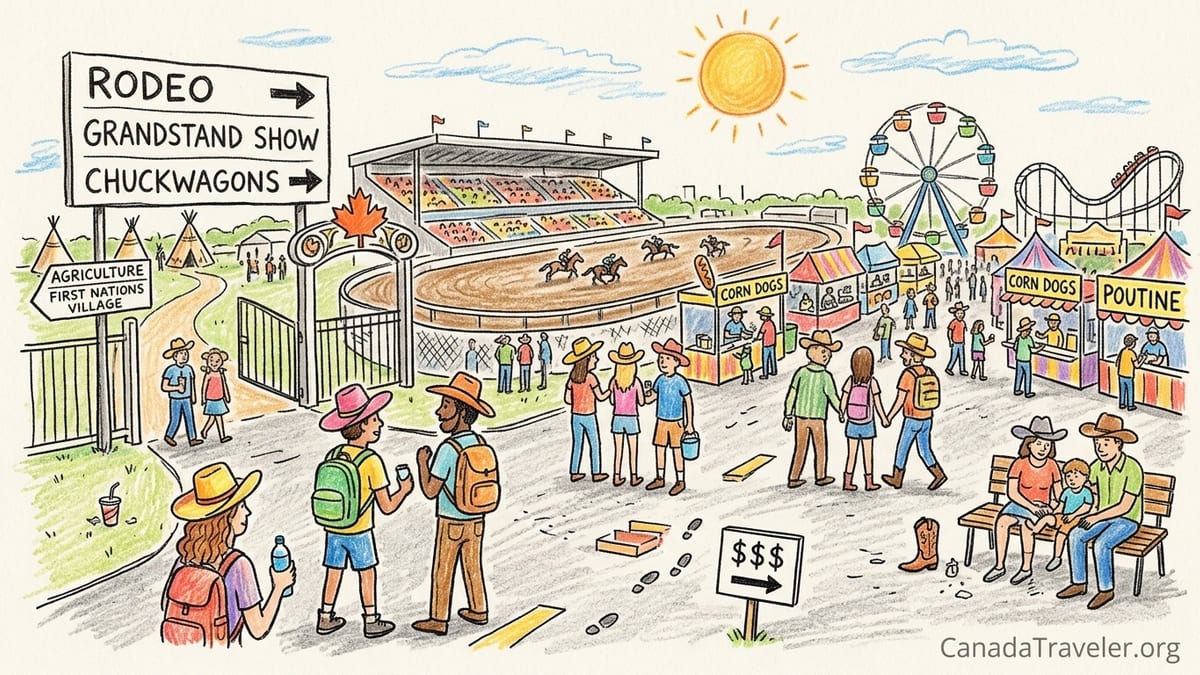
Setting the Scene: One Day on the 2026 Stampede Grounds
My visit fell midweek in 2026, on a day without a weather warning but with the kind of dry prairie heat that bakes the asphalt around mid-afternoon. I went in early, arriving just after lunch to catch the grounds at their quietest and to experience the build toward the evening chuckwagon races and Grandstand Show. Arriving at Victoria Park CTrain station, the crowds were already cowboy-hatted and moving with purpose toward the entry plazas.
At the main gate, general admission for adults in 2026 was set around 28 Canadian dollars, not including any rides or grandstand events. You can trim that with advance deals and select free entry windows, but for many casual visitors arriving on a standard day, that 28 dollar gate fee is the baseline price of simply walking into Stampede Park. I paid full fare because I wanted to evaluate the festival the way most international travelers will experience it: without local discount codes or corporate hospitality tents.
Once through security and the ticket scan, the grounds themselves felt enormous. From the agricultural barns to the infield grandstand, and from the food alleys to the neon-buzzing midway, it took a solid 10 to 15 minutes of fast walking to cross from one major zone to another. Over the course of the day my phone logged well over 15,000 steps, and I met more than one visitor slumped on a shaded bench at 4 p.m., sandals off, clearly surprised by the walking demands of this “show.”
Heat shaped the experience more than any brochure acknowledges. On the tarmac-heavy midway, reflected sun made the mid-afternoon hours feel punishing, pushing many people into indoor halls or beer tents until early evening. Shade exists, but it is often tied to commerce: under the awning of a food stall, next to a branded stage or inside a merchandise hall. If you are sensitive to heat or traveling with young children, this alone should factor into whether the Stampede in its peak hours will feel more exhilarating or exhausting.
The Real Price of a Day: Solo, Couple and Family Budgets
The headline admission price is only the beginning. To understand what “worth it” means in 2026, I tracked what a realistic day would cost for different types of travelers. All figures below are approximate but grounded in current pricing and what I actually paid or observed on site that day.
For a solo traveler using public transit, a typical midweek day might look like this. General admission at 28 dollars. A Ride All Day midway pass bought in advance at a Calgary supermarket for 46.99 dollars plus tax, which covers unlimited rides on the N.A.M.E. Midway and the WestJet Skyride but does not include park entry. Add a handful of midway snacks and meals at roughly 12 to 18 dollars per item for things like gourmet corn dogs, loaded poutine or novelty desserts, plus 6 to 10 dollars for soft drinks or bottled water. Even limiting yourself to one full meal and two snacks, you are quickly at 50 to 70 dollars on food and nonalcoholic drinks. A couple of beers or cocktails can easily add another 20 to 30 dollars. With a standard 3.70 to 4 dollar adult transit fare each way, a solo day that includes admission, unlimited rides, simple food and one or two drinks lands comfortably in the 140 to 180 dollar range.
For a couple, double almost everything. Two adult admissions approach 56 dollars. Two Ride All Day passes purchased in advance add about 94 dollars plus tax. Share some food and you might contain meals and snacks to 80 to 100 dollars between you, if you are disciplined about skipping the priciest novelty items. Many couples will add at least one shared alcoholic round, bringing the day’s total to a realistic 260 to 320 dollars on site, before considering any evening rodeo or Grandstand Show tickets. Factor in a rideshare or hotel parking instead of transit, and that number climbs higher.
Families feel the pinch most. On my visit, I spoke to a Calgary parent who had posted their breakdown online for a day with one child, totaling just under 240 dollars without any rodeo or evening show. Another local calculated spending near 400 dollars for an adult with two kids once food, rides and games were factored in. These numbers line up with what I saw at the tills. A family of four paying full freight general admission, two adult Ride All Day passes and a bundle of individual ride tickets for younger children, plus basic fair food and a shared treat or two, will struggle to keep the day below 350 dollars, and that is before souvenirs or reserved-event tickets enter the picture.
Parking can add another 20 to 30 dollars if you drive and use official or nearby private lots. The frugal workarounds exist, including advance-value days, discount codes attached to lotteries and corporate promotions, and free-entry morning slots on specific dates. Yet most first-time visitors coming from outside Calgary will not have easy access to those hacks. From a budget perspective, the Stampede in 2026 is a major-ticket day out, on par with or more expensive than many North American theme parks, especially once you factor in the price of the rodeo or evening spectaculars.
Rodeo, Chuckwagons and the Grandstand: What You Actually Get
A crucial distinction for travelers is this: your grounds admission does not include the main arena spectacles. Entry to Stampede Park for 28 dollars lets you wander the midway, agricultural exhibits, music stages and beer tents, but if you want to see the afternoon rodeo or the evening chuckwagon races and Grandstand Show, you must buy separate tickets. Some package deals wrap admission and arena seating into one price, but those are still a significant extra cost above simply “going to the Stampede.”
On my visit, I opted for a mid-level afternoon rodeo seat and an upper-level evening ticket that combined the chuckwagon races with the Grandstand Show. Rodeo and chuckwagon tickets span a wide price range in 2026, from lower tier seats in the 60 to 70 dollar zone into premium levels that can easily exceed 100 dollars once fees and taxes are added. Some bundles advertise two-day thrill packages at around 360 dollars that include one rodeo ticket, one evening show ticket, two days of park admission and a notebook of extras like a cowboy hat, tote bag, Skyride tickets and shopping discounts.
The afternoon rodeo itself remains a tightly produced spectacle. Events like bareback riding, tie-down roping, steer wrestling and barrel racing roll out in rapid succession. From my shaded seat, I could appreciate the skill and speed, but I was struck by how little contextual storytelling about ranching culture reached the stands. There were flashes of heritage in the commentary, yet much of the show felt like a sports broadcast, geared to adrenaline and scores rather than explaining working ranch practices to curious visitors.
In the evening, the chuckwagon races took over, framed as a uniquely Calgary tradition. The races were fast and chaotic to watch, with teams thundering around the half-mile track pulling steel wagons. The Grandstand Show that followed blended pop-country performances, precision dance numbers, fireworks and a patriotic narrative. For many in the stands, this double bill was the emotional climax of their Stampede day. It also deepened the budget hit. By the time I added my arena tickets to earlier spending on admission, food and a rides wristband, my single midweek day hovered close to 300 dollars.
Crowds, Queues, Heat and Getting Around
One of the most misleading clichés about the Stampede is that it is always “packed.” My actual midweek experience in 2026 was more nuanced. Early afternoon on the grounds, particularly in the agricultural barns and exhibition halls, was busy but functional. I could walk at a normal pace, approach most stalls without jostling and find shade or a place to sit without a long search. The midway rides had short waits, often under 10 minutes for mid-tier attractions.
By late afternoon, especially after 4 p.m., the character of the event shifted. The midway filled with teenagers and young adults, and the food lines swelled. Signature items and viral food stands could have 20 to 30 minute waits, while popular thrill rides sometimes stretched beyond 30 minutes as the evening approached. The CTrain platforms closest to the grounds became notably more crowded after the rodeo sessions ended and again after the evening Grandstand Show, but service remained frequent and staff helped keep people moving.
Heat and hard surfaces were the silent challenges. Much of the walking route between the main gate, Saddledome area, midway and Grandstand involves asphalt or concrete. In the late afternoon sun, temperatures on those surfaces feel significantly hotter than the official air reading. Misting stations and water refill points existed but were not always obvious, leaving many visitors lined up at high-priced drink stands simply to stay hydrated. Families with strollers and older travelers lagged visibly on the long inclines that connect the infield to the higher concourses.
Seating comfort also varied. In the rodeo and chuckwagon stands, plastic stadium seats with limited legroom and direct sun exposure were common in the lower tiers, while shaded or club-level areas required higher-priced tickets. On the grounds, free seating often meant hot metal bleachers or grass patches. If you have mobility issues, chronic pain or children who need frequent rests, plan for slower movement and regular indoor cooling breaks. My pedometer and aching feet by day’s end were as good a reality check as any attendance statistic.
Culture or Carnival: How Much Feels Like Real Western Heritage?
From the outside, the Calgary Stampede sells itself as an immersion in authentic western heritage. On the ground in 2026, the reality feels more like a large-scale urban fair with western accents layered on top. There are genuine cultural elements. In the agriculture zone, you can watch stockmanship demonstrations, chat with 4-H competitors and see working ranch horses close up. Traditional First Nations Village spaces highlight tipi structures, craftwork and performances curated with Indigenous partners. Morning pancake breakfasts around the city and free rope-square activities downtown extend a version of the western story beyond the gates.
Yet as I walked deeper into the park, the visual language shifted toward commercial entertainment. The midway is dominated by generic rides and games that could be airlifted into any state fair on the continent. Food offerings lean heavily into deep-fried novelty: rainbow-colored drinks, oversized turkey legs, foot-long corn dogs, sugar-dusted desserts and Instagram-forward mash-ups that have little to do with ranch life. Branded merchandise stalls sell everything from sequined cowboy hats and plastic boots to corporate-logoed bandanas.
The evening Grandstand Show, while technically polished, felt more like a touring arena revue than a quietly grounded exploration of prairie history. Fireworks, drones, pop-country medleys and dance troupes took center stage, with western motifs serving as a visual frame rather than the core narrative. For overseas visitors expecting something akin to a working ranch experience, the abrupt shift into bright lights and corporate sponsorship logos can feel jarring.
This is not to say there is no real heritage here, but that it requires intention and time to find. You must seek out the livestock shows, the educational talks, the Indigenous programming and the quieter corners of the park rather than letting the midway pull you along by spectacle. For those who equate “worth it” with deep cultural understanding, the Stampede may disappoint if you treat it as a one-day, see-everything sprint. The default experience, especially for those drawn by rides and big-name concerts, tilts heavily toward modern commercial festival rather than lived ranching culture.
Animal Welfare Under the Spotlight
No honest investigation of whether the Stampede is worth it in 2026 can ignore animal welfare. The Vancouver Humane Society has tracked animal injuries and deaths at the Calgary Stampede for decades. By its count, more than one hundred animals have died at the event since the late 1980s, with the majority of those deaths linked to the chuckwagon races. The organization’s detailed reporting shows that high-profile crashes are not isolated anomalies but part of a pattern that has fueled calls to remove chuckwagons and rodeo events from the program entirely.
The 2026 edition added new fuel to that debate. On July 11, during a Rangeland Derby chuckwagon heat, two wagons collided while attempting to negotiate the barrels, leading to a serious injury to at least one horse. According to the Vancouver Humane Society, Stampede representatives stated that initial examinations revealed no fractures, but the injury was still considered serious. Humane Society campaigners described the incident as sadly familiar and reiterated that nearly every year brings fresh reports of horse injuries or deaths in what is marketed as family entertainment.
The Stampede’s own position emphasizes its veterinary protocols and monitoring. Organizers highlight a “Fitness to Compete” program under which animals are assessed by veterinarians, sometimes with input from university researchers, to ensure only the healthiest individuals enter events. Daily observational checks, more detailed examinations for high-risk disciplines such as chuckwagon racing and the ability to pull any animal deemed unfit are promoted as evidence that the Stampede operates under some of the most stringent animal-care standards in the western sports industry. Official materials stress that both physical and psychological welfare are priorities, and that the organization continually refines rules in consultation with experts.
These two narratives coexist but do not cancel each other out. Robust veterinary oversight may reduce some risks, but it does not eliminate the fundamental questions raised by events that involve roping, wrestling, bucking or racing large animals at high speed in front of roaring crowds. Even if a horse or steer passes a health check in the morning, the moral question remains: is it acceptable to subject them to a level of stress and potential injury for public entertainment, especially when alternatives for celebrating western heritage exist that do not rely on such displays? Veterinary protocols address how the Stampede manages risk within its chosen model. They do not resolve the deeper ethical debate over whether that model should continue.
Five Big Criticisms: Cost, Commercialization, Crowds, Organization and Animals
After a full day on site and many conversations with locals and visitors, five major criticisms stood out. The first is cost. For an international traveler or a family, the Stampede in 2026 is expensive. Admission, rides, food and drinks quickly scale into the hundreds of dollars. While discount days and local hacks soften the blow, a traveler who simply wants to sample the famous festival without insider knowledge will likely emerge with sticker shock. Many Calgarians I spoke with mentioned volunteering or using employer passes as the only way they were willing to attend.
The second criticism is commercialization. The western aesthetic is everywhere, but it is frequently attached to brands, sponsors and retail. From corporate stages to beverage tents wrapped in logos, the sense of grassroots community celebration has to compete with a powerful layer of marketing. Visitors can spend more time interacting with branded activations than with working ranchers or Indigenous storytellers. For a festival that trades heavily on authenticity in its international image, this tilt toward merchandising and sponsorship can feel like a betrayal of the story it tells the world.
Third are the crowds and sensory overload during peak hours. While my midweek afternoon was manageable, evenings around concert set times and just after the Grandstand Show felt like a crush of bodies on key walkways. Noise levels from overlapping music stages, screaming midway rides and public-address systems can be overwhelming, especially for children, older travelers or anyone sensitive to sensory input. The fact that quieter cultural programming is physically and acoustically overshadowed adds to the impression that spectacle, not heritage, is the core priority.
Fourth is attraction organization and wayfinding. Although staff and volunteers are generally friendly, the layout of the grounds and the signage leave gaps. Water-refill points were not clearly marked on my visit, and it was often faster to buy bottled drinks at a premium. Some pathways between major zones narrowed unexpectedly, creating bottlenecks at busy times. The connection between general admission zones and ticketed arena areas was not always intuitive for first-timers, leading some visitors to miss pre-show festivities or arrive late for events they had paid handsomely to see.
The fifth criticism, already discussed but worth repeating, involves animal welfare. Beyond stark fatality counts, it is the routine nature of risk in rodeo and chuckwagon events that troubles many observers. The Vancouver Humane Society has argued that these events subject animals to fear and stress for entertainment, and that serious incidents in 2024 and 2026 show that safety reforms have not solved the underlying problems. While the Stampede points to its veterinary teams, monitoring systems and ongoing rule changes, critics counter that there is an inherent tension between animal well-being and high-adrenaline competition. For ethically minded travelers, this unresolved conflict weighs heavily in any decision about whether attendance is “worth it.”
Who Will Still Love the Stampede, and Who Should Skip It?
Despite these criticisms, there is a clear audience that will still find the 2026 Calgary Stampede worthwhile. If you are a rodeo or western sports enthusiast, the combination of world-class competitors, a marquee chuckwagon meet and a nightly Grandstand Show may justify the high cost and ethical compromises in your personal calculus. Thrill-ride fans and festival-goers who thrive on crowds, loud music and late nights will likely see the event as a once-in-a-lifetime party, especially when paired with Calgary’s citywide pancake breakfasts and nightlife.
Travelers who love photographing vivid scenes may also be captivated. The Stampede offers endless visual drama: cowboys silhouetted against dusty light in the infield, neon midway reflections in puddles after a late-day thunderstorm, fireworks bursting over the skyline. For social travelers and influencers, the festival furnishes more than enough content for a highlight reel, though that lens can obscure the more complex realities beneath the surface.
On the other hand, visitors seeking a quieter, more reflective encounter with western and Indigenous heritage may find the Stampede overwhelming and misaligned with their hopes. Between the expense, the noise and the ethical unease around animal events, many historically curious travelers might be better served by smaller ranch experiences, regional museums or cultural sites away from the midway’s constant sensory assault. Families on tight budgets may also ask whether their travel dollars would go further at other attractions in Alberta that deliver more learning and less commercial pressure.
If you do decide to go, designing the day with your priorities in mind is critical. You could skip the midway entirely, spend your time in the agricultural barns and Indigenous Village, attend only one marquee arena event and treat the rest of your visit as a cultural field trip. Or, conversely, you could avoid the rodeo and chuckwagons on ethical grounds and treat the Stampede strictly as an urban fair with live music and rides. In either case, going in with a clear-eyed understanding of what your ticket does and does not include, and what values you are willing to compromise, makes the experience more intentional.
Alternatives: Head-Smashed-In Buffalo Jump and Quieter Heritage
For travelers who come to Alberta primarily for western and Indigenous history rather than big-ticket entertainment, there are compelling alternatives. One stand-out is Head-Smashed-In Buffalo Jump, a UNESCO World Heritage Site located about a two-hour drive south of Calgary. In 2026, adult admission there was around 18 dollars, significantly lower than a single day’s entry to the Stampede grounds, and there is no second tier of premium tickets to access its core stories.
At Head-Smashed-In, the focus is on thousands of years of Plains Indigenous culture and the sophisticated communal hunting practices that sustained entire communities. Inside the interpretive center, layered exhibits explain how buffalo jumps worked, the spiritual and practical knowledge behind them, and the devastating impact of colonization on bison herds and Indigenous life. Outside, walking trails lead to the cliff edge and through the surrounding landscape, where interpreters often share first-hand perspectives on tradition and resilience.
The contrast with the Stampede is stark. Instead of a 300 dollar sensory onslaught built around a 10-day commercial window, Head-Smashed-In offers a quieter, year-round encounter with history at a fraction of the price. There are no midway rides, no beer tents and no pyrotechnic finales, only the wind across the prairie and the weight of stories that long predate the city of Calgary itself. For many culturally focused travelers, this may feel far more “authentically western” than watching a choreographed bronc ride or a branded Grandstand routine.
This does not mean you must choose one or the other. Some visitors will pair a day or evening at the Stampede with side trips to Head-Smashed-In, regional ranches, museums in Calgary and nearby mountain parks, using each to illuminate a different facet of the West. Yet when the question is whether the Stampede alone is worth the hype and expense, sites like Head-Smashed-In serve as a useful reference point. They show that it is entirely possible to engage deeply with prairie and Indigenous histories without contributing to the ethical controversies and high costs of a mega-festival.
The Takeaway
After a full day inside the 2026 Calgary Stampede, my conclusion is that the festival delivers exactly what it is structurally built to deliver: a massive commercial fair with western styling, high-octane sports and a controversial relationship with the animals at its center. For some travelers, that combination will be intoxicating and worth every dollar. For others, especially those sensitive to cost, crowds or animal welfare, it will feel at best like an overhyped, overpriced spectacle and at worst like a celebration that sits uncomfortably with their values.
The international image of the Stampede as a pure expression of ranching heritage does not fully match the on-the-ground reality. Genuine cultural experiences exist within the program, from agricultural shows to Indigenous storytelling, but they are embedded in a landscape dominated by midway rides, branded food and a festival economy that demands constant spending. Stringent veterinary protocols coexist with an ongoing record of serious animal injuries and deaths, particularly in the chuckwagon races, leaving a moral question that no risk-management plan can fully erase.
If you are deciding whether to attend, start with your priorities. If your dream is a high-energy party with rides, live music and stadium-scale shows, and you are prepared for a 200 to 300 dollar day, the Stampede can still be a thrilling centerpiece of a trip to Alberta. If, however, your goal is to understand the land and its peoples more deeply, to travel quietly and to minimize harm in your tourism choices, then destinations like Head-Smashed-In Buffalo Jump and smaller cultural venues will likely feel more rewarding and more aligned with your conscience.
In the end, the question “Is the Calgary Stampede worth it?” has no single answer. It depends on whose story you want to listen to, what kind of experience you value and how you weigh excitement against ethics. My notebook from that hot July day is full of spectacle and generosity, but also of unease. Whether you choose the roar of the Grandstand or the silence atop an ancient buffalo jump, let your decision be an informed one.
FAQ
Q1. How much did general admission cost for adults at the 2026 Calgary Stampede?
Adult general admission in 2026 was around 28 Canadian dollars for a standard day, not including rides, rodeo tickets or evening Grandstand events.
Q2. Is the Ride All Day midway pass included with Stampede admission?
No. The Ride All Day pass, sold in advance for about 46.99 dollars plus tax, covers midway rides but does not include your separate park admission fee.
Q3. Do rodeo and chuckwagon tickets include entry to the Stampede grounds?
Many rodeo and evening Grandstand tickets come bundled with park admission, but not all. Travelers should check carefully, because some promotions and passes still require separate gate tickets.
Q4. How crowded did the Stampede grounds feel during your 2026 visit?
Midweek early afternoons were busy but walkable, while late afternoons and evenings, especially after arena events, felt very crowded on main pathways and transit platforms.
Q5. Is the Calgary Stampede a good choice for families on a tight budget?
For many families the Stampede is a costly day out. With admission, food and rides, even a relatively restrained visit can easily reach several hundred dollars.
Q6. How much of the Stampede feels like genuine western or ranching culture?
There are authentic elements in the agricultural barns and Indigenous Village, but a large share of the visitor experience revolves around generic midway rides, branded food and big commercial shows.
Q7. What are the main animal welfare concerns at the Calgary Stampede?
The Vancouver Humane Society has documented many animal deaths over the decades, especially in chuckwagon races, and raised ongoing concerns about fear, stress and serious injuries in rodeo and wagon events.
Q8. How does the Stampede defend its use of animals in events?
Organizers point to daily veterinary checks, fitness-to-compete assessments, rest schedules and on-site monitoring as evidence that they prioritize animal health and constantly refine safety rules.
Q9. Who is most likely to enjoy the Calgary Stampede experience?
Rodeo fans, thrill-ride enthusiasts, party-oriented travelers and visitors who love large festivals with concerts and fireworks tend to find the Stampede most rewarding.
Q10. What is an alternative for travelers seeking quieter western and Indigenous heritage?
Head-Smashed-In Buffalo Jump, with 2026 adult admission around 18 dollars, offers a quieter, in-depth look at Plains Indigenous history without the midway atmosphere.