


Northern Canada’s Arctic is no longer the exclusive realm of explorers and scientists. Each summer, a growing fleet of small expedition ships navigates through Nunavut’s fjords and islands, offering travelers close-up encounters with polar wildlife, Inuit communities and raw polar landscapes. These voyages are very different from conventional cruises: they rely on weather and sea ice, use Zodiacs to land on remote shores and often include charter flights to far-flung embarkation points. This guide walks you through how Arctic expedition cruises around Nunavut work in practice, with concrete examples to help you decide if this style of travel is right for you.
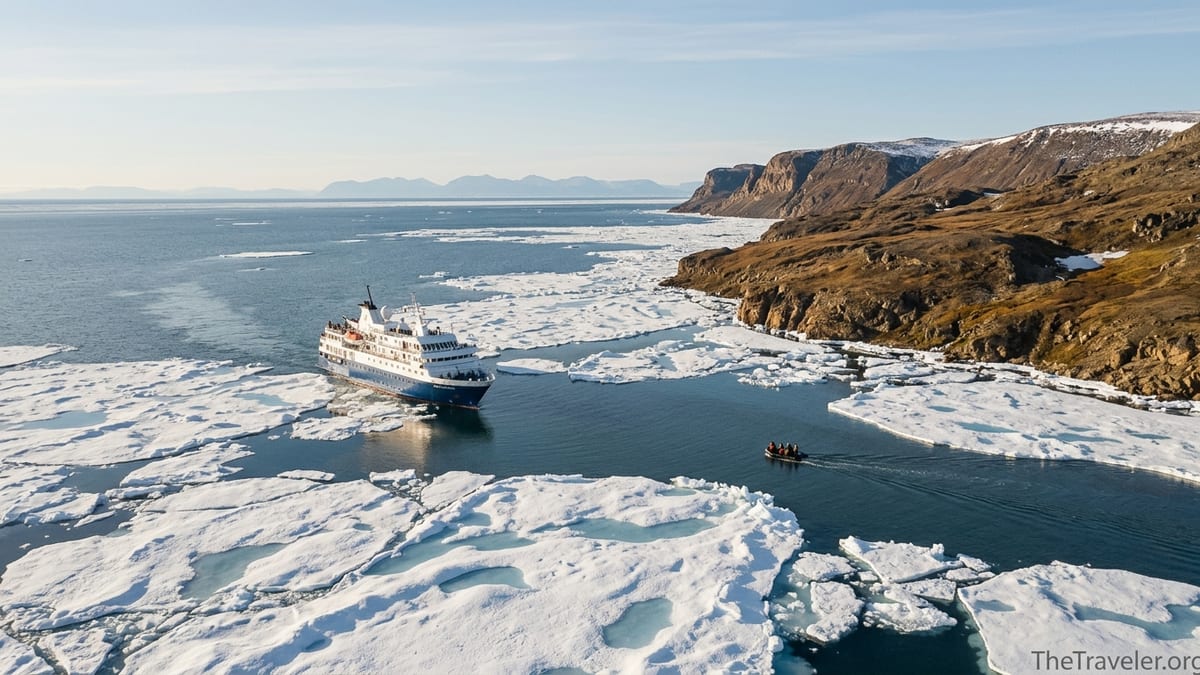
Where Arctic Expedition Cruises Sail in Nunavut
Most Arctic expedition itineraries in Nunavut operate between late June and early September when sea ice retreats and daylight is nearly continuous. Routes typically thread through Baffin Island, the Northwest Passage and the High Arctic. For example, Canadian operators and international lines run 12 to 17 day itineraries that might start in Kangerlussuaq in west Greenland, cross Davis Strait and then work down the Nunavut coast of Baffin Island with calls near Pond Inlet, Qikiqtarjuaq and Pangnirtung before ending in Iqaluit. Other classic trips follow the fabled Northwest Passage between communities such as Cambridge Bay, Gjoa Haven, Resolute and Grise Fiord.
Destination Nunavut actively promotes small-ship visits to communities like Cambridge Bay and Pond Inlet, and many itineraries weave in history at Franklin Expedition sites near King William Island and the wreck areas of HMS Erebus and HMS Terror. A 14 day voyage on a line such as Silversea or Ponant might advertise Nunavut calls like Lower Savage Islands, Cape Dorset (now Kinngait) and Monumental Island, combined with Greenland ports like Nuuk, Ilulissat and Sisimiut. Prices commonly start around 12,000 to 15,000 US dollars per person for these mid to high range luxury expeditions, with more immersive Northwest Passage routes on specialist operators running higher.
Shorter “gateway” itineraries are emerging too. Some companies offer 7 to 11 day Canadian Arctic and Greenland combinations that spend several days along Baffin Island for iceberg cruising and wildlife before turning south toward Labrador or Atlantic Canada. While these shorter voyages often touch only one or two Nunavut communities, they still provide Zodiac landings at uninhabited islands, fjords and bird cliffs, making them appealing for travelers who want a taste of the region without committing three weeks and a very high budget.
How the Expedition Ship Experience Works
Arctic ships serving Nunavut are small by mainstream cruise standards. Many carry between 100 and 200 passengers, which is crucial because wildlife landings and visits to Inuit communities are usually limited to groups of that size to protect the environment and keep encounters authentic. Operators such as Quark Expeditions, Adventure Canada, Hurtigruten, Silversea, Ponant and others deploy ice strengthened vessels like Ultramarine, Ocean Adventurer or Le Lyrial that can push safely through first year ice and maneuver into narrow channels.
On board, the feel is more research vessel with comfortable hotel services than floating resort. Instead of casinos and Broadway style shows, you’ll find lecture theaters, mud rooms lined with rubber boots and parkas, and observation lounges with floor to ceiling windows. Many ships now feature modern amenities such as saunas, small gyms and hot tubs. For instance, Quark’s Ultramarine includes a fleet of Zodiacs, two helicopters for optional sightseeing in some regions, and large gear drying rooms. Even so, daily life revolves around expedition briefings, wildlife announcements over the PA and spur of the moment landings when the team spots belugas, walrus haul-outs or promising pack ice.
A key practical difference from conventional cruising is flexibility. Arctic itineraries are always described as “examples” rather than fixed schedules because ice, wind and swell dictate where and when a ship can safely land. A planned stop at a remote island near Baffin Bay might be swapped for another bay if ice has blown in overnight. Good operators communicate these changes clearly through daily briefings and recap sessions. Travelers who thrive on spontaneity and are comfortable surrendering control usually find this unpredictability to be one of the Arctic’s charms.
Cabin Categories, Pricing and What’s Included
Cabin categories on Arctic expedition ships range from compact porthole cabins to spacious balcony suites. Prices rise quickly with size and view. A sample 14 to 17 day Canadian Arctic and Nunavut voyage on a mid range expedition line often lists “from” prices around 13,000 to 18,000 US dollars per person in a lower deck twin cabin. Balcony cabins or junior suites on the same departures can run from the low 20,000s into the 30,000 plus range. Premium suites on luxury lines with butler service and all inclusive drinks can exceed 35,000 US dollars per person for similar lengths.
Cabin choice matters less for entertainment value than for comfort in variable seas and long daylight. Travelers prone to motion sickness usually favor lower, more central cabins with portholes or picture windows, while photographers often pay extra for balcony cabins so they can quickly step outside when whales or icebergs appear. Families or groups sometimes book connecting cabins on ships that offer them, while solo travelers should look for operators with designated single cabins or reduced single supplements on select voyages.
Inclusions are broader than on many warm water cruises. Arctic expedition fares almost always cover Zodiac excursions, guided hikes, lectures and loaned gear such as rubber boots and expedition parkas. Many lines now include soft drinks and wine or beer with meals, and some include open bar. Charter flights to or from Arctic embarkation points may be bundled or sold as mandatory add ons. For example, Adventure Canada pricing sheets for 2026 show separate Northbound and Southbound charter flight packages between southern gateways like Toronto or Calgary and communities such as Resolute or Iqaluit, often totaling a few thousand US dollars per person on top of the cruise fare.
Flights and Embarkation Points for Nunavut Cruises
Because Nunavut has no road links to the rest of Canada, almost all Arctic expedition cruises involving the region rely on special charter flights. Lines typically bundle a same day or overnight charter from a southern hub to a small Arctic airport close to the pier. A common pattern is for guests to meet in Ottawa, Toronto or Calgary, spend one hotel night included or optional, and then board an early morning charter north. Quark, for instance, has used charter flights from Calgary to Resolute for High Arctic and Northwest Passage itineraries, while other trips operate charters between Toronto and Kangerlussuaq or Iqaluit.
On Greenland to Nunavut voyages that begin in Nuuk or Kangerlussuaq and end in Iqaluit, the line might include a charter from Reykjavik or Copenhagen to the embarkation port, and then a post cruise charter from Iqaluit back to a southern Canadian city or sometimes directly to a European hub. Travelers pay close attention to whether these flights are included in the published fare or listed as extra “expedition flight packages.” A not uncommon example is an 11 to 14 day Canadian Arctic and Greenland cruise advertised from about 12,000 US dollars, with an additional charter flight package of roughly 1,500 to 2,700 US dollars per person depending on direction and routing.
Independent travel into Nunavut to meet a cruise is rarely practical. Scheduled regional airlines like Canadian North and local carriers based in Iqaluit, Rankin Inlet or Resolute serve the territory’s communities, but expedition ships coordinate closely with charter arrivals to minimize delays and baggage issues. For planning purposes, you should treat the departure city of the charter, such as Toronto or Ottawa, as your effective embarkation point and build in at least one buffer night on either end in case of weather or missed connections.
Wildlife Viewing, Shore Landings and Cultural Visits
Wildlife is a central reason to choose an Arctic cruise that includes Nunavut. Around Baffin Island, many itineraries spend hours in Zodiac boats cruising beneath bird cliffs that hold tens of thousands of thick billed murres and kittiwakes. Guests hope to see polar bears patrolling ice floes, walrus on offshore haul out rocks and pods of beluga or narwhal in narrow channels. While no reputable operator will guarantee sightings, expedition teams choose landing sites and cruising routes with wildlife probability in mind, often drawing on local Inuit knowledge to time visits with animal movements.
Shore excursions fall into two main styles: “wet landings” by Zodiac onto pebbly beaches and “cruise only” trips where Zodiacs circle icebergs, glacier fronts or cliffs without going ashore. In Nunavut, a single landing might offer a combination of short and long hikes, photography groups and a quiet “contemplative” walk. Safety briefings are rigorous. Guests must stay within sight of armed polar bear guards, carry no food ashore and follow instructions exactly. Landing numbers are managed both by ship size and by environmental guidelines so that sensitive tundra and archaeological sites are not trampled.
Cultural visits are a key differentiator of Canadian Arctic voyages compared with some other polar destinations. Many itineraries schedule community visits in places like Pond Inlet, Cambridge Bay or Kinngait. These stops might include a hosted walk through town, time at a local cultural center, Inuit games demonstrations, and performances of throat singing or drum dancing. On some voyages, local guides join the ship for several days as guest lecturers, sharing perspectives on climate change, traditional knowledge and contemporary life in Nunavut. Travelers often remark that these conversations and visits become some of the most memorable parts of the journey.
Trip Lengths, Seasonality and Who Should Consider an Arctic Cruise
Most Nunavut focused expedition cruises last between 10 and 17 days, not counting travel to and from the charter departure city. Shorter 7 to 9 day sailings concentrating on Baffin Island and western Greenland appeal to travelers with limited vacation time or tighter budgets, though they typically offer fewer community visits and less time deep in the archipelago. At the other extreme, extended Northwest Passage crossings of 18 to 24 days might link Greenland, Nunavut and Alaska in a single voyage, attracting travelers with a strong interest in polar history and a high tolerance for sea days and remote conditions.
The core season runs from late June, when the midnight sun is strongest and sea ice is just starting to break up, through August and early September when nights begin to darken and northern lights become possible. Early summer departures may offer thicker ice, more snow on shore and higher chances of seeing polar bears on ice floes. Later season voyages often feature more open water, colorful tundra and occasionally better whale sightings. Operators time different routes accordingly, with some offering Baffin Island and Greenland earlier in the season and Northwest Passage transits in late August or early September, when key choke points are most likely to be navigable.
These trips suit travelers who are comfortable in remote, weather dependent environments and who value learning and nature over nightlife. The demographic skews toward experienced travelers in their 40s through 70s, though some lines welcome families with teenagers and occasionally younger children on designated “family departures.” People with limited mobility should consider that getting in and out of Zodiacs requires good balance and a few steps up or down in choppy conditions. That said, many operators can accommodate a range of fitness levels by offering gentler walks and providing trekking poles and supportive staff.
How to Choose the Right Operator and Itinerary
Picking the right Nunavut cruise is as much about the operator’s philosophy as the route map. Some companies, such as Adventure Canada and certain Canadian based outfits, emphasize cultural immersion and partnerships with Inuit organizations, often bringing local knowledge keepers and artists aboard. Others, like luxury lines Silversea or Ponant, lean into higher comfort levels with more elaborate cuisine and inclusions while still offering strong expedition programs. Specialist polar operators such as Quark Expeditions or Hurtigruten position themselves between those poles, with a strong scientific and wildlife focus and a range of cabin categories.
When comparing itineraries, look beyond simple port lists. Ask how many full days are planned in Nunavut waters, how many community visits are scheduled versus wilderness landings, and what the ratio of expedition staff to guests is. For instance, an itinerary titled “Canadian High Arctic and Greenland” might spend only two days around Nunavut’s shores, while a dedicated Northwest Passage route may offer a full week of landings and Zodiac cruises across multiple islands and hamlets. Pricing can be similar at first glance, but the depth of experience will differ markedly.
It is also worth considering booking through a specialist polar travel agency rather than directly with a cruise line, especially if this is your first expedition cruise. Advisors who regularly place guests on Canadian Arctic voyages can compare ships across brands, explain subtle differences in landing policies or cabin layouts, and sometimes access promotional pricing that reduces per person costs by several thousand dollars. Regardless of how you book, aim to confirm your trip 12 to 18 months in advance for the best cabin selection, then watch for occasional sales or early booking discounts on select 2026 and 2027 departures.
The Takeaway
An Arctic expedition cruise to Nunavut is less a vacation in the traditional sense and more a structured adventure into one of the world’s last vast, sparsely populated regions. Expect changeable weather, flexible daily plans and a strong emphasis on learning and respect for local communities. In return, you gain access to wildlife rich pack ice, sculpted fjords and Inuit hamlets that are almost impossible to visit independently.
When planning, focus on three pillars: itinerary depth in Nunavut, the character and size of the ship, and the practicalities of flights and inclusions. A thoughtfully chosen 12 to 17 day voyage on a capable small ship, with at least a handful of community visits and plenty of time allocated to Baffin Island or the High Arctic, will deliver a rich introduction to northern Canada’s Arctic. If you approach the region with patience, curiosity and realistic expectations about comfort and cost, a Nunavut expedition cruise can become one of the defining journeys of your traveling life.
FAQ
Q1. How much does an Arctic expedition cruise that includes Nunavut typically cost?
For a 10 to 17 day voyage that spends several days in Nunavut, budget roughly 13,000 to 20,000 US dollars per person for a standard twin cabin, with balcony cabins and suites often running from the low 20,000s into the 30,000 plus range, not including international flights.
Q2. When is the best time of year to cruise the Canadian Arctic around Nunavut?
The main season is late June through early September. Early trips may have more sea ice and polar bear opportunities, while late August and early September often bring more open water, colorful tundra and a chance of northern lights.
Q3. Do I need previous expedition or hiking experience to join a Nunavut cruise?
No prior expedition experience is required, but you should be comfortable walking on uneven ground, climbing in and out of Zodiacs and coping with changeable weather. Operators provide safety briefings and usually offer different hiking options by difficulty level.
Q4. How close will I get to wildlife such as polar bears and whales?
Wildlife encounters are never guaranteed and distances are carefully controlled for safety and conservation. You may view polar bears from the ship or Zodiacs at a safe range, while whales and seals sometimes surface surprisingly close, but responsible operators avoid crowding or pursuing animals.
Q5. What kind of clothing and gear do I need to bring?
Most lines supply rubber boots and often a waterproof parka. You will still need layered clothing including base layers, a warm mid layer, wind and waterproof outer layers, hat, gloves and good thermal socks. Many travelers also bring dry bags for camera gear and a neck gaiter or buff.
Q6. Are Arctic cruises that include Nunavut suitable for children?
Policies vary. Some operators welcome children as young as eight or twelve and run family focused departures with special programming, while others set higher minimum ages. Given the remote setting and Zodiac operations, these trips generally suit older, mature children and teenagers best.
Q7. How rough are the seas on a Nunavut expedition cruise?
Conditions vary by route and weather. Sheltered fjords and channels can be calm, but crossings of Davis Strait or exposed segments of the Northwest Passage may be choppy. Modern expedition ships have stabilizers, and seasickness medication can help travelers who are prone to motion sickness.
Q8. What is typically included in the fare besides the cabin?
Fares normally cover meals, Zodiac excursions, guided hikes, lectures, loaned boots and sometimes parkas. Many also include coffee, tea and some alcoholic drinks. Charter flights to or from Arctic embarkation points may be included or sold as mandatory add ons, so check the fine print.
Q9. How far in advance should I book a Nunavut Arctic cruise?
Because capacity is limited and the season is short, booking 12 to 18 months in advance is common, especially if you want a specific cabin type or itinerary. Last minute deals exist but usually involve limited cabin choices and flexible travel plans.
Q10. Is travel insurance necessary for a cruise in the Canadian Arctic?
Comprehensive travel insurance, including medical evacuation coverage, is strongly recommended and sometimes required by operators, given the remoteness of Nunavut and the high cost and complexity of emergency evacuations from the region.