

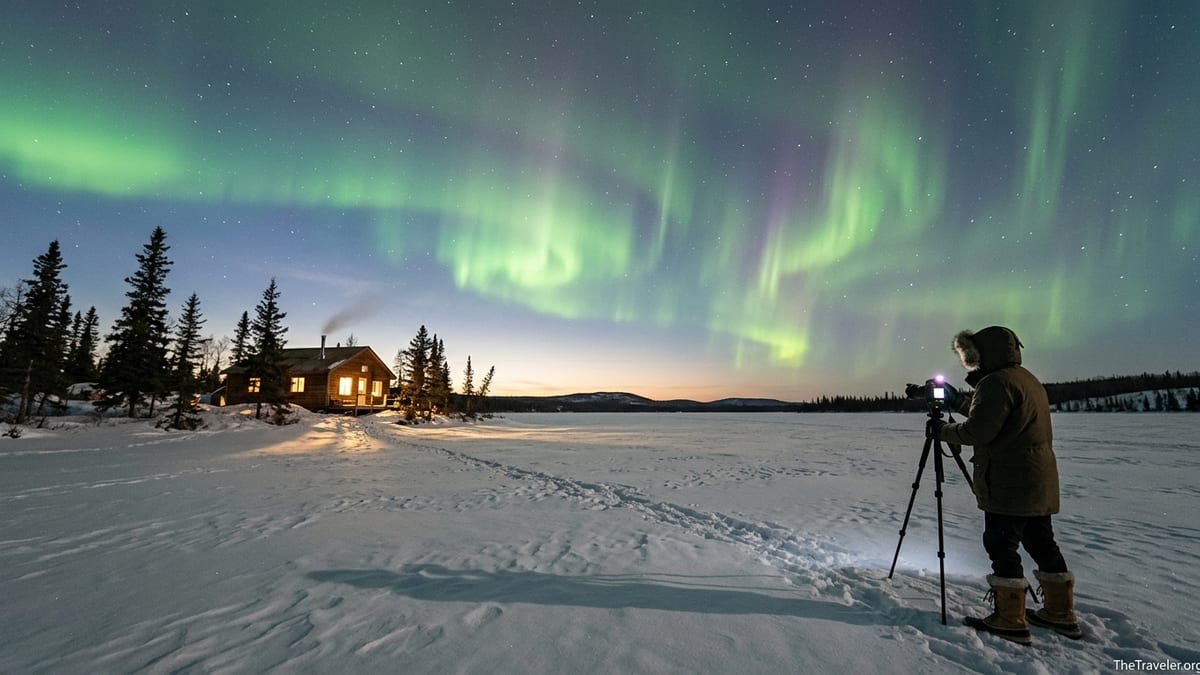
Northern Canada sits directly under the auroral oval, which means some of the most reliable Northern Lights on earth. Yet planning an aurora trip here involves real choices: Yellowknife in the Northwest Territories or the Yukon around Whitehorse and Dawson City, winter or autumn, lodge or hotel, self-drive or guided photo tour. This guide walks you through those trade-offs with concrete examples of lodges, tours and realistic trip lengths so you can design an aurora holiday that fits your budget, comfort level and photography ambitions.
Yellowknife vs Yukon: How the Destinations Compare
Both Yellowknife and the Yukon capital of Whitehorse sit close to the center of the auroral oval, which means strong aurora activity on many clear, dark nights. In practice, that gives both regions a high probability of Northern Lights over a multi-night stay, but the feel of the trip is quite different. Yellowknife is smaller and more remote, with an “end of the road” frontier atmosphere, frozen Great Slave Lake in winter and a very compact downtown where most visitors stay. Whitehorse in the Yukon feels more like a small regional hub, with more restaurants, museums and easy road trips to hot springs or the Yukon Wildlife Preserve.
Yellowknife’s biggest advantage for aurora is its geography. It lies on the edge of the Canadian Shield and away from coastal mountains, so the surrounding terrain is largely low, with big lakes and fewer microclimates to trap clouds. Bush-plane-access lodges such as Blachford Lake Lodge sit directly beneath the auroral oval and emphasize that flat, continental climate for clear skies. The Yukon offers superb viewing too, but some of its most scenic areas near mountain ranges can see more localized cloud, so operators often build in flexible strategies for chasing clearer sky if conditions change.
In terms of logistics, Yellowknife is usually a simpler, more focused aurora trip. Many visitors fly in, check into a downtown hotel like Chateau Nova or the Explorer, and book 2 to 4 nights of dedicated aurora tours that shuttle them out to darker areas. In Whitehorse, Northern Lights trips are often combined with daytime sightseeing, hot springs visits and winter activities. For example, a three-night “aurora and wildlife” package might include nightly viewing plus dog sledding and a soak at Eclipse Nordic Hot Springs, turning the trip into a broader Yukon sampler rather than a single-purpose aurora mission.
Costs are relatively comparable at the midrange hotel-and-tour level, but remote lodges and boutique properties skew higher. A fly-in eco-lodge from Yellowknife will typically price out in the several-thousand-dollar-per-person range for four or five nights including flights, meals and guided activities. In the Yukon, a boutique property such as Northern Lights Resort & Spa near Whitehorse sells all-inclusive winter or autumn packages with private chalets and nightly aurora viewing that also sit in that premium price band. The key difference is style: Yellowknife’s remote lodges feel like classic off-grid wilderness bases, while many Yukon lodges lean toward wellness, glass chalets and spa comforts.
When to Travel: Winter vs Autumn Aurora Seasons
The two main seasons for aurora in northern Canada are deep winter from roughly late November to March, and the shoulder months of late August to early October. Astronomically, the Northern Lights are present year-round, but you need dark skies, so these are the months with long enough nights. In Yellowknife, winter means extended darkness windows, sometimes from late afternoon until morning, which maximizes your chance that at least one of those hours will line up with a strong auroral display and clear sky. In autumn, evenings are milder, lakes can still be open for reflections and trees turn yellow, but nights are shorter.
For Yellowknife, many local operators and residents recommend late September into March, with February and March popular for very clear skies and deep snow. By those late-winter months, the worst of the extreme early-winter cold often eases slightly, yet you still get long, dark hours. Autumn trips in late August or September can be rewarding, especially for photographers seeking aurora mirrored in unfrozen lakes. Local travelers often talk about driving a short distance out of town toward darker lakeside pull-offs in shoulder season to catch the lights when the forecast cooperates, although cloud cover is a bigger wildcard compared with midwinter.
In the Yukon, the pattern is similar but shaped by its more mountainous terrain. Around Whitehorse, winter aurora packages typically run from roughly November through March or early April, with many lodges organizing multi-night stays across that period. A winter “all inclusive” stay at a resort such as Northern Lights Resort & Spa combines cozy chalets, saunas and hearty meals with guided nightly viewing during those darkest months. Autumn experiences in the Yukon, marketed as “Yukon in the Autumn with Northern Lights,” tend to cluster in September when there is still fall color, exposed water and a softer, golden light for daytime photography.
If your top priority is maximizing the odds of simply seeing the lights at least once, a midwinter visit with the longest darkness window can be more forgiving of fickle weather. If you care just as much about daytime hiking, fall colors or lake reflections as you do about the aurora itself, then an autumn trip in either Yellowknife or the Yukon can be more visually varied, provided you accept a bit more risk that clouds or shorter nights might cut into your viewing chances.
Aurora Lodges, Hotels and Where to Stay
Your base has a major impact on how convenient it is to watch the aurora. In Yellowknife, visitors generally choose between downtown hotels with evening tours, or remote lodges accessible by snowmobile or small plane. Downtown, larger hotels such as the Explorer and Chateau Nova are popular with tour operators, who include them as pickup points for nightly excursions. This approach keeps up-front costs moderate and leaves your days free to explore the town, walk the frozen lake or join optional dog-sledding or ice-cave activities.
For a more immersive stay, remote lodges near Yellowknife offer a “sleep under the aurora” feel. Blachford Lake Lodge, for example, is a fly-in wilderness lodge about 100 kilometers from the city, reached by bush plane. Packages that run in winter and autumn bundle the charter flight, cabin or lodge room, all meals and nightly aurora viewing from the frozen lake or shoreline. Being so far from city lights means you can step outside your cabin when staff wake you for activity, without having to drive anywhere. The trade-off is cost and less flexibility: a five-night all-inclusive package will typically price well above a simple hotel-plus-evening-tour combination.
In the Yukon, there is a clearer distinction between boutique aurora resorts close to Whitehorse and “in-town plus tour” setups. Northern Lights Resort & Spa, just outside Whitehorse, is a good example of the first model. It offers a small number of private log or glass chalets, wellness amenities like saunas and massages, and all-inclusive packages that include gourmet meals and guided aurora viewing on site. Guests can watch from heated lounges or step out onto the snow, with tripods and photography guidance often available. This style suits travelers who want a resort atmosphere where everything from winter clothing rental to daytime excursions is pre-arranged.
Whitehorse itself has midrange hotels that pair well with nightly aurora shuttles to darker areas outside town, a setup similar to Yellowknife. Newer facilities are emerging too: a planned “Aurora Outpost” near Takhini Hot Springs is being developed as an upscale viewing base that combines access to hot pools with a dedicated dark-sky site. Farther afield, Dawson City sees autumn aurora packages that combine Klondike Gold Rush history with Northern Lights excursions and, in some cases, heli-access backcountry camps aimed at photographers who want mountain backdrops in their shots.
Guided Tours, Aurora Villages and Photography Trips
A guided aurora tour can be as simple as an evening bus trip from town to a heated cabin, or as complex as a multi-day photo expedition with professional instructors. In Yellowknife, the most common products are nightly tours that pick up from downtown hotels around 9 or 10 p.m., drive 20 to 60 minutes to darker sites and provide warm shelters, hot drinks and assistance with photography. Some operators maintain permanent “aurora villages” with heated teepees or cabins, purpose-built viewing stands and on-site photographers who capture souvenir images for guests who do not want to manage cameras themselves.
For serious photographers, Yellowknife also supports more specialized small-group tours that chase clear sky rather than staying at a single fixed camp. These guides monitor short-term cloud forecasts and road conditions, sometimes driving in different directions on successive nights to find clearer horizons. While that approach requires more time in a vehicle, it can materially increase your chances of a good show in marginal weather. It also suits visitors who want varied landscapes in their photos, from frozen lakes to rocky outcrops and forest silhouettes.
In the Yukon, the equivalent offerings range from bus-based “aurora lounge” nights outside Whitehorse to full-fledged photography tours that span several days. An example is an evening product where guests are picked up from Whitehorse hotels and taken to a purpose-built viewing lounge with a licensed bar, snacks, tripods and on-site guides who help guests adjust camera settings for long exposures. Small operators and independent guides also run van-based “aurora chaser” tours, including some that limit group size to just a handful of guests in order to move quickly and tailor locations to the conditions each night.
One notable difference is that Yukon tour packages often braid daytime exploration into the product by default. A three-night aurora stay might bundle morning visits to the Yukon Wildlife Preserve, snowshoeing or dog sledding, and an evening at Eclipse Nordic Hot Springs, then transition straight into late-night viewing at a dark-sky site. In Yellowknife, similar daytime add-ons exist, but many visitors structure them as optional extras rather than integrated package components, keeping the focus squarely on the nighttime sky.
How Many Nights to Book for Better Odds
No guide can guarantee the Northern Lights. The aurora depends on both space weather and local cloud cover, and even in prime locations there will be nights when conditions simply do not line up. What you can control is your time window. In both Yellowknife and the Yukon, local operators commonly suggest booking at least three consecutive nights focused on aurora viewing, with four or even five nights strongly recommended if the lights are a once-in-a-lifetime priority.
As a rule of thumb, a three-night stay in a place like Yellowknife or Whitehorse gives you multiple rolls of the dice against both cloud and solar activity. Over those three nights, it is statistically common that at least one will offer usable conditions and some level of auroral activity, even if it is not a roaring “full sky” display each time. A five-night package at a dedicated aurora lodge, such as a fly-in property near Yellowknife or a glass-chalet resort near Whitehorse, further improves those odds and allows for slower days in between late nights.
From a practical travel-planning perspective, balancing cost and probability usually leads to itineraries in the 4 to 6 night range in total, with 3 to 5 targeted aurora nights built into that. For example, you might fly into Yellowknife for five nights, schedule aurora tours on your first three evenings, then keep the last two nights flexible to either rest or add a final aurora outing if the forecast looks promising. In the Yukon, a similar pattern might involve three nights at a dedicated aurora resort plus two nights in Whitehorse for museums, restaurants and a final optional viewing excursion.
Flexibility matters. Wherever possible, choose operators or lodge packages that allow some night-by-night adjustments based on weather. Some small-group guides in both Yellowknife and Whitehorse explicitly advertise flexibility to chase clear breaks in the cloud deck, rather than committing you to fixed locations regardless of conditions. This may cost slightly more per night than a large-bus tour, but it can meaningfully improve the quality of the aurora you see.
What It Actually Costs: Sample Budgets
Prices change each season and fluctuate with exchange rates, but you can still build a realistic budget band for aurora trips in Northern Canada. At the more economical end, a midwinter Yellowknife trip where you stay at a standard downtown hotel and join group evening tours might total in the low to mid four figures in Canadian dollars per person for three or four nights, including domestic flights from a major Canadian city. Each aurora tour night generally adds a few hundred Canadian dollars that covers transportation, warm shelter, hot drinks and basic photography support.
Step up to a remote lodge, and the numbers increase but so does the level of service. A four or five night all-inclusive stay at a fly-in lodge near Yellowknife, covering the charter flight, meals, guided activities and nightly aurora viewing, will usually cost several thousand Canadian dollars per person before international airfare. The experience becomes more like a traditional wilderness lodge holiday with the aurora as the headline feature rather than just one nightly excursion.
In the Yukon, boutique aurora resorts near Whitehorse fall between those two bands, closer to the remote-lodge experience but with road access. All-inclusive autumn or winter packages featuring private chalets, gourmet meals, daytime tours and nightly viewing can easily sit in the mid-to-upper four figures in Canadian dollars for a three to five night stay. Meanwhile, a Whitehorse hotel-based trip with nightly shuttles to an aurora lounge or dark-sky site is broadly comparable to the Yellowknife hotel-and-tour budget, making the choice more about style and access than price alone.
Regardless of destination, do not forget extras. Winter clothing rentals, if you do not own suitable parkas, boots and mitts, can add a noticeable amount per person, although some high-end packages include them. Daytime excursions like dog sledding, snowmobiling, wildlife preserve visits or heli-scenic flights quickly stack on top of the core aurora costs. Many travelers find it helpful to pick a package that already includes one or two daytime highlights, then reserve only a small discretionary budget for additional spur-of-the-moment activities once on the ground.
Planning for Weather, Darkness and Photography
Seeing the aurora is part luck, part planning. The elements you can plan for are your season, your nightly schedule and your readiness to manage cold and cameras in the dark. In midwinter in Yellowknife or Whitehorse, nighttime windchills can drop far below freezing, so even if you are watching from a heated cabin or glass chalet you will likely spend stretches outside adjusting tripods or simply staring upward. Proper winter boots, insulated pants, a serious parka and warm mitts are not optional at those temperatures. Many premium resorts in the Yukon and some Yellowknife lodges include winter clothing rental in their packages for exactly that reason.
Darkness windows are just as important. In midwinter, you might realistically be in full darkness from early evening until late morning, and good aurora can appear at any point. In autumn, there may only be a few truly dark hours between twilight and moonrise or dawn. Professional guides in both regions often use detailed forecasts that combine cloud predictions, moon phase and space weather indices to decide exactly when to focus effort each night. As a visitor, you can improve your odds by napping in the late afternoon, staying flexible on bedtime and being prepared to step outside when staff wake you at midnight or later if activity spikes.
For photography, both Yellowknife and the Yukon are extremely camera friendly, but you need some basic knowledge to bring home sharp images. Even if you join a tour with on-site help, you will get better results if you arrive having practiced long exposures on a tripod at home. Typical settings involve wide-angle lenses, open apertures and shutter speeds from roughly 5 to 20 seconds, depending on how bright and fast-moving the aurora is. Many tours and resorts provide sturdy tripods and can suggest starting settings, but you are still responsible for knowing your own camera’s menus and how to adjust focus in the dark.
Finally, consider the non-aurora feel of your nights. In Yellowknife’s aurora villages and in Yukon lounges and resorts, warm interiors with hot drinks, snacks and sometimes a bar turn the long waiting periods into social time. In contrast, small-group chasing tours can mean hours in a quiet van and brief intense bursts of shooting when conditions align. Neither style is better; they simply suit different personalities. Think honestly about whether you want a social, comfort-forward atmosphere or a more focused photography mission, then choose Yellowknife or Yukon products that match.
FAQ
Q1. Is Yellowknife or the Yukon better for seeing the Northern Lights?
Both offer excellent aurora odds because they sit under the auroral oval, but Yellowknife has a slight edge in long, dark winter nights and flatter terrain that can mean fewer localized clouds. The Yukon balances strong aurora with more varied daytime sightseeing and boutique resorts that combine viewing with wellness and wildlife experiences.
Q2. How many nights should I book for an aurora trip?
A minimum of three dedicated aurora nights is advisable in either destination, with four or five nights giving a much better chance of at least one clear, active display. Many travelers plan total trips of four to six nights so they can rest between late nights and add or move a tour based on the weather forecast.
Q3. When is the best time of year to visit Yellowknife for Northern Lights?
Late September through March typically offers the best combination of darkness and activity. February and March are especially popular for clear skies and deep snow, while late August and September appeal to photographers who want milder temperatures, unfrozen lakes and fall colors, albeit with shorter nights and more variable cloud.
Q4. When is the best time to see the aurora in the Yukon?
In the Yukon, winter packages usually run from roughly November to March or early April, when nights are long and dark. September is the prime autumn month, offering fall foliage and open water along with nights that are just dark enough for aurora, although weather can be more unpredictable than in midwinter.
Q5. What is the difference between staying in town and at an aurora lodge?
Staying in town, such as downtown Yellowknife or Whitehorse, is usually cheaper and more flexible; you join nightly tours that drive to dark-sky sites and can add daytime activities at will. At an aurora lodge or boutique resort, you typically pay more for an all-inclusive package but gain the ability to step outside your cabin or glass chalet whenever the aurora appears, often with staff on hand to wake you and assist with photography.
Q6. Are guided aurora tours worth the cost for photographers?
For most photographers, guided tours are worth it, especially on the first nights. Guides know local weather patterns, safe pull-outs and foreground locations, and can help troubleshoot camera settings in the cold. Small-group “chaser” tours that move in search of clear sky are particularly valuable if you are traveling a long way and want to maximize your chances in a short time window.
Q7. How cold does it get during winter aurora trips?
In midwinter in Yellowknife or Whitehorse, nighttime temperatures commonly drop far below freezing and can feel much colder with windchill. It is normal to spend time outside at minus double-digit Celsius temperatures while waiting for or photographing the lights, even if you retreat regularly to a heated cabin or lounge. Proper winter clothing, including insulated boots, pants, a serious parka and warm mitts, is essential.
Q8. Can I see the Northern Lights without leaving town?
Yes, strong aurora can sometimes be visible from within Yellowknife or Whitehorse themselves, especially on very active nights. However, city lights and buildings reduce contrast and make weaker displays harder to see or photograph. Most visitors still book at least a few nights out at dark-sky sites, either via shuttle tours or by staying at a lodge with minimal light pollution.
Q9. Are autumn aurora trips really worth it compared to winter?
Autumn trips can be very rewarding if you value milder temperatures, fall colors and open-water reflections in your photos. The trade-off is shorter nights and a bit more dependence on cooperative weather. If seeing the lights at all is your absolute top priority, a midwinter visit offers a more forgiving darkness window. If you want a mix of hiking, scenery and aurora, autumn in either Yellowknife or the Yukon can be ideal.
Q10. How far in advance should I book aurora lodges and tours?
Popular lodges and small-group tours in both Yellowknife and the Yukon often sell out months in advance for peak periods like late February, March and autumn color season. As soon as your dates are firm, it is wise to secure accommodation and at least your first few aurora nights. Larger group tours may have more last-minute availability, but specialized photography departures and boutique chalets are best booked well ahead of time.