


Northern Canada feels like a different country within Canada itself: small fly-in capitals, endless tundra, midnight sun, and winter skies alive with aurora. For a first-time visitor, the distances, weather and costs can be intimidating, but with realistic planning the North is surprisingly accessible. This guide focuses on the main visitor gateways of Whitehorse in Yukon, Yellowknife in the Northwest Territories and Iqaluit in Nunavut, and helps you understand flights, limited road access, northern lights, wildlife experiences, accommodation and what it all really costs.
Understanding Northern Canada’s Regions
When people say “the North” in Canada, they usually mean three vast territories: Yukon, Northwest Territories and Nunavut. Together they stretch from coastal rainforests near the Alaska border to the high Arctic islands, but your first trip will almost certainly start in one of three small capitals: Whitehorse, Yellowknife or Iqaluit. Each serves as the main air hub for its territory and as a practical base with hotels, restaurants and tour operators.
Yukon tends to feel like the softest introduction. Whitehorse is road-connected to the rest of Canada, has a population of around 30,000, and its main streets offer coffee shops, outdoor stores and visitor centres in easy walking distance. The surrounding landscape mixes boreal forest with mountains, and popular trips include drives on the Alaska Highway or Dempster Highway toward the Arctic Circle.
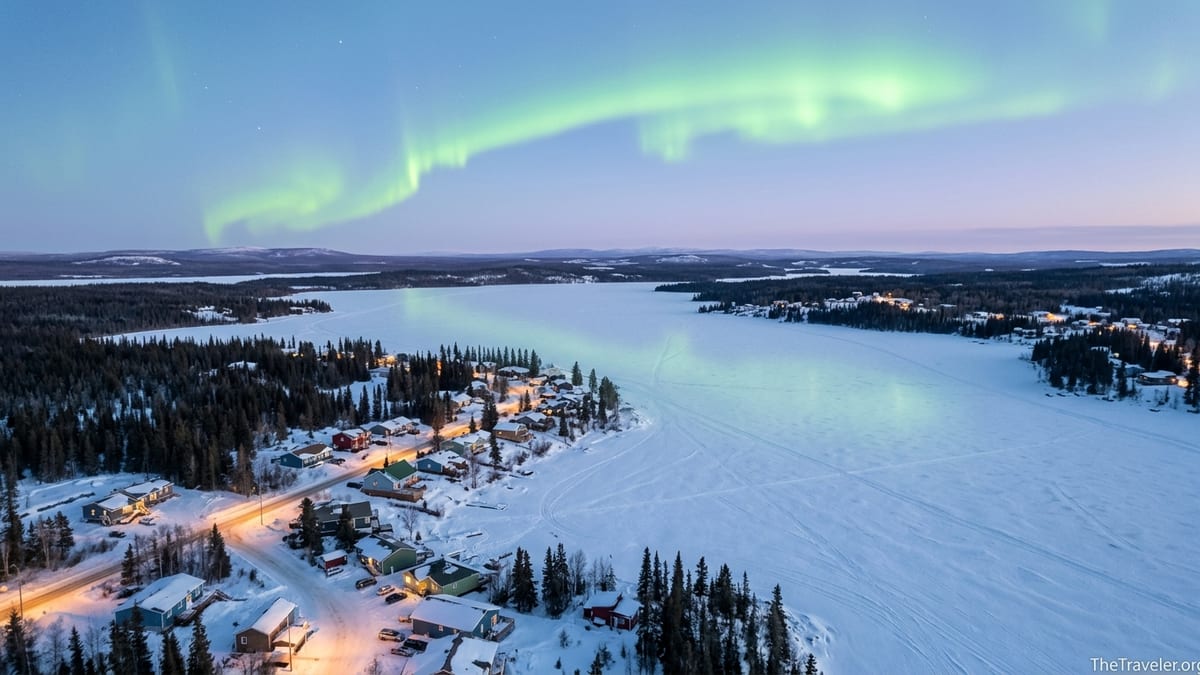
The Northwest Territories feel a little more remote. Yellowknife sits on the shore of Great Slave Lake, close to the auroral oval, and has become one of the world’s premier places to see the northern lights in winter. Outside the capital, most communities are isolated and reached by small aircraft or seasonal winter roads. Landscapes move from Canadian Shield rock and lakes in the south to true Arctic tundra in the north.
Nunavut is the most remote and culturally distinct of the three. There are no roads connecting Nunavut to the rest of Canada, and even communities within Nunavut are linked by air, snowmobile and boat rather than highways. Iqaluit on Baffin Island is the main entry point for visitors, with a compact downtown along Frobisher Bay and strong Inuit cultural presence. From there, most travelers join organized expeditions to places like Pangnirtung in Auyuittuq National Park or fly farther north to communities such as Pond Inlet.
How to Get There and Around: Flights and Limited Roads
For most first-time visitors, the biggest surprise is how central flights are to northern travel. Whitehorse’s Erik Nielsen International Airport has regular jet service from Vancouver, Calgary and sometimes seasonal routes from European or US gateways. Yellowknife is typically connected to Edmonton and Calgary, and sometimes Vancouver. Iqaluit normally links to Montreal and Ottawa. Schedules are seasonal and can change year to year, so it is worth checking flight availability before locking in dates for things like lodge stays.
Fares vary widely, but from major southern Canadian cities you can often expect return economy tickets in the range of roughly 400 to 900 Canadian dollars to Whitehorse or Yellowknife during shoulder seasons, with peak holiday or aurora periods often higher. Iqaluit is usually more expensive given fewer competing airlines and longer distances, and it is not unusual to see return fares from Montreal or Ottawa that are higher than many transatlantic flights. Booking several months ahead and avoiding busy school holiday weeks helps keep costs down.
Road access is uneven and is an important planning consideration. Yukon has by far the most extensive highway network of the three territories. Visitors routinely drive the Alaska Highway, Klondike Highway to Dawson City, and in summer or winter take the Dempster Highway, Canada’s only all-season road that crosses the Arctic Circle and continues to Inuvik in the Northwest Territories. This allows adventurous road trips from British Columbia or Alberta into Yukon and onward to the Arctic with a well-prepared vehicle.
By contrast, Yellowknife is reachable by road from Alberta via the Mackenzie Highway and Yellowknife Highway, but many communities in the Northwest Territories rely on gravel roads, ferries or winter ice roads. Nunavut has no road connections from the south at all, so transport between communities is by small aircraft or by sea in summer. For a first-time visitor, this generally means using one capital as a hub and then joining flights or boat-based tours to smaller communities and parks rather than trying to drive independently between them.
When to Go: Seasons, Northern Lights and Midnight Sun
Choosing the right season is key. In Yellowknife, local tourism organizations describe the aurora viewing season as running roughly from mid August through April, when nights are dark enough and the town’s position under the auroral oval gives a high likelihood of clear displays on many nights. Winter visitors between November and March experience long, cold nights and a strong chance of seeing the lights with a multiday stay, while late August and September can combine aurora with milder temperatures and the first hints of fall colour.
Whitehorse and Yukon in general offer a broader mix of seasonal experiences. Summer from June to August brings nearly endless daylight, with hiking in Kluane National Park, canoe trips on the Yukon River, and road trips along the Alaska or Klondike Highways. By late August and September, darkness returns enough for northern lights tours around Whitehorse or farther north near Dawson City, with cool nights but reasonable daytime warmth. Winter visitors, especially from December to March, find classic snow experiences like dog sledding, snowshoeing and hot springs combined with aurora viewing just outside town.
Nunavut’s visitor season is shaped by ice and daylight. In Iqaluit, late spring and early summer feature long days, sea ice breaking up on Frobisher Bay and opportunities for snowmobile or dog-sled outings close to town. Summer brings hiking and boating in nearby parks. Farther north on Baffin Island, many expedition cruises and adventure travel companies schedule voyages in July and August, when sea ice allows access to fjords and wildlife viewing. Winter trips focused on northern lights or extreme cold are possible but require careful outfitting and usually work best with local guides arranging snowmobile routes and accommodations in smaller communities.
For a first visit that balances accessibility and weather, many travelers aim for late August to mid September or February to March. The late summer period offers crisp evenings, colourful tundra and a chance at aurora without deep-winter cold, while late winter combines strong northern lights, reliable snow for winter activities and slightly longer days that make sightseeing easier.
Experiences: Aurora, Arctic Landscapes and Wildlife
Northern lights are the headline attraction for many first-time visitors, especially to Yellowknife and Whitehorse. In Yellowknife, a typical aurora tour might involve an evening pickup from your hotel, a 30 to 45 minute drive beyond city lights along the Ingraham Trail, and several hours at a heated cabin or teepee camp with warm drinks while guides monitor the sky. Some travelers choose multi-night packages that bundle three or four evening outings to maximize the chance of a strong display, often combined with daytime city tours or dog sledding.
Whitehorse offers similar aurora-focused experiences, but with a stronger emphasis on combining northern lights with winter adventure. You might spend a day snowshoeing in the forests near town or soaking at a hot springs facility, then head out in the evening to a lakeside cabin with a clear northern horizon. Multi-day packages often include airport transfers, gear rental such as parkas and boots, and three or more nights of aurora watching to spread the risk of cloudy weather.
Arctic landscapes are just as powerful a draw. Driving the Dempster Highway from near Dawson City toward Inuvik gives a tangible sense of crossing climatic zones, from boreal forest into rolling tundra and then to the stark hills north of the Arctic Circle. Travelers often describe seeing caribou in the distance, raptors along the roadside and a vastness that makes fuel stops and small lodges like Eagle Plains feel like tiny outposts. In Nunavut, landscapes are more often reached by plane or boat, but short flights from Iqaluit to Pangnirtung, combined with guided day hikes on the edges of Auyuittuq National Park, provide accessible introductions to glacier-carved valleys and coastal cliffs.
Wildlife viewing in the North tends to be opportunistic rather than guaranteed. In Yukon, roadside sightings of moose, black bears or Dall sheep are common in summer on highways near Kluane National Park. The Northwest Territories offer chances to see wood bison along certain roads and migratory birds in the Mackenzie Delta region. Nunavut is known for marine mammals such as seals, narwhal and bowhead whales, but seeing them usually requires specialized boat tours or expedition cruises with experienced guides who understand both the animals and local community expectations.
Whitehorse, Yellowknife and Iqaluit: What to Expect on the Ground
Whitehorse feels like a relaxed outdoor hub. Downtown hotels range from familiar Canadian chains to independent lodges, and you can walk to coffee shops, bakeries and gear outfitters. A visitor information centre typically provides maps, driving advice and updates on road conditions. Many first-time visitors spend two or three nights in Whitehorse, rent a vehicle and use it as a base for day trips along the Alaska Highway or to nearby trailheads and viewpoints. In winter, operators in and around town offer dog sledding, snowmobiling and guided aurora viewing.
Yellowknife is smaller but has a distinctly frontier character, with colourful houses on the shores of Great Slave Lake and a lively Old Town with art galleries and restaurants. Many hotels and guesthouses cater directly to aurora visitors, offering wake-up calls when the lights appear. Tour operators run everything from large-bus aurora outings and village-style aurora camps with heated teepees to small-group photography tours where guides help you set up tripods on frozen lakes. Daytime activities can include ice road drives in winter, walks on lakeshore trails, or visiting local cultural centres.
Iqaluit is more compact and primarily a working government and regional hub rather than a classic tourist town. Accommodation choices currently include a few hotels and guesthouses aimed at business and government travelers, with prices that may surprise new visitors used to southern Canadian cities. You can walk most of the town in an afternoon, from the waterfront near the port to hilltop viewpoints that look over Frobisher Bay. Day tours often focus on Inuit culture, local craft studios and short snowmobile or boat excursions depending on the season. Because flights are limited and delays can occur, many visitors build in an extra buffer day in Iqaluit at the start or end of their trip.
In all three capitals, food options tend to be more expensive than in southern cities, but you can still find simple cafes for breakfast and casual lunches. In Whitehorse and Yellowknife, supermarkets allow for self-catering if you choose accommodation with basic kitchen facilities. In Iqaluit, groceries are available but prices reflect the cost of flying goods in, so stocking up on non-perishable snacks before flying north can help keep costs manageable.
Accommodation, Tours and Realistic Costs
Accommodation in the North spans basic motels, mid-range hotels, wilderness lodges and homestay-style guesthouses. In Whitehorse and Yellowknife, mid-range hotel rooms often fall somewhere in the approximate range of 170 to 280 Canadian dollars per night, depending on season and demand. During popular aurora periods or major events, rates can climb higher and availability tightens, so advanced booking is advisable. In Iqaluit, nightly rates are often higher than visitors expect, reflecting limited supply and government demand; it is common to see standard hotel rooms priced above typical southern-Canada city levels.
Tours vary from simple half-day experiences to multi-day packages. In Yellowknife or Whitehorse, a typical evening aurora tour with transportation, warm shelter and hot drinks might cost roughly 130 to 250 Canadian dollars per person, with photography-focused or small-group outings at the upper end. Multi-night packages that include airport transfers, accommodation, thermal clothing rental and several evening tours can reach into the low four-figure range per person. In Nunavut, day tours by snowmobile or boat from Iqaluit are often priced higher due to fuel costs and small group sizes, and multi-day expeditions or cruises into remote regions are typically major investments comparable to international expedition travel.
Daily costs beyond tours and lodging depend on how you travel. Eating in restaurants for every meal in the North adds up quickly; dinner mains in Whitehorse or Yellowknife often land in a similar price range to larger Canadian cities, while in smaller or more remote communities they can be higher. Self-catering part of the time, such as buying groceries for breakfasts and picnic lunches, is a common strategy. Renting a vehicle in Whitehorse or Yellowknife can offer flexibility for day trips and self-guided aurora hunting, but rates are often higher than in large southern airports, and some companies restrict travel on gravel highways like the Dempster.
For a rough planning baseline, many first-time visitors find that a four-night aurora-focused trip to Yellowknife or Whitehorse, including flights from a major Canadian city, mid-range accommodation, two or three guided activities and meals, can sit in the broad band of a few thousand Canadian dollars per person. A shorter, culture-focused visit to Iqaluit with one or two guided day tours may fall in a similar overall range once higher airfares and hotel costs are included. Expedition-style trips deeper into Nunavut or along Arctic coasts are significantly more expensive and often planned a year or more in advance.
Practical Planning for First-Timers: Safety, Gear and Booking
Weather and preparedness are central to safe and enjoyable northern travel. Winter temperatures in Yellowknife, Whitehorse or Iqaluit frequently drop well below minus 20 degrees Celsius, and wind can make it feel colder. Many tour operators provide insulated boots, parkas and snow pants as part of winter packages, which can reduce the need to buy specialized gear for a single trip. Even so, arriving with quality base layers, warm mid-layers, windproof outer gloves and a good hat makes evenings outside far more comfortable.
Driving, especially on northern highways like the Dempster, requires caution. Conditions can change quickly from packed snow to loose gravel or mud, and there may be long gaps between fuel stops and services. Government and tourism websites for Yukon and the Northwest Territories publish road-condition updates and safety brochures that emphasize carrying a full-size spare tire, extra fuel where appropriate, emergency food and water, and letting someone know your route and expected arrival times. For a first trip, many travelers choose summer or early fall for long-distance driving and keep winter roads to shorter day trips near major centres.
Booking strategy matters because capacity in the North is inherently limited. Flights to Iqaluit or Yellowknife can sell out during peak weeks, and popular wilderness lodges or aurora camps may have only a handful of rooms. It is usually wise to secure flights and core accommodation several months in advance for winter or high-summer trips, then add specific tours once your dates are fixed. For complex itineraries involving multiple small communities or charter flights, working with a specialist tour operator familiar with northern logistics can save money and reduce risk of misconnection.
Travel insurance is particularly important in the North. Weather-related delays, especially in winter or shoulder seasons, are common, and flights to or between remote communities may be rescheduled or canceled on short notice. Policies that cover trip interruption, additional accommodation due to delayed flights and medical evacuation from remote areas offer an extra layer of protection in regions where hospital facilities and commercial flight options are limited.
The Takeaway
For many travelers, a first trip to Northern Canada becomes the start of a long-term fascination. Even a modest four-night stay in Whitehorse, Yellowknife or Iqaluit gives an unusually concentrated experience of big skies, Indigenous cultures and a climate that shapes daily life in ways that often surprise visitors from southern cities. The costs are higher and the logistics more complicated than a typical city break, but the payoff is a sense of remoteness and clarity that is increasingly rare.
Approach your planning with realism. Accept that weather can disrupt flights, that restaurant choices will be limited compared with Toronto or Vancouver, and that you may spend long evenings outside in serious cold while waiting for the sky to come alive. But also recognize that with thoughtful preparation, appropriate clothing, and a margin of flexibility in your schedule, Northern Canada is far more approachable than it looks on a map.
Whether you start with an aurora-focused escape to Yellowknife, a summer road trip through Yukon’s mountains, or a culture-rich visit to Iqaluit and nearby communities, you will come away with a new understanding of distance, light and quiet. Plan carefully, respect local advice, and give the North enough time to work on you. For many visitors, once is not enough.
FAQ
Q1. What is the best time of year to see the northern lights in Northern Canada?
The peak aurora season generally runs from around mid August to April, when nights are dark enough. In places like Yellowknife and Whitehorse, many visitors aim for late August to late March, while February and March are popular for those who want a mix of strong lights, snow activities and slightly longer days.
Q2. How many nights should I stay to have a good chance of seeing the aurora?
Because the northern lights are influenced by both space weather and cloud cover, most operators recommend at least three to four nights in an aurora destination such as Yellowknife or Whitehorse. This gives multiple viewing opportunities and a better chance that at least one night will be clear enough for a strong display.
Q3. Is it possible to drive to all three territories on my first trip?
You can drive to Yukon and to parts of the Northwest Territories, including Yellowknife, using the highway network from British Columbia or Alberta. However, Nunavut has no road connections to the rest of Canada, so reaching Iqaluit and other Nunavut communities requires flying. For a first trip, many people choose either a Yukon road journey or a fly-in visit to one or two capitals rather than trying to include all three.
Q4. How cold does it really get in winter, and what clothing do I need?
Winter temperatures in Whitehorse, Yellowknife and Iqaluit often drop well below minus 20 degrees Celsius, and colder spells are not unusual. You will want insulated boots, thermal base layers, a warm mid-layer such as fleece or wool, a windproof outer layer, insulated gloves or mitts and a good hat. Many winter tour packages include rental parkas and boots, which can reduce what you need to buy.
Q5. Are northern communities welcoming to visitors?
In general, communities in Yukon, Northwest Territories and Nunavut are welcoming to respectful visitors who understand that they are entering small, tightly knit places where people live and work year round. Booking locally owned tours, learning a bit about Indigenous cultures in advance, asking before taking photos of people and being patient with local schedules all help create positive experiences on both sides.
Q6. How expensive is food and accommodation compared with southern Canada?
Food and accommodation are typically more expensive in the North due to transport costs and limited supply. Hotel rates in Whitehorse and Yellowknife often sit above comparable properties in many southern cities during busy periods, and Iqaluit can be more expensive still. Restaurant prices are similar to or higher than big-city Canadian norms, while groceries, especially fresh produce, can cost significantly more in remote communities.
Q7. Can I rent a car and explore on my own?
Car rental is available in Whitehorse and Yellowknife and can be an excellent way to explore nearby roads, lakes and viewpoints. However, some rental contracts restrict travel on remote gravel highways such as the Dempster, and winter driving requires experience and caution. In Nunavut, car rental options are more limited and are mainly used within communities rather than for long-distance travel between them.
Q8. Do I need special permits to visit parks and remote areas?
Many national and territorial parks in the North require permits or advance reservations, especially for backcountry trips. For example, backpacking routes in parks on Baffin Island or remote river trips in Yukon and the Northwest Territories are usually regulated and may have limited quotas. Working with local tour operators or consulting park agencies well ahead of your trip is the best way to confirm requirements.
Q9. Is Northern Canada suitable for families and less experienced travelers?
Yes, as long as you choose destinations and seasons that match your comfort level. A winter aurora trip to Yellowknife or Whitehorse using guided tours and hotel stays, or a summer road trip on Yukon’s main highways with short hikes and day tours, can work well for families. More remote expedition-style travel in Nunavut or along Arctic coasts is better suited to travelers who are comfortable with basic conditions, flexible schedules and higher costs.
Q10. How far in advance should I book flights and tours?
For peak periods such as February to March aurora season or July and August in Yukon, it is wise to book flights and core accommodation several months in advance, especially if you are traveling on fixed dates. Popular aurora lodges, wilderness cabins and small expedition operators often fill well ahead of time, while day tours in the capitals can sometimes be arranged closer to departure but may still sell out during busy weeks.