


Ontario doesn’t “turn” for fall all at once. Colour climbs and descends with latitude, elevation, tree mix, and weather, which is why one weekend can be blazing in Algonquin while vineyards in Prince Edward County are still mostly green, and why the Lake Superior shoreline can be past peak while the Ottawa Valley is just getting started. For planning, that means two things: build your trip around Ontario’s strongest seasonal product, the Canadian Shield-and-lakes classic postcard landscape that Destination Ontario spotlights in Algonquin Provincial Park and Muskoka, and confirm conditions with current provincial foliage reporting before you go rather than betting on fixed-date predictions.
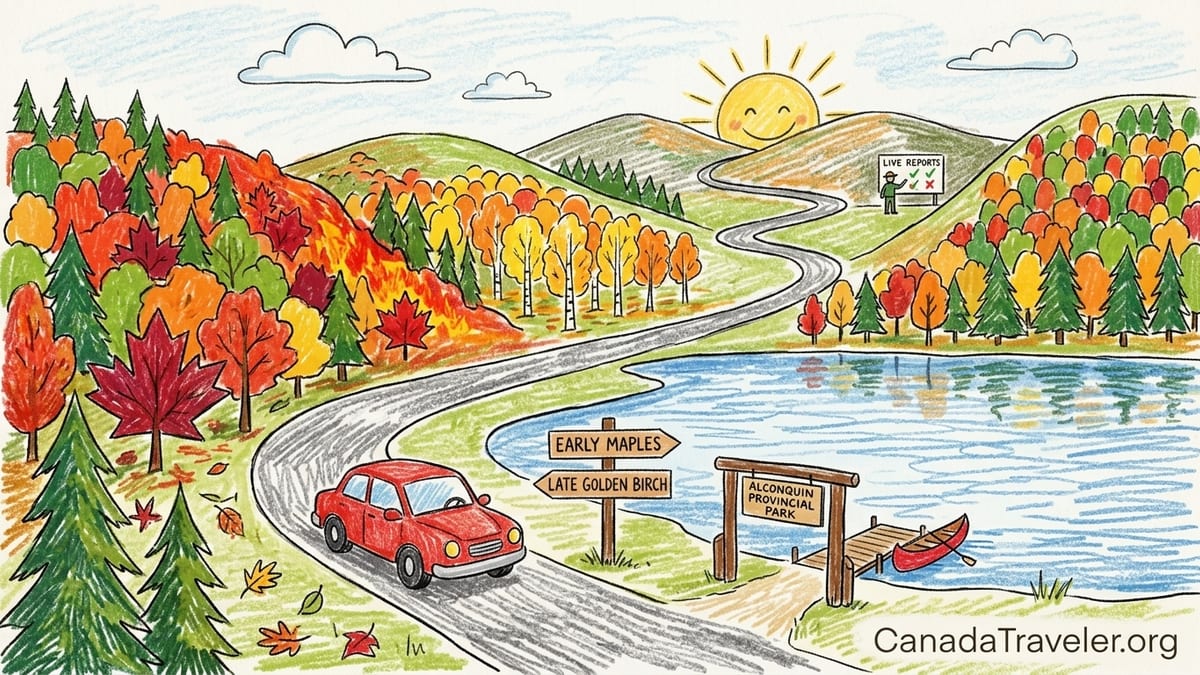
How Ontario’s colour season actually moves (and why you should check live reports)
Think of Ontario’s fall colours as a moving target you can road-trip into, not a single “best week.” Maples tend to light up early and dramatically, especially in mixed forests across higher, cooler areas like Algonquin’s Highway 60 corridor. As the season advances, the show often shifts toward gold: birch, poplar, and tamarack (larch) can hold colour later, and some lakeshore and lower-elevation destinations stay photogenic after the famous inland peaks have started shedding.
The most reliable pre-trip habit is checking an up-to-date provincial fall-colour report (Ontario Parks publishes park-by-park updates, including “best viewing” suggestions and report dates). Those details matter because a “90% colour change” note can mean different things depending on leaf fall, storm damage, or whether you’re looking at a maple hillside versus a shoreline stand of birch. Treat reports as a directional tool, then choose your destinations based on what’s currently performing.
Practical planning also means knowing where pressure concentrates. In Algonquin and nearby parks, high-demand weekends can fill day-use capacity and parking lots early, while the exact same trails on a Tuesday can feel calm and spacious. If you can take even one weekday off, you’ll notice it immediately in shorter gate lines, easier trailhead parking, and better conditions for photography and wildlife viewing.