


After a few summers of chasing saltwater vibes without saltwater, I stopped treating Ontario as a consolation prize and started treating it like what it is: a serious freshwater beach destination with its own learning curve. Ontario borders four of the five Great Lakes, and Destination Ontario notes the shoreline adds up to more than 15,000 kilometres, which helps explain why the province can feel like it has a different “best beach” for every type of traveler. It also explains the big warning that comes with the famous names: the beach can be gorgeous and still be miserable if you show up at the wrong time, with the wrong expectations, and without a plan for parking, crowds, and comfort-station reality.
Freshwater Beach Travel In Ontario: What I Learned The Hard Way
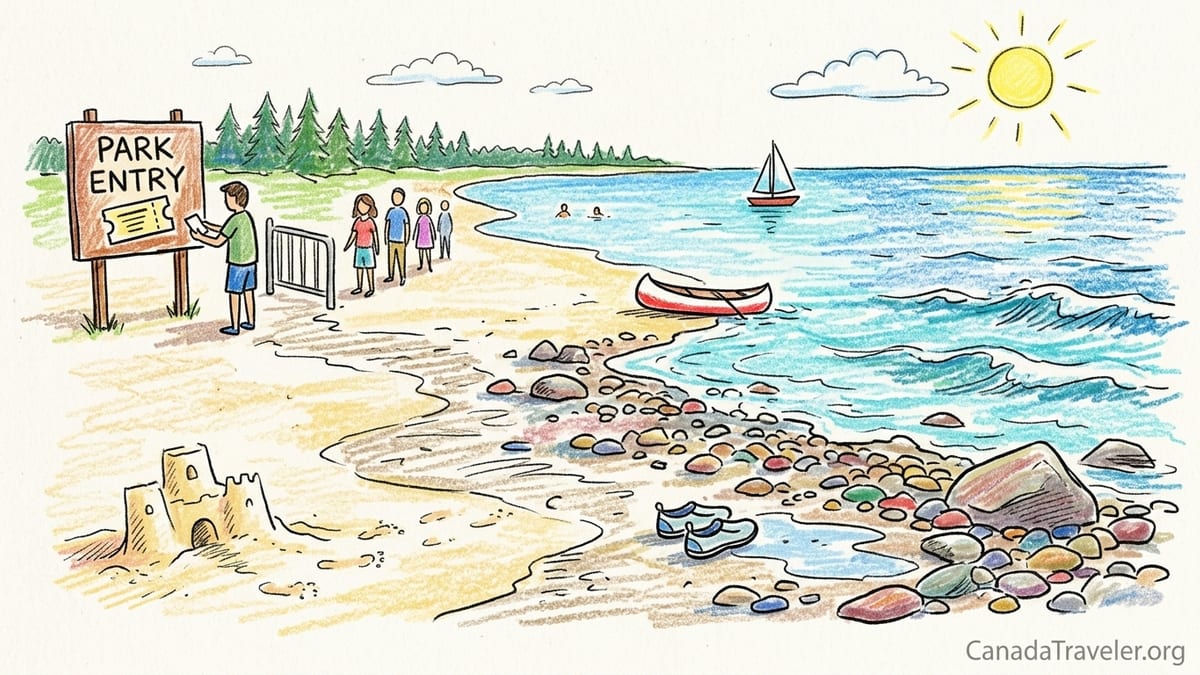
Freshwater beach travel looks familiar until it doesn’t. The first surprise is how quickly conditions change. On the same weekend, I’ve had a glassy Lake Huron morning that felt almost Caribbean in color, then watched a wind shift turn the nearshore into rolling chop that knocked over my sandcastle ambitions. Ontario beaches also have a different “feel” underfoot: some are soft, sugar-sand stretches that squeak when you walk; others are pebble and rock coastlines where water shoes are the difference between exploring and hobbling back to the car.
The second surprise is logistics. A Great Lakes day can be ruined more by access than by weather: sold-out day-use quotas, paid parking zones that fill early, long walks from overflow lots, and comfort stations that are not evenly distributed along long beaches. Ontario Parks now leans heavily on planning ahead for day use at its busiest parks, including the kind of parks that anchor this article: Sandbanks and Pinery both explicitly push advance daily vehicle permits in peak season. In other words: the sand can be perfect, but you still have to get in the gate.
Finally, there’s temperature. People hear “lake” and assume “cold,” but that’s only half true. Ontario’s Great Lakes beaches range from shockingly brisk to genuinely swimmable depending on the lake, the week, and the wind. I’m careful here because I’m not going to invent exact degrees I didn’t measure, but I can say this: the same traveler who finds Lake Superior thrilling may find it borderline punishing for lounging, while Lake Erie on a hot spell can feel like the warmest open-water swim in the province.