


Ontario quietly has one of Canada’s strongest “dark-sky” lineups for first-time aurora chasers, with designated preserves, astronomy pads, remote shorelines and big-lake horizons that can outperform what many visitors expect from a province anchored by Toronto. Still, the Northern Lights are never guaranteed. Your best plan is to combine the right place (real darkness and a north-facing horizon) with the right night (current space-weather forecasts, clear skies, and minimal moonlight), then give yourself enough time and flexibility to wait out clouds or a weak display.
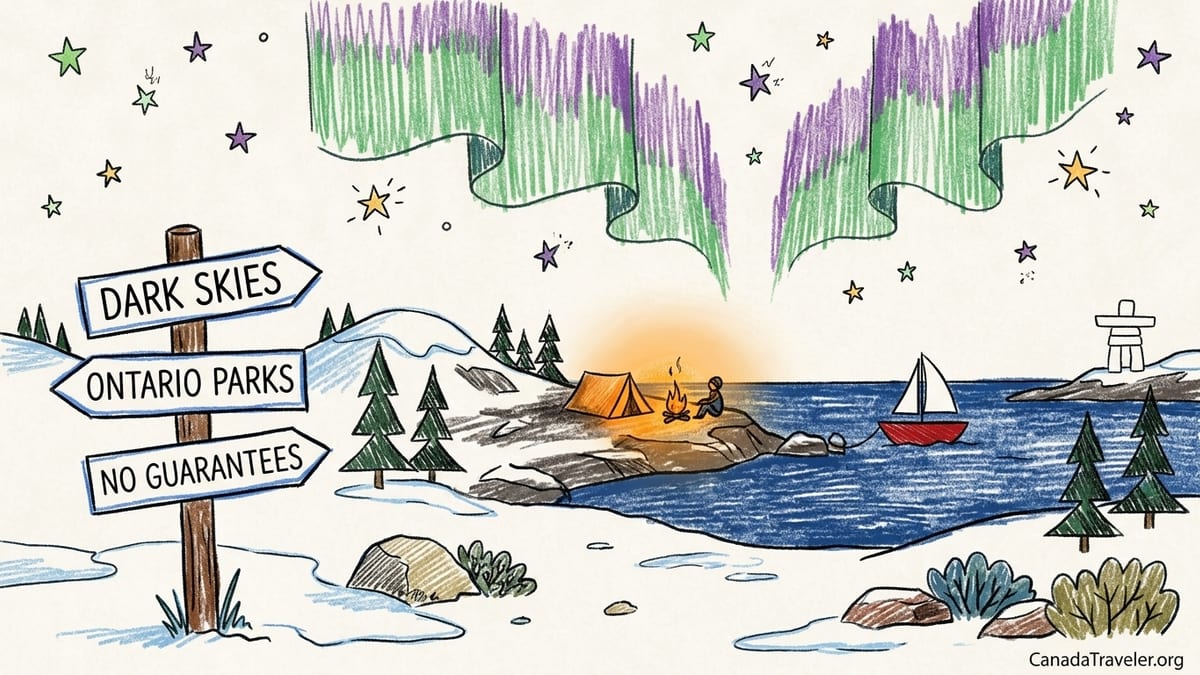
How To Plan An Ontario Aurora Night (And Why Nothing Is Guaranteed)
The Northern Lights appear when solar activity sends charged particles toward Earth and they interact with gases in the upper atmosphere. Some nights, Ontario gets a faint green arc low on the northern horizon. Other nights, it’s curtains overhead and phone cameras pick up reds and purples you can barely see with your eyes. And some nights, even in the darkest park in the province, you get nothing but stars.
To plan realistically, think in layers. First is space weather: use official forecasts from Space Weather Canada and NOAA’s aurora products for the most current, short-term guidance. These update frequently and rely on near-real-time solar wind measurements, which is why a night that looks promising at lunchtime can fizzle by midnight, or vice versa.
Second is local sky conditions. Ontario can have perfect geomagnetic activity and still be a total loss under lake-effect cloud, fog, or blowing snow. Check an hourly cloud forecast for the specific park or community you’re driving to, not just the nearest city. Third is darkness: new moon or a low moon makes a meaningful difference, especially in southern Ontario where even a modest moon can wash out a faint aurora.
Finally, focus on what you can control on the ground: get away from light pollution, choose a north-facing horizon (shorelines and open rock barrens are your friend), arrive before full dark to scout safely, and plan to stay out longer than you think. In Ontario, fall, winter, and early spring often offer longer nights and fewer haze issues than midsummer, plus fewer bugs and more hours of true darkness.
Within Reach Of Toronto And Southern Ontario: Quick Wins For Dark Sky
If you’re starting in Toronto or the GTA and want a realistic “tonight or this weekend” plan, aim for places that deliver genuine darkness even when aurora odds are only moderate. Your goal here is not the highest aurora probability in the province, but the best combination of easy driving, safe late-night logistics, and skies dark enough that a modest aurora is still visible.
Torrance Barrens (near Muskoka) is the closest true dark-sky destination many Toronto-area travelers can reach in under two hours, depending on traffic. It’s a conservation reserve with a strong stargazing reputation, but it is not a staffed, amenity-rich campground. Rules matter here: camping is restricted to designated sites only, and visitors should be prepared for no services, limited infrastructure, and the reality that other people’s headlights and flashlights can spoil night vision. For aurora chasing, it’s often best used as a late-evening stargazing base with a flexible “move if needed” mindset rather than a do-it-all resort-style stay.
Bruce Peninsula National Park is another southern Ontario standout because it holds Dark-Sky Preserve status and has a reputation for some of the darkest skies in the south. Tobermory is the nearest hub for supplies, meals, and last-minute lodging. The tradeoff is that Bruce Peninsula can be seasonal and access changes outside the main operating season. Parks Canada posts winter operations guidance, and in the colder months you may be walking farther to reach ideal viewpoints, which can be a feature or a deal-breaker depending on your gear and patience.
For travelers who want a structured dark-sky experience without backcountry variables, Point Pelee National Park in far southwestern Ontario is designated as a Dark Sky Preserve, but it’s better thought of as a stargazing and dark-sky education destination than a consistent aurora hotspot. Its southern latitude means auroras typically need to be stronger to reach that far south. In other words: a great “dark-sky product,” but not your top pick if your entire goal is maximizing aurora probability.
Central Ontario: Algonquin, Muskoka, And The Advantage Of Year-Round Options
Central Ontario is where planning gets easier because you can pair dark-ish skies with reliable places to sleep, warm up, and reset if weather disappoints. This is also the zone where many travelers begin to notice Ontario’s dark-sky advantage: you don’t have to go to the Arctic to find meaningful darkness, and you can build an aurora attempt into a normal weekend away.
Algonquin Provincial Park is a classic choice, especially for visitors who want a wilderness feel without flying north. The key planning detail is seasonal accessibility. In winter, only limited developed camping is available, with Mew Lake Campground widely referenced as the developed campground open for winter camping, while much of the rest of the park’s developed camping closes. That makes Mew Lake one of the most practical “base camps” for a winter aurora attempt where you can still retreat to a heated comfort station, warm your hands, and try again later.
Muskoka and the Highway 11 and Highway 400 corridors also make it easy to pivot. If a cloud deck sits over Georgian Bay but skies look clearer inland, you can adjust. If moonlight is too bright at 10 p.m., you can plan for the darker hours after moonset, grab a late snack in town, then return to the viewing area when the sky improves. That kind of flexibility matters more than first-timers expect.
A practical central Ontario approach is to book a simple motel in Gravenhurst, Bracebridge, Huntsville, or Whitney, then treat your aurora outing like a night drive to a dark-sky site rather than an all-night endurance test. This is also where a warm car becomes an advantage: you can cycle between viewing and warming up without compromising safety when temperatures drop below freezing.
Northeastern Ontario: Manitoulin, Killarney, And Big-Sky Georgian Bay
Northeastern Ontario is where Ontario’s aurora promise starts to feel tangible. You’re far enough north that auroras don’t always need to be blockbuster geomagnetic storms to show up, and you’re close to wide water horizons and shield rock that help open your view to the north.
Manitoulin Island is a standout because it pairs accessibility with serious dark-sky credentials. Manitoulin Eco Park is a Royal Astronomical Society of Canada designated commercial Dark-Sky Preserve, and it’s set up specifically for people who come to experience darkness. It also enforces night-sky-friendly behavior, including a no white light rule in the preserve area, which is exactly the kind of on-the-ground detail that determines whether you go home with photos or frustration. For planning, Manitoulin is also practical because you can combine an aurora attempt with a recognizable route: drive to the Island, settle in, then pick your nights based on cloud cover and the latest forecast rather than betting everything on a single evening.
Killarney Provincial Park is another major name in Ontario aurora planning because it’s both spectacular and far enough north to improve odds. Importantly, Killarney can remain a four-season destination, but access changes during the snowy season. Ontario Parks posts operating dates and winter information, and travelers should plan for walk-in conditions when gates close for winter, which changes what “camping” feels like. If your goal is aurora viewing plus comfort, the nearby village of Killarney offers lodging and meals, while the park’s campgrounds and interior routes serve travelers who are prepared for colder, quieter conditions.
For a Georgian Bay weekend built around the sky, a powerful plan is: book two nights, plan one night for scouting and stargazing even if aurora odds are low, then reserve your second night for the best forecast window. The extra night reduces the pressure that ruins most first-time aurora trips.
If you’re adding a classic Ontario road trip element, Sudbury makes a useful resupply and overnight hub in this region, and the Island and Killarney corridors let you mix restaurants, cabins, and campgrounds in a way that feels manageable for first-timers.
Lake Superior And Algoma: Sleeping Giant, Lake Superior Shorelines, And Winter Darkness
If you want the best mix of higher aurora odds, genuinely dark skies, and iconic landscapes, Lake Superior country is Ontario’s sweet spot. It’s not “easy” from Toronto, but it is achievable with a long driving day or a flight to Thunder Bay or Sault Ste. Marie and a rental car. And once you’re there, the combination of northern latitude and minimal light pollution starts doing real work for you.
Sleeping Giant Provincial Park, east of Thunder Bay, is often highlighted for winter outdoor experiences and has been recognized as a Dark Sky Preserve in recent years. It’s also one of the most practical Lake Superior picks for travelers who want a structured place to stay: Ontario Parks lists year-round operating dates, and roofed accommodations can remove a huge amount of stress from winter aurora chasing. Instead of racing to pack up a frozen tent at 2 a.m., you can step outside for 15 minutes, check the sky, and try again later.
Lake Superior Provincial Park, along Highway 17 between Sault Ste. Marie and Wawa, is a strong “shoreline horizon” play. The park’s operating dates for its main campgrounds are clearly posted, which matters for aurora planning because a lot of visitors assume they can roll in and camp year-round. If you’re visiting outside the posted operating season, plan on staying in nearby communities and using the shoreline as a viewing location where permitted, rather than assuming campground services are available.
Algoma’s small communities make this region workable: Wawa, Marathon, Terrace Bay, and the outskirts of Thunder Bay can all function as base towns where you can buy hand warmers, extra gloves, or a last-minute tripod if something breaks. In practice, that’s what makes Lake Superior aurora chasing less intimidating than it looks on a map.
One Lake Superior-specific note: cloud can be both your enemy and your filter. Lake-effect cloud can wipe out the sky, but when a cold front clears out, the transparency can be incredible, producing the crisp, high-contrast stars and aurora photos people chase for years. In fall through early spring, those “post-front” nights can be some of the best of the year.
Far Northern Ontario: Moosonee, James Bay Skies, And The “Go North For Odds” Strategy
If your priority is strongest aurora odds and you’re willing to accept logistical complexity, far northern Ontario is where the math starts to tilt in your favor. Destination Ontario highlights Moosonee as one of the province’s northernmost communities, and the farther you go from southern light domes, the more often auroral activity that would be invisible near Toronto becomes visible to the naked eye.
Moosonee is also a different kind of Ontario trip because it is not connected to the provincial highway network in the same way most travelers expect. Many visitors arrive via Ontario Northland’s Polar Bear Express from Cochrane, which is a core part of the experience and can double as a sightseeing journey. Ontario Northland publishes schedules and service updates, and travelers should verify the current timetable before building an aurora plan around arrival times and late-night needs.
For accommodation, plan conservatively. In far north destinations, the number of rooms can be limited and services can run on reduced hours compared to southern Ontario. A practical aurora itinerary is to give yourself at least two nights on location, treat the first night as a low-pressure attempt, and keep your second night for the best forecast window. Also plan around cold and wind. In open lowland landscapes near James Bay, wind chill can end an aurora session faster than cloud cover.
Far north strategy is less about finding a “dark-sky preserve” sign and more about building redundancy into your trip: reliable indoor warmth, a safe viewing area with a broad northern horizon, and an approach that respects how quickly conditions can change. This is also where a headlamp with a red mode stops being a nice-to-have and becomes basic etiquette, especially if you’re viewing with other travelers.
The Takeaway
The fastest, easiest Ontario aurora attempt from Toronto is to treat a dark-sky area as your primary goal and the aurora as a bonus: Torrance Barrens is the classic near-Toronto darkness play if you follow posted rules and arrive prepared for minimal services. If you want a more structured trip where “dark-sky product” is part of the destination, Bruce Peninsula National Park offers a well-known southern Ontario dark-sky reputation, but you need to plan around seasonal operations and changing access outside peak season.
The best weekend destination for most travelers is the Manitoulin and Killarney zone, where dark skies, north-facing horizons, and vacation logistics meet in the middle. Manitoulin Eco Park is especially strong for first-timers because it is designed around protecting darkness, including strict lighting rules, while still being close enough to communities for supplies and comfort.
The best combination with camping depends on season and what you mean by “camping.” For shoulder season and summer bookings, Lake Superior Provincial Park’s campgrounds are a memorable way to pair open-water horizons with a classic Ontario road trip, as long as your travel dates match posted operating seasons. For winter, consider roofed accommodation options in a place like Sleeping Giant Provincial Park so you can actually stay out for the late-night hours when auroras often strengthen without turning the trip into a survival exercise.
If you want the strongest odds and you’re willing to go north, pick far northern Ontario and give yourself multiple nights. Moosonee is a bucket-list choice where darkness is not the exception but the baseline. Just plan like a northerner: confirm schedules and services, pack for serious cold, and build flexibility into every step because the aurora never reads your itinerary.
FAQ
Q1. What is the best month to see the Northern Lights in Ontario?
Fall through early spring is often most practical because nights are longer and darkness comes earlier, but clear skies and current solar activity matter more than the calendar.
Q2. Can I guarantee seeing the aurora if I visit a dark-sky preserve?
No. A dark-sky preserve reduces light pollution, but auroras still depend on solar activity and local weather, so even perfect darkness can produce no aurora.
Q3. What forecast should I use for Ontario aurora planning?
Use official, frequently updated products from Space Weather Canada and NOAA, then pair that with a local hourly cloud forecast for your exact park or town.
Q4. Is Kp the only number I should watch?
No. Kp can be a useful general indicator, but short-term aurora visibility depends heavily on real-time solar wind conditions and local cloud cover.
Q5. Where is the easiest place to try from Toronto without flying?
Torrance Barrens is one of the most reachable dark-sky options for a quick attempt, with the important caveat that services are minimal and rules must be followed.
Q6. What’s the best Ontario destination for a dedicated aurora weekend?
Manitoulin Island and the Killarney area offer a strong balance of northern latitude, real darkness, and practical lodging or camping options.
Q7. Do I need a north-facing horizon to see the Northern Lights?
Most of the time, yes. Auroras frequently begin as a low arc in the north, so open water, clearings, and rocky shorelines can make a big difference.
Q8. How does moonlight affect aurora visibility?
A bright moon can wash out faint auroras, especially in southern Ontario. New moon, a low moon, or viewing after moonset usually improves contrast.
Q9. What camera settings work for first-time aurora photos?
Start with a tripod, wide-angle lens, and a short test series around 5 to 15 seconds at a moderate-to-high ISO, then adjust based on brightness and motion.
Q10. What should I pack for a winter aurora attempt in Ontario?
Bring insulated boots, layered clothing, mitts over gloves, hand warmers, and a red-light headlamp, plus a plan to warm up safely between viewing periods.