


I spent one full winter night sleeping inside Québec’s Hôtel de Glace, the seasonal ice hotel at Village Vacances Valcartier near Quebec City. I did not just tour the ice bar and sculpture-filled corridors during the day; I checked into an ice room, zipped myself into the issued thermal sleeping bag, navigated the middle-of-the-night bathroom run in subzero air, and woke up with frost on my eyelashes. This is what that night was really like, in practical detail, and whether I think the experience was worth the premium price.
Booking, Price and What I Actually Reserved
I booked directly through Village Vacances Valcartier for a mid-season Saturday in February, choosing the standard overnight package that includes one night in an ice room plus a warm backup room in the adjacent Hotel Valcartier. The ice hotel rates vary by date and room type, but for my stay the base Ice Room for two people priced out in the range of around 450 to 550 Canadian dollars before taxes and resort fees, with themed suites and spa packages costing more. The package structure matters, because you never sleep two nights in the ice hotel in a row; it is sold as a one-night novelty layered onto an otherwise normal winter getaway.
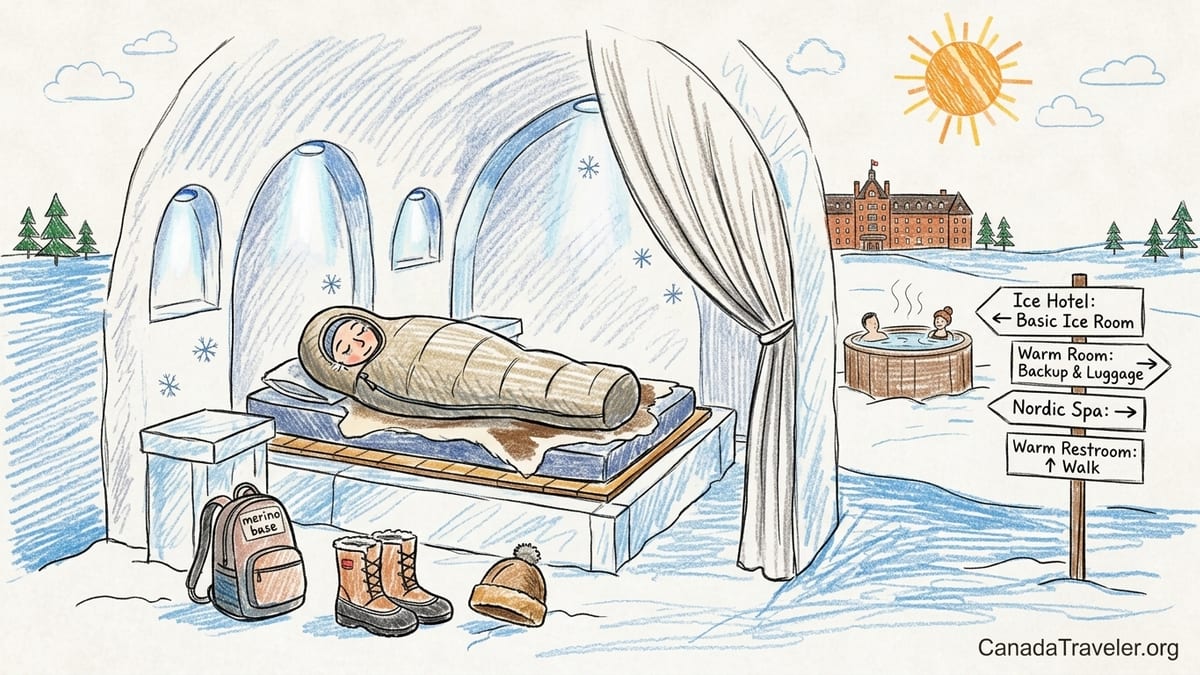
My reservation category was a basic Ice Room with one queen bed sculpted from ice, rather than a themed suite with sculpted walls or a private hot tub nearby. In practical terms, that meant a simple rectangular room carved from snow, colored LED lighting, and a solid block of ice topped with a wooden platform, insulated mattress, and reindeer-style hides. There was no door, only a curtain, and no private bathroom or electrical outlets inside the ice room. All the warm, functional parts of the stay lived back in the conventional building.
Included in the rate were the overnight use of a Nordic-style thermal sleeping bag, access to the Nordic relaxation area with hot tubs and sauna, the warm backup room from 4 p.m. onward, an ice cocktail served in a carved ice glass at the ice bar, and breakfast the next morning in the main hotel. What you are really paying for is the right to stay inside once the last daytime tour crowds leave, plus the logistics and staff support that make the night reasonably safe and comfortable.
It is important to note that while Bonjour Québec and Quebec City tourism materials often describe Hôtel de Glace as North America’s only true ice hotel, it functions both as an attraction and as lodging. During the day, hundreds of visitors file through on guided or self-guided tours. At night, just a small subset remain as overnight guests, sleeping in roughly minus 3 to minus 5 degrees Celsius inside the snow vaults while the resort around them keeps humming at normal hotel temperatures.
Arrival, Check-in and First Impressions After Closing Time
I arrived at Village Vacances Valcartier in mid-afternoon, about 30 minutes’ drive north of Old Quebec. Check-in for the overnight package took place in the lobby of the warm Hotel Valcartier, not directly inside the ice structure. The front desk staff confirmed my ice room assignment, provided keycards for the warm hotel room, and handed me a printed schedule for the evening that outlined the mandatory information session, suggested time slots for the Nordic area, and when I would be able to access my ice room.
The first surprise was how much of the experience is anchored in the warm building. I dropped my suitcase in the regular hotel room, which looked like any contemporary Canadian resort room with two queen beds, standard bathroom, and plenty of heating. This warm room is your home base before and after the ice night, and it is where your main luggage stays. Hôtel de Glace explicitly encourages guests to bring only what they need for the actual night into the ice zone: a small backpack with base layers, hat, gloves, and the clothes you will wear to bed.
By late afternoon I joined about 20 other overnight guests in a meeting room for the mandatory briefing with a member of the ice hotel team. The staffer walked us through how to dress, how the sleeping bags worked, what to do if we felt too cold, and exactly how to handle the bathroom situation between 9 p.m. and 9 a.m. They emphasized layered wool or synthetic clothing, no cotton, and recommended sleeping in clean, dry base layers rather than the outfit we had worn during the day. The briefing felt a bit like a cross between a mountaineering talk and a resort orientation, calm but serious about the cold.
Only after the last day visitors filtered out, around 8 or 9 p.m., did the ice hotel transform from busy attraction into something quieter and more otherworldly. Colored lights glowed on the carved arches, the ice bar kept serving cocktails to overnight guests, and the ambient temperature inside the structure stabilized just below freezing. Walking through the silent hallways, I finally understood why the resort markets this as more than a photo stop; you feel suspended in a temporary cathedral of snow.
Room Setup, Thermal Sleeping Bag and What I Wore
My Ice Room, like all of them, sat at a steady interior temperature of roughly minus 3 to minus 5 degrees Celsius. That is warmer than a bitterly cold Quebec night outdoors, but it is still well below zero, and nothing inside the room produces heat. The bed frame and side tables were carved from ice, though you never actually lie on the bare ice. Instead, staff had already placed a wooden platform on top of the ice, a thick foam mattress, and insulating hides. The lighting came from a small recessed LED that could be switched to soft blue or warm white, and the doorway was a simple heavy curtain that hung from a snow arch.
At a designated pavilion near the entrance, staff issued each overnight guest a thermal mummy-style sleeping bag rated for temperatures lower than those inside the hotel, along with a clean inner liner. They demonstrated how to spread the liner on the bed, how to climb in while still dressed in base layers, and how to cinch the hood drawstring around your face so that only nose and mouth remained exposed. The rule was clear: enter the sleeping bag warm and dry, not chilled, because the bag traps existing heat rather than generating any.
Based on the briefing and the packing guide on the resort’s website, I wore mid-weight merino wool long underwear top and bottom, a second thin wool layer on top, wool socks, and a fleece hat that covered my ears. I skipped a heavy down jacket inside the bag, as staff warned that bulky insulation could compress and make you feel colder. Instead, I wore a light fleece and planned to pull it over my shoulders like a blanket if needed. I kept a buff-style neck gaiter handy to pull over my mouth when the air felt particularly sharp.
I left jeans, cotton hoodies, and anything damp in the warm hotel room, changing into the sleeping clothes there before walking over to the ice hotel with my small backpack. This turned out to be crucial, because even slightly sweaty socks or base layers get clammy and cold quickly at subzero temperatures. In the end, my combination of merino base and fleece hat worked well, and I never felt painfully cold, though my nose and cheeks certainly knew I was not in a normal bedroom.
Bathrooms, Showers and Middle-of-the-Night Logistics
There are no functioning bathrooms inside the actual Hôtel de Glace rooms. For all toilet, shower, and sink needs, overnight guests use the facilities in the adjacent Hotel Valcartier or a dedicated heated building just outside the ice complex, depending on configuration in a given season. In my case, the nearest restroom was a few minutes’ walk from my room, through a snow corridor, out into the open air, and into a heated structure with standard toilets and sinks. Showers were back in the main hotel building near the Nordic spa area.
Staff urged us to finish showers in the evening before heading into the ice area for good, and to use the bathroom one last time right before sliding into the sleeping bag. That advice made sense. Around 2 a.m. I woke up needing to go, and I had to psych myself up to leave the warm cocoon of the sleeping bag. The routine went like this: sit up, quickly pull on my insulated jacket that I had left hanging inside the room, slip into snow boots standing just beside the bed, tug on gloves, and push through the curtain into air that bit exposed skin instantly.
The walk to the heated bathroom building was short but memorable. The sky above the village glowed faintly from resort lights, snow squeaked underfoot, and the ice hotel loomed blue and quiet behind me. My breath crystallized in the headlamp beams mounted along the path. Inside the bathroom building, the blast of warmth fogged my glasses and reminded me why the staff repeatedly told us not to drink too much alcohol before bed; fewer bathroom trips mean fewer nighttime excursions through the cold and less opening and closing of curtains that let warmth escape from rooms.
There are warm changing cabins near the Nordic area hot tubs and sauna, which overnight guests can access during certain hours. After a late hot tub soak, I dried off completely in the heated cabin, changed back into my sleeping layers, and walked back through the ice corridors to my room. Showers waited for the next morning back in the regular hotel room, which felt like pure luxury after a night of brushing my teeth in quick, shivery bursts.
Noise, Condensation and How Much I Actually Slept
Inside the ice room, sound behaves differently than in a typical hotel. The thick snow walls muffle outside noise, but there are no solid doors between rooms. Instead, curtains sway in the openings, so you can hear other guests moving in the corridor, zipping sleeping bags, or whispering as they settle in. On my night, there were a few late returns from the Nordic spa and the ice bar, with soft laughter and the squeak of boots on packed snow. By around midnight, most people had cocooned, and a hush took over, broken only by occasional footsteps and the distant thump of grooming equipment working on the resort’s tubing hills.
Condensation was more subtle than I expected. The air itself remained dry and cold, which is easier on gear than humid cold, but any warm breath that hit the sleeping bag opening or the fleece around my face created a little rim of frost by morning. My eyelashes collected fine crystals, and the liner near my shoulders felt slightly damp where my breath had escaped. Staff had warned us about this and advised against burying our noses fully inside the sleeping bag, which can lead to more moisture inside and leave you feeling colder by dawn.
In total, I estimate that I slept around five solid hours in two main blocks, with one bathroom trip in between and a few shorter stretches of dozing as I resettled in the bag. That is less than my usual eight hours at home, but more than I feared I might get in an ice room. The main challenges were psychological: convincing my body to relax in an environment that never stopped feeling like a high-altitude winter camp, and managing small drafts whenever I shifted and opened a tiny gap in the hood of the bag.
I never needed to use the emergency option of returning to the warm backup room for the rest of the night, but staff made it clear that this was available at any time and not treated as failure. Some guests do decide at 3 a.m. that they have had enough of the novelty and prefer the conventional bed; the resort expects that and designs the package around choice rather than endurance.
Daytime Visit vs Full Overnight Stay
Spending time at Hôtel de Glace during the day and staying overnight are two entirely different experiences. During visiting hours, the ice hotel functions much like a winter museum. Day visitors buy timed tickets, wander through the main hall, chapel, themed suites, and ice slide, snap hundreds of photos, and sip one drink at the ice bar. The atmosphere is busy and social, with guides explaining how the hotel is rebuilt every December using thousands of tons of snow and ice, and children racing up and down the corridors.
As an overnight guest, you can, and should, also take advantage of this daytime access to appreciate the craftsmanship in full light. You see the level of carving on the walls, the variety of suite designs, and how the structure is engineered. However, once the last tour groups leave and the doors close to the public, the ice hotel shifts character. Lights are dimmed, staff quietly remake beds that visitors have posed on for photos, and only those with wristbands identifying them as overnight guests are allowed to remain past certain checkpoints.
During the late evening and night hours, you share the space with a relatively small community of fellow guests and staff. The ice bar becomes more intimate, conversations slow down, and the chilly chapel and hallways feel softer, almost like being locked overnight inside an art installation. You also carry a different mental load, because every visit to the bar, the hot tub, or the bathroom must be weighed against how it will affect your body temperature and your ability to sleep.
If your priority is purely visual and photographic, a daytime visit combined with a warm hotel room at the resort or in Quebec City would absolutely deliver the main highlights. You can tour all room categories, admire the bar and chapel, and leave when your toes get cold. The overnight stay layers in physical immersion and a sense of accomplishment. It is less about seeing and more about feeling what it means to actually live in that frozen architecture for one long winter night.
Alcohol, Nordic Spas and Staff Instructions
One of the more counterintuitive parts of the evening briefing involved alcohol. The ice bar is central to the hotel’s marketing, and overnight guests receive a complimentary cocktail in an ice glass. Staff, however, are clear that serious drinking is a bad idea before sleeping in subzero conditions. Alcohol dilates blood vessels, giving a short-lived sense of warmth but ultimately speeding heat loss and increasing the risk of a miserable night. Their recommendation matched mountaineering advice I have heard elsewhere: enjoy one drink early in the evening, switch to water or hot non-alcoholic beverages afterward, and head to bed sober.
I followed that guidance with a single vodka-based cocktail from the ice bar around 8 p.m., then several glasses of water and a herbal tea while warming up inside the adjacent building. Other guests lingered at the bar longer, but most seemed to taper off drinking as the night went on, conscious that they still needed to make the cold walk to their rooms and manage the sleeping bag system. The staff presence in the bar remained friendly but observant, with subtle reminders about bedtime and the Nordic spa times.
The included access to the outdoor hot tubs and sauna in the Nordic area is both a highlight and a potential trap. The romantic idea is straightforward: soak in a steamy hot tub under the stars, then stroll to your ice room and slide into the sleeping bag glowing with warmth. The practical reality is that you must dry yourself completely, including hair, in the heated changing cabins before going back outside. Any residual moisture on skin or in hair cools rapidly in the cold and can make you feel chilled for hours. The staff instructions here were explicit, and attendants stood by dryers and towels, reminding guests not to rush the drying phase.
Throughout the evening, staff reinforced three main rules. First, stay dry, including socks and base layers, and change into fresh clothing if there was any doubt. Second, respect your body’s signals, whether that meant going inside to warm up, drinking water instead of more alcohol, or bailing to the warm hotel room if the cold felt overwhelming. Third, keep your sleeping bag correctly sealed, especially around shoulders and hood, since most heat escapes through those gaps. Their approach was reassuring, more like experienced winter guides than resort entertainers.
Price, Novelty and Whether It Was Worth It
From a value perspective, Hôtel de Glace is undeniably expensive for a night that delivers less sleep and fewer conventional comforts than a mid-range hotel in Quebec City. For what I paid for a single ice-room night with the warm-room package, I could have enjoyed two or more nights in a comfortable downtown hotel within walking distance of Old Quebec’s restaurants and museums. On a strict price-per-hour-of-rest metric, the ice hotel fares poorly.
However, evaluating it purely as lodging misses the point. The overnight stay is more comparable to booking a guided glacier trek, a helicopter sightseeing flight, or a special-occasion tasting menu. You are paying for a specific, intense, once-in-a-while experience. For me, the combination of drifting off under an arched ceiling of snow, waking up periodically to the muffled stillness, and stepping outside before dawn into air that sparkled with frost justified the cost as a travel splurge. It felt like a story I would tell for years, not simply another hotel night that blurred into memory.
Would I book a second ice-room night on the same trip or attempt back-to-back nights in an ice hotel anywhere? No. One properly planned night felt exactly right. By the next evening, I was happy to be back in a regular heated room, catching up on sleep. If I returned to Village Vacances Valcartier with friends or family in future winters, I could easily imagine booking a standard warm hotel room, buying daytime tickets to tour Hôtel de Glace, and skipping the overnight for anyone not enthusiastic about cold-weather camping.
As for enjoyment on the morning after, I genuinely liked waking up there, even with a slight sleep deficit. Staff knocked gently on the curtain around 7:30 a.m., offering a warm welcome and reminding us about breakfast. Climbing out of the sleeping bag and standing on the insulated mat beside the bed, I felt both chilled and oddly proud. A short walk back to the main hotel, a hot shower, and strong coffee restored feeling to my fingers. Looking back, the entire 24 hours felt like swapping normal hotel expectations for a controlled winter adventure, with professional support close at hand.
What I Packed, What Worked and Who Should Avoid an Ice-Room Night
My packing list had been shaped by the resort’s overnight guide, advice from past guests, and my own winter travel experience. In practice, the items that made the biggest difference to comfort were high-quality merino wool base layers, a second thin wool top, thick wool socks dedicated only to sleeping, a fleece hat that stayed on all night, and a light down or synthetic jacket for walking between buildings. Insulated winter boots with good traction were essential for the icy paths between the ice hotel, Nordic area, and bathroom facilities.
I also brought a compact headlamp, though the corridors were lit well enough that I only used it during the bathroom trip, and a small dry bag to keep my phone, glasses, and a water bottle off the snow surfaces inside the room. The resort-supplied sleeping bag and liner did most of the thermal work, so I did not need heavy blankets or extra pads. On the unnecessary side, I packed a second pair of heavy mittens and thick ski pants specifically for inside the ice room and never used them; simple gloves and my usual winter pants were enough for walking to and from the Nordic area and bathrooms.
Despite the success of my layering strategy, an ice-room night is not for everyone. Anyone with significant circulation issues, chronic respiratory conditions aggravated by very cold air, or severe claustrophobia may find the combination of tight sleeping bag and frigid environment stressful rather than exciting. Light sleepers who are easily disturbed by unfamiliar sounds or temperature shifts might also be happier with a warm room and daytime visit only. Children who hate wearing hats or who kick blankets off at night could struggle, though some families do book multi-bed ice rooms or suites and treat it as an adventure.
On the other hand, travelers who enjoy winter sports, camping, or mountaineering are well suited to the ice hotel. If you already know how your body reacts to cold and have experience using layered clothing systems, you will likely find the night more manageable and even relaxing. Couples celebrating a milestone, solo travelers collecting unusual lodging experiences, and small groups of friends who like the idea of “earning” breakfast through a night in the cold are all likely to feel the splurge was justified.
The Takeaway
Sleeping at Québec’s Hôtel de Glace is less a hotel stay and more a curated winter challenge wrapped in romantic marketing. It demands preparation, attention to clothing and moisture, and a willingness to accept shorter, lighter sleep in exchange for a powerful travel memory. The structure itself, rebuilt each winter from snow vaults and ice blocks, is worthy of a visit on architectural grounds alone. Committing to stay overnight adds a bodily dimension that daytime tours cannot replicate.
For most travelers, one night is enough to appreciate the experience without exhausting themselves. The combination of a warm backup room, clear staff instructions, and well-chosen gear makes the night safe and, in my case, genuinely enjoyable, even if I did occasionally question my sanity stepping out to the bathroom at 2 a.m. in the Quebec cold. If the price fits within your discretionary travel budget and you are curious about what it really feels like to sleep in a man-made ice cave, then a single night at Hôtel de Glace can be a memorable centerpiece of a winter trip to Quebec.
If, on the other hand, you prioritize deep, uninterrupted sleep, dislike wearing hats or snug sleeping bags, or are traveling with very young children or anyone with cold-sensitive health conditions, you may be happier keeping Hôtel de Glace on your daytime itinerary only. You will still see the glowing chapel, sip a drink from an ice glass, and collect beautiful photographs, then retreat to a cozy, conventional bed nearby. Both choices are valid. The key is knowing your own tolerance for cold and novelty before you book.
FAQ
Q1. How cold was the room at Hôtel de Glace during your overnight stay?
The interior of my ice room stayed around minus 3 to minus 5 degrees Celsius, which is stable but still well below freezing, so the thermal sleeping bag and proper clothing were essential.
Q2. How much did you actually pay for the night?
For a mid-season Saturday with a standard Ice Room and warm backup room, my total came to the mid hundreds of Canadian dollars for two people before tax and fees, in line with current published ranges for basic overnight packages.
Q3. Where did you keep your luggage and valuables while sleeping in the ice room?
My main suitcase and most belongings stayed locked in the warm Hotel Valcartier room assigned as part of the package, and I only brought a small backpack with night clothes, phone, and essentials into the ice hotel.
Q4. Did you feel safe and monitored during the night?
Yes. Staff were on duty inside and around the ice hotel all night, with clear instructions given at the briefing about how to find help, where to go if I felt too cold, and the option to return to the warm room at any time.
Q5. Could you charge phones or use electronics in the ice room?
There were no outlets inside my ice room, and I avoided using the phone much to preserve battery in the cold, so I charged everything in the warm hotel room before and after the night.
Q6. How many layers did you actually wear to sleep?
I slept in a merino wool base layer top and bottom, a second light wool top, thick wool socks, a fleece hat over my ears, and a light fleece I could pull over my shoulders inside the resort-issued sleeping bag.
Q7. What was the hardest part of the experience?
The most difficult moments were waking up for a middle-of-the-night bathroom trip, leaving the warm cocoon of the sleeping bag, and walking through the subzero air to the heated restroom building.
Q8. Did the included hot tubs and sauna make the night easier?
The Nordic area was a highlight, but it only helped because I fully dried off and changed into dry layers in a warm cabin afterward; going back to the ice room even slightly damp would have made the night much colder.
Q9. Would you recommend the overnight stay for families with young children?
I would be cautious; children who dislike hats or tight bedding may struggle to stay warm, so for many families a warm hotel room plus a daytime visit to Hôtel de Glace is a smarter and less stressful choice.
Q10. Was one night at Hôtel de Glace worth the price for you personally?
For me, yes, as a one-time travel splurge; the combination of sleeping in a sculpted snow vault, waking to frosted eyelashes, and knowing I had truly stayed there made the cost feel justified, but I would not pay for multiple ice-room nights on the same trip.