


Western Canada rewards careful planning. Distances are long, mountain weather is changeable and reservations often sell out months ahead, yet the payoff is huge: glassy turquoise lakes in Banff and Jasper, rainforests and surf towns on Vancouver Island, and one of North America’s most attractive coastal cities in Vancouver. This guide lays out realistic 7, 10, 14 and 21 day routes that combine these highlights with practical information on driving times, ferries, trains and flights so you can build an itinerary that fits both your time and energy.
Key Logistics for Western Canada Road and Rail Trips
Western Canada looks compact on a map, but the reality on the road is different. The drive from Vancouver to Banff is roughly 850 to 900 kilometers via Kamloops and Revelstoke, which in summer typically means around nine to ten hours of pure driving on the fastest highways, not counting stops. Recent traveler reports often quote it as a full-day push, and winter driving can stretch that to 11 hours or more due to snow and ice on mountain passes. By contrast, Calgary to Banff is only about 130 kilometers and usually just over 90 minutes on a divided highway, which is why many itineraries fly into Calgary for the Rockies portion and into Vancouver for the coast.
When linking Vancouver and Vancouver Island, expect a ferry crossing time of around one hour and thirty to forty minutes between Tsawwassen, south of Vancouver, and Swartz Bay, near Victoria. BC Ferries typically operates multiple sailings daily on this route, and in 2026 a standard car with driver on peak summer sailings often comes in around 70 to 90 Canadian dollars one way, with cheaper saver fares on certain off-peak departures if booked in advance. Because peak weekends can see multi-sailing waits, reservations are strongly advised in July and August, especially if you are timing a same-day drive from, for example, Tofino back to the mainland.
Rail and flight connections allow you to trim long drives. VIA Rail’s transcontinental service, The Canadian, links Vancouver and Jasper several times per week. The run takes roughly 19 hours in theory but is known for freight-related delays, so treat it as a scenic overnight journey rather than precision transportation. At the premium end, Rocky Mountaineer sells daylight-only luxury rail journeys such as “Journey Through the Clouds” between Vancouver and Jasper or “First Passage to the West” between Vancouver and Banff or Lake Louise, generally running from late April through early October. For flyers, Air Canada and WestJet routinely operate multiple daily flights between Vancouver, Calgary and Victoria, which can be crucial if you only have a week.
Accommodation and car rental are another key constraint. A midsize rental car in high summer often runs in the range of 80 to 140 Canadian dollars per day in Vancouver or Calgary, with prices spiking for one-way rentals that start in one province and end in another. In Banff, Jasper and Tofino, summer nightly room rates for mid-range hotels commonly sit in the 300 to 500 Canadian dollar band, with hostels and basic motels sometimes around 80 to 180 Canadian dollars if booked early. Given these prices and limited inventory, it is wise to fix at least your Rockies nights as soon as flights are confirmed, and then fill in coastal stays later.
7 Day Itinerary: Vancouver and the Rockies Snapshot
With only one week, combining Vancouver and the Rockies is ambitious but possible if you fly one leg. A popular pattern is three nights in Vancouver, three in Banff or Canmore, and one in Calgary for your outbound flight. For example, arrive Vancouver on Day 1, stay downtown near Canada Place or in the West End so you can walk to Stanley Park and the seawall. Spend Day 2 exploring the city on foot and public transit, visiting Granville Island’s public market, cycling around Stanley Park and maybe taking a sunset drink in English Bay. On Day 3, consider a day trip to the Sea to Sky corridor: a rental car or tour to Squamish and Whistler allows you to see Howe Sound fjords, the Sea to Sky Gondola and Whistler Village without an overnight.
On Day 4, take a morning flight from Vancouver to Calgary, usually about 90 minutes gate to gate, collect a rental car at Calgary International Airport and drive to Banff. Even with a grocery stop in Canmore, most travelers are in Banff within two to three hours of landing. Spend Days 4 to 6 exploring Banff National Park: time the scenic Minnewanka Loop and Sulphur Mountain gondola one day, then devote a full day to Lake Louise and Moraine Lake, using the Parks Canada shuttle or commercial shuttles now required for non-residents to access Moraine Lake during peak season. If you want a softer day, wander Banff Avenue, visit the Banff Park Museum and soak in the Banff Upper Hot Springs, which often run in the 20 to 30 Canadian dollar range per adult.
On Day 7, you can either fly out of Calgary or, if schedules permit and you are willing to trade some certainty for scenery, return to Vancouver on VIA Rail’s Canadian or a Rocky Mountaineer segment. In practice, most one-week travelers prefer the simplicity of a round-trip flight from Calgary, especially if they are aligning with overseas connections. If you want to sample another mountain town, you might sleep in Canmore on your final night instead of Banff. Canmore sits just outside the national park boundaries, often offers slightly lower hotel prices and has a strong restaurant scene along 8 Street.
Travelers trying to fit Vancouver Island into seven days generally need to sacrifice either Whistler or the Rockies. A workable alternative week splits three nights in Vancouver with four on Vancouver Island, using the Tsawwassen to Swartz Bay ferry to reach Victoria and then driving to Tofino. However, driving from Victoria to Tofino takes roughly four and a half to five hours each way on a winding two-lane highway, so anyone prone to road fatigue should consider staying put in either Victoria or the mid-Island region rather than attempting both the Pacific Rim and the Rockies in such a short span.
10 Day Itinerary: Vancouver, Vancouver Island and Banff
Ten days gives you enough flexibility to include both Vancouver Island and the Rockies without every day feeling rushed. One common pattern runs Vancouver (3 nights), Victoria or Tofino on Vancouver Island (3 nights) and Banff or Canmore plus Calgary (4 nights). For example, Days 1 to 3 in Vancouver follow a similar rhythm as the weeklong plan: orienting yourself in the city, taking advantage of the walkable waterfront, packing in a Capilano or Lynn Canyon suspension bridge visit and perhaps a half-day craft brewery crawl in East Vancouver.
On Day 4, drive from Vancouver to Tsawwassen and board a mid-morning BC Ferries sailing to Swartz Bay. Allow at least an hour to check in with a vehicle, longer on summer weekends. Once on Vancouver Island, either spend two nights in Victoria, exploring the Inner Harbour, the Royal BC Museum with its First Nations galleries, and the Dallas Road waterfront, or point the car toward Tofino on the Pacific Rim. The Victoria to Tofino drive is about 320 kilometers and commonly takes just under five hours of driving, longer if you stop in places like Cathedral Grove or the Coombs market for food. Many visitors choose to base three nights in Tofino or neighboring Ucluelet to allow a full day on the surf beaches and another day for whale watching or bear watching boat tours, which often run around 130 to 200 Canadian dollars per adult.
Day 7 is typically a travel day to the Rockies. You might take an early ferry from Nanaimo or Victoria back to the mainland and then fly from Vancouver to Calgary in the afternoon, or drop the Island rental car in Victoria and book a direct Victoria to Calgary flight in peak season. Once in Calgary, a short evening drive gets you to Canmore or Banff for a late dinner. For flexibility, some travelers accept the added cost of a one-way rental that starts in Vancouver, includes Vancouver Island, then is dropped in Calgary, but one-way fees between provinces can be substantial, so compare against simply returning to Vancouver to fly.
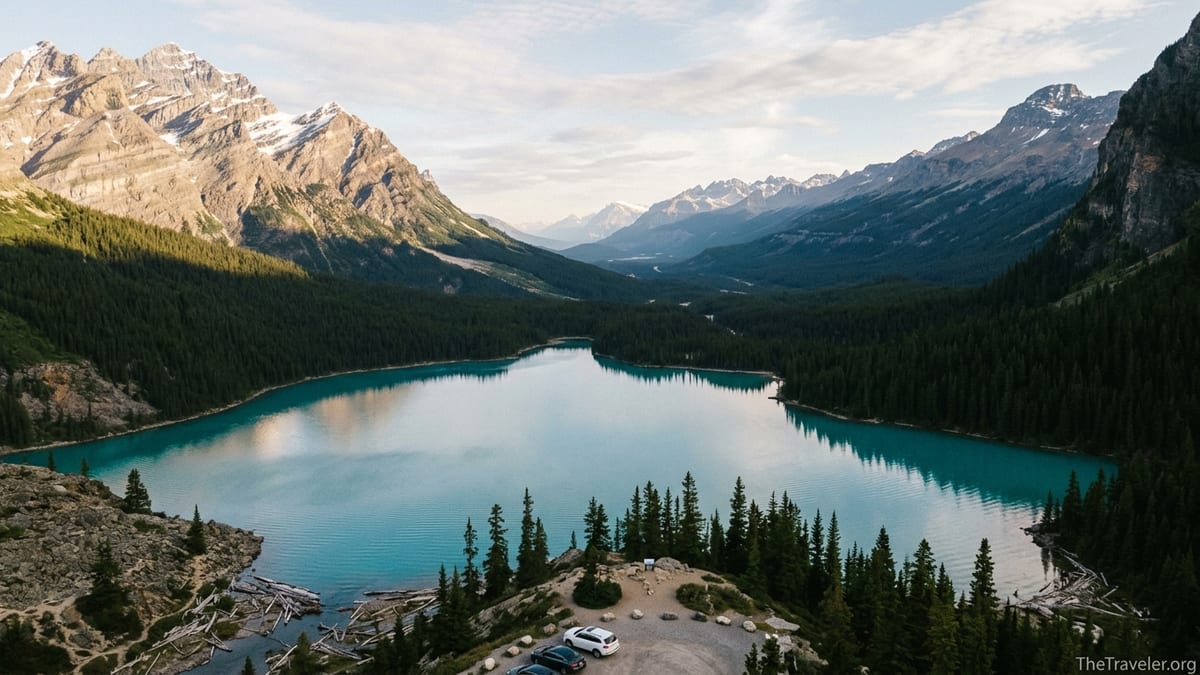
Spend Days 8 and 9 exploring Banff National Park and, if time allows, the southern stretch of the Icefields Parkway up to Bow Lake or Peyto Lake. A realistic day outing from Banff might look like leaving town after breakfast, arriving at Lake Louise by mid-morning, hiking the Lakeshore or Lake Agnes trail, then continuing to Moraine Lake by shuttle in the late afternoon to avoid the heaviest crowds. On Day 10, either squeeze in a short hike in Canmore’s Grassi Lakes area or visit the Whyte Museum in Banff before driving back to Calgary for an evening flight. This 10 day loop keeps most driving legs under six hours and allows three distinctive flavors of Western Canada: cosmopolitan Vancouver, coastal Vancouver Island and the classic peaks and lakes of the Rockies.
14 Day Itinerary: Classic Western Canada Loop with Jasper
With two weeks, you can create a more complete loop linking Vancouver, Vancouver Island, the Icefields Parkway and both Banff and Jasper. A classic pattern allocates roughly three nights in Vancouver, three on Vancouver Island, four in the Rockies and two flex nights for transit and buffer. One way to structure this is Vancouver (Days 1 to 3), Victoria and Tofino (Days 4 to 7), then Jasper and Banff (Days 8 to 13), with Day 14 reserved for departure from Calgary or Vancouver.
After your Vancouver and Vancouver Island segments, return to the mainland on Day 7 and either overnight near Vancouver International Airport or board VIA Rail’s Canadian that evening for the overnight journey to Jasper. Treat this as a scenic repositioning segment rather than a commuter train. Economy fares can be relatively affordable compared with driving and a hotel, but berths and cabins with beds and private or semi-private washrooms can cost several hundred dollars per person in peak season. Onboard, you have dome viewing cars to enjoy canyon and mountain scenery as the train climbs towards the Rockies. Arrival into Jasper is often scheduled for early morning, so you arrive ready to explore without sacrificing a daytime of driving.
From Jasper, allow at least two and ideally three nights. Jasper itself has a lower-key, less resort-like feel than Banff, and it is a strong base for wildlife watching drives along Pyramid Lake Road, boat tours on Maligne Lake and short hikes like the Valley of the Five Lakes loop. Hotel prices in Jasper in July and August are comparable to Banff, often 250 to 450 Canadian dollars per night for mid-range properties, with a few family-run motels and cabins in the 180 to 250 Canadian dollar range when booked well ahead. If you prefer a quieter experience, some travelers base themselves outside town in cabin resorts along Highway 16.
The Icefields Parkway between Jasper and Lake Louise is the key scenic link in a 14 day loop. It is only about 230 kilometers from Jasper to Lake Louise but easily takes six to eight hours with stops. Serious photographers often add an overnight at Saskatchewan River Crossing or in the Columbia Icefield area to keep driving days short. Classic stops include Athabasca Falls, Sunwapta Falls, the Columbia Icefield and its visitor center, and viewpoints over Bow Lake and Peyto Lake. Columbia Icefield tours, which bundle a glacier ride and a cliff-edge glass-floored Skywalk, typically price in the 100 to 150 Canadian dollar range per adult. Once in Lake Louise or Banff, two to three nights allow you to repeat favorite lakes at sunrise, tackle a moderate hike like the Plain of Six Glaciers and still enjoy a relaxed dinner at a Banff bistro.
To close the loop, you can drive from Banff back to Calgary for your flight, or, if you want to avoid backtracking, consider using Rocky Mountaineer for a daylight rail journey from Banff or Lake Louise to Vancouver and then fly home from there. Rocky Mountaineer’s packages are premium products, but they also remove the need to drive the often-busy Trans-Canada Highway across three mountain ranges. If you are budget-conscious, a straightforward one-way car rental between Calgary and Vancouver, split with another traveler, can still be more economical than two rail tickets, provided you are comfortable with the long driving day.
21 Day Itinerary: In-Depth Western Canada Exploration
Three weeks opens up slower travel and side trips. In 21 days you can easily combine Vancouver, the Sunshine Coast or Gulf Islands, Vancouver Island, and an extended Rockies stay with time to recover between long drives. One pattern allocates five nights in the Vancouver region, six on Vancouver Island, seven in the Rockies and three as transit or flex days. Start with three nights in Vancouver, then add two nights on the Sunshine Coast or Bowen Island to decompress from flights before taking the ferry to Vancouver Island.
On Vancouver Island, a six night split might look like two nights in Victoria, three in Tofino or Ucluelet and one in the Comox Valley or Campbell River. This allows you to sample everything from afternoon tea in downtown Victoria’s heritage hotels to storm watching or surfing lessons in Tofino and salmon or whale watching excursions out of Campbell River. Driving days remain manageable: Victoria to Tofino at around five hours of driving, Tofino to Campbell River at roughly three to four hours, and Campbell River to Nanaimo about two hours. From Nanaimo, ferries to the mainland or flights back to Vancouver provide multiple exit points, which you can match to car rental return locations.
In the Rockies, seven nights can be divided, for example, as three in Jasper, two at a midpoint along the Icefields Parkway or in Lake Louise, and two in Banff or Canmore. This longer stay makes it realistic to undertake more demanding day hikes such as Edith Cavell Meadows near Jasper or the Iceline Trail in Yoho National Park near Lake Louise, both of which require solid fitness and a full day on the trail. It also lets you build in weather buffers. If smoke from regional wildfires or a late-season snowstorm obscures views on one day, you still have alternatives later in the week.
With 21 days, another option is to arrive by train and depart by air or vice versa. For example, fly into Vancouver, spend your coastal days, then board VIA Rail to Jasper and rent a car there for a one-way southbound drive to Banff and Calgary. Alternatively, join a partially organized tour for the Rockies section, bundling transportation and accommodation, then enjoy independent time in Vancouver and on the Island. Tour companies that partner with VIA Rail or Rocky Mountaineer often sell 12 to 18 day packages, and you can book a shorter segment if you prefer to customize the rest of your trip.
The extra time also invites slower, more local experiences. In Vancouver, you might dedicate a full day to the North Shore, hiking the Grouse Grind or Lynn Headwaters and enjoying sunset at Ambleside Beach. On Vancouver Island, you could plan a half-day food tour of Victoria’s Chinatown and Inner Harbour, and another in the Cowichan Valley tasting wines and ciders. In Banff and Jasper, consider guided activities such as a photo tour that focuses on sunrise locations, or a half-day introduction to rock climbing or ice walking in Johnston Canyon organized by local guides. Although these add cost, they reduce planning stress and often reveal lesser-known viewpoints that independent travelers miss.
Choosing Between Driving, Ferries, Trains and Flights
Your choice of transport shapes not only your schedule but also your experience. Self-driving is the most flexible option and the one most independent travelers choose for at least part of their route. A realistic, comfortable driving plan keeps any single day under six hours of drive time whenever possible, with one or two longer days if necessary. For example, in a 14 day loop, you might accept one eight hour day between Vancouver and Jasper or Banff, offset by shorter runs the rest of the time. Remember that summer roadworks and wildlife sightings can slow traffic in the mountains, so treat estimated times in apps as optimistic rather than guaranteed.
On ferries between the mainland and Vancouver Island, you can drive on in your rental car or cross as a foot passenger and pick up a separate rental on the Island. For many travelers, it is cheaper and simpler to maintain a single car rental and pay the vehicle ferry fare than to juggle multiple contracts, especially if you are traveling with children or surfboards. However, foot passengers are not subject to long vehicle queues in peak summer, so a couple traveling light might choose to walk on, rent a compact car in Victoria for a few days, then return as foot passengers again.
Trains are best treated as scenic experiences rather than strict transportation. Rocky Mountaineer runs only in daylight and includes hotel overnights at intermediate stops like Kamloops or Quesnel, which means you will need additional nights and a budget that can easily exceed several thousand Canadian dollars per person for a multi-day trip. VIA Rail, by contrast, offers a more budget conscious, slower paced rail experience where you sleep on board. In both cases, the train lets you see canyon walls, river valleys and wildlife at a relaxed pace while someone else handles the driving.
Flights serve primarily to compress long distances. A typical example is a traveler with ten days who flies into Vancouver, spends four nights in the region, then flies to Calgary and spends five nights in the Rockies before departing. In this scenario, a multi-city ticket into Vancouver and out of Calgary is often more efficient than a simple round trip, particularly for travelers coming from overseas. Within Canada, budget carriers sometimes offer competitive fares on Vancouver to Calgary or Victoria to Calgary routes, but schedules can be seasonal, so it is worth checking exact days and times before locking in hotel reservations.
The Takeaway
Designing a Western Canada itinerary is less about seeing every highlight and more about balancing distance, cost and your own travel pace. Seven days works for a city and Rockies snapshot, ten to fourteen days allow a satisfying loop that includes Vancouver Island and the Icefields Parkway, and three weeks invite slower travel and side trips without constant repacking. Across all versions, being realistic about driving times, reserving key elements like ferries and Rockies accommodation well in advance, and choosing one or two rail or flight segments to trim the longest legs will make your journey smoother and more enjoyable.
If you think of the trip as a series of distinct regions, each with its own character and logistics, the planning becomes far easier. Vancouver offers urban comfort and gentle introductions to the Pacific coast. Vancouver Island provides rainforests, surf culture and smaller towns. Banff and Jasper deliver the archetypal Canadian Rockies experience of turquoise lakes and jagged peaks. With the sample 7, 10, 14 and 21 day structures in this guide as a starting point, you can now adjust nights, swap in different side trips and layer on experiences that match your interests, whether that means more time on the water, on the trail or simply on the deck of a cabin watching the alpenglow fade from a mountain ridge.
FAQ
Q1. Is it realistic to drive from Vancouver to Banff in one day?
It is possible in summer, but it is a very long day. The direct highway route usually means around nine to ten hours of driving without long stops. Many travelers break the trip with an overnight in Kamloops or Revelstoke, especially when traveling with children or after a long flight.
Q2. Do I need to reserve BC Ferries in advance for Vancouver Island?
Reservations are strongly recommended in July and August, on holiday weekends and whenever you have tight connections. While it is sometimes possible to travel on standby, waits of several sailings have become more common in peak periods, so booking ahead reduces stress and protects your schedule.
Q3. How far in advance should I book Banff and Jasper accommodation?
For July and August, many hotels and popular cabins in Banff and Jasper fill six to nine months ahead, and some summer weekends sell out even earlier. If you are flexible on exact dates or willing to stay in Canmore or Hinton, you can sometimes find rooms closer to arrival, but it is safest to secure key nights as soon as your flights are fixed.
Q4. Is VIA Rail or Rocky Mountaineer better for seeing the Rockies?
They serve different budgets and styles. Rocky Mountaineer is a premium, daylight-only experience with hotel stays and high service levels built into the fare. VIA Rail is more affordable and runs overnight, so you may sleep through some scenery, but it offers comfortable viewing cars and cabins at lower prices. Many travelers choose VIA Rail for transportation and Rocky Mountaineer as a once-in-a-lifetime splurge.
Q5. Can I visit both Banff and Jasper without renting a car?
Yes, but it requires more planning. Shuttle buses and small group tours connect Banff, Lake Louise and Jasper along the Icefields Parkway in summer, and organized packages often include accommodation and sightseeing. However, a rental car still gives the greatest flexibility for sunrise and sunset stops or spontaneous detours.
Q6. What is the best month to do a Western Canada loop including the Rockies and Vancouver Island?
Late June through mid September usually offers the widest range of activities, open mountain passes and frequent ferry and flight schedules. July and August bring the warmest weather but also the biggest crowds and highest prices. May and October can be rewarding shoulder seasons, but some seasonal services and high alpine hikes may not be available.
Q7. How expensive is a typical 10 to 14 day Western Canada trip?
Costs vary widely, but many mid-range travelers report daily budgets in the range of 250 to 450 Canadian dollars per person when sharing a room. This usually covers accommodation, car rental, fuel, meals and a few paid activities such as gondola rides, museum entry or boat tours, but not luxury rail segments or business class flights.
Q8. Should I start my trip in Vancouver or Calgary?
Starting in Calgary is often better if your focus is primarily on Banff and Jasper, since the drive from Calgary to Banff is short and lets you reach the mountains quickly. Starting in Vancouver works well if you want more time on the coast and Vancouver Island, then finish in Calgary after crossing the Rockies by road or rail.
Q9. Is driving in the Canadian Rockies difficult for visitors?
In summer, the main highways are well maintained and straightforward if you are comfortable with mountain driving and pay attention to speed limits, wildlife and weather. In winter and early spring, snow and ice can make conditions challenging, and local advice often leans toward renting in Calgary and limiting routes to busier, well serviced roads unless you have solid winter driving experience.
Q10. Can I see Western Canada without renting a car at all?
It is possible using a mix of city transit, intercity buses, organized tours, shuttles and trains, particularly if you base in hubs like Vancouver, Victoria, Banff and Jasper. However, your schedule will be less flexible, some viewpoints will be hard to reach at quiet times of day and organized tours may increase costs. Many travelers choose a hybrid approach, renting a car only for a core week in the Rockies or on Vancouver Island.