


Western Canada is vast, spectacular and, at times, confusing when you are trying to decide where to base yourself. First‑time visitors see names like Vancouver, Victoria, Whistler, Banff, Lake Louise and Jasper on a map and quickly realize they cannot do everything in a week. With hotel rates in major destinations often well above 250 Canadian dollars a night in peak season, choosing the right home base matters for both your itinerary and your budget. This guide compares the main hubs in British Columbia and the Canadian Rockies so you can match each place to your style of trip, whether you are visiting for city sights, hiking, skiing, a romantic escape or a family road trip.
Understanding Western Canada’s Main Bases
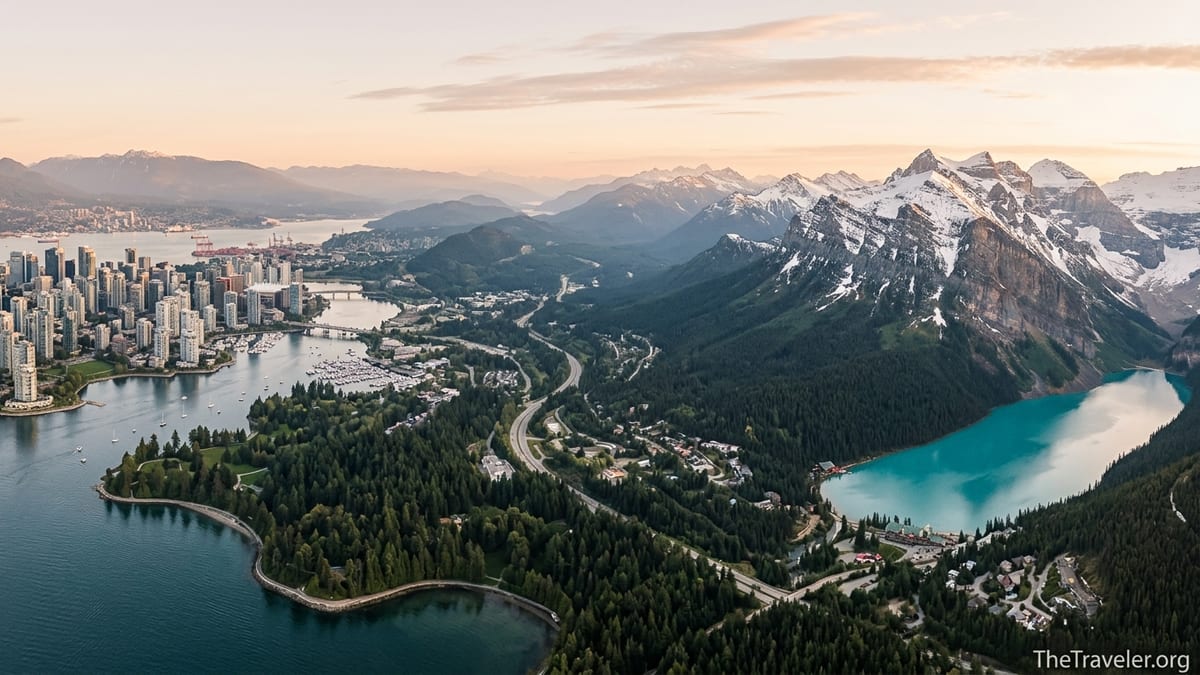
When people talk about “Western Canada” for travel, they are usually thinking about a triangle: Vancouver and nearby Vancouver Island on the Pacific coast, the Coast Mountains around Whistler, and the Canadian Rockies anchored by Banff, Lake Louise and Jasper. Distances are significant. Driving from Vancouver to Banff takes around nine to ten hours without stops, and a one‑way trip between Banff and Jasper along the Icefields Parkway is about 230 kilometres. For most first‑time visitors with 7 to 14 days, the key question is not only where to go, but where to sleep so that travel days do not eat your holiday.
Accommodation costs are also an important factor. In Vancouver, average hotel rates in central areas are now often in the range of roughly 250 to 350 Canadian dollars per night for a standard, midrange double room in busy months, with higher prices for harbour‑view hotels and boutique properties. In Banff and Lake Louise, summer and early autumn are peak seasons and even simple hotel rooms can easily run 300 to 500 Canadian dollars per night or more, with classic resorts such as Fairmont Banff Springs or Fairmont Chateau Lake Louise often well beyond that. Whistler, Canada’s flagship mountain resort, tends to follow a similar pattern, with higher prices in ski and summer biking seasons and lower rates in shoulder periods.
Because prices are high in prime destinations, many travellers mix expensive bases with more affordable ones. Some choose to stay in Canmore instead of Banff, or Squamish instead of Whistler, then drive into the main sights. Others accept the higher nightly costs but reduce the length of stay, spending two nights at Lake Louise to be close to the trails and then more nights in cheaper hubs. Thinking through your priorities and style of travel before you book will help you decide which bases justify a premium rate and where you can save without feeling compromised.
Seasonality is another crucial consideration. July and August are peak months almost everywhere, especially in the Rockies and on Vancouver Island. In winter, Whistler and the Banff area see ski crowds, while Vancouver and Victoria are quieter but wetter. Spring and autumn can offer a good balance of lower rates, fewer crowds and decent weather, particularly for road trips, but some high‑elevation trails and mountain roads may still have snow into late June.
Vancouver: Best Urban Base and Gateway Hub
Vancouver is the main international gateway for Western Canada and an obvious base for first‑time visitors who want urban comforts before or after time in the mountains. Staying downtown places you within walking distance of the seawall in Stanley Park, the restaurants of Yaletown and Gastown, and cruise ship terminals. Typical midrange hotels in the downtown core, including well‑known brands clustered around Robson Street and Coal Harbour, might cost around 250 to 350 Canadian dollars per night in high season, with simple rooms in older properties sometimes a little lower and upscale hotels such as the major Fairmont or luxury boutique properties usually higher.
For families, downtown suites or apartment‑style hotels can be worth the premium because they reduce meals out. Properties with kitchenettes in areas like the West End near English Bay let you walk to the beach and grocery stores while still being close to public transport. Couples on a short city break often favour harbour‑view hotels in Coal Harbour for the skyline and mountain backdrop, even at a higher nightly rate, while budget‑conscious travellers sometimes look across the harbour to North Vancouver. There, midrange hotels around the Lonsdale Quay area can be slightly less expensive, and the SeaBus links directly back to downtown in about 15 minutes.
Vancouver works particularly well as a base if you are planning day trips rather than a long road journey. Popular excursions include the gondola and hiking around Squamish, wine tasting in the Fraser Valley, or a ferry day trip to Bowen Island. However, if your priority is deep time in the mountains or on long hiking trails, you may prefer to limit Vancouver to two or three nights at the start or end of your trip and focus your accommodation budget on the Rockies or Whistler, where the landscapes are more dramatic right outside your door.
For luxury travellers, Vancouver offers some of Western Canada’s best high‑end hotels, with spa properties, fine‑dining restaurants and rooftop bars. These hotels are ideal bookends to a rougher road trip that might otherwise include motels and cabins. If you plan to travel in July, August or on holiday weekends, booking your Vancouver base several months ahead is prudent, as large conferences or cruise ship days can push rates up quickly across the city.
Victoria and Vancouver Island: Slower Pace and Coastal Charm
Victoria, at the southern tip of Vancouver Island, is the region’s second major city base and appeals to travellers looking for a softer, slower introduction to Western Canada. The Inner Harbour area concentrates most hotels, from historic waterfront properties to modern boutiques and chain hotels. Typical midrange rates can be somewhat lower than in central Vancouver, particularly outside peak summer and festival weekends, making Victoria a popular choice for couples and retirees seeking a relaxed, walkable base with good food, gardens and coastal views.
Families with younger children often appreciate Victoria’s compact size and attractions such as the Royal BC Museum and nearby Butchart Gardens. Downtown hotels let you explore largely on foot, and harbour‑view rooms can be a treat without the price tag of Canada’s top resorts. For those on a tighter budget, motels and small inns just outside the centre, in neighbourhoods such as James Bay or along the main routes out of town, can offer meaningful nightly savings while still being within a short drive of the harbour.
Beyond Victoria, Vancouver Island has smaller bases that work well for specific interests. Tofino on the west coast is a favourite for storm watching, surfing and wild beaches, and its lodges and cabins can be priced similarly to popular mountain destinations, especially for oceanfront rooms. Nanaimo, Parksville and Courtenay are more practical stops for road trippers using the island as part of a longer journey between Vancouver and the Rockies, with a mix of chain hotels, motels and vacation rentals at a range of prices.
Victoria and Vancouver Island generally suit travellers who prefer coastal scenery, wildlife tours and mild weather to rugged mountain landscapes. They pair especially well with a few nights in Vancouver at the start or end of a trip. If your main goal is to explore the Rockies or to spend extensive time hiking at high elevations, however, the extra ferry time may not be the most efficient use of a short holiday, and you may be better served basing closer to the mainland mountains.
Whistler and the Sea to Sky: Mountain Base for Outdoor Lovers
Whistler is Canada’s flagship four‑season mountain resort and an excellent base for travellers who want easy access to hiking, biking, skiing and mountain scenery without long drives each day. The village is compact, pedestrian‑friendly and packed with hotels, condos and vacation rentals. In winter ski season and during busy summer weeks, typical hotel rooms in central Whistler often start around the mid‑200s Canadian dollars and can climb well above 400 or 500 dollars per night for well‑located properties, especially for suites with kitchen facilities or slope‑side convenience.
For families and groups, condo‑style accommodation is a major advantage in Whistler. Two‑bedroom apartments with kitchens can be more cost‑effective than multiple hotel rooms, particularly if you are staying four or more nights and plan to self‑cater some meals. Many such properties are in the Upper Village, Creekside or the Benchlands, which are slightly removed from the main village stroll but linked by shuttles and walking paths. Couples on a romantic getaway might gravitate to smaller lodges with hot tubs and mountain views, accepting a smaller room in exchange for atmosphere and location.
Whistler also suits travellers who want a car‑free or low‑stress base. Once you arrive, you can walk to most restaurants, lifts and trailheads, and shuttle services connect to Vancouver and the airport. For road trippers driving the Sea to Sky Highway between Vancouver and the interior, Whistler works well as a two‑ or three‑night stop to break up the journey while still offering high‑quality accommodation and services.
If Whistler’s prices feel too steep, nearby towns can serve as alternative bases. Squamish, located about halfway between Vancouver and Whistler, has become a popular hub for rock climbers and hikers, with a growing selection of hotels and rental homes that are often less expensive than Whistler’s core. Pemberton, north of Whistler, offers a quieter rural feel, with small inns and cabins that appeal to travellers seeking space and lower nightly costs. Both options require more driving to reach major ski lifts or bike parks, so they work best for travellers with a car who do not mind commuting for activities.
Banff and Canmore: Classic Rockies Base for First‑Timers
Banff is the most famous town in the Canadian Rockies and the default base for many first‑time visitors to Western Canada. It offers a broad range of hotels, from simple motels on the edge of town to higher‑end lodges and landmark properties, plus a dense concentration of restaurants, shops and tour operators. In summer, Banff’s popularity drives hotel rates high. A typical midrange hotel room might cost roughly 250 to 400 Canadian dollars per night in peak season, with luxury properties and spacious suites significantly more. Winter sees a mix of ski travellers and shoulder‑season deals, so rates can drop, but the town is rarely truly inexpensive.
For families, Banff’s combination of amenities and access is hard to beat. Many hotels offer family suites with sofa beds or kitchenettes, and a town shuttle system links major hotels with the gondola, hot springs and trailheads. It is possible to travel without a car if you join organized tours to Lake Louise, Moraine Lake and the Icefields Parkway, though having your own vehicle offers far more flexibility. Couples on shorter trips often accept the higher cost of a central hotel so they can walk to dinner after long hiking days, treating Banff as an alpine basecamp with a lively evening atmosphere.
Just outside the park boundary, Canmore functions as a lower‑cost alternative base. The town has grown quickly in recent years and now offers a wide choice of condo hotels, chain properties and vacation rentals. Nightly rates are often somewhat lower than Banff’s, especially for multi‑bedroom apartments and longer stays. Travellers who prioritize space, self‑catering and value frequently choose Canmore, driving 20 to 30 minutes into Banff National Park for hikes and sightseeing. The trade‑off is the extra time in the car and the lack of a classic national park town setting when you step outside your door.
Banff and Canmore work especially well for first‑time visitors to the Rockies who want to combine scenery with convenience. Using one of these towns as a base for four or five nights allows for day trips to Lake Louise, Johnston Canyon, the Yoho National Park waterfalls across the provincial border, and even a full‑day excursion up the Icefields Parkway towards Jasper. If your schedule is tight, you may decide to stay only in Banff or only in Canmore rather than splitting nights between several nearby towns, which can waste valuable time on check‑ins and packing.
Lake Louise and Jasper: Best for Hiking, Scenery and Road Trips
Lake Louise and Jasper are smaller, more nature‑focused bases that reward travellers willing to accept limited services in exchange for being close to some of Western Canada’s most spectacular landscapes. Lake Louise consists of a small village near the highway plus lakeside hotels perched directly on the shore. The lakeside properties are among the most iconic in Canada and are priced accordingly, with many rooms selling for premium rates in July and August and often booked months in advance. Simpler hotels and hostels in the village generally cost less but still tend to be more expensive than comparable roadside motels further from the park’s core.
For hikers and photographers, staying at Lake Louise can be worth the higher cost. Being a few minutes’ walk or a short shuttle from the trailheads to popular spots such as the Plain of Six Glaciers and the Lake Agnes teahouse allows for early starts and late returns without a long drive. Families and couples who prize quiet evenings and easy access to sunrise and sunset views often choose to spend at least one or two nights here, even if the rest of their Rockies time is based in Banff, Canmore or elsewhere.
Jasper, at the northern end of the Icefields Parkway, has more of a small‑town feel than Banff and serves as a relaxed base for exploring the northern Rockies. Accommodation ranges from lodges along the highway into town to motels and hotels in the centre, plus numerous small cabins and hostels outside town. Typical midrange hotel rooms in Jasper can run in the ballpark of 200 to 350 Canadian dollars per night in busy summer periods, though rates vary widely depending on location and amenities. Some travellers also look at cabins and bungalows along nearby lakes for a more secluded experience, accepting a short drive into town for supplies.
Jasper is especially well suited to road‑trip itineraries that include the full length of the Icefields Parkway. Many visitors spend a few nights in Banff or Canmore, then drive north with stops at viewpoints, short hikes and the Columbia Icefield, before spending two or three nights in Jasper. This pattern works well for both couples and families because it limits daily driving while still covering a large area. If you are a keen hiker, allocating extra time to Jasper allows you to explore trails around Maligne Lake, Mount Edith Cavell and the valley of the Five Lakes without rushing.
Choosing Bases by Trip Type and Budget
How you combine these bases depends heavily on the kind of trip you are planning. For a first‑time visitor with ten days, a common pattern is to start with two or three nights in Vancouver to recover from the flight and enjoy urban highlights, then fly or drive to Calgary and spend the remaining week in the Rockies, splitting time among Banff or Canmore, Lake Louise and Jasper. This approach minimizes long driving days and allows you to focus on marquee sights. Families might favour longer stays in fewer places, such as four nights in Canmore, two nights at Lake Louise and two nights in Jasper, reducing the number of times they have to unpack.
For couples on a romantic holiday or honeymoon, it can make sense to concentrate your budget on a few high‑impact nights in standout settings. That might mean two nights in a harbour‑view suite in Vancouver, two nights in a lakeside room at Lake Louise, and three nights in a boutique lodge in Jasper or Whistler, with more modest hotels on travel days in between. These splurge nights are often remembered long after more functional overnight stops fade from memory.
Budget‑conscious travellers and long‑term road trippers often choose less famous bases on the fringes of the main destinations. In British Columbia, that might mean staying in Squamish instead of Whistler, or in Revelstoke and Golden on the way to the Rockies rather than in the highest‑priced park towns. In Alberta, it can mean using Canmore as a home base for Banff National Park, or even staying in towns such as Cochrane or Invermere for some nights and driving into the mountains for day trips. These choices require more time behind the wheel but can meaningfully reduce nightly accommodation costs.
Whichever pattern you choose, it is important to book early for peak travel months. In July and August, and around major holiday periods, popular hotels in Vancouver, Victoria, Whistler, Banff, Lake Louise and Jasper can sell out months in advance. Even roadside motels in smaller hubs along the main highway routes may fill up on busy weekends. If you plan to rely on vacation rentals, be aware that local regulations in British Columbia and Alberta have tightened in recent years, reducing casual short‑term listings in some communities and making professionally managed properties and hotels more reliable options.
The Takeaway
Western Canada rewards travellers who plan their bases with as much care as their sightseeing list. Vancouver and Victoria are ideal for those who want culture, restaurants and coastal scenery, Whistler and the Sea to Sky corridor provide a polished mountain resort experience, and Banff, Canmore, Lake Louise and Jasper anchor unforgettable journeys into the Rockies. Each destination has a distinct personality and price level, and the right combination depends on whether you are travelling as a family, couple, solo adventurer or luxury seeker.
If your time is limited and you are visiting for the first time, a focused itinerary that links Vancouver with a single Rockies base such as Banff or Canmore, plus perhaps a short stay at Lake Louise or Jasper, will usually feel more satisfying than trying to cover every famous name. Those planning longer road trips can layer in Victoria, Whistler and smaller hubs along the way, trading higher nightly rates in iconic locations for more nights in quieter, less expensive towns.
Above all, remember that your base is not just a place to sleep. In Western Canada it shapes how you experience the landscapes, how early you reach trailheads, how much time you spend in the car and how you feel at the end of each day. By understanding what each main base offers and matching it carefully to your priorities and budget, you can build a Western Canada itinerary that feels both practical and deeply memorable.
FAQ
Q1. Is it better to base in Banff or Canmore for a first visit to the Rockies?
For a first visit, Banff offers the classic national park town atmosphere and the most tour options, but Canmore often provides larger rooms or condos at slightly lower prices. If your budget allows, many travellers choose Banff for a shorter stay to be in the heart of the park, then add extra nights in Canmore for more space and value.
Q2. How far in advance should I book hotels in Banff, Lake Louise and Jasper?
For July and August, it is wise to look at accommodation six to nine months in advance, especially for lakeside hotels at Lake Louise and popular properties in Jasper. Shoulder seasons such as late May, June, September and early October can be more flexible, but limited options in smaller towns still mean that booking a few months ahead gives you better choice and pricing.
Q3. Can I visit the Rockies using Vancouver as my only base?
It is technically possible to take a short flight or a long drive from Vancouver to the Rockies for day or overnight tours, but using Vancouver as your sole base is not practical if you want to explore Banff, Lake Louise and Jasper in depth. The distances are simply too great. Most travellers combine a few nights in Vancouver with a separate block of time based in the Rockies, usually reached via a domestic flight or a one‑way road trip.
Q4. Is Whistler worth it in summer if I am already visiting the Rockies?
Whistler and the Rockies both offer mountains, but the experiences differ. Whistler is a compact resort village with lift‑accessible hiking, mountain biking and a lively restaurant scene, ideal if you like a car‑free base and resort amenities. The Rockies are more spread out and feel more like wilderness. If you have at least two weeks, including both can make sense; with less time, many travellers prioritize the Rockies and add Whistler only if they enjoy resort activities.
Q5. Where should families base themselves for a Western Canada road trip?
Families often prefer bases with larger rooms, kitchen facilities and easy parking. Popular choices include condo hotels in Whistler, apartment‑style accommodations in Canmore, and centrally located hotels in Vancouver or Victoria close to parks and attractions. Structuring the trip with three‑ or four‑night stays in a few key hubs, rather than one‑night stops every day, usually makes the journey more relaxed for children and parents alike.
Q6. Are there cheaper alternatives to staying in Lake Louise village or on the lake?
Yes. Budget‑conscious travellers often stay in Banff or Canmore and visit Lake Louise on a day trip, using shuttles or park‑and‑ride systems for lake access. On the western side of the park, lodgings in nearby towns such as Field and Golden can sometimes offer lower nightly rates, though they require more driving. The trade‑off is spending more time on the road and less time right on the lakeshore at sunrise and sunset.
Q7. Do I need a car if I base in Banff or Vancouver?
In both Banff and Vancouver, it is possible to get by without a car, particularly if you stay centrally and join organized tours. Banff has shuttles to popular attractions and lakes, while Vancouver has an extensive public transit network. However, having your own vehicle gives you far more flexibility for sunrise hikes, lesser‑known viewpoints and impromptu stops, so many travellers choose to rent a car for at least part of their trip.
Q8. How do hotel prices in Vancouver compare with those in the Rockies?
On average, central Vancouver hotel rates in busy periods are broadly comparable to those in popular Rockies towns such as Banff and Whistler, particularly in the midrange and upscale categories. However, the Rockies have fewer total rooms and extremely strong summer demand, which can push prices higher on peak dates and leave fewer budget options. Travellers on tighter budgets often allocate more nights to Vancouver, Victoria or secondary mountain hubs and fewer nights to the most sought‑after park towns.
Q9. Is Victoria a good alternative to Vancouver as a coastal base?
Victoria suits travellers who prefer a smaller, quieter city with harbour views and gardens rather than a larger urban centre. Hotel rates can be slightly more forgiving than downtown Vancouver, especially outside midsummer, and the Inner Harbour area is very walkable. However, reaching Victoria requires a ferry or flight, so it works best for trips of at least a few nights rather than a quick overnight stop.
Q10. What is a good simple itinerary combining cities, Rockies and a road trip?
A practical two‑week itinerary for many first‑time visitors is three nights in Vancouver for city and coastal sights, two nights in Victoria or Whistler depending on your interests, then a flight or drive to Calgary followed by five to seven nights in the Rockies split among Canmore or Banff, Lake Louise and Jasper. This pattern keeps one‑way drives between bases manageable, offers a mix of urban and mountain experiences, and allows you to adjust the balance between expensive and more affordable bases to fit your budget.